

Last Updated 04/11/2026
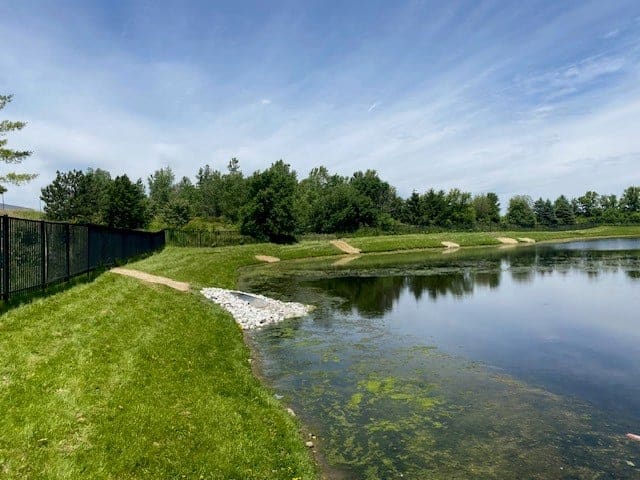
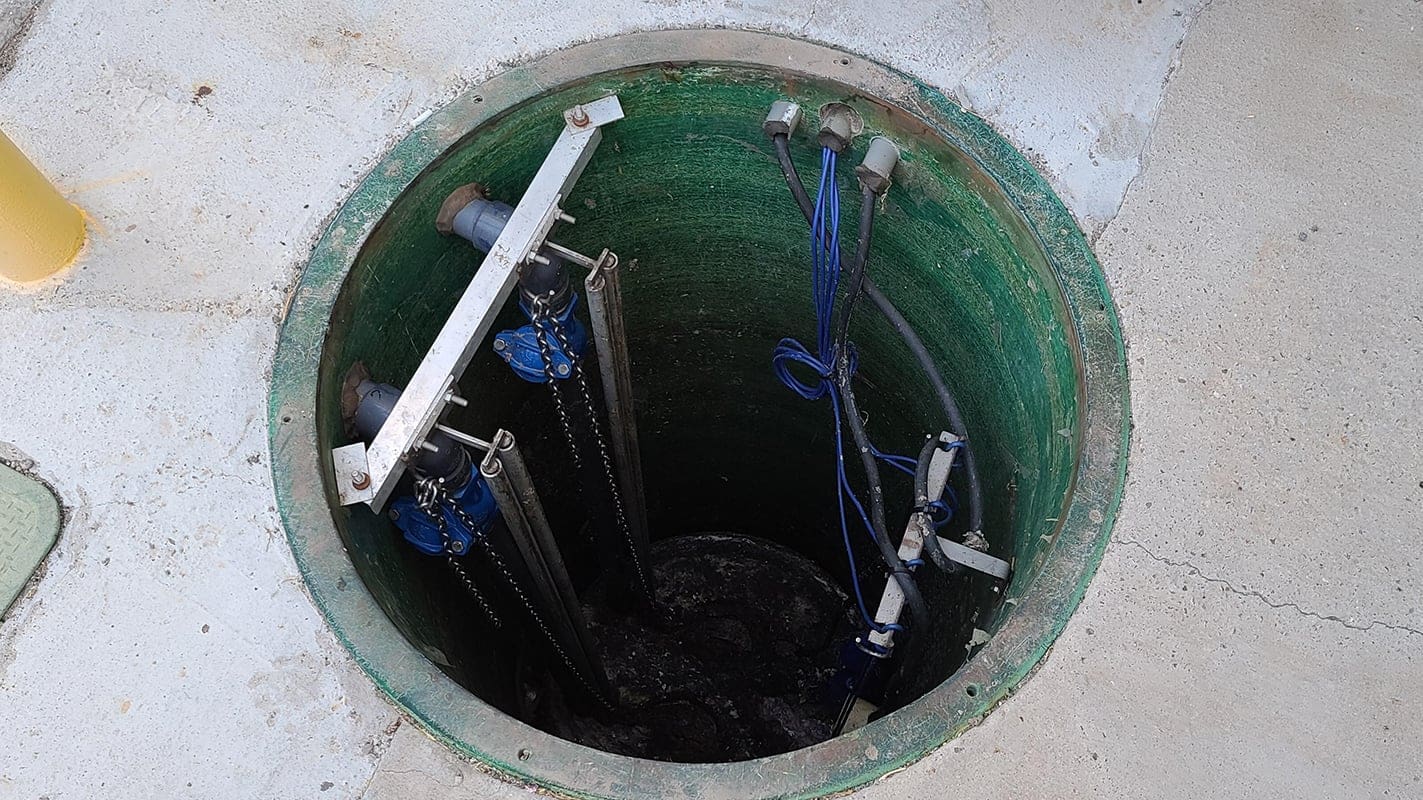
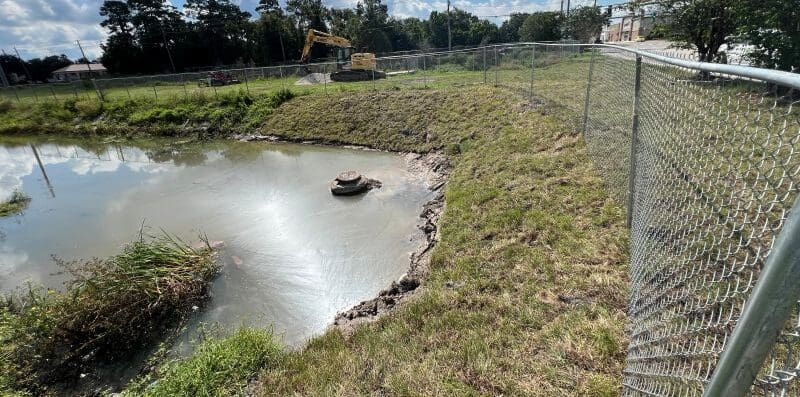
The City of Melbourne has enacted a Stormwater Ordinance in order to protect, maintain and enhance both the immediate and the long term health, safety and general welfare of the citizens of the city. The City of Melbourne is the permitting authority for all land disturbing activities and requires the land owner to maintain all on-site stormwater control facilities and all open space areas (e.g. parks or “green” areas) required by the approved stormwater control plan. The City of Melbourne will only provide construction permits to projects that establish a plan to manage stormwater runoff occurring during the construction process. Stormwater fees will be calculated and collected by the city. The City of Melbourne, under the NPDES program, also has the authority to inspect properties for noncompliance and can issue a notice of violation (NOV) for any deficiency or infraction onsite. Property owners are responsible for the maintenance of any stormwater facilities or practices located on the property. The City of Melbourne has the authority to inspect stormwater facilities and practices in order to ascertain that they properly maintained and functioning.
Stormwater Fee
Equivalent residential unit (ERU) shall be defined to serve as a reference from which an equitable distribution of the cost of services and facilities can be made among all properties within the city through a storm water management service charge rate methodology. The equivalent residential unit within the city for the purpose of service charge rate making has been determined through engineering analysis to be a gross area of two thousand five hundred (2,500) square feet of effective impervious area.
The current stormwater utility rate of assessment of $36 per ERU allows the City to collect sufficient revenue in order to comply with these requirements and construct a small number of stormwater projects.
Maintenance
(a) The installed system required by this article shall be maintained by the legal entity responsible for maintenance.
(b) The city engineer shall approve a written maintenance plan upon a finding that the plan meets the terms of this article. The approved construction and maintenance plans shall become a part of the maintenance plan.
(c) The storm water management system to be maintained by the legal entity shall have adequate easements to permit the city to inspect, and if necessary, to take corrective action should the legal entity fail to maintain the system properly.
(d) If inspection reveals that the legal entity is not maintaining the storm water management system in accordance with this section of the City Code, the code enforcement division shall give the legal entity written notice of the corrective action required to be taken. Should the legal entity fail, within thirty (30) days of the notice, to complete such corrective action, the city may enter upon the property, take the necessary corrective action, and file a lien upon the properties responsible for the maintenance of the storm water system for the cost of such action.
(e) In the event an emergency situation is determined to exist by the code enforcement administrator after consulting with the city engineer, which endangers persons and/or property, the city may take corrective action. Any city actions and costs incurred may be recovered by the placement of a lien on the properties responsible for the maintenance of the storm water system.
(f) The legal entity shall execute and record a document acceptable to the city attorney and city manager, which defines its authority and responsibility for maintenance of the storm water management system, defines how the maintenance is to be performed, and provides a legal mechanism assuring the perpetuation of the maintenance.
(g) Maintenance of storm water facilities shall include the performance of the system as originally designed and permitted by the city and/or appropriate governmental agencies and as stated in the written plan.
(h) Maintenance shall include compliance with city building and construction codes, city nuisance codes, specifically Chapter Health & Sanitation, and other applicable city codes.
Inspections.
Subsequent to the applicant’s satisfying the requirements of this article and other applicable ordinances, and the issuance of the appropriate permit, the applicant shall, during construction, arrange for and schedule the following inspections by the city engineer:
(1) During clearing operation and excavation, to assure that effective control practices relative to erosion and sedimentation are being followed.
(2) All underground conveyance and control structures, prior to backfilling.
(3) Final inspection when all systems required by the applicant’s approved storm water management plan have been installed.
Penalties.
Any person who violates or causes to be violated any provision of this article or permits any such violation or fails to comply with any of the requirements hereof shall be subject to enforcement action of the code enforcement board, pursuant to Florida Statutes. A separate offense shall be deemed committed on each day during or on which a violation or failure to comply occurs or continues.
ILLICIT DISCHARGE AND CONNECTION
Prohibitions.
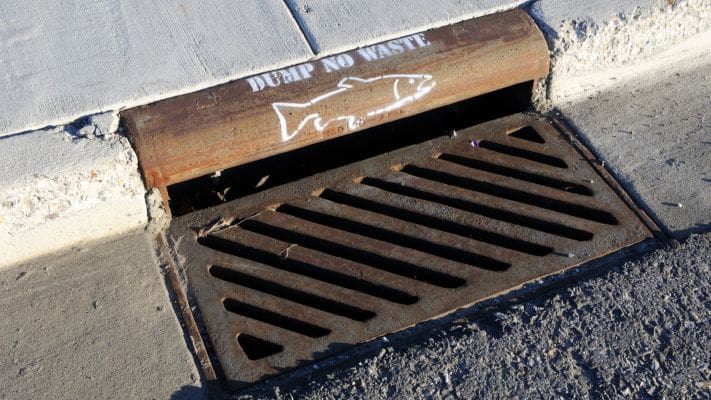
(a) Illicit/illegal discharges. No person shall throw, drain, or otherwise discharge, cause, or allow others under its control to throw, drain, or otherwise discharge into the MS4 any pollutants or waters containing any pollutants, other than storm water, whether such discharges occur through piping connections, runoff, exfiltration, infiltration, seepage or leaks. Polluting matter includes, but is not limited to, the following:
(1) Petroleum products, including, but not limited to oil, gasoline, grease;
(2) Solid waste;
(3) Paints;
(4) Steam cleaning waste;
(5) Pesticides, herbicides or fertilizers;
(6) Degreasers, solvents;
(7) Sanitary sewage;
(8) Chemically treated cooling water;
(9) Antifreeze and other automotive products;
(10) Lawn clippings, leaves, branches, etc.;
(11) Animal carcasses;
(12) Recreational vehicle waters;
(13) Dyes;
(14) Construction materials;
(15) Any liquids in quantity or quality that are capable of causing a violation of the city’s NPDES storm water permit; and
(16) Solids in such quantities or of such size capable of causing interference or obstruction to the flow of the city’s storm sewer system.
(b) Illicit connections.
(1) No person may maintain, use or establish any direct or indirect connection to any storm sewer owned by the city that results in any discharge in violation of any provision of federal, state, city of other laws or regulations.
(2) This subsection is retroactive, and applies to illicit connections made prior to the effective date of the article from which this subsection is derived; regardless of whether made under a permit or other authorization, or whether permissible under laws or practices applicable or prevailing at the time the connection was made.
(3) A person is considered to be in violation of this article if the person connects a line conveying sewage to the MS4, or allows such a connection to continue.
(c) Violation of permits. Any discharge into the storm water system of the city in violation of any federal, state, county, municipal or other governmental law, rule, regulation or permit is prohibited, except those discharges set forth in this section or as in accordance with a valid NPDES permit.
Storm water discharges from commercial, industrial or construction activities to the MS4 or regulated waters.
(a) Storm water from areas of any commercial activity, industrial activity or construction activities shall be controlled, treated and managed on-site using best management practices so as not to cause an illicit or illegal discharge to the city’s MS4 or regulated waters.
(b) All erosion, pollutant, and sediment controls required by Chapter 27 (Article II), Appendix D (Chapter 9, Article XVI), or by any applicable local, state, or federal permit, including elements of a storm water pollution prevention plan required under an NPDES permit and the city’s land development regulations, shall be properly implemented, installed, operated, and maintained.
(c) Authorized discharges to the city’s MS4 shall be controlled so that they do not impair the operation of the city’s MS4 or contribute to the failure of the city’s MS4 to meet any applicable local, state, or federal law or regulation.
(d) Authorized discharges to regulated waters shall be controlled so that they do not adversely impact the quality or beneficial uses of those waters or result in violation of any applicable local, state, or federal law or regulation.
(e) Any person who has been issued an NPDES permit authorizing discharges to the MS4 shall submit a complete copy of the permit to City of Melbourne Engineering Department within thirty (30) days after the effective date of this article (June 1, 2008), or within thirty (30) days after the issuance of a permit.
Authorized exemptions.
The commencement, conduct or continuance of any illicit or illegal discharge to the storm drain system is prohibited except as described as follows:
(1) Water line flushing;
(2) Flushing of reclaimed water lines;
(3) Street cleaning;
(4) Construction dust control;
(5) Landscape irrigation;
(6) Diverted stream flows;
(7) Rising ground waters;
(8) Foundation and footing drains;
(9) Swimming pool discharges;
(10) Uncontaminated ground water infiltration (as defined at 40 C.F.R. 35.205(20));
(11) Uncontaminated pumped ground water;
(12) Discharges from potable water sources;
(13) Air conditioning condensate;
(14) Irrigation water;
(15) Springs;
(16) Lawn watering;
(17) Individual residential car washing;
(18) Flows from riparian habitat and wetlands; and
(19) Discharges or flows from emergency firefighting activities and emergency response activities done in accordance with an adopted spill response/action plan.
The prohibition shall not apply to any non-storm water discharge permitted under an NPDES permit, waiver, or waste discharge order issued to the discharger and administered under the authority of the Florida Department of Environmental Protection, provided that the discharger is in full compliance with all requirements of the permit, waiver, or order and other applicable laws and regulations, and provided that written approval has been granted for any discharge to the storm drain system.
Inspection and monitoring for compliance.
City personnel and city agents shall be granted access for inspection of facilities discharging or suspected of discharging to the city’s MS4 or waters of the United States in order to effectuate the provisions of this article and to investigate violations or potential violations of any of the terms herein. All structures and processes which allow discharges to the city’s MS4, as well as records connecting them, shall be made accessible to city personnel and city agents for this purpose.
Reporting requirements.
Illicit discharges to the MS4 are prohibited. Any person owning or occupying a premise or facility who has knowledge of a discharge of pollutants from those premises or facilities or other type of evidence which might result in a violation of the prohibitions found in section Prohibitions of this article shall immediately take action to abate the discharge of pollutants, and shall notify the authorized enforcement agency within twenty-four (24) hours of the discharge of pollutants. The initial notification may be by telephone, but the person responsible shall submit a written report within seventy-two (72) hours of discovery. The written report shall include a description of the discharge volume, content, frequency, discharge point location to the MS4, measures taken or to be taken to terminate the discharge, and the name, address and telephone number of the person who may be contacted for additional information. Hazardous materials discharges shall be reported to the city, the Brevard County Public Safety Office, the Brevard County Health Department, and the Florida Department of Environmental Protection.
Violations, enforcement, and penalties.
(a) Notice of violation. Whenever the authorized enforcement agency finds that a person has violated a prohibited or failed to meet a requirement of this article, the authorized enforcement agency may order compliance by written notice of violation to the responsible person. Such notice may require without limitation:
(1) The elimination of illicit connections or discharges.
(2) The issuance of cease and desist orders.
(3) The abatement or remediation of storm water pollution or contamination hazards and restoration of any affected property.
(4) May, but shall not be required to, provide advice as to the possible amount of fines.
(5) The implementation of source control or treatment BMPs.
If abatement of a violation and/or restoration of affected property is required, the notice shall set forth a deadline within which such remediation or restoration must be completed. Said notice shall further advise that, should the violator fail to remediate or restore within the established deadline, the work may be done by a designated governmental agency or a contractor and the expenses thereof shall be charged to the violator.
(b) If the violation is not corrected by the date assigned, the authorized enforcement agency may file charges with the code enforcement board or prosecute the violations in court.
(c) In addition to any fines that may be imposed, any person responsible for illicit or illegal discharges, or noncompliance with BMPs at industrial and/or construction sites, and who fails to correct any prohibited condition or discontinue any prohibited activity at the order of the authorized enforcement agency shall be liable to the city for the expenses incurred in abating pollution, including expenses incurred in testing, measuring, sampling, collecting, removing, treating, and disposing of the polluting materials and preventing further noncompliance and/or illicit discharges.
(d) Persons responsible for violation of this article shall be liable for all costs incurred by the city in sampling, analyzing and/or monitoring the discharge, together with all state and/or federal fines imposed as a result of the discharge and cost of removing, remedying or properly treating the discharge.
(e) Any person found in violation and/or who fails to comply with the requirements of any provision of the article shall, without limitation on the city’s legal recourse, be subject to prosecution before the Code Enforcement Board of the City of Melbourne, pursuant to the Melbourne Code of Ordinances. Each day of violation shall constitute a separate violation.
(f) The city may elect to take any or all of the above remedies concurrently, and the pursuit of one shall not preclude the pursuit of another.
View State Page
Frequently Asked Questions
How do I know if my stormwater system is at risk in Melbourne?
The usual physical signs apply: standing water past 72 hours, erosion, sinkholes, discolored discharge. Melbourne’s code adds a records-based one too, since the city requires a recorded maintenance document defining who’s responsible for the system and how upkeep will be performed. If that document doesn’t exist or the responsible party isn’t clearly named, the property is exposed even if the physical system looks fine, since an inspection finding non-compliance triggers a 30-day window to correct it before the city can step in.
How does stormwater compliance affect property value in Melbourne?
Every property in the city pays a stormwater utility rate of $36 per Equivalent Residential Unit, based on 2,500 square feet of effective impervious area, and that fee structure follows the parcel regardless of ownership. More significant for due diligence is Melbourne’s lien authority: if a legal entity fails to correct a maintenance deficiency within 30 days of notice, the city can perform the work itself and place a lien on the property for the cost. A buyer inheriting an unresolved deficiency is also inheriting that lien risk.
How often does Melbourne require stormwater inspections?
During construction, the city engineer inspects at three defined stages: during clearing and excavation, before backfilling underground conveyance structures, and at final system completion. After construction, the city retains ongoing authority to inspect any system through recorded easements, and can take corrective action if the responsible entity isn’t maintaining it properly. There’s no fixed post-construction cycle beyond that standing authority, so routine self-monitoring matters more here than in cities with a set annual schedule.
What are the most common stormwater violations in Melbourne?
Melbourne’s code prohibits an extensive list of non-stormwater discharges, from petroleum products and pesticides to construction materials and sanitary sewage, along with any illicit connection to the MS4, even one made years ago under different rules. One requirement is easy to miss: anyone aware of a discharge violation has to notify the city within 24 hours and follow up with a written report within 72 hours. Beyond illicit discharges, the usual maintenance-driven violations, overgrown vegetation, sediment buildup and clogged structures, round out what AQUALIS sees most often.
What happens if my property is found in violation of Melbourne's stormwater ordinance?
The city issues a written notice of violation specifying the required corrective action, and if it isn’t resolved by the deadline, the case can go to the Code Enforcement Board or to court. The violator is liable for all city costs tied to testing, monitoring and remediation, plus any state or federal fines the discharge triggers, and each day of violation counts separately. AQUALIS helps Melbourne property owners respond to notices quickly, get the required maintenance documentation in place, and avoid the lien exposure that comes with a missed 30-day correction window.
The information on this page is provided for general informational purposes only and is not legal advice. Regulations change frequently — AQUALIS makes no warranty as to the accuracy or completeness of this content, and any reliance on it is at your own risk. Consult a qualified professional or your local regulatory authority to confirm requirements applicable to your specific property.