


Last Updated 04/12/2026
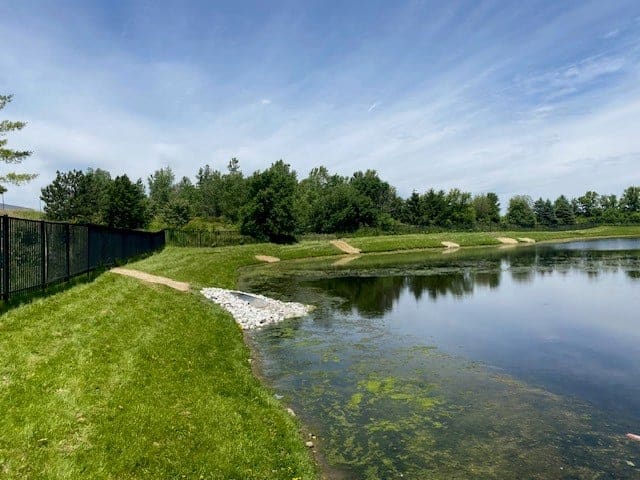
The City of Orlando has enacted a Stormwater Management Ordinance in order to provide a mechanism for mitigating the damaging effects of uncontrolled and unplanned stormwater runoff and to improve the public health, safety and welfare by providing for the safe and efficient capture and conveyance of stormwater runoff and the correction of stormwater problems. The City of Orlando is the permitting authority for all land disturbing activities and requires the land owner to maintain all on-site stormwater control facilities and all open space areas (e.g. parks or “green” areas) required by the approved stormwater control plan. The City of Orlando will only provide construction permits to projects that establish a plan to manage stormwater runoff occurring during the construction process. Stormwater fees will be calculated and collected by the city. Stormwater credits are available for properties that engage in stormwater best management practices. The City of Orlando, under the NPDES program, also has the authority to inspect properties for noncompliance and can issue a notice of violation (NOV) for any deficiency or infraction onsite. Property owners are responsible for the maintenance of any stormwater facilities or practices located on the property. The City of Orlando has the authority to inspect stormwater facilities and practices in order to ascertain that they properly maintained and functioning.
Stormwater Maintenance
Private Facilities.
Private Facilities.
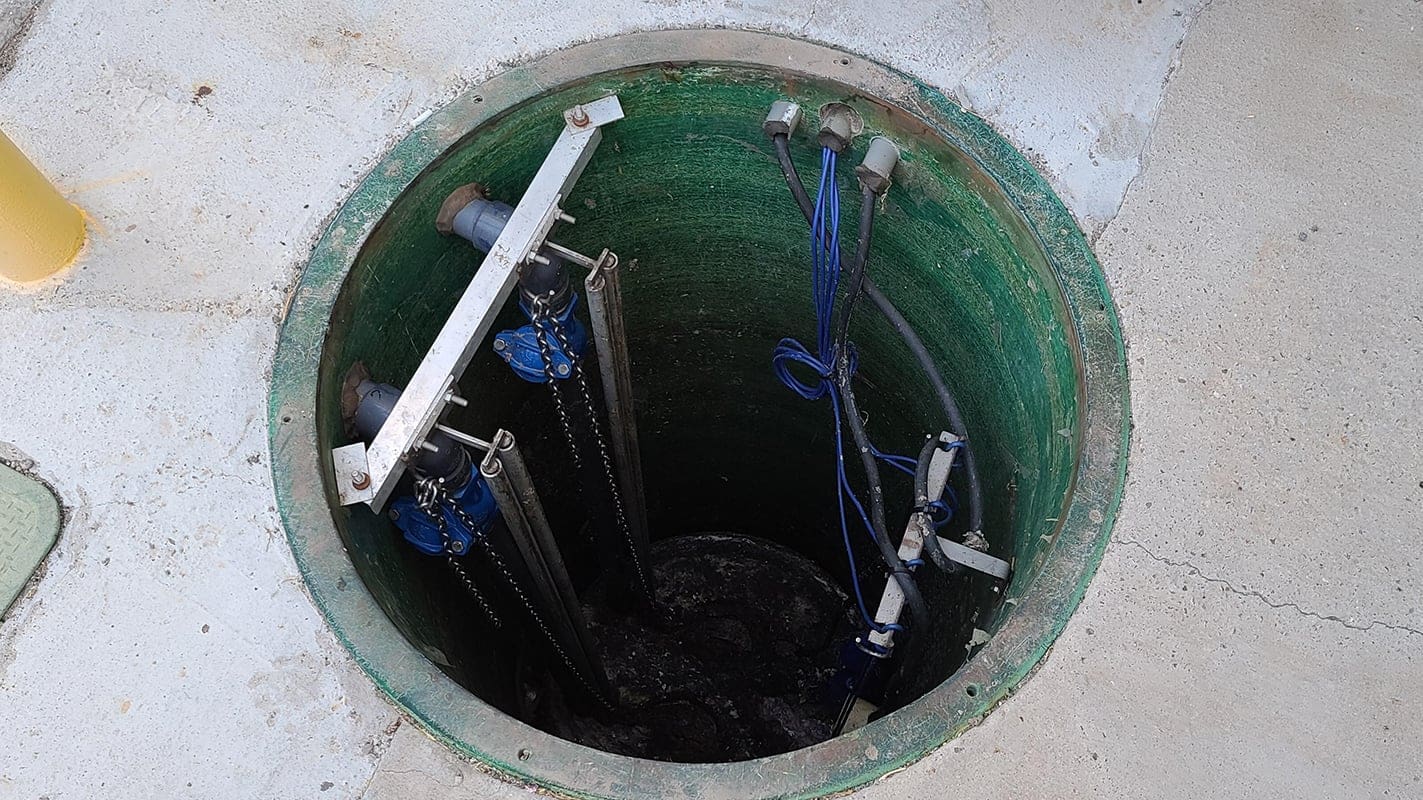
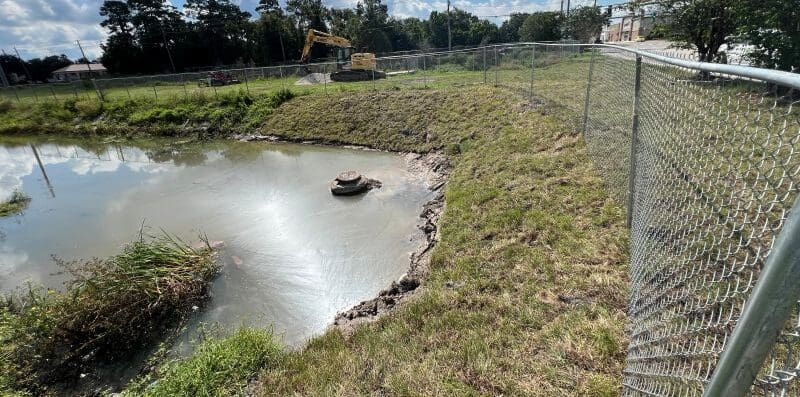
The property owner shall be responsible for stormwater drainage facilities located on private property where runoff will principally be collected within that property. The owner shall clean and maintain the facility or channel, as required, to ensure efficient and proper operation of the facility, and shall obtain the City Engineer or the Utility Bureau Chief’s prior written approval for any proposed changes or alterations to any private stormwater drainage facilities that, in the City’s sole discretion, may substantially or adversely affect stormwater drainage in the property owner’s area.
The Utility Bureau Chief shall provide for inspection of private facilities to ascertain that the stormwater facilities are functioning as designed and approved. The Utility Bureau Chief shall provide for remedial maintenance of facilities based upon the severity of stormwater problems and potential hazard to the public health, safety, and welfare.
Emergencies and Abatement.
In case of an emergency, the Utility Bureau Chief may direct that action be taken immediately to correct the condition or abate the activity to protect the public health, safety, and welfare. The Utility Bureau may perform the required work and charge the owner all such related (and provable) costs.
Stormwater Utility Fee
A Stormwater Utility Fee is imposed on each parcel of land within the City. Properties that have existing stormwater management facilities in accordance with the Orlando Urban Stormwater Management Manual (OUSWMM), or those planning such facilities, may have their fee reduced or pro-rated as determined by the Streets & Stormwater Division Manager.
The annual utility fee for developed property is based on the Equivalent Residential Unit (ERU). The Streets & Stormwater Division maintains a database and assigns a billing class code to each parcel. Each parcel is charged a reasonable and equitable fee in accordance with its assigned ERU and site mitigation factors, if any.
Developed properties, which meet the OUSWMM criteria, will have their fee discounted. Those properties with on-site mitigation, which do not fully meet OUSWMM criteria, may receive a partial discount as determined by the division manager.
Monthly Charge Per Equivalent Residential Unit (ERU).
The monthly charge per equivalent residential unit shall be $9.99 effective October 1, 2008. The Stormwater Utility Division Manager is directed to prepare a list of all parcels (residential and non-residential) within the City, and assign a designation to each, and for which each shall be charged a reasonable and equitable fee, according to assigned ERU equivalence and site mitigation factors, if any; provided, however, that the City shall have the option to set a fixed minimum and maximum fee for residential parcels.
Delinquent Charges.
All charges not paid within thirty (30) days after the bill is due, or that are not under active appeal, shall be considered delinquent.
All charges delinquent hereunder shall be subject to, 1) an interest charge at the Florida statutory rate, 2) a rebilling charge covering administrative costs in accordance with this Chapter, and 3) shall constitute a lien upon the real property affected, from the date charges are incurred. Charges which remain unpaid for a period of sixty (60) days may be reported to the City Council for assessment against the real property. In the alternative, the City Council may direct the City Attorney to file suit thereon, and to collect all such unpaid charges and fees, including reasonable attorney’s fees and charges.
Illicit Discharges
Discharge of Polluting Matter in Natural Waters Prohibited.
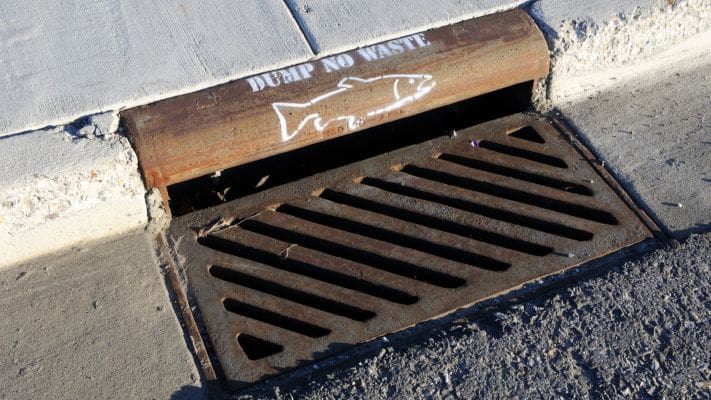
(1) It shall be unlawful for any person to drain, deposit, place or otherwise discharge into any natural outlet or storm water system within the City, or to cause or permit to be drained, deposited, placed or otherwise discharged into such waters, any organic or inorganic matter which causes or tends to cause pollution. Polluting matter includes, but is not limited to, the following:
(a) Petroleum products, including but not limited to oil, gasoline, and grease.
(b) Solid Waste (as defined in City Code Chapter 28).
(c) Pet Waste.
(d) Chemicals.
(e) Paints.
(f) Soaps.
(g) Laundry Waste.
(h) Steam Cleaning Waste.
(i) Pesticides, Herbicides or Fertilizers.
(j) Degreasers, Solvents.
(k) Heated Water.
(l) Sanitary Sewage.
(m) Chemically Treated Cooling Water.
(n) Antifreeze, and other Automotive Products.
(o) Lawn Clippings, Leaves, Branches, etc.
(p) Animal Carcasses.
(q) Silt.
(r) Acids or Alkalis.
(s) Recreational Vehicle Waste.
(t) Dyes (without prior written permission of the Utility Bureau).
(u) Construction Materials.
(v) Any groundwater which contains phosphorous or nitrogen concentrations greater than the surface water into which the groundwater is discharged.
(w) Any water which exceeds the state surface water standards.
(x) Toxic or Poisonous Solids or Liquids.
(y) Solids in such quantities or of such size capable of causing interference or obstruction to the flow in the City’s stormwater system.
(2) It shall be unlawful to wash any public or private streets, buildings, sidewalks or parking areas, unless all visible debris and sediments have been removed prior to washing. If the removal of the debris and sediments is not feasible (as determined by the Utility Bureau Chief), then the street, building, etc. may only be washed with the Utility Bureau Chief’s prior written approval, which may include requirements to clean the affected drainage pipelines or provide treatment of washwater runoff to prevent downstream pollution. Only water may be used for washing purposes.
Liability for Pollution Abatement.
Any person responsible for pollutant discharge into any natural waters or stormwater systems and who fails to correct any prohibited condition or discontinue any prohibited activity at the Utility Bureau Chief’s request shall be responsible to pay the necessary expenses incurred by the City in carrying out the pollution abatement, including any expenses incurred in testing, measuring, sampling, collecting, removing, containing, treating, and disposing of the pollutant materials.
Penalties.
(1)Any person who violates any of the provisions of this Chapter shall be punished as provided in Section 1.08 of the City Code. Each and every day on which such person continues to violate the provisions of this Code after having been notified of such violation shall constitute a separate offense.
(2) Any person who violates any provision of this ordinance shall be subject to a civil penalty of up to $1,000 per day for each day that such person is in violation of this ordinance.
(3) Any person who causes or allows an unauthorized discharge, or who otherwise violates the provisions of this Chapter, may be required to appear before the Code Enforcement Board for enforcement proceedings pursuant to Chapter 5 of the City Code.
(4) The remedies and penalties provided in this Ordinance are not exclusive, and the City may seek whatever other remedies are authorized by statute, at law or in equity, against any person who violates the provisions of this Ordinance.
View State Page
Frequently Asked Questions
How do I know if my stormwater system is at risk in Orlando?
The physical warning signs are familiar: standing water past 72 hours, erosion, sinkholes, discolored discharge. Orlando adds a specific benchmark, since fee discounts depend on a system meeting the criteria in the Orlando Urban Stormwater Management Manual, so a facility that’s drifted out of spec can lose that discount even before it draws a formal notice of violation. The city also retains ongoing authority to inspect private facilities to confirm they’re functioning as designed and approved.
How does stormwater compliance affect property value in Orlando?
Every parcel in Orlando carries a stormwater utility fee based on its Equivalent Residential Unit, currently $9.99 per month per ERU, but properties with facilities that meet the city’s stormwater manual criteria qualify for a discounted rate, with partial discounts available for on-site mitigation that doesn’t fully meet the standard. Unpaid stormwater charges become a lien on the property after 60 days delinquent, so an inherited fee dispute or lapsed discount is a real, attachable liability worth surfacing before a sale closes.
How often does Orlando require stormwater inspections?
The city’s Utility Bureau inspects private stormwater facilities to confirm they’re functioning as designed and approved, with remedial maintenance directed based on the severity of the problem and its potential risk to public health and safety. There’s no fixed public schedule beyond that standing authority, so properties benefiting from a stormwater fee discount have good reason to stay ahead of an inspection rather than wait for the city to initiate one.
What are the most common stormwater violations in Orlando?
Orlando’s code lists an unusually long roster of prohibited discharges, covering everything from petroleum products and pesticides to pet waste, paint, lawn clippings and construction materials, along with any water exceeding state surface water standards. Washing a street, building or parking area without first clearing visible debris is also explicitly prohibited. Beyond illicit discharges, the violations AQUALIS sees most often are the familiar ones: neglected vegetation, sediment buildup and clogged inlets that keep a facility from meeting OUSWMM performance criteria.
What happens if my property is found in violation of Orlando's stormwater ordinance?
Violations carry a civil penalty of up to $1,000 per day for each day the violation continues, and the city can also refer a case to the Code Enforcement Board for separate proceedings. In an emergency, the Utility Bureau Chief can order immediate correction of a hazardous condition, and the city may perform the work itself and bill the owner for provable costs. AQUALIS helps Orlando property owners resolve open violations quickly and keep their systems meeting the standard needed to retain any stormwater fee discount.
The information on this page is provided for general informational purposes only and is not legal advice. Regulations change frequently — AQUALIS makes no warranty as to the accuracy or completeness of this content, and any reliance on it is at your own risk. Consult a qualified professional or your local regulatory authority to confirm requirements applicable to your specific property.