

Last Updated 08/20/2026
Excerpt from Stormwater Ordinance
334-5 Regulations.
The Department may promulgate rules and regulations to effectuate the purposes of this chapter. Failure by the Department to promulgate such rules and regulations shall not have the effect of suspending or invalidating this chapter.
334-6 Prohibited activities.
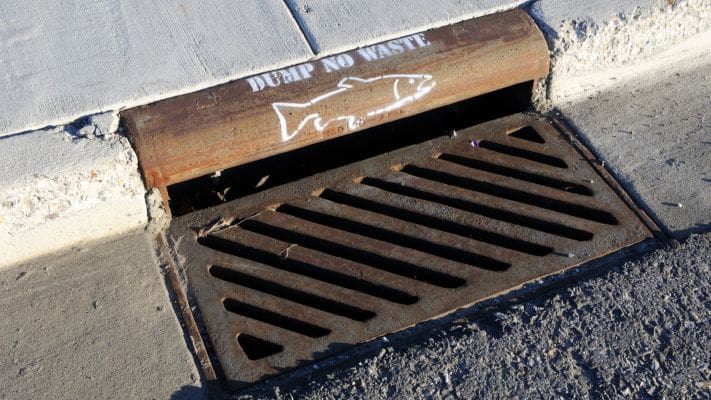
- Illicit discharges. No person shall dump, discharge, cause or allow to be discharged any pollutant or non-stormwater discharge into the municipal separate storm sewer system (MS4), into a watercourse, or into the waters of the commonwealth.
- Illicit connections. No person shall construct, use, allow, maintain or continue any illicit connection to the municipal storm drain system, regardless of whether the connection was permissible under applicable law, regulation or custom at the time of connection.
- Obstruction of municipal storm drain system. No person shall obstruct or interfere with the normal flow of stormwater into or out of the municipal storm drain system without prior written approval from the Department.
334-8 Suspension of storm drainage system access.
- The Department may suspend municipal storm drain system access to any person or property without prior written notice when such suspension is necessary to stop an actual or threatened discharge of pollutants that presents imminent risk of harm to the public health, safety, welfare or the environment. In the event any person fails to comply with an emergency suspension order, the authorized enforcement agency may take all reasonable steps to prevent or minimize harm to the public health, safety, welfare or the environment.
- Any person discharging to a municipal storm drain system in violation of this chapter may have their municipal storm drain system access terminated if such termination would abate or reduce an illicit discharge. The Department will notify a violator of the proposed termination of municipal storm drain system access. The violator may petition the Department for reconsideration and hearing. A person commits an offense if the person reinstates municipal storm drain system access to premises terminated pursuant to this section, without prior approval from the Department.
334-9 Notification of spills.
Notwithstanding other requirements of local, state or federal law, as soon as a person responsible for a facility or operation, or responsible for emergency response for a facility or operation, has information of or suspects a release of materials at that facility or operation, resulting in or which may result in discharge of pollutants to the municipal storm drainage system or waters of the commonwealth, the person shall take all necessary steps to ensure containment, and cleanup of the release. In the event of a release of oil or hazardous materials, the person shall immediately notify the municipal Fire and Police Departments, Department of Public Works, and the Board of Health. In the event of a release of nonhazardous material, the reporting person shall notify the authorized enforcement agency no later than the next business day. The reporting person shall provide to the authorized enforcement agency written confirmation of all telephone, facsimile or in-person notifications within three business days thereafter. If the discharge of prohibited materials is from a commercial or industrial facility, the facility owner or operator of the facility shall retain on-site a written record of the discharge and the actions taken to prevent its recurrence. Such records shall be retained for at least three years.
336-6 Applicability
- Multifamily residential developments involving four or more units;
- Any new commercial, industrial, institutional structures under the same ownership, with at least 5,000 square feet of gross floor area, 10,000 square feet of impervious surface, or that require 10 or more parking spaces;
- Redevelopment or additions to existing commercial, industrial, and institutional uses which result in an additional impervious surface area or gross floor area of greater than 5,000 square feet, or which results in an increase of 10 or more parking spaces;
- Construction activities and subdivisions disturbing greater than or equal to one acre;
- Development or redevelopment involving multiple separate activities in discontinuous locations or on different schedules if the activities are part of a larger common plan of development or redevelopment that together disturbs one or more acres.
336-7 Permit procedures and performance standards.
336-8Enforcement.
View State Page
Frequently Asked Questions
What commercial projects trigger a stormwater management permit in Springfield?
A permit is required before construction begins on any new commercial, industrial, or institutional structure under the same ownership with at least 5,000 square feet of gross floor area, 10,000 square feet of impervious surface, or 10 or more required parking spaces. Redevelopment or additions to existing commercial, industrial, and institutional uses trigger the same requirement if they add more than 5,000 square feet of impervious surface or gross floor area, or increase parking by 10 or more spaces.
Does a smaller commercial project in Springfield still need a stormwater permit?
It might, depending on how the work is structured. Construction activities and subdivisions disturbing an acre or more require a permit regardless of building size. Development involving multiple separate activities at different locations or on different schedules also requires a permit if those activities are part of a larger common plan that together disturbs an acre or more.
Can a Springfield property get a waiver instead of a full stormwater management permit?
Yes. The Stormwater Authority can issue a waiver of the permit requirement in place of a full permit, though the specific procedures and criteria for requesting one are defined in the department’s rules and regulations rather than the ordinance itself.
Does a Springfield stormwater permit guarantee the approved system will work as designed?
No. Issuance of a stormwater management permit isn’t a guarantee by the city, the Stormwater Authority, or its employees that the approved system’s design or efficiency will perform as expected. The responsibility for the system functioning properly still rests with the property owner.
What happens if a Springfield property owner discharges pollutants into the storm drain system?
Dumping or discharging any pollutant or non-stormwater flow into the municipal storm sewer system, a watercourse, or state waters is prohibited, as is any illicit connection to the system. The Department can suspend a property’s storm drain access without advance notice if doing so is necessary to stop an actual or threatened discharge that poses imminent risk to public health, safety, or the environment.
What happens if a spill threatens Springfield's storm drainage system?
Anyone responsible for a facility with an actual or suspected release that could reach the storm drainage system must immediately act to contain and clean it up. Oil or hazardous material releases require immediate notification to the fire and police departments, public works, and the board of health. Non-hazardous releases must be reported to the enforcement agency by the next business day, followed by written confirmation within three business days. Commercial and industrial facilities must retain records of the discharge and corrective action for at least three years.
The information on this page is provided for general informational purposes only and is not legal advice. Regulations change frequently — AQUALIS makes no warranty as to the accuracy or completeness of this content, and any reliance on it is at your own risk. Consult a qualified professional or your local regulatory authority to confirm requirements applicable to your specific property.