

Last Updated 08/11/2026
Post Development Stormwater Management Ordinance
Sec. 74-517. – Stormwater management inspection and maintenance.
(a) Prior to the issuance of any permit for a land development activity requiring a stormwater management facility or practice hereunder for which the City of Atlanta requires ongoing maintenance, the owner or responsible party shall execute an inspection and maintenance agreement. Such agreement shall be submitted prior to the issuance of any such permit and shall be binding on all appropriate successors in title of the site.
Inspection and maintenance agreements may terminate or be amended if superseded by subsequent development approved by the City of Atlanta. Any applicant for development will be required to obtain an inspection and maintenance agreement for all proposed and existing stormwater management facilities on the property.
(b) The inspection and maintenance agreement must be approved by the City of Atlanta; and upon approval, recorded in the deed records of the Superior Court of Fulton or DeKalb County, whichever is applicable, prior to issuance of permit.
(c) Responsibility for the operation and maintenance of the stormwater management facility or practice shall remain with the property owner and shall pass to any successor in title. If portions of the site are sold or otherwise transferred, the inspection and maintenance responsibility shall pass to the appropriate successor in title. Such transfers shall designate for each portion of the site, the responsible party to be permanently responsible for its inspection and maintenance and shall be recorded in the deed records for the property. The inspection and maintenance agreement shall identify by name or official title the person responsible for carrying out the inspection and maintenance.
(d) Where a stormwater maintenance facility exists on any property to be subdivided, including, but not limited to, Subdivisions, Planned Developments, Multi-family Developments, or Mixed Use Developments, the facility shall be owned in accordance with the following:
(1) If a property owners’ association is created, in accordance with the Georgia Property Owners’ Association Act (O.C.G.A. § 44-3-220, et seq.), the stormwater maintenance facility shall be treated as a common area, and the following provisions, at a minimum, shall be included in the property owners’ association’s bylaws or covenants:
a. Governance by the Georgia Property Owners’ Association Act (O.C.G.A. § 44-3-220, et seq.) or a successor to that Act that grants lien rights to the association for maintenance expenses and tax obligations;
b. Automatic compulsory membership in the property owners’ association of all lot purchasers and their successors in title;
c. A fair and uniform method of assessment and collection/payment for dues, maintenance, and related costs;
d. Perpetual and continued inspection and maintenance liability for the required stormwater facility;
e. Filing of all required covenants, declarations, and restrictions with the Clerk of the Superior Court of Fulton or DeKalb County, whichever is applicable; and
f. Prior arrangement for the transfer of ownership of the stormwater maintenance facility in fair and equal parts to all lot owners in the case of the property owners’ association dissolving.
(2) If a property owners association is not created, the stormwater maintenance facility shall be owned by all appropriate successors in title to the land in the development sold or otherwise transferred. Costs associated with the inspection and maintenance of the stormwater facility shall be assessed equitably among all of the lots in the development.
(e) The inspection and maintenance agreement shall comply with the requirements of the Department of Watershed Management and include, at a minimum, a description of the property, appropriate details of the stormwater management plan, an operations and maintenance plan, and a plan for annual inspection.
(f) In addition to enforcing the terms of the inspection and maintenance agreement, the City of Atlanta may also enforce all of the provisions for ongoing inspection and maintenance in Section 74-520 of this Article.
(g) Prior to the issuance of any permit for a land development activity requiring a stormwater management facility or practice hereunder, the owner or responsible party shall execute an indemnification and hold harmless agreement, in a form provided by the City of Atlanta, which shall state at a minimum, that the owner or responsible party shall indemnify and hold harmless the City of Atlanta for any up-stream or down-stream damages due to structural, design, installation, maintenance or any other failure of the stormwater management facility.
Sec. 74-520. – Ongoing inspection and maintenance of stormwater facilities and practices.
(a) Operation and maintenance agreements. An owner must comply with any operation and maintenance agreement.
(b) Pre-existing facilities and other agreements. For any land that is not subject to an operation and maintenance agreement for a stormwater management system, the following shall apply:
(1) Where another agreement is in place (such as an inspection and maintenance or indemnification agreement), the owner must comply with that agreement.
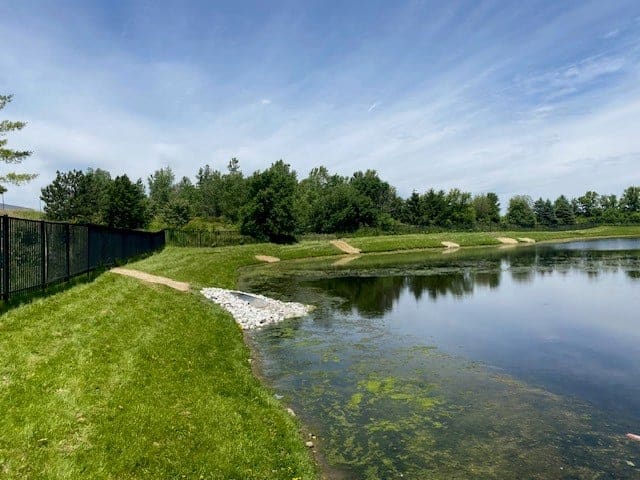
(2) Where there is no agreement in place, the owner must maintain the stormwater management system in a manner that ensures that the system performs as originally designed.
(c) Maintenance inspections of stormwater management systems. The following shall apply to all land regardless of the existence of an operation and maintenance agreement or other similar agreement:
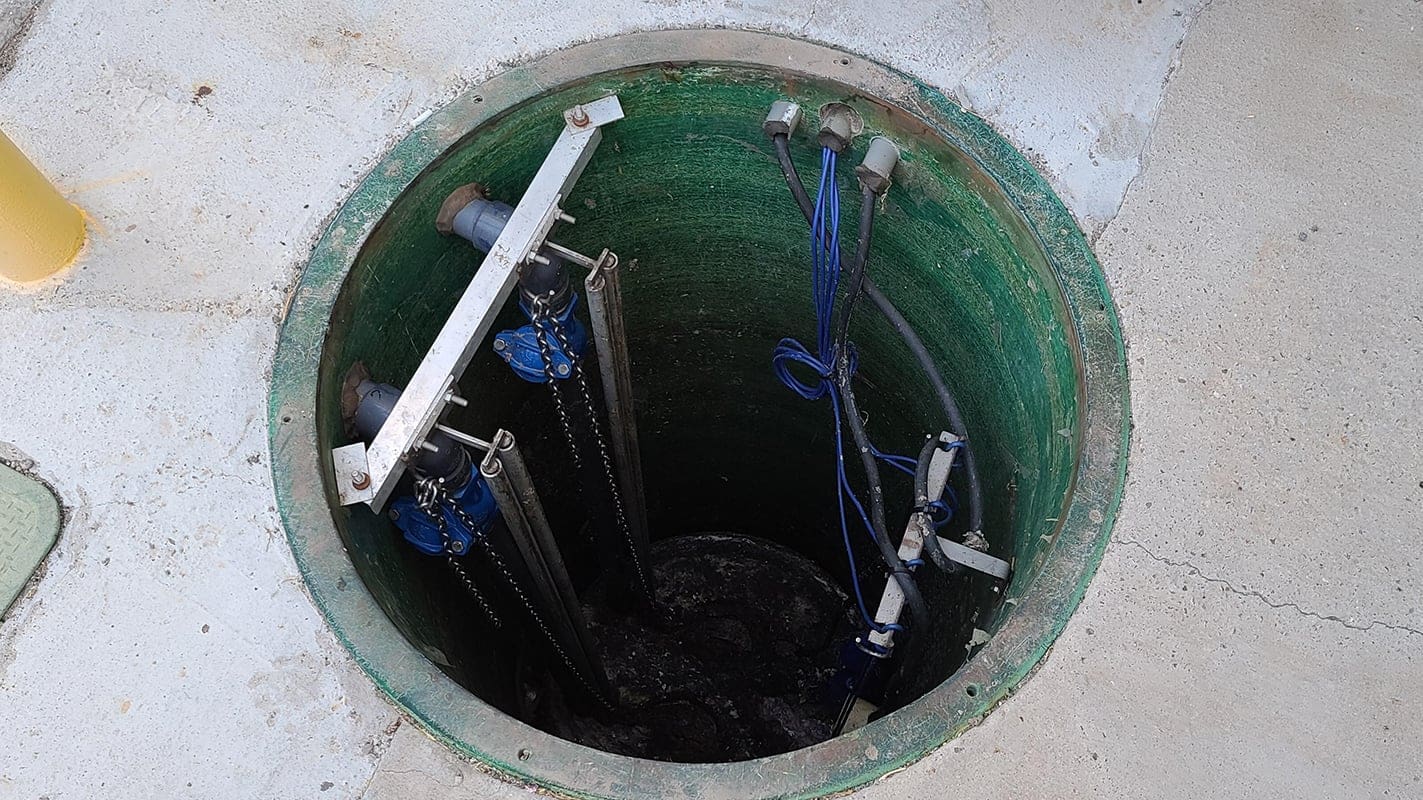
(1) Stormwater management systems must undergo ongoing inspections to document maintenance and repair needs and ensure compliance with the requirements of any agreement, any stormwater management plan and this article.
(2) A stormwater management system shall be inspected in accordance with any operation and maintenance agreement or other similar agreement. In the absence of an operation and maintenance agreement or similar agreement, or where such an agreement does not provide for periodic inspections, the stormwater management system must be inspected by the owner at least annually.
(3) In the event that the stormwater management system has not been maintained and/or becomes a danger to public safety or public health, the city shall notify the owner by registered or certified mail, or by delivery in person of a notice of violation. The notice shall specify the measures needed to bring the stormwater management system into compliance with this article and shall specify the time within which such measures shall be completed. Failure of the city to provide such notice shall not relieve the owner from performing proper maintenance and inspection of the stormwater management system. A failure by the owner to comply with the notice is a violation of this article.
(4) Inspection programs by the city may be established on any reasonable basis, including but not limited to routine inspections, random inspections, inspections based upon complaints or other notice of possible violations, and joint inspections with other agencies inspecting under environmental or safety laws. Inspections may include, but are not limited to, reviewing maintenance and repair records, sampling discharges, surface water, groundwater, and material or water in stormwater management systems, and evaluating the condition of those systems.
(d) Records of maintenance activities. Parties responsible for the operation and maintenance of a stormwater management system shall maintain records of all maintenance and repairs and provide copies to the department upon request.
(e) Failure to maintain. If an owner is in breach of subsections (a), (b), (c)(2) or (c)(3) of this section, the city, after 30 days written notice (except, that in the event the violation constitutes an immediate danger to public health or public safety, 24 hours notice shall be sufficient), may correct any violation by performing the necessary work to place the stormwater management system in proper working condition. The city may assess the owner of the system for the cost of repair work which shall be a lien on the property, and may be placed on the ad valorem tax bill for such property and collected in the ordinary manner for such taxes.
Sec. 74-521. – Enforcement; notice of violation.
(a) Notwithstanding any enforcement action authorized by other parts of this article, any action or inaction which violates the provisions of this article, the requirements of an approved stormwater management plan, a permit, or an operation and maintenance agreement or other similar agreement, may be subject to:
(1) the enforcement actions outlined in this section and section 522;
(2) injunctive or other equitable relief where any such action or inaction is continuous with respect to time; or
(3) a combination of (1) and (2) above.
(b) A violation of any provisions of this article may be subject to civil penalties, criminal penalties, and stop work orders as set out in section 74-522, whether or not a notice of violation is issued.
(c) Right-of-entry for inspection. The city may enter a property at reasonable times and in a reasonable manner for the purpose of inspection or abatement. This includes the right to enter a property when it has a reasonable basis to believe that a violation of this article is occurring or has occurred, or that entry is necessary for the abatement of a public nuisance or correction of a violation of this article. Refusing entry or access to any authorized representative or agent of the city who requests entry for the purposes of inspection or abatement, and who presents appropriate credentials, or obstructing, hampering or interfering with any such representative while in the process of carrying out his or her official duties, is a violation of this article.
(d) Any enforcement activities for violations of the provisions of this article which are also violations of chapter 74 Article II of the Code for land-disturbing activities shall be undertaken pursuant to the provisions of that article.
(e) Any enforcement activities for violations of the provisions of this which are also violations of chapter 158 of the Code for vegetation shall be undertaken pursuant to that chapter.
(f) Notice of violation. If the city determines that an applicant or owner has failed to comply with a permit, an approved stormwater management plan, operation and maintenance agreement or other similar agreement, or any provision of this article (whether or not other enforcement action is authorized by another part of this article), it shall issue a written notice of violation to such applicant or owner. Where a person is engaged in development without having first secured a permit, the notice of violation shall be served on the owner or person that is apparently in charge of the development being conducted on the site. The notice of violation shall contain:
(1) The name and address of the owner, the applicant or the person apparently in charge of the development being conducted on the site;
(2) The address or other description of the land upon which the violation is occurring;
(3) A statement specifying the nature of the violation;
(4) A description of the remedial measures necessary to bring the action or inaction into compliance with the permit, the stormwater management plan, this article or the Code and the date for the completion of such remedial action;
(5) A statement of the penalty or penalties that may be assessed against the person to whom the notice of violation is directed; and
(6) A statement that the determination of violation may be appealed to the municipal court by filing a written notice of appeal within 30 days after the date on which the notice of violation was issued (except, that in the event the violation constitutes an immediate danger to public health or public safety, or where a person is taking action without a required permit, such a notice of violation must be appealed within 24 hours of receiving the notice).
Sec. 74-522. – Penalties.
(a) Penalties. In the event the remedial measures described in the notice of violation have not been completed within the time provided in the notice of violation for appeal to the municipal court, any one or more of the following actions or penalties may be taken or assessed against the person to whom the notice of violation was directed.
(b) Notice. Upon expiration of the notice, the City of Atlanta may notify the person in violation of its intent to seek penalties and of any other enforcement to be taken under this section. Before taking any of the following actions or imposing any of the following penalties, the City of Atlanta shall first notify the owner or other responsible party in writing of its intended action, and shall provide not more than 72 hours (except, that in the event the violation constitutes an immediate danger to public health or public safety, or taking action without a required permit 24 hours’ notice shall be provided) to cure such violation. In the event the owner or other responsible party fails to cure such violation after such notice and cure period, the City of Atlanta may take any one or more of the following actions or impose any one or more of the following penalties:
(1) Stop work order. The City of Atlanta may issue a stop work order which shall be served on the owner or other responsible party. It shall stop all activities at the site except for the work required to remedy the violation or violations. The stop work order shall remain in effect until the owner or other responsible party has taken the remedial measures set forth in the notice of violation or has otherwise cured the violation or violations described therein.
(2) Withholding, suspension, or revocation of certificate of occupancy or certificate of completion. The city may refuse to issue, suspend, or revoke, a certificate of occupancy or certificate of completion, for the building or other improvements constructed or being constructed on the site until the owner or the applicant has taken the remedial measures set forth in the notice of violation or has otherwise cured the violations described therein. A suspended or revoked certificate of occupancy or certificate of completion may be reinstated after the owner or the applicant has taken the remedial measures set forth in the notice of violation or has otherwise cured the violations described therein.
(3) Suspension, revocation or modification of permit. the city may suspend, revoke or modify the permit authorizing the development. A suspended, revoked or modified permit may be reinstated after the owner or the applicant has taken the remedial measures set forth in the notice of violation or has otherwise cured the violations described therein. Suspension, revocation or modification of a permit shall not prohibit the owner or the applicant from taking the necessary remedial measures to cure the violations.
(4) Civil penalties. In the event the owner or other responsible party fails to take the remedial measures set forth in the notice of violation or otherwise fails to cure the violations described therein within the time provided in the notice of violation, or such greater period as the City of Atlanta shall deem appropriate after the City of Atlanta has taken one or more of the actions described above, the City of Atlanta may issue a citation for the violation of this Article and impose a penalty not to exceed $2,500.00 per violation, depending on the severity of the violation, for each day the violation remains unremedied after receipt of the notice of violation.
(5) Criminal penalties. For intentional and flagrant violations of this ordinance, the City of Atlanta may issue a citation to the owner or other responsible party, requiring such person to appear in municipal court to answer charges for such violation. Upon conviction, such person shall be punished by a fine not to exceed $1,000.00 or imprisonment for 60 days or both. Each act of violation and each day upon which any violation shall occur shall constitute a separate offense. Imposition of criminal penalties shall be a separate and distinct action from the imposition of civil penalties pursuant to subsection (4) of this section.
(6) Liability. Implementation of this section does not reduce liability under any other applicable state or federal law, rule, or requirement.
(c) Remedies not exclusive. The remedies listed in this Article are not exclusive of any other remedies available under any applicable federal, state or local law. Each remedy listed in this subsection may be sought and imposed for each day of violation and the Department of Watershed Management may seek cumulative remedies.
View State Page
Frequently Asked Questions
What is an inspection and maintenance agreement in Atlanta, and when do I need one?
Before Atlanta issues a permit for any land development requiring an ongoing-maintenance stormwater facility, the owner has to execute an inspection and maintenance agreement, then record it in the Fulton or DeKalb County deed records before the permit is issued. That agreement names the person or title responsible for inspection and maintenance, and it binds every future owner, so the obligation transfers automatically if the property changes hands.
Who owns a shared stormwater facility in an Atlanta subdivision or multifamily development?
It depends on whether a property owners’ association exists. If one is formed under Georgia’s Property Owners’ Association Act, the facility gets treated as common area, and the association’s bylaws have to include lien rights for maintenance costs, automatic membership for every lot owner, a fair assessment method, and a plan to transfer the facility fairly to all lot owners if the association ever dissolves. Without an association, ownership and cost-sharing fall to every successor in title across the development, split equitably among the lots.
How often does Atlanta require stormwater systems to be inspected?
The inspection schedule follows whatever the property’s operation and maintenance agreement specifies. If no agreement exists, or the one in place doesn’t set a periodic schedule, the owner has to inspect the system at least once a year. Records of every inspection and repair have to be kept and made available to the Department of Watershed Management on request, so an owner without documentation to show can face scrutiny even if the physical system looks fine.
What happens if an Atlanta stormwater system isn't maintained?
The city sends a notice of violation specifying the required corrective measures and a deadline, generally with a 30-day cure period before the city acts, or 24 hours if the condition endangers public health or safety. If the owner still doesn’t comply, the city can perform the repair itself and bill the owner, with that cost becoming a lien collectible the same way as unpaid property taxes.
What penalties can Atlanta impose for an unresolved stormwater violation?
Beyond a stop work order or a suspended certificate of occupancy or permit, civil penalties can run up to $2,500 per violation for each day it remains unremedied after notice. Intentional and flagrant violations can also bring criminal charges in municipal court, with fines up to $1,000, up to 60 days in jail, or both, and each day of violation treated as a separate offense. Civil and criminal penalties can be pursued independently of each other, so a serious violation can face both tracks at once.
The information on this page is provided for general informational purposes only and is not legal advice. Regulations change frequently — AQUALIS makes no warranty as to the accuracy or completeness of this content, and any reliance on it is at your own risk. Consult a qualified professional or your local regulatory authority to confirm requirements applicable to your specific property.