


Last Updated 7/28/2026
Excerpt from Drainage Criteria Manual
Section 8- Stormwater Management
8.1.0 – GENERAL
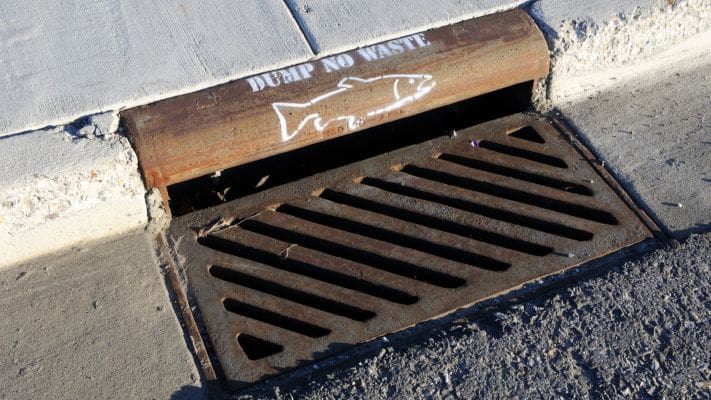
Stormwater Management (SWM) programs for the purpose of controlling increased urban runoff generated by development are a top priority in urban planning. More frequent flooding, increased rates and volumes of runoff, increased stream channel erosion and degradation, increased sedimentation and increased water pollution are all problems intensified by development. Stormwater control measures (SCMs) such as detention ponds, open channels, and storm drains (for a full list refer to DCM 1.2.4), have proven to significantly reduce downstream flooding, reduce sediment and pollutant loads, and provide debris removal which can benefit water quality.
The basic concept of SCM for peak rates of runoff is to provide for a temporary storage of stormwater runoff. Runoff is then released at a controlled rate which cannot exceed the capacities of the existing downstream drainage systems, or the predeveloped peak runoff rate of the site, whichever is less.
The solid lined hydrograph shown in Figure 8-1 in Appendix D of this manual represents a storm runoff event without SCM, while the dashed line hydrograph depicts the same event with SCM. The peak flow of the undetained hydrograph could exceed the capacity of the downstream conveyance system thereby cause surcharging and flooding problems. With the introduction of the SCM, the solid lined hydrograph is spread over a longer time period and its peak is reduced. The area between the two curves to the left of their intersection represents the volume of runoff which is temporarily stored or detained in the SCM.
The City of Austin approaches the control of excess flows through the application of both on-site/off-site and regional SWM detention facilities. Essentially, the distinction between the two approaches is that on-site or off-site is generally limited to site specific criteria, while regional incorporates a basin wide hydrologic analysis.
8.3.0 - STORMWATER MANAGEMENT PONDS
8.3.1 - General
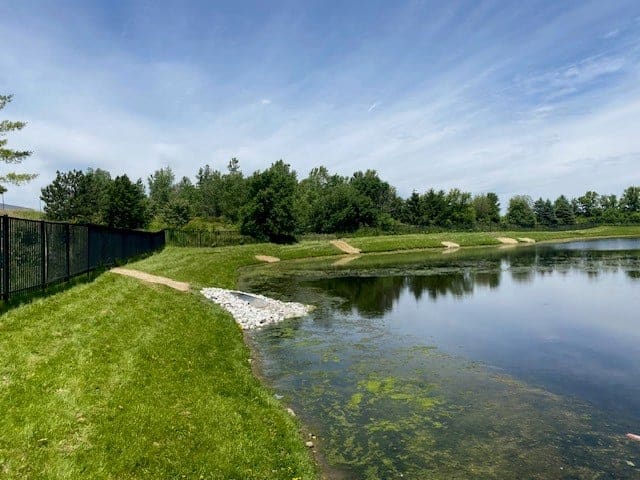
Stormwater Management (SWM) ponds may be of two basic types: On-site/off-site and regional. In general, on-site or off-site ponds are those which are located off-channel and provide stormwater management for a particular project or development. Regional ponds are designed to provide stormwater management in conjunction with other improvements on a watershed-wide basis. SWM ponds may be further classified as retention or detention ponds and may incorporate water quality stormwater control measures (SCMs) as defined in the Environmental Criteria Manual. The performance and safety criteria in this section apply to all ponds that provide management of peak rates of stormwater runoff regardless of type.
8.3.2 - Performance Criteria for SWM Ponds
A. Detention ponds shall be designed to reduce post-development peak rates of discharge to existing pre-development peak rates of discharge for the 2-, 10-, 25- and 100-year storm events at each point of discharge from the project or development site. For the post-development hydrologic design of the SWM pond, any off-site areas that drain to the pond shall be assumed to remain in the existing condition. If off-site flows are conveyed through the SWM pond, the SWM pond outlet structure must be designed to safely pass 100-year fully developed off-site flows in accordance with the Safety Criteria set forth in Section 8.3.3.
B. For design purposes, any pond with a drainage area larger than 64 acres shall be classified as a regional pond. Performance criteria for regional ponds shall be reviewed and approved by the Watershed Protection Department on a project-by-project basis. The determination shall be based on a preliminary engineering study prepared by a licensed engineer in the State of Texas.
C. Maximum retention or “draw-down” time for flood detention ponds shall not exceed 24 hours from the time of peak storage to the time of complete emptying of the pond, as determined by hydrograph routing or other calculations acceptable to the City. This requirement does not apply to facilities in which retention or “draw-down” time is required to be greater than 24 hours. However, only the portion of the volume within a water quality control available after 24 hours of drawdown time may be used or credited towards detention requirements.
View State Page
The information on this page is provided for general informational purposes only and is not legal advice. Regulations change frequently — AQUALIS makes no warranty as to the accuracy or completeness of this content, and any reliance on it is at your own risk. Consult a qualified professional or your local regulatory authority to confirm requirements applicable to your specific property.