

Last Updated 08/18/2026
Excerpts from Baton Rouge, Louisiana Stormwater Management Plan
“After completion of the site construction and prior to Final Occupancy of the development or building, the Developer/Owner agrees to provide a Schedule of Maintenance for the constructed Best Management Practices (BMPs) as recommended in the approved Water Quality Impact Study (WQIS) and/or Stormwater Management Plan (SMP). This Schedule of Maintenance shall be attached and recorded as part of this Maintenance Covenant.”
In order to comply with Federal and State regulations for urban storm water, a Stormwater Management Plan (SMP) will be required for all development and redevelopment projects that require demolition or complete removal of existing structures or impervious surfaces at a site and replacement with new development. Maintenance activities such as top-layer grinding and repaving are not considered redevelopment. Interior remodeling projects are also not considered to be redevelopment.
The Stormwater Management Plan shall include:
- Location: Map of location of subject property and adjacent development and infrastructure. Recent aerial photo (Google Maps, etc.) indicating site location.
- Existing Conditions: Description and map of existing site conditions, including land cover, contours, soil types, and estimated pollutant load. Indicate all drainage systems the site drains to.
- Proposed Development: Description and site plan of the proposed development, including land cover, contours, empirically expected pollutant load, proposed drainage ways, and stormwater Best Management Practices (BMPs). SMP shall recommend specific on-site drainage improvements to provide adequate capacity to manage the first inch (1”) of a ten (10) year storm event on the development site.
- Plan Implementation: Description of the specific proposed drainage ways and stormwater BMPs and how they meet the requirements for drainage and water quality as described in Sections 15.14, 15.16 and Appendix K of the East Baton Rouge Unified Development Code.
- Maintenance: Description and schedule of how the proposed drainage ways and stormwater BMPs will be maintained over time. For all building permits needing a Stormwater Management Plan, the following documents will be required prior to granting of Final Occupancy:
- Stormwater BMP Maintenance Covenant: A document signed by the property owner guaranteeing that all constructed stormwater BMPs will be continually maintained according to the recorded BMP maintenance description and schedule. The Maintenance Covenant and maintenance description/schedule must be filed with the East Baton Rouge Parish Clerk of Court prior to submittal to DPW.
- Design Professional Certification: A document signed and sealed by the professional of record who prepared the Stormwater Management Plan for the project, certifying that all components of the SMP were installed according to the approved building permit plans.
Stormwater BMP Practices for East Baton Rouge Parish
Site Management and Maintenance
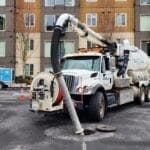
The staff who will maintain and repair the development, once construction is completed and the the property is in use, are key players in stormwater management. They must ensure the stormwater treatment train continues to function in improving water quality, and must practice good housekeeping on the property to prevent the introduction of new pollution sources. The most important step is to prepare and implement a maintenance program. As part of the design of BMPs, the landscape architect should prepare a maintenance manual to assist staff in properly caring for the individual BMPs and the entire stormwater treatment train. The maintenance manual should include specific information on when and how to maintain and replace vegetation, clean pervious paving, and prevent stormwater pollution when repairing and maintaining other parts of the development.
Advised BMP Maintenance by type:
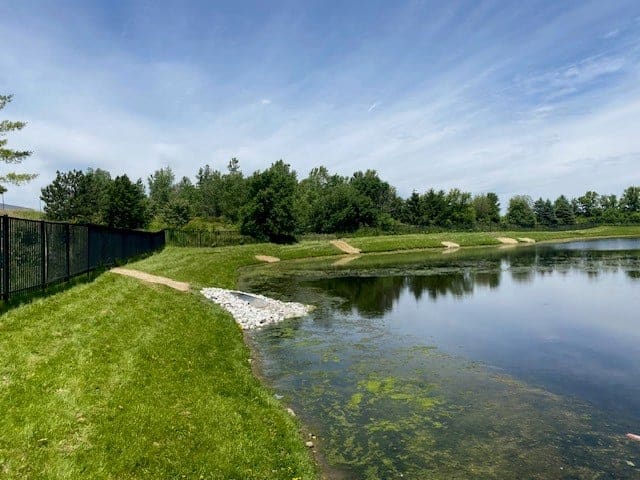
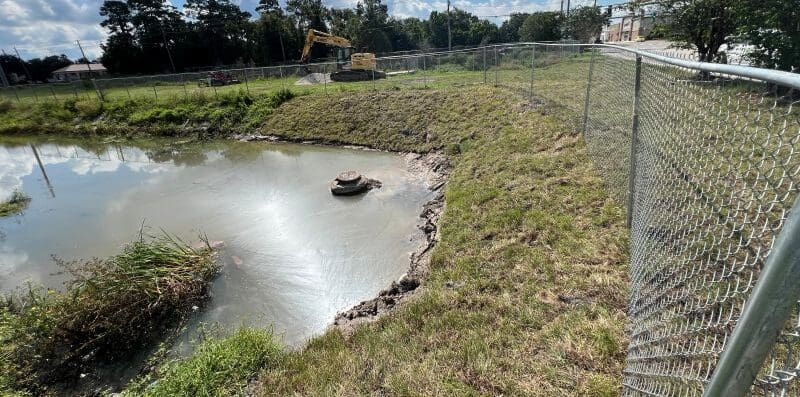
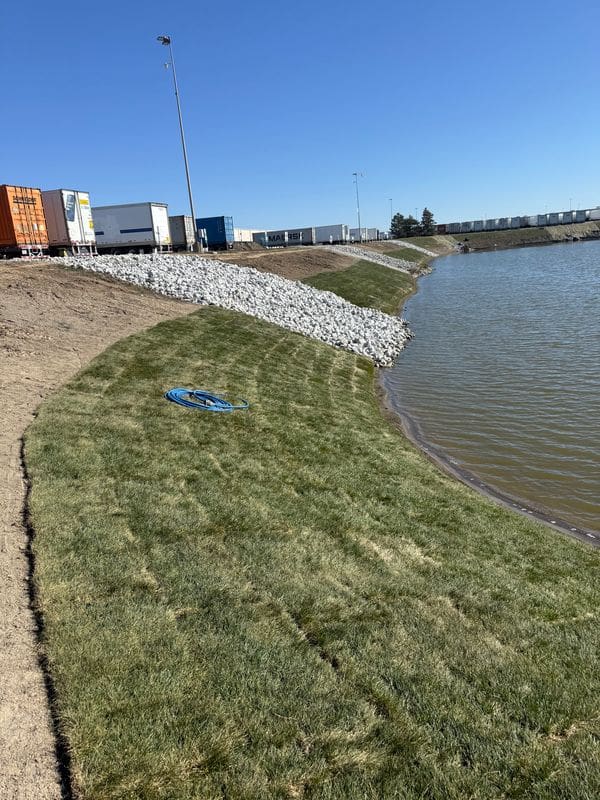
- Dry/Wet Pond: Twice annually, check for erosion of banks, and ensure conveyance is operational. Annually, check for sediment accumulation in pond and forebay, and clear inlet and outlet of debris. As needed/continually, manage pesticides and fertilizer and remove any litter or debris. Every 5-7 years remove sediment from forebay.
- Pervious Paving: Twice annually, use a street sweeper to vacuum.
- Vegetated BMPs: Annually (end of Autumn) remove invasive species. Twice annually check for plant pests and diseases and ensure conveyance and overflow outlets are clear and operational.
View State Page
Frequently Asked Questions
Which projects in Baton Rouge require a Stormwater Management Plan?
Any development or redevelopment project that requires demolition or complete removal of existing structures or impervious surfaces, followed by new construction, needs a Stormwater Management Plan. Top-layer grinding, repaving, and interior remodeling projects don’t count as redevelopment and fall outside this requirement.
What has to be included in a Stormwater Management Plan for Baton Rouge?
The plan must show existing site conditions (land cover, contours, soil types, estimated pollutant load, and connected drainage systems), the proposed development’s drainage design, and how it meets the requirements in the East Baton Rouge Unified Development Code. Drainage improvements must be sized to manage the first inch of a 10-year storm event on-site. The plan also has to include a maintenance description and schedule for the proposed BMPs.
What is a Stormwater BMP Maintenance Covenant, and when is it required in Baton Rouge?
It’s a signed document in which the property owner guarantees that all constructed stormwater BMPs will be maintained according to the recorded schedule. The covenant, along with the maintenance description and schedule, must be filed with the East Baton Rouge Parish Clerk of Court before submission to the Department of Public Works. Properties can’t receive final occupancy on a permit requiring a Stormwater Management Plan without it.
How often do stormwater BMPs need maintenance in East Baton Rouge Parish?
Maintenance frequency depends on the BMP type. Dry and wet ponds need bank erosion checks twice a year and sediment and debris clearing at the inlet and outlet annually, with full forebay sediment removal every five to seven years. Pervious paving should be vacuumed with a street sweeper twice a year. Vegetated BMPs need invasive species removal once a year and biannual checks for plant pests, disease, and clear conveyance and overflow outlets.
Who is responsible for maintaining stormwater BMPs after construction is complete in Baton Rouge?
Property staff who manage and maintain the site day to day play a central role. They’re responsible for keeping the stormwater treatment train functioning to protect water quality and for practicing good housekeeping to avoid introducing new pollution sources. A maintenance manual, prepared as part of the original BMP design, should guide staff on vegetation care, pervious paving cleaning, and pollution prevention during other site upkeep.
The information on this page is provided for general informational purposes only and is not legal advice. Regulations change frequently — AQUALIS makes no warranty as to the accuracy or completeness of this content, and any reliance on it is at your own risk. Consult a qualified professional or your local regulatory authority to confirm requirements applicable to your specific property.