
Last Updated 07/20/2026
Excerpt from City of Bellingham Code of Ordinances
Title 15 Water and Sewers; Chapter 15.42 Stormwater Management
Maintenance, inspection and enforcement
A. General Requirements.
1. Maintenance Required. All stormwater facilities shall be maintained in accordance with this chapter and the Stormwater Management Manual. Systematic, routine preventive maintenance is preferred.
2. Minimum Standards. The following are the minimum standards for the maintenance of stormwater facilities:
a. Facilities shall be inspected annually and cleared of debris, sediment and vegetation when they affect the functioning and/or design capacity of the facility.
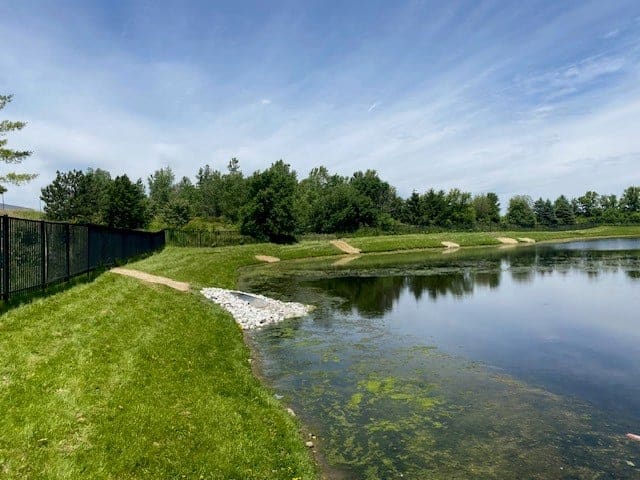
b. Grassy swales and other biofilters shall be inspected monthly and mowed or replanted as necessary. Clippings are to be removed and properly disposed of.
c. Maintenance of stormwater facilities including LID facilities, which may include, but are not limited to, bioretention, dispersion, and infiltration facilities, amended soils, pervious systems, vegetated roofs, or roof water harvesting, shall be maintained consistent with conditions of approval, and recorded agreements against subject properties, and city standards as enacted at the time of approval.
d. Where lack of maintenance is causing or contributing to a water quality problem or violation, immediate action shall be taken by the subject property owner to correct the problem.
3. Compliance. Property owners are responsible for the maintenance, operation and repair of stormwater drainage systems and BMPs unless the city has accepted maintenance responsibility in writing and a written easement exists granting the city an adequate and sufficient right, in the city’s discretion, to enter the property and conduct these activities. Property owners shall maintain, operate and repair the facilities in compliance with the requirements of this chapter and the DOE Manual (current edition).
B. Administration. The director of public works shall develop and administer an inspection program for stormwater facilities in Bellingham.
C. Inspection Program.
1. Whenever implementing the provisions of the inspection program or whenever there is cause to believe that a violation of this chapter has been or is being committed, the inspector is authorized to inspect stormwater drainage systems within Bellingham to determine compliance with the provisions of this chapter.
2. Development Inspection. All new development and redevelopment shall provide for and install adequate runoff controls per an approved SSP or SWPPP. Failure to provide such required runoff controls prior to or simultaneously with the commencement of land disturbance activities and failure to schedule an inspection for the runoff controls shall result in an order to stop all work upon the site for a minimum of three working days; provided, that such work that is necessary to bring the site into compliance with this code, permits, or an approved SSP or SWPPP shall be allowed to continue.
D. Enforcement.
1. Orders. The director shall have the authority to issue to an owner or person an order to install, maintain or repair a component of a stormwater facility or BMP to bring it in compliance with this chapter, the Ecology Manual (current edition), and/or city regulations. The order shall include:
a. A description of the specific nature, extent and time of the violation and the damage or potential damage that reasonably might occur;
b. A notice that the violation or the potential violation cease and desist and, in appropriate cases, the specific corrective actions to be taken; and
c. A reasonable time to comply, depending on the circumstances.
2. Civil Penalty. In addition to any other remedy or sanction available, a person who fails to comply with a final order issued by the director or city council pursuant to this chapter, or who fails to conform to the terms of an approval issued, shall be subject to a civil penalty and/or a stop work order.
a. Amount of Penalty. The penalty shall be not less than $100.00 or exceed $5,000 for each violation. Each day of continued violation or repeated violation shall constitute a separate violation.
b. Aiding or Abetting. Any person who, through an act of commission or omission, aids or abets in the violation shall be considered to have committed a violation for the purposes of the civil penalty.
c. Notice of Penalty. A civil penalty shall be imposed by the director, by a notice in writing, which shall be served either by certified mail with return receipt requested or by personal service, to the person incurring the same. The notice shall describe the violation, the date(s) of violation, and shall order the acts constituting the violation to cease and desist, and, in appropriate cases, require necessary corrective action within a specific time.
d. Application for Remission or Mitigation. Any person incurring a penalty may apply in writing within 10 days of receipt of the penalty to the director of public works (or designee) for remission or mitigation of such penalty. Upon receipt of the application, the director of public works may remit or mitigate the penalty only upon a demonstration of extraordinary circumstances, such as the presence of information or factors not considered in setting the original penalty. The director’s decision may be appealed to the hearing examiner within 10 days of the decision.
e. Appeal of Civil Penalty. Persons incurring a penalty imposed by the director may appeal in writing within 10 days of the receipt of the notice of penalty to the hearing examiner. The hearing examiner shall hold a de novo hearing to consider the appeal and may affirm, modify or reverse the penalty. The decision of the hearing examiner may be appealed to superior court within 10 days of the date of the hearing examiner’s decision.
3. Penalties Due. Penalties imposed under this section shall become due and payable 10 days after notice of the penalty is mailed or delivered, whichever occurs first, unless application for remission or mitigation is made or an appeal is filed. Whenever an application for remission or mitigation is made or an appeal to the hearing examiner filed (including payment of all applicable hearing examiner fees), penalties shall become due and payable 10 days after the date of the decision regarding the remission or payable after all review proceedings and a final decision has been issued confirming all or part of the penalty. If the amount of a penalty owed is not paid within the time specified in this section, the city may take actions necessary to recover such penalty.
4. Penalty Recovered. Penalties recovered shall be paid to a fund dedicated to enforcement and/or enhancement of the stormwater management program.
E. City Action. In addition to any other remedies the city may have under this chapter or at law or in equity, nothing in this chapter or elsewhere within this code shall prevent the city from effecting repairs or maintenance to stormwater facilities if the director of public works (or designee) determines that imminent danger to public safety, health or welfare, or public or private property, or critical areas or habitat is likely as a result of the actions or inaction of the property owner(s). If the city affects repairs or maintenance, the cost will be charged to the property owner(s) together with any penalties incurred under this chapter and any costs of collection (including attorneys’ fees), all of which shall be considered a lien against the subject property and also collectable as a personal debt against the property owner(s).
Infractions – Penalty
A violation of any provision of this chapter, other than as set forth in BMC 15.42.110, shall be considered an infraction, punishable by a stop work order and/or a fine of up to $500.00. Each day of continued violation or repeated violation shall constitute a separate violation. This penalty shall be in addition to any other remedy or sanction provided in this chapter or by other law or in equity.
The court may order, in addition to any fine imposed, that a person found to have committed an infraction shall make restitution to any person damaged by the violation.
Any violation of this chapter committed intentionally by any person may be a misdemeanor.
Each misdemeanor shall be punishable by a fine not to exceed $1,000. This penalty shall be in addition to any other remedy or sanction provided in this chapter or by other law or in equity.
The court may order, in addition to any fine imposed, that a person found to have committed a misdemeanor shall make restitution to any person damaged by the violation.
Misdemeanors – Penalty
Any violation of this chapter which results in damage to public or private property, other than the property of the violator, in an amount greater than $250.00, or which results in any physical injury to a person, shall be a misdemeanor. For purposes of this section, “damage” shall include cost to restore as well as loss of value.
Each second or subsequent violation of this chapter by any person within a period of three years may be a misdemeanor.
Any violation of this chapter committed intentionally by any person may be a misdemeanor.
Each misdemeanor shall be punishable by a fine not to exceed $1,000. This penalty shall be in addition to any other remedy or sanction provided in this chapter or by other law or in equity.
The court may order, in addition to any fine imposed, that a person found to have committed a misdemeanor shall make restitution to any person damaged by the violation.
View State Page
Frequently Asked Questions
What is stormwater compliance in the City of Bellingham?
Stormwater compliance in Bellingham means following the City’s stormwater ordinance, which sets minimum requirements for managing runoff on your property. The City is the permitting authority for all land disturbing activities and requires a stormwater management plan before any construction permit is issued. Once construction is complete, property owners are responsible for maintaining all on-site stormwater facilities and open space areas required by their approved plan. The City also operates under the NPDES program and can inspect properties and issue a Notice of Violation (NOV) for any deficiency found on site.
Who is responsible for stormwater compliance in Bellingham?
The property owner is responsible for maintaining, operating, and repairing all stormwater drainage systems and best management practices (BMPs) on their property. This remains the owner’s obligation unless the City has accepted maintenance responsibility in writing and a formal easement exists. If neither of those conditions is met, compliance falls on you as the property owner, regardless of who occupies the site. AQUALIS can manage your stormwater compliance obligations on your behalf.
How often do I need to have my stormwater system inspected in Bellingham?
Bellingham’s ordinance sets specific minimums depending on the type of facility.
All stormwater facilities must be inspected at least once per year and cleared of debris, sediment, and vegetation whenever those conditions affect performance.
Grassy swales and biofilters must be inspected monthly and mowed or replanted as needed. Clippings must be removed and properly disposed of.
LID facilities such as bioretention areas, infiltration systems, pervious pavement, vegetated roofs, and amended soils must be maintained consistent with the conditions of approval and any recorded agreements on the property.
AQUALIS recommends staying ahead of the minimum schedule to avoid issues before a City inspection occurs.
Why does stormwater maintenance matter for Bellingham property owners?
Bellingham’s ordinance includes a clear escalation path from a maintenance lapse to financial and legal consequences.
Fines up to $5,000 per day. Each day a violation continues is treated as a separate offense. Civil penalties range from $100 to $5,000 per violation.
Misdemeanor charges. Violations that cause more than $250 in damage to public or private property, cause physical injury, or are committed intentionally can be prosecuted as misdemeanors, with fines up to $1,000 per violation.
City repairs billed to you. If a maintenance failure poses an imminent danger to public safety or property, the City can step in, make the repairs, and charge the full cost to the property owner, including penalties and legal fees. Those costs become a lien against the property.
What are the most common stormwater compliance failures in Bellingham?
Based on AQUALIS’s experience and Bellingham’s ordinance requirements, these are the issues we see most often.
Annual inspections not completed. All stormwater facilities require a documented annual inspection. Many property owners skip this or do not keep records, leaving them with no way to demonstrate compliance if the City asks.
Grassy swales and biofilters not maintained monthly. The monthly inspection and mowing requirement for biofilters catches many owners off guard. Overgrown or degraded swales are among the most common findings during City inspections.
LID facilities not maintained per approval conditions. Bioretention areas, pervious pavement, and other low impact development features have specific maintenance conditions tied to their original approval. These are frequently overlooked, especially after a property changes hands.
Starting land disturbance without approved runoff controls. Failing to have runoff controls in place before beginning any land disturbing activity results in an automatic stop work order for a minimum of three working days.
Missing maintenance records. The City can inspect at any time. Properties without documented maintenance history cannot demonstrate compliance even if the physical system is in good shape.
How do I know if my Bellingham stormwater system is at risk?
Watch for these signs that your system may need attention.
Water quality issues. Bellingham’s ordinance requires immediate action from the property owner if a lack of maintenance is causing or contributing to a water quality problem. If you notice discolored or murky discharge from your drainage system, do not wait for a City inspection.
Overgrown or dead vegetation. Swales and biofilters that have not been mowed or replanted are a direct compliance gap under Bellingham’s monthly maintenance requirement.
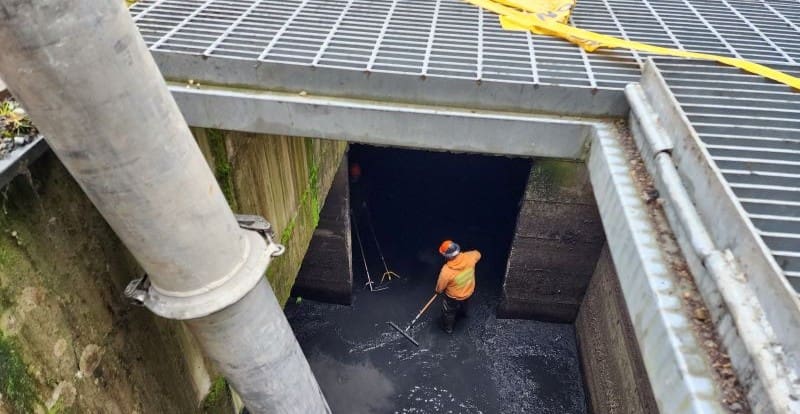
Sediment or debris buildup. Visible sediment in catch basins, inlets, or detention areas that is affecting the system’s capacity needs to be cleared.
No maintenance records on file. If you cannot document that annual inspections have been completed, you are exposed to enforcement action regardless of the physical condition of your system.
Recent property purchase. LID and stormwater maintenance conditions are recorded against the property and transfer with ownership. If you recently bought a property and are unsure what maintenance obligations came with it, AQUALIS can review the approval conditions and current system condition for you.
The information on this page is provided for general informational purposes only and is not legal advice. Regulations change frequently — AQUALIS makes no warranty as to the accuracy or completeness of this content, and any reliance on it is at your own risk. Consult a qualified professional or your local regulatory authority to confirm requirements applicable to your specific property.