

Last Updated 08/24/2026
EXCERPT- Biloxi Code of Ordinances, June 2020
Chapter 16.5 – STORMWATER MANAGEMENT ORDINANCE
Sec. 16.5-5. – Installation of required BMPs prior to land disturbance activities.
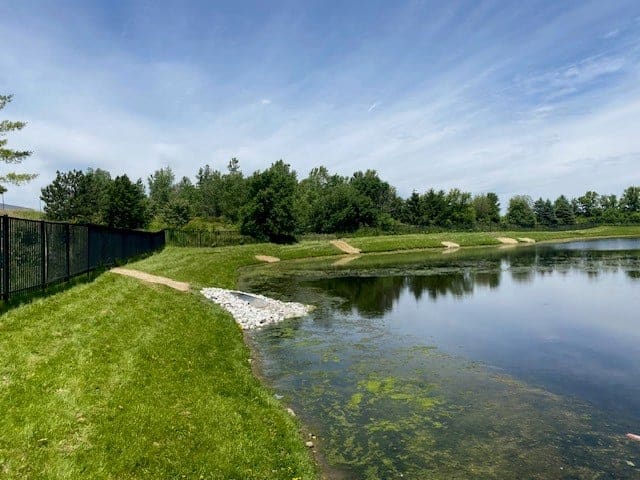
(a.) Installation of Best Management Practices, which address stormwater runoff, shall be required for all projects involving land disturbance activities within the City of Biloxi, except those identified in section 16.5-3, exemptions and waivers, of this chapter.
(1) Utilization of pre-construction BMPs is required prior to the commencement of demolition or development/redevelopment activities;
(2) Utilization of construction BMPs are required throughout demolition or development/redevelopment until such time as a certificate of development compliance or certificate of occupancy, as applicable, is issued; and
(3) Post-construction BMPs are required to be installed and maintained until such time as either title transfers or the approved use of the subject property changes. A new SWPPP must be submitted by the new owner and any time there is a change in use of the property.
(b) BMP selection is site specific, dependent upon site conditions and proposed activities, thus each project’s MDEQ- or city-approved SWPPP will identify appropriate pre-construction, construction and post-construction BMPs that will be subject to ongoing inspections by the city.
(c) The Erosion Control, Sediment Control and Stormwater Management on Constructions Sites and Urban Areas, prepared by the Mississippi Department of Environmental Quality, the Mississippi Soil and Water Conservation Commission and the USDA Soil Conservation Service, identifies BMPs acceptable to the City of Biloxi and related standards for the prevention, treatment and control of nonpoint sources (NPS). This manual is available for review in the engineering division of the public works department and online at biloxi.ms.us .
(d) Acceptable methods for accomplishing the installation and maintenance of site specific BMPs is provided in detail in the above-referenced planning and design manual.
Sec. 16.5-8. – Performance guarantees and maintenance agreements.
(a.) Stormwater management practice/BMP performance guarantees.
(1) General. In accordance with this chapter, section 23-7-9, and other applicable sections of the Biloxi Code of Ordinances, a performance guarantee for installation of stormwater management practices shall be required prior to issuance of a certificate of zoning compliance to insure that pre-construction, construction and post-construction BMPs are installed as required by the approved SWPPP.
(b) Maintenance agreements, maintenance easements.
(1) General.
a. All post-construction stormwater treatment practices shall have an enforceable maintenance agreement with the City of Biloxi to:
1. Ensure against defects in workmanship or materials in providing stormwater management practice improvements required as part of an approved SWPPP;
2. Ensure the SWPPP-required stormwater management practices function as designed; and
3. Ensure routine maintenance of BMPs is performed in a timely basis.
b. The maintenance agreement will include any and all maintenance easements required to access and inspect the stormwater treatment practices and to perform routine maintenance as necessary. In addition, a legally binding covenant specifying the parties responsible for the proper maintenance of the BMPs shall be secured prior to issuance of any permits for land disturbance activities.
c. Information detailing additional information, as well as the format, of the required maintenance agreement is provided in the administrative manual. Provisions for the periodic review and evaluation of and improvement to the effectiveness of maintenance activities shall be identified in the agreement.
d. The maintenance agreement shall include a statement of acknowledgement by owner that if the terms are not upheld to the city’s satisfaction, the city has the right to perform, or have performed, such repair and maintenance services as deemed necessary at a cost to be paid by the owner, as further detailed in subsection (2)e. failure to maintain practices, following.
e. The maintenance agreement shall be submitted to the engineering division for approval.
Sec. 16.5-9. – Installation, maintenance, operation and inspection.
(b) To ensure the proper installation, maintenance and operation of temporary and permanent BMPs by the owner, the city shall conduct on-site inspections and shall review applicable reports and records on a periodic basis, identified more specifically in the administrative manual, throughout all stages of development.
(2) Post-construction.
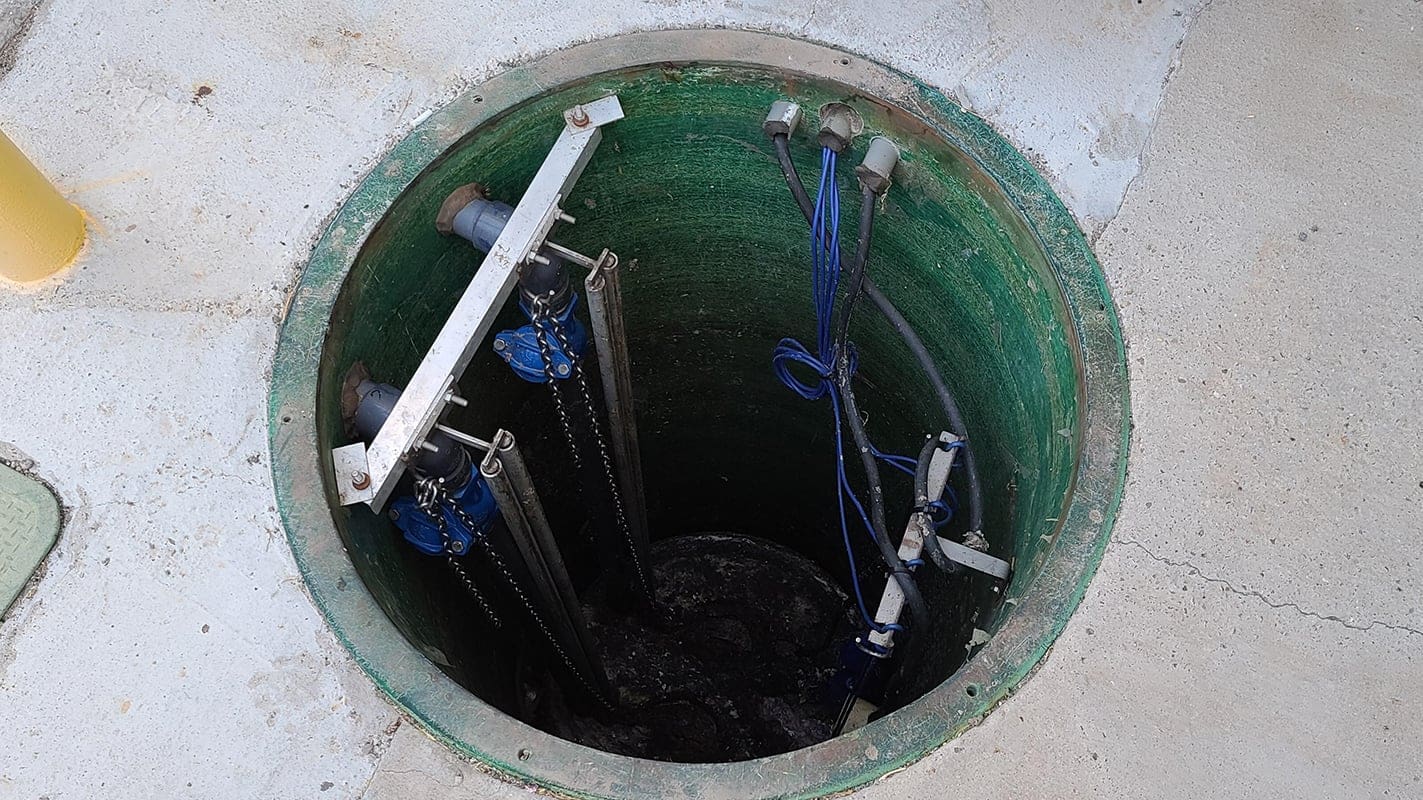
a. Post-construction, the owner shall perform or cause to be performed preventive maintenance of all completed stormwater management practices to ensure proper functioning.
b. The city shall ensure preventive maintenance through inspection of all stormwater management systems within its jurisdiction. City inspection shall occur during the first year of operation and at least once every three years subsequent to initial post-construction inspection.
c. Inspection reports shall be maintained by the community development department on all stormwater management systems and shall include the following.
1. The date of inspection;
2. Name of inspector;
3. The condition of permanent post-construction BMPs;
4. Any other item that could affect the proper function of the stormwater management system; and
5. A description of needed maintenance.
Sec. 16.5-13. – Monitoring of discharges, access and inspection.
(a) The director of community development and his designated representatives shall be permitted to enter and inspect properties and facilities subject to regulation under this chapter at reasonable times and as often as may be necessary to determine compliance with this chapter. If a discharger has security measures in force, which require proper identification and clearance before entry into its premises, the discharger shall make the necessary arrangements to allow access to representatives of the city
(f) Unreasonable delays in allowing the city or other authorized enforcement agency access to a permitted property is a violation of this chapter.
(g) If the city or other authorized enforcement agency has been refused access to any part of the premises from which stormwater is discharged, and he/she is able to demonstrate probable cause to believe that there may be a violation of this chapter, or that there is a need to inspect and/or sample as part of a routine inspection and sampling program designed to verify compliance with this chapter or any order issued hereunder, or to protect the overall public health, safety, environment and welfare of the community, then the city may seek issuance of a search warrant from any court of competent jurisdiction.
Sec. 16.5-16. – Notification of spills.
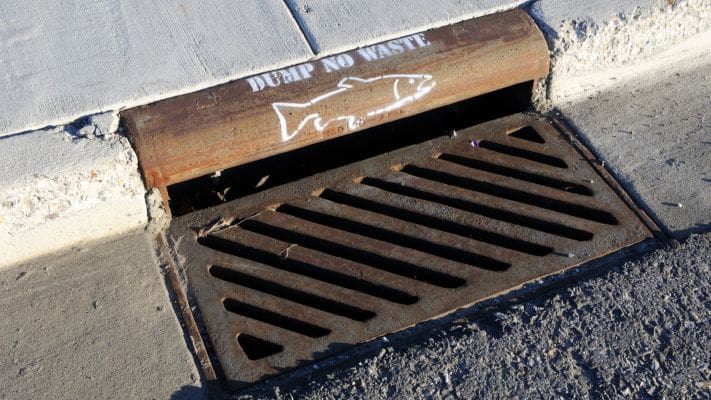
Notwithstanding other requirements of law, as soon as any person responsible for a facility or operation, or responsible for emergency response for a facility or operation has information of any known or suspected release of materials from that facility or operation that are resulting or may result in illegal discharges or pollutants discharging into stormwater, the city stormwater drainage system, state or U.S. waters, said person shall take all necessary steps to ensure the discovery, containment, and cleanup of such release.
Sec. 16.5-18. – Notice of violations.
Any person who violates or continues to violate any requirements of this chapter may be subject to enforcement actions outlined in this section or may be restrained by injunction or otherwise restricted in a manner provided by law. Whenever the city finds a violation of this chapter has occurred, the director of community development may order compliance by written notice of violation.
(2) Such notice may require:
a. The performance of monitoring, analyses and reporting;
b. The elimination of illicit connections or discharges;
c. The violating discharges, practices, or operations shall cease and desist. Depending upon the severity of the violations, to be determined by the city engineer, offending person(s) may be given as little as 24 hours to clean up sediments, pollutants, etc., and an additional 24 hours in which to put stormwater controls in place. Otherwise, a stop work order may be issued;
d. The abatement or remediation of stormwater pollution or contamination hazards and the restoration of any affected property; and
e. The implementation of source control, pollution prevention practices, or treatment BMPs.
Sec. 16.5-19. – Penalties and prosecution.
(a) Civil. In the event the alleged violator fails to take the remedial measures set forth in the notice of violation or otherwise fails to cure the violations described therein the time limit specified after the city has taken one or more of the actions described above, the city may seek any legal or equitable remedy available under the law. The city may recover any and all attorneys’ fees, court costs, and any other expenses associated with enforcement of this chapter, including sampling and monitoring expenses.
(b) Criminal.
(1) Violations of this chapter shall be deemed a misdemeanor and any person who has violated or continues to violate this chapter shall be guilty of a misdemeanor and subject to criminal prosecution to the fullest extent of the law.
(2) The city through its notice of violation shall notify the alleged violator to appear before the Community Court for the City of Biloxi, Mississippi, and a date and time certain to answer charges for such violation. Upon conviction, such person shall be punished by a fine as provided in section 1-1-8 of this Code of Ordinances. Each violation and each day upon which any violation shall continue, will constitute a separate offense.
Sec. 16.5-27. – Design storm frequency.
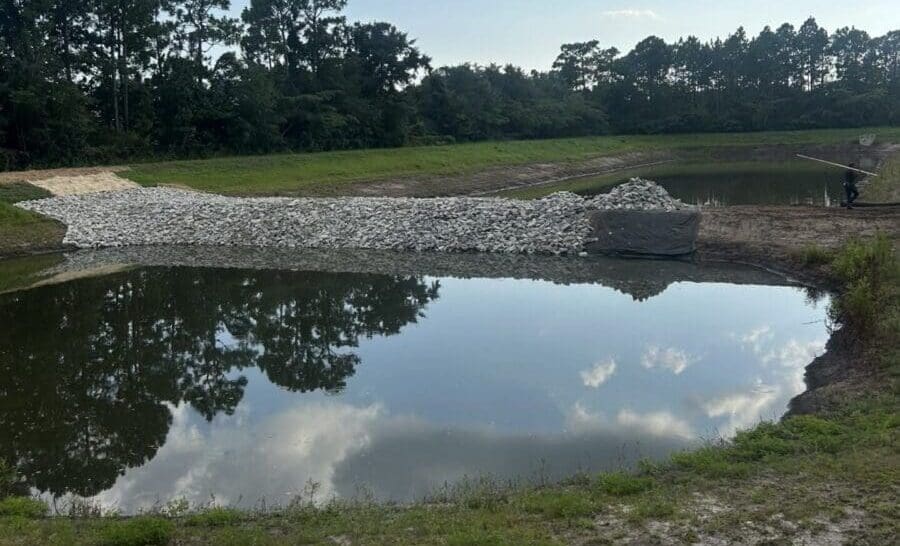
(a) The minimum design frequency for drainage facilities and structures shall be a 100-year, 24-hour storm occurrence. Drainage calculations shall be submitted to the engineering division evaluating stormwater runoff pre- and post- development. Post-development peak stormwater runoff from a 100-year, 24-hour storm event shall not exceed the same storm event pre-construction. At a minimum the first one-inch of runoff from the 100-year, 24-hour storm event shall be detained onsite for water quality. Residential single family homes are exempt from this requirement.
View State Page
Frequently Asked Questions
What stormwater regulations apply to properties in Biloxi?
Biloxi’s stormwater program is governed by Chapter 16.5 of the city’s Code of Ordinances, which complies with the National Pollutant Discharge Elimination System (NPDES) through the city’s Municipal Separate Storm Sewer System (MS4) permit. Biloxi developed its stormwater plan jointly with D’Iberville, Gulfport, Long Beach, Pass Christian and Harrison County, so property owners operating across these jurisdictions will see similar underlying standards.
What Best Management Practices (BMPs) does my property need, and when?
Biloxi requires BMPs at three distinct stages. Pre-construction BMPs must be in place before demolition or development begins. Construction BMPs stay active throughout the project until a certificate of development compliance or occupancy is issued. Post-construction BMPs then need to be installed and maintained continuously until the property changes ownership or use, at which point the new owner has to submit a fresh Stormwater Pollution Prevention Plan (SWPPP). This means stormwater compliance doesn’t end when construction wraps up. It follows the property through its life cycle.
How often does the city inspect stormwater systems after construction is complete?
Biloxi conducts a post-construction inspection during the first year of operation, then follows up at least once every three years after that. Inspectors document the date, their name, the condition of the permanent BMPs, and a description of any maintenance needed, and these reports are kept on file by the community development department. Knowing this cadence in advance can help property owners plan maintenance windows before an inspection is due, rather than reacting after a deficiency is flagged.
Do I need a maintenance agreement for stormwater facilities on my property?
Yes. Any post-construction stormwater treatment practice requires an enforceable maintenance agreement with the city, covering defects in workmanship, ongoing function of the practices as designed, and timely routine maintenance. The agreement has to include any maintenance easements the city needs to access and inspect the facilities, and it must be secured before the city issues any land disturbance permits. Property owners also acknowledge in the agreement that if maintenance isn’t kept up to the city’s standard, Biloxi can perform the work itself and bill the owner for the cost.
What happens if I report a spill or suspected discharge issue?
Under Section 16.5-16, anyone responsible for a facility that has a known or suspected release resulting in illegal discharge must take immediate steps to discover, contain and clean up the release. The ordinance doesn’t specify a fixed notification window the way some neighboring jurisdictions do, so it’s worth confirming current reporting expectations directly with the city’s community development department.
How quickly do I need to respond to a stormwater violation?
Response windows can be short. Depending on the severity of the violation, as determined by the city engineer, a violator may be given as little as 24 hours to clean up sediment or pollutants, plus another 24 hours to put stormwater controls back in place. If the issue isn’t addressed, the city can issue a stop work order. Given how tight these windows are, having a response plan ready before an issue arises is far more practical than scrambling after a notice arrives.
What penalties can Biloxi impose for stormwater violations?
Violations are treated as misdemeanors, and the city can pursue both civil and criminal remedies. On the civil side, Biloxi can recover attorneys’ fees, court costs and enforcement expenses like sampling and monitoring if a violator doesn’t take the remedial steps outlined in a notice of violation. On the criminal side, violators can be summoned to appear before Biloxi’s Community Court, and each day a violation continues counts as a separate offense.
What design standard applies to drainage facilities on new development?
Biloxi requires drainage facilities to be designed for a 100-year, 24-hour storm event, and post-development peak runoff from that storm can’t exceed pre-construction levels. At minimum, the first inch of runoff from that storm event must be detained on-site for water quality purposes, though single-family residential homes are exempt from this particular requirement.
Where can I find Biloxi's full stormwater ordinance and design standards?
The complete ordinance is available through Biloxi’s Municode page, and the city maintains a dedicated Stormwater Management page alongside its Land Development Ordinance. For state-level context, the Mississippi Stormwater Design Guidance Manual covers the BMP standards referenced throughout Biloxi’s code.
The information on this page is provided for general informational purposes only and is not legal advice. Regulations change frequently — AQUALIS makes no warranty as to the accuracy or completeness of this content, and any reliance on it is at your own risk. Consult a qualified professional or your local regulatory authority to confirm requirements applicable to your specific property.