



Last Updated 08/19/2026
Prince George’s County Stormwater Management Control Ordinance
Sec. 32-178. – Minimum Stormwater Control Requirements.
(a) The minimum control requirements established in this Section and the Maryland Design Manual and the Prince George’s County Design Manual are as follows:
- Planning techniques, nonstructural practices, and design methods specified in the Maryland Design Manual and the Prince George’s County Design Manual shall be used to implement ESD to the MEP. The use of ESD planning techniques and treatment practices must be exhausted before any structural BMP is implemented. Stormwater management design plans for development projects subject to this Division shall be designed using ESD sizing criteria, recharge volume, water quality volume, and channel protection storage volume criteria according to the Maryland Design Manual and the Prince George’s County Design Manual. The MEP standard is met when channel stability is maintained, 100% predevelopment groundwater recharge is replicated, non-point source pollution is minimized, and structural stormwater management practices are used only if determined to be absolutely necessary.
- Attenuation of the 2-year, 10-year frequency storm event for downstream erosion exist and/or attenuation of the 100-year frequency storm event for downstream flooding exist are required according to the Maryland Design Manual and the Prince George’s County Design Manual and all subsequent revisions when the Department determines that additional stormwater management is necessary because the receiving channel and/or conveyance system are determined inadequate.
- The Department has the authority to require more than the minimum control requirements specified in this Division if hydrologic or topographic conditions warrant or if flooding, stream channel erosion, or water quality problems exist downstream from a proposed project.
(b) Alternative minimum control requirements may be submitted for approval to the Administration. A demonstration that alternative requirements will implement ESD to the MEP and control flood damages, accelerated stream erosion, water quality, and sedimentation will be required by the Department. Comprehensive watershed studies also may be required.
(c) In addition, where the development activity is located within a Chesapeake Bay Critical Area Overlay Zone, the minimum stormwater control requirements shall include all the requirements of Subtitle 5B.
(d) Concept and design plans shall be consistent with adopted and approved watershed management plans and flood management plans as approved by the State Water Resources Administration in accordance with the Flood Hazard Management Act of 1976 (Title 8, Subtitle 9A of the Natural Resources Article), where applicable.
(e) Best management practices information for new developments and redevelopments shown on the approved final stormwater management plans, where applicable, shall be submitted by the Department for submission to the Administration under the requirements of the NPDES Program. The owner and/or applicant shall provide this information to the Department.
(CB-15-2011; CB-27-2014; CB-36-2015)
Sec. 32-196. – Inspection for Preventive Maintenance.
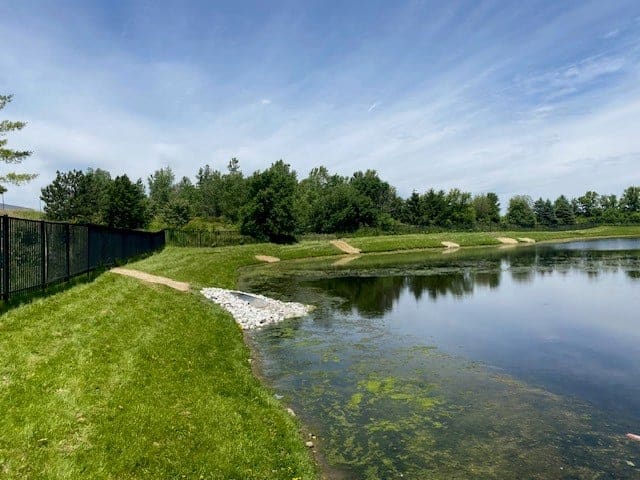
(a) Preventive maintenance inspections of public infiltration systems, bioretention, retention or detention structures shall be made by the Department. Inspection reports for public facilities shall be maintained by the Department.
(b) Privately maintained facilities shall be inspected by the property owner of record. The Department of the Environment shall create an inspection schedule requiring an inspection during the first year of operation and at least once every three (3) years thereafter. The inspection reports shall be submitted to the Department of the Environment for evaluation to ensure compliance with the approved plans and maintenance agreement. Reports for private facilities shall be maintained by the Department of the Environment.
(c) In lieu of the Department of the Environment maintenance inspections, a licensed professional engineer may also perform maintenance inspections of private facilities and submit the appropriate reports to the Department of the Environment. Inspections by a third-party shall be evaluated by the Department of the Environment to ensure compliance with the approved plan and maintenance agreement.
(d) If, after an inspection, the condition of a facility presents an immediate danger to the public health or safety because of an unsafe condition or improper maintenance, for a publicly maintained facility, the Department or for a privately maintained facility, the Department of the Environment as appropriate, shall take such action as may be necessary to protect the public and make the facility safe. Any cost incurred by the County shall be paid by the owner.
(e) Inspection reports for ESD treatment systems and structural stormwater management measures shall include the following:
- The date of inspection;
- Name of inspector;
- An assessment of the quality of the stormwater management system related to ESD treatment practice efficiency and the control of runoff to the MEP;
- The condition of:
- Vegetation or filter media;
- Fences or other safety devices;
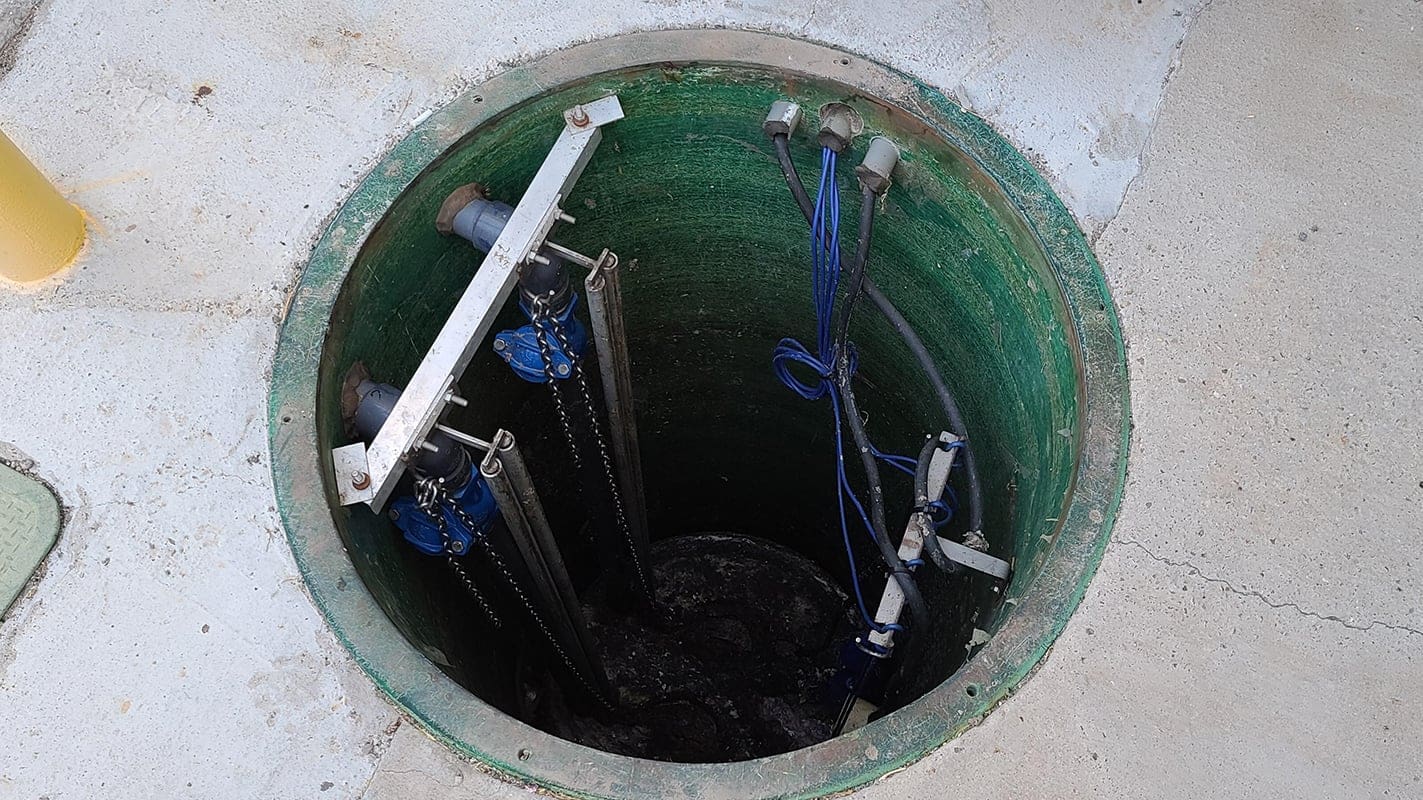
- Spillways, valves, or other control structures;
- Embankments, slopes, and safety benches;
- Reservoir or treatment areas;
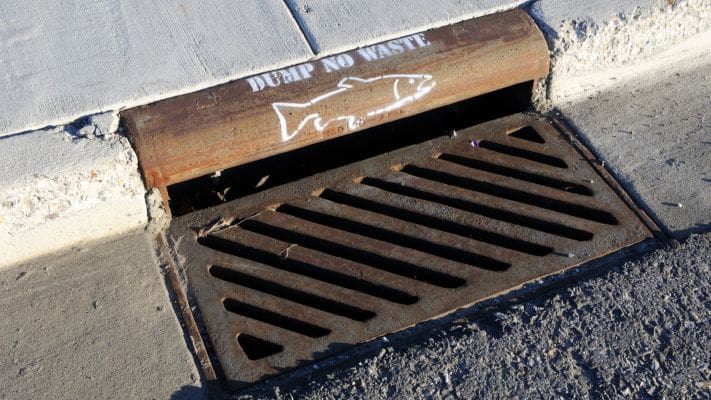
- Inlet and outlet channels or structures;
- Underground drainage;
- Sediment and debris accumulation in storage and forebay areas;
- Any nonstructural practices to the extent practicable; and
- Any other item that could affect the proper function of the stormwater management system.
- Description of needed maintenance.
(f) Upon notifying an owner of the inspection results, the owner shall have 30 days, or other time frame mutually agreed to between the Department and the owner, to correct the deficiencies discovered. The Department shall conduct a subsequent inspection to ensure completion of the repairs.
(g) If repairs are not properly undertaken and completed, enforcement procedures of Section 32-195 of this Division shall be followed by the Department.
(h) If, after an inspection by the Department, the condition of a stormwater management facility is determined to present immediate danger to public health or safety because of an unsafe condition, improper construction, or poor maintenance, the Department shall take such action as may be necessary to protect the public and make the facility safe. Any cost incurred by the County shall be assessed against the owner(s), as provided in 32-195(c) of this Division.
(CB-15-2011; CB-30-2014)
View State Page
Frequently Asked Questions
What stormwater design standard applies to new development in Prince George's County?
Projects must implement environmental site design to the maximum extent practicable before any structural BMP is considered, following criteria in both the Maryland Design Manual and the Prince George’s County Design Manual. The standard is met when channel stability is maintained, predevelopment groundwater recharge is fully replicated, and structural practices are used only when determined to be absolutely necessary.
Does the Chesapeake Bay Critical Area affect stormwater requirements in Prince George's County?
Yes. Development activity located within a Chesapeake Bay Critical Area Overlay Zone must meet all standard minimum stormwater control requirements plus the additional requirements under Subtitle 5B. Properties in these zones should expect a more layered review than a typical site outside the overlay.
Who inspects private stormwater facilities in Prince George's County?
The property owner of record is responsible for inspecting privately maintained facilities, following a schedule requiring inspection during the first year of operation and at least once every three years after. Inspection reports get submitted to the Department of the Environment for evaluation against the approved plan and maintenance agreement.
Can a property use its own engineer instead of the county for stormwater inspections in Prince George's County?
Yes. A licensed professional engineer can perform maintenance inspections on private facilities in place of the Department of the Environment, as long as the resulting reports go to the department for evaluation. The department still reviews any third-party inspection to confirm it meets the approved plan and maintenance agreement.
What happens if a Prince George's County property doesn't fix a stormwater deficiency after inspection?
The owner has 30 days, or another timeframe mutually agreed upon with the Department of the Environment, to correct any deficiencies found. The department follows up with another inspection to confirm the repairs. If repairs aren’t properly completed, the county moves into its standard enforcement process.
What happens if a stormwater facility is found to pose an immediate danger in Prince George's County?
If an inspection reveals a facility presents an immediate danger to public health or safety because of an unsafe condition or improper maintenance, the responsible department, either the county department for public facilities or the Department of the Environment for private ones, takes whatever action is necessary to make the facility safe. Any cost the county incurs gets billed to the owner.
The information on this page is provided for general informational purposes only and is not legal advice. Regulations change frequently — AQUALIS makes no warranty as to the accuracy or completeness of this content, and any reliance on it is at your own risk. Consult a qualified professional or your local regulatory authority to confirm requirements applicable to your specific property.