

Last Updated XX/XX/XXXX
Excerpt from the City of Fort Worth Stormwater Management Plan
1. MCM 2. Post-Construction Stormwater Control Measures
3. Development and Redevelopment Application and Regulatory Mechanism
Currently, all development and redevelopment projects in the City of Fort Worth are required to adhere to the established documents, manuals, policies, rules and ordinances apply to all development and redevelopment projects associated with platting activities and modifications to public infrastructure. The primary mechanism regulating post-construction stormwater controls in the City of Fort Worth is the Stormwater Management Design Manual. This manual has been adopted via ordinance to implement structural and nonstructural controls for our community.
To further address the post-construction control requirements addressed in this section of the permit, the City of Fort Worth is currently in the process of developing and adopting a Grading Ordinance which will control grading activities for all projects which disturb 0.5 acres or more of land. This ordinance will also include the adoption of the 2010 revision of the NCTCOG iSWM manual and updated local criteria manual to increase the level of protection of the City of Fort Worth’s stormwater infrastructure. The new manual adopts the explicit standards for construction runoff control and requires an integrated process for construction and post-construction controls.
The City of Fort Worth is evaluating current and upcoming changes in local ordinance, policies and procedures to ensure that the requirements of this permit are adequately addressed. The City of Fort Worth fully intends to comply with the requirements established to ensure all required development activities are properly addressed.
Additionally this manual addresses the need to establish policies and procedures to provide for long-term operation and maintenance of BMPs within the City of Fort Worth. Developers implementing structural BMPs are required to enter into an agreement with the city for perpetual maintenance. Policy statements in the manual addressing long term operation and maintenance are:
- City Maintenance – The CFW will provide for perpetual maintenance, in accordance with adopted city maintenance standards, of all public drainage facilities located within dedicated easements and constructed to the CFW standards. Access shall be provided and dedicated by the developer to all public stormwater facilities in developments for maintenance and inspection by the CFW.
- Private Maintenance:
- Private drainage facilities include those drainage improvements which are located on private property and which handle only private water.
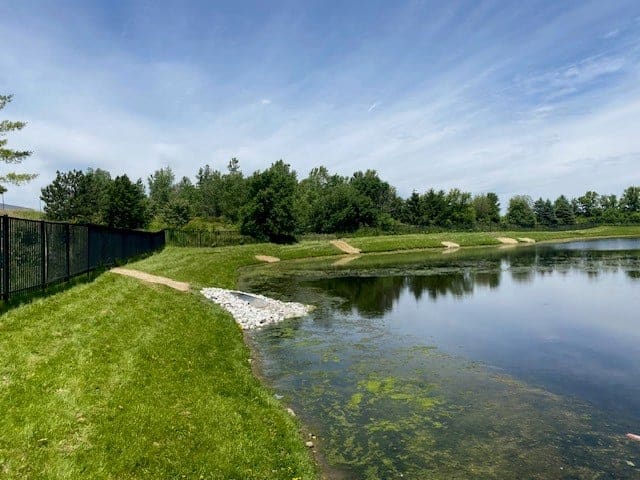
- Private drainage facilities may also include detention or retention ponds, dams, and other stormwater controls which collect public water, as well as drainage ways not constructed to City standards but which convey public water. Such facilities must be designed in accordance with sound engineering practices and reviewed and inspected by the City.
- An agreement for perpetual maintenance of private drainage facilities serving public water shall be executed with the City prior to acceptance of the final plat. This agreement shall run with the land and can be tied to commercial property or to an owner’s association, but not to individual residential lots.
- Access shall be provided by the developer/owner to all private drainage facilities where there may be a public safety concern for inspection by the CFW.
View State Page
Frequently Asked Questions
What stormwater requirements apply to development projects in Fort Worth?
All development and redevelopment projects in Fort Worth must comply with the Stormwater Management Design Manual, which has been adopted by ordinance and serves as the primary mechanism regulating post-construction stormwater controls. The manual covers both structural and nonstructural controls and establishes policies for long-term operation and maintenance of BMPs.
Grading activities on projects disturbing 0.5 acres or more are also subject to the City’s Grading Ordinance, which incorporates the NCTCOG integrated Stormwater Management manual. This ordinance requires an integrated approach to construction and post-construction stormwater controls and applies to all projects meeting the disturbance threshold regardless of project type. AQUALIS can review your project and help you confirm what is required before permitting begins.
Who is responsible for maintaining stormwater facilities in Fort Worth?
Maintenance responsibility in Fort Worth depends on whether a facility is public or private.
Public drainage facilities located within dedicated easements and constructed to City standards are maintained by the City of Fort Worth, provided the developer has dedicated proper access for maintenance and inspection.
Private drainage facilities are those on private property handling only private water, and the owner is responsible for their maintenance. However, private drainage facilities that also collect public water, including detention and retention ponds and drainage ways not built to City standards, are also the owner’s responsibility, though they must be designed to sound engineering standards and are subject to City inspection.
For any private drainage facility serving public water, developers must execute a perpetual maintenance agreement with the City prior to final plat acceptance. The agreement runs with the land and can be tied to commercial property or an owner’s association, but not to individual residential lots. AQUALIS can manage your ongoing maintenance obligations and help ensure your agreement is current.
How do I know if my Fort Worth stormwater system is at risk of failure or safety violation?
Watch for these warning signs.
No perpetual maintenance agreement on file. Any private drainage facility that collects public water requires a perpetual maintenance agreement recorded before final plat acceptance. If your property has a detention pond, retention facility, or drainage way that handles public runoff and no such agreement exists, that is an active compliance gap.
Your facility collects public water but was not designed or inspected to City standards. Private facilities handling public stormwater must be designed in accordance with sound engineering practices and are subject to City review and inspection. If your facility was built without going through that review process, its compliance status is uncertain.
Access to the facility has not been provided to the City. Fort Worth requires that access be dedicated to the City for all public drainage facilities and provided for private facilities where there is a public safety concern. Facilities that cannot be inspected are a compliance risk.
Water is not draining after rain or visible deterioration is present. Sediment buildup, clogged inlets, overgrown vegetation, and structural damage are signs maintenance is overdue and put your facility at risk during a City inspection.
Recent property purchase. Perpetual maintenance agreements in Fort Worth run with the land. If you recently acquired a commercial property with stormwater facilities, AQUALIS can confirm whether the required agreement is in place and assess the current condition of the facilities.
The information on this page is provided for general informational purposes only and is not legal advice. Regulations change frequently — AQUALIS makes no warranty as to the accuracy or completeness of this content, and any reliance on it is at your own risk. Consult a qualified professional or your local regulatory authority to confirm requirements applicable to your specific property.