


Last Updated 08/14/2026
Excerpt from Hammond Municipal Code
INSPECTION, MAINTENANCE AND REPORTING.
Upon completion of the construction activities the following shall occur perpetually in accordance with the SWPPP regardless of site usage and land ownership:
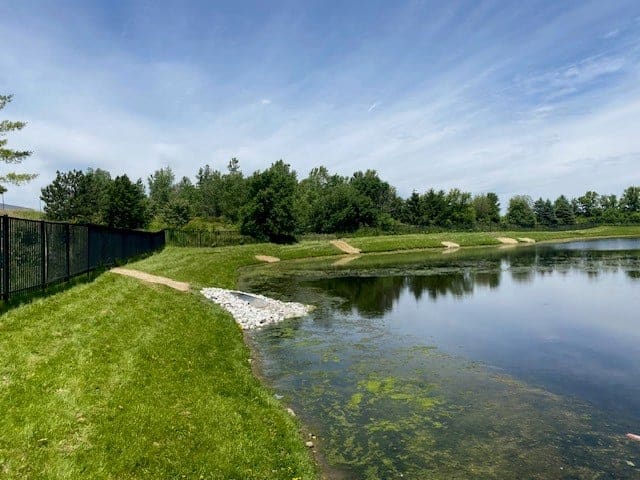
(1) All constructed stormwater quality facilities shall be maintained by the property owner, or per agreements on file with the DSM, and be in good condition and in accordance with the approved SWPPP operation and maintenance procedures and schedules and the BSM approved technical standards.
(2) The approved stormwater quality facilities shall not be subsequently altered, revised or replaced except in accordance with the approved SWPPP or in accordance with DSM approved amendments or revisions to the SWPPP.
(3) The BSM, or its designee, shall have the authority to conduct inspections of the site and the installed BMPs to ensure full compliance with the provisions of this chapter, the design standards and technical specifications approved by the BSM and terms and conditions of the SWPPP.
PROHIBITED DISCHARGES AND CONNECTIONS
APPLICABILITY AND EXEMPTIONS.
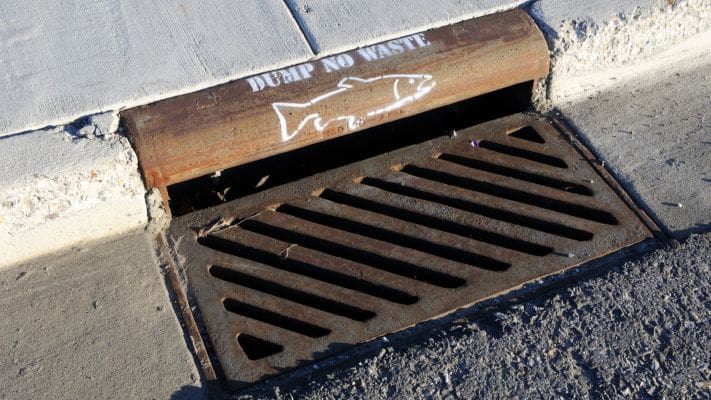
(A) This subchapter shall apply to all discharges, including illegal dumping, entering the stormwater drainage system under the control of the Board of Stormwater Management for the City of Hammond. These discharges include flows from direct connections to the stormwater drainage system, illegal dumping, and contaminated runoff.
(C) Any non-stormwater discharge permitted under an NPDES permit, waiver, or waste discharge order issued to the discharger and administered under the authority of the United States Environmental Protection Agency is also exempted from this chapter, provided that the discharger is in full compliance with all requirements of the permit, waiver, or order and other applicable laws and regulations, and provided that written acceptance has been granted for the subject discharge to the stormwater drainage system.
PROHIBITED DISCHARGES AND CONNECTIONS.
(A) Illicit discharges prohibited. No person shall discharge or cause to be discharged to Hammond’s municipal separate storm sewer system, watercourse, or water body, directly or indirectly, any discharge that is not composed entirely of stormwater except permitted discharges per 40 CFR § 122.26(b)(2). Any person discharging stormwater shall effectively minimize pollutants from also being discharged with the stormwater through the use of best management practices (BMPs). The Division of Stormwater Management of the City of Hammond is authorized to require dischargers to implement pollution- prevention measures, including BMPs, as may be necessary to prevent or reduce the discharge of pollutants into Hammond’s stormwater drainage system.
(B) Illegal connections prohibited. The construction, use, maintenance or existence of illegal connections to the storm drainage system is prohibited. This prohibition expressly includes, without limitation, illegal connections made in the past regardless of whether the connection was permissible under law or practices prevailing or applicable at the time of connection and regardless of whether the connection was approved by an authorized enforcement agency at the time of the connection.
(C) It shall be a violation of this chapter to permit, allow or engage in the discharge of any pollutant into any waterway of the United States, including but not limited to, the Grand Calumet River, the Indiana Harbor Ship Channel, any of their tributaries or streams or any streets, storm sewers or drains, ditches or drainage ways leading to any such waterway of the United States.
STORAGE OF HAZARDOUS OR TOXIC MATERIAL.
(A) It shall be a violation of this chapter to store polluting substances, as identified by USEPA or IDEM, in a manner that violates any federal, state or local statute, ordinance or regulation relating to the protection of the public health, safety and welfare or environment, when such storage is shown to have the potential of allowing discharge to any waterway of the United States including, but not limited to the Grand Calumet River, the Indiana Harbor Ship Channel, any of their tributaries or streams or any streets, storm sewers or drains, ditches or drainage ways leading to any such waterway of the United States.
(B) Storage or stockpiling of hazardous or toxic material on any site must include adequate protection and/or containment so as to prevent any such materials from entering any temporary or permanent stormwater conveyance or watercourse.
POLLUTANT REDUCTION THROUGH THE USE OF BEST MANAGEMENT PRACTICES.
The owner or operator of a commercial or industrial establishment shall provide, at their own expense, reasonable protection from accidental discharge of prohibited materials or other wastes into the municipal separate storm sewer system or watercourses, using the city’s approved BMPs. Further, any person responsible for a property or premise that is or may be the source of an illicit discharge may be required to implement additional BMPs as required by the Stormwater Management Division to prevent further discharge of pollutants into the municipal separate storm sewer system. Compliance with all terms and conditions of a valid NPDES permit authorizing the discharge of stormwater associated with industrial activity to the extent practicable shall be deemed to be compliance with the provisions of this section.
PRIVATE PROPERTY MAINTENANCE DUTIES.
(A) Every person owning property through which a watercourse passes, or such person’s lessee, shall keep and maintain that part of the watercourse located within their property boundaries free of trash, debris, excessive vegetation, and other obstacles that would pollute, contaminate, or significantly retard the flow of water through the watercourse. In addition, the owner or lessee shall maintain existing privately owned structures within or adjacent to a watercourse, so that such structures will not become a hazard to the use, function, or physical integrity of the watercourse.
(B) Easements intended for periodic or occasional use as conductors for the flow of surface water runoff shall be maintained in an unobstructed condition by the owners of the properties they cross. The utility shall have the right to determine if any obstruction exists and to repair or maintain, or require such repair and maintenance by the property owner, as shall be reasonably necessary to keep the conductors unobstructed.
(C) No property owner or occupant shall change the stormwater runoff pattern of his property in such a way that neighboring properties or city property is adversely affected. Consideration and provisions must be made for drainage to and from neighboring properties when land use or development is altered.
(D) No property owner or occupant shall direct stormwater runoff from roof drains, sump pump outfalls or other building drains in such a way that neighboring properties or city property is adversely affected.
RATES, CHARGES AND BILLING
STORMWATER SERVICE BILLING
A stormwater utility user fee shall be imposed based on the Lake County Property Class Code for real property within the City of Hammond, Lake County, Indiana, according to the service address for each parcel or lot’s tax payer ID number, which charge shall be assessed against the owner thereof, who shall be considered the stormwater utility customer/user for the purposes of this article except parcels of land owned by state, county, municipal and public and private schools, churches and religious institutions and other tax exempt organizations shall be exempted.
The stormwater utility user fee is deemed reasonable and is necessary to fund National Pollutant Discharge Elimination System (NPDES) phase 2 compliance and regulations; stormwater management program administration; repair, replacement improvement, operation, regulation and maintenance of the existing and future City of Hammond stormwater system; Stormwater Management Department expenditures; future planning of the stormwater system; capital improvements within the City of Hammond stormwater system; implementation of MS4 regulations; administrative and salary costs for individuals who provide services to the stormwater management system and regulations of such system and/or for the Hammond Department of Storm Water Management. The City of Hammond will not fund stormwater system infrastructure improvements or enforcement of subdivision covenants that are the responsibility of the property owner(s), subdivider and or developer as identified in the City of Hammond municipal code, such as retention and detention basins. This rate shall be evaluated annually as to its sufficiency to satisfy the needs of the Hammond Department of Storm Water Management.
For more about the user fee structure see Property Class Code
ENFORCEMENT
(A) Enforcement actions generally.
Enforcement of this chapter shall be subject to the severity of the infraction and the responsible party’s efforts to comply as determined by the Stormwater Management Division. The Department shall reserve the right to determine the level of enforcement on a case-by-case basis. Subject to division (G) below, enforcement actions shall be initiated by the serving of a notice of violation and may include any 1 or more of the following:
(1) Verbal warning to the responsible party/parties to make corrections.
(2) Written warning to the responsible party/parties to make corrections within a specified period of time. The period of time shall take into account issues such as the severity of the problem, pending weather, seasonal conditions, and the level of effort necessary to correct the problem.
(3) Warning of non-compliance with directions to the responsible party/parties that site conditions require immediate action.
(4) The performance of monitoring, analysis, and reporting.
(5) Stop work order.
(6) Suspension of access to the stormwater drainage system.
(7) Civil penalties and fines.
(B) Restoration and remediation.
Any person or entity discharging to the agreed upon by the Board of Stormwater Management and the violator and that further the goals of Hammond’s approved stormwater quality management plan.
(C) Emergency suspensions.
The Stormwater Management Division may, without prior notice, suspend access to the stormwater drainage system to a person or entity when such suspension is necessary to stop an actual or threatened discharge which presents or may present imminent and substantial danger to the environment, or to the health or welfare of persons, or to the stormwater drainage system or waters of the United States. If a responsible party fails to comply with a suspension order issued in an emergency, the Department of Stormwater Management may take such steps as deemed necessary to prevent or minimize damage to the stormwater drainage system or waters of the United States, or to minimize danger to persons.
(D) Suspension of access to the stormwater drainage system due to the detection of illicit discharge.
Any person or entity discharging to the agreed upon by the Board of Stormwater Management and the violator and that further the goals of Hammond’s approved stormwater quality management plan.
(E) Civil penalty.
Any person that has violated or continues to violate this chapter and passed as a municipal ordinance, shall be liable to civil penalties to the fullest extent of the law, and shall be subject to a fine of up to $2,500 dollars per violation per day. Each and every day that the violation exists shall constitute a separate offense.
(F) Fees and costs.
The Stormwater Management Division may recover all reasonable attorneys’ fees, court costs, consultant costs and other expenses associated with enforcement of this chapter, including sampling and monitoring expenses to the extent permitted by law.
(G) Remedies not exclusive
The remedies listed in this chapter are not exclusive of any other remedies available under any applicable federal, state or local law and it is within the discretion of the Stormwater Management Division to seek cumulative remedies.
(H) Authorized enforcement agencies.
The Board of Stormwater Management, Water Pollution Control Maintenance Department, Division of Public Works and Stormwater Management Division, Hammond Department of Environmental Management, Department of Law, Code Enforcement/Inspections, and Fire Department of the City of Hammond, or its subcontractors shall be the agencies authorized to enforce this chapter of the Hammond Municipal Code.
(I) Appeal of notice of violation.
Any person receiving a notice of violation may appeal the determination to the Board of Stormwater Management. The notice of appeal must be received within 30 days from the date of the notice of violation. Hearing on the appeal before the Board or its hearing officer shall take place within 30 days from the date of receipt of the notice of appeal. The decision of the Board or its hearing officer shall be final, subject to any right of a person to seek judicial review in a court of competent jurisdiction.
View State Page
Frequently Asked Questions
Who's responsible for maintaining a stream or watercourse that runs through my Hammond property?
Every property owner whose land includes part of a watercourse has to keep that section free of trash, debris, excessive vegetation and other obstacles that would pollute the water or slow its flow, and that duty extends to lessees too. Any privately owned structure in or near the watercourse also has to be maintained so it doesn’t become a hazard to the channel’s function or physical integrity. Drainage easements crossing a property carry the same obligation: they have to stay clear, and the utility can require the owner to fix an obstruction if one turns up.
Is my Hammond property exempt from the stormwater utility fee?
Only if it’s owned by state, county or municipal government, or by a public or private school, church, religious institution or other tax-exempt organization. Every other property pays based on its Lake County Property Class Code, billed to whoever’s listed as the taxpayer on that parcel. Worth noting: the fee explicitly does not fund private infrastructure like retention or detention basins, so a property owner’s own system stays their financial responsibility no matter how much they pay into the utility fee.
Can I change how stormwater drains off my Hammond property?
Not if it adversely affects a neighboring property or the city’s own infrastructure. Any change in land use or development has to account for drainage to and from neighboring properties, and roof drains, sump pump outfalls and other building drains can’t be redirected in a way that shifts the burden onto someone else’s land. That standard applies whether the change is intentional site redesign or just an overlooked side effect of a renovation.
What counts as an illicit discharge in Hammond?
Anything that isn’t entirely stormwater, discharged directly or indirectly into the city’s system, a watercourse or a water body, unless it falls under a specific federal exemption. Illegal connections are separately prohibited, including ones made in the past even if they were permissible under the rules that applied at the time. The ordinance also specifically calls out the Grand Calumet River and the Indiana Harbor Ship Channel by name, reflecting how directly local waterway protection factors into the city’s enforcement priorities.
What penalties apply to a stormwater violation in Hammond?
Civil penalties can run up to $2,500 per violation per day, with each day a violation continues treated as a separate offense, and the city can recover attorney’s fees, court costs, consultant costs and monitoring expenses on top of that. Enforcement escalates based on severity and how cooperative the responsible party is, starting with a verbal warning and moving through written warnings, stop work orders and suspended access to the drainage system before penalties are formally assessed. In an emergency, the city can suspend a property’s access to the stormwater system without any prior notice at all.
The information on this page is provided for general informational purposes only and is not legal advice. Regulations change frequently — AQUALIS makes no warranty as to the accuracy or completeness of this content, and any reliance on it is at your own risk. Consult a qualified professional or your local regulatory authority to confirm requirements applicable to your specific property.