

Last Updated 04/10/2026
Excerpt From Chapter 120 of the City of Milwaukee Code of Ordinances
120-7. Control of Storm Water Discharge.
APPLICABILITY. No person shall proceed with any residential, commercial, industrial or institutional improvement or subdivision of property without having provided for appropriate storm water measures that control or manage runoff from such development or redevelopment or future development of the subdivided property. A storm water management plan addressing storm water runoff quality control, quantity control or both must be submitted and approved pursuant to sub. 2 or waived pursuant to sub 4. A plan is required:
a. Before an existing drainage system is altered, rerouted, deepened, widened, enlarged, filled or obstructed in preparation for improvement.
b. Before or concurrent with the submittal and approval of an erosion and sediment control plan as specified in ch. 290.
c. Before the development or redevelopment is permitted for commencement of construction.
120-13. Manual of Storm Water Management Practices.
1. The city engineer with the assistance of the commissioners of the departments of neighborhood services and city development shall compile a manual of storm water management practices. The manual shall be made available for sale to the public and updated periodically. The manual will be used for the preparation of a storm water management plan.
2. The manual shall incorporate current best management practices (BMPs) for controlling the quality and quantity of storm water runoff. The manual shall contain:
a. Guidance and specifications for the preparation of a storm water management plan, including techniques for calculating and presenting the information required in the plan.
b. Detailed design specifications for BMPs used to improve the water quality.
c. Minimum specifications for the construction of BMP facilities which use current sound engineering practices.
d. Techniques and BMPs which emphasize the use of natural systems.
e. Techniques and BMPs for source control measures to manage water quality.
f. Techniques and BMPs which control volume in an effort to improve water quality.
g. Minimum requirements for the maintenance plan.
3. The manual is available for purchase from the department of public works.
120-15. Maintenance of Drainage Facilities.
- Every 5 years the person shall submit a written recertification for the approved storm water management plan from a registered professional engineer that the drainage facility is operating as originally designed along with an updated irrevocable letter of credit, certified check or surety bond or letter of financial guarantee from the person as provided in s. 120-9. By submitting the guarantee, the person consents to allowing the city to inspect the best management practices prescribed in the storm water management plan.
- When applicable, the facilities shall be maintained in accordance with the agreements set forth in s. 120-11.
- Minimum maintenance requirements and procedures outlined in the manual of storm water management practices described in s. 120-13 shall also be used.
- Violations of this section shall be subject to the enforcement procedures and penalties set forth in s. 120-17.
View State Page
Frequently Asked Questions
What is stormwater compliance in the City of Milwaukee?
Stormwater compliance in Milwaukee means following Chapter 120 of the City of Milwaukee Code of Ordinances. Before starting any residential, commercial, industrial, or institutional construction project, or subdividing property, you must submit a stormwater management plan to the City and receive approval before work begins.
Once your project is complete, your responsibilities continue. You are required to maintain your approved stormwater facilities over time and, every five years, have a licensed engineer confirm in writing that everything is still working as designed. The City also requires you to keep a financial guarantee in place such as a letter of credit or surety bond for as long as the stormwater facilities are in use.
Who is responsible for stormwater compliance in Milwaukee?
The property owner or developer is responsible under Chapter 120. This includes submitting the stormwater management plan before construction, maintaining the approved drainage facilities after construction is complete, and keeping the required financial guarantee current.
This responsibility stays with the property owner even if tenants or contractors are the ones using the site. If your property changes hands, the new owner takes on these obligations, which is why missing compliance documentation can become a problem during a sale.
AQUALIS can manage your ongoing compliance obligations, including routine maintenance, coordinating your five-year recertification, and keeping your records current.
How often does Milwaukee require stormwater system recertification?
Every five years. Under Section 120-15, you must submit a written statement from a registered professional engineer confirming that your drainage facilities are still working as originally designed. At the same time, you must renew the financial guarantee that the City holds in connection with your stormwater plan. Acceptable forms include a letter of credit, surety bond, certified check, or letter of financial guarantee.
Missing this five-year deadline is a violation that can trigger enforcement under Section 120-17. Many property owners miss it simply because they were not aware of the requirement or it was not communicated when the property changed hands.
Beyond the five-year minimum, AQUALIS recommends annual or semi-annual inspections so you are not caught off guard when recertification time comes.
Why does stormwater maintenance matter for Milwaukee property owners?
Milwaukee’s Chapter 120 connects maintenance directly to a five-year recertification deadline and a financial guarantee the City holds specifically to fund repairs if maintenance lapses. Deferred maintenance has real, predictable consequences.
Failed recertification. If an engineer cannot confirm your system is working as designed, your five-year recertification fails. You will be required to bring the system back into compliance on a timeline set by the City, with costs you did not plan for.
Financial guarantee exposure. If you fail to maintain your system, the City can draw on the financial guarantee you have provided. You may then be required to replenish it.
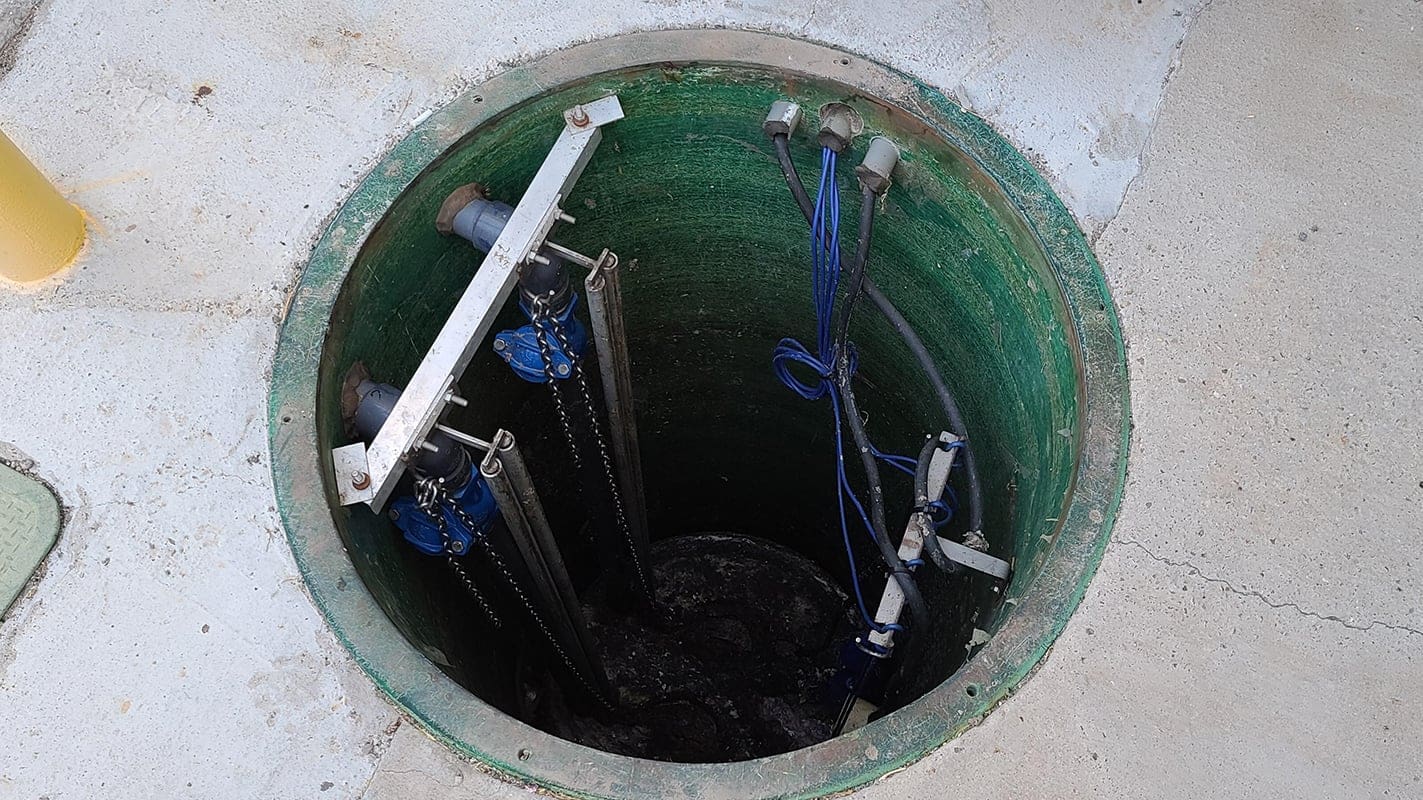
Property damage. Clogged inlets, sediment-filled detention basins, and deteriorated pipes lead to flooding, erosion, and structural damage. Milwaukee requires that stormwater best management practices (BMPs) be maintained per the City’s Manual of Storm Water Management Practices, so physical deterioration is also a compliance issue.
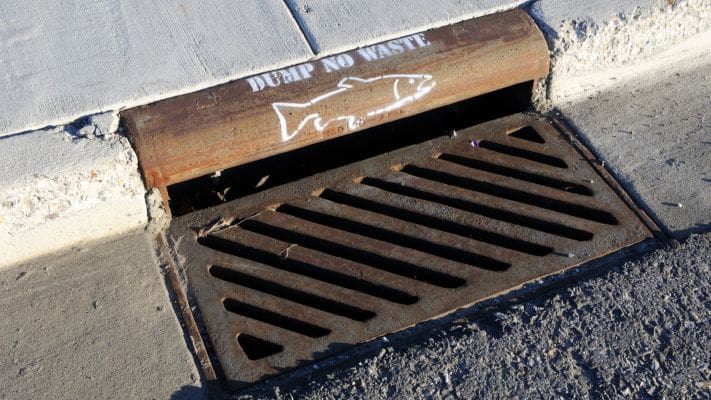
Sewer system liability. Stormwater systems that are not working correctly can discharge untreated runoff into Milwaukee’s storm sewer system, creating potential liability under the Milwaukee Metropolitan Sewerage District’s rules in addition to Chapter 120.
What are the most common stormwater compliance failures in Milwaukee?
Based on AQUALIS’s inspection experience and Milwaukee’s Chapter 120 requirements, these are the issues we see most often.
Missed five-year recertification. This is the most common gap, especially after a property changes hands. The new owner often is not aware the obligation exists or does not know when the last recertification was submitted.
Expired financial guarantees. Letters of credit and surety bonds tied to stormwater plans require periodic renewal. An expired guarantee is a violation on its own, separate from the condition of the physical system.
BMPs not maintained to City standards. Milwaukee’s Manual of Storm Water Management Practices sets specific maintenance requirements for all approved stormwater measures. Overgrown vegetation, sediment-filled basins, and clogged outlets are common findings that put properties out of compliance.
Drainage changes made without plan approval. Chapter 120 requires a new or amended stormwater management plan before any existing drainage system is altered, rerouted, deepened, widened, filled, or obstructed. Informal changes made without approval are a frequent source of violations.
Missing original plan documents. Engineers performing the five-year recertification need the original approved stormwater management plan. Properties that cannot locate it face additional time and expense to reconstruct the documentation.
How do I know if my Milwaukee property's stormwater system is at risk?
Watch for these warning signs.
You do not know when your last recertification was. If it has been more than five years, or you are not sure, your property may already be out of compliance with Section 120-15 regardless of how the physical system looks.
Water that will not drain. Standing water that remains more than 72 hours after rain, or visible sediment and erosion around your drainage structures, suggests the system is not performing as designed.
You cannot find your stormwater management plan. Without the original approved plan, your five-year recertification will be more complicated and costly. Locating it now is much easier than reconstructing it under a deadline.
Your financial guarantee may have expired. Check whether your letter of credit, surety bond, or certified check is still current. An expired guarantee is an independent violation the City can act on during an inspection.
Drainage work was done without a plan amendment. Any modifications to existing drainage including rerouting, filling, widening, or obstructing require an updated plan. Unpermitted changes are a common source of violations discovered during inspections or due diligence.
You are planning to sell or refinance. Chapter 120 compliance documentation is increasingly reviewed in commercial transactions. An AQUALIS assessment before listing or refinancing can surface and resolve issues before they affect the deal.
Can stormwater fees be reduced for Milwaukee property owners?
Yes. The City of Milwaukee has a Stormwater Credit Program that allows property owners to reduce their stormwater utility fees by demonstrating active, on-site management of runoff. Common ways to qualify include the following.
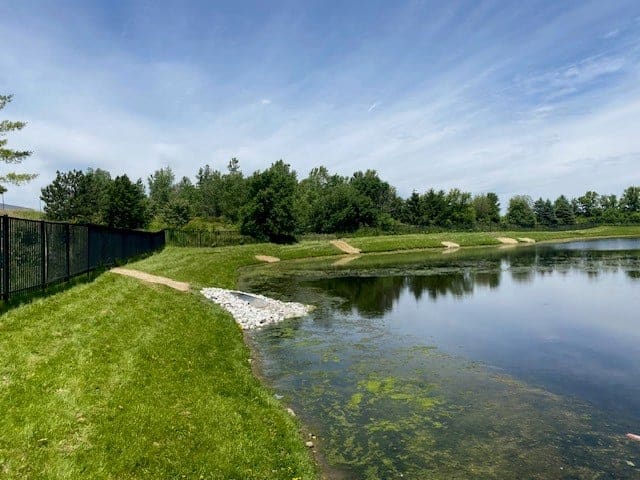
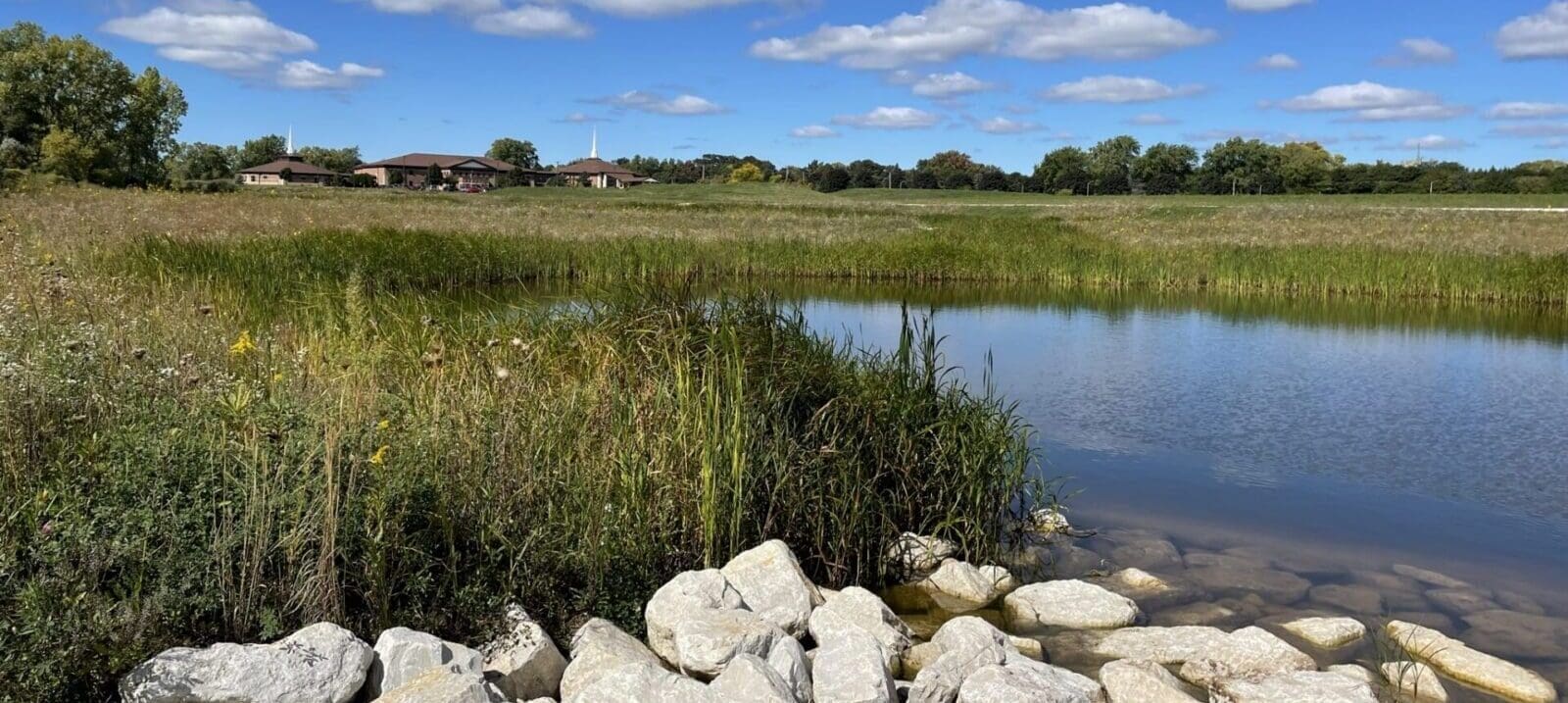
On-site detention or retention. Systems that capture runoff and release it slowly, like detention ponds or underground vaults, can qualify for volume-based fee reductions.
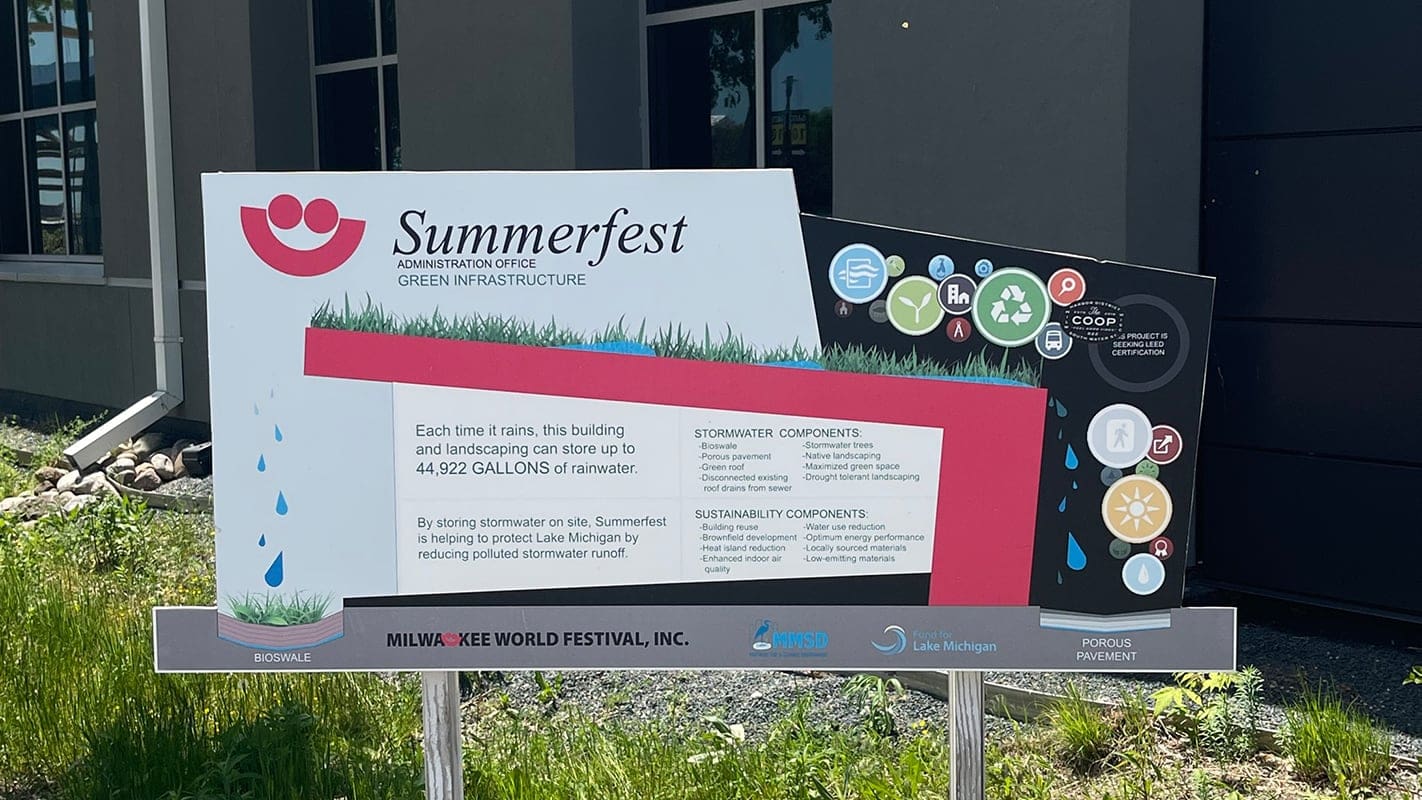
Water quality improvements. Bioretention areas, vegetated swales, permeable pavement, and similar practices may qualify for additional credits.
Documented maintenance. Milwaukee’s credit program requires that qualifying systems be properly maintained and in good working condition. If maintenance lapses, you can lose credits you have held for years, making your five-year recertification directly relevant to your utility fee.
AQUALIS can review your existing stormwater facilities, assess your eligibility under Milwaukee’s credit program, and help you prepare and maintain the documentation needed to apply or keep your credits.
How does stormwater compliance affect my Milwaukee property's value?
Milwaukee’s Chapter 120 creates specific, documented compliance obligations that come up in commercial property transactions more often than owners expect.
Due diligence. Buyers and lenders now routinely ask for proof that the stormwater management plan is approved, the five-year recertification is current, and the financial guarantee is valid. Gaps in any of these can become a condition of closing or a point of negotiation.
Repair costs. A failed recertification means bringing the system back into compliance before the City will accept the report. Depending on how long maintenance has been deferred, that can range from routine dredging and vegetation work to full reconstruction. These costs surface in environmental assessments and affect how a buyer values the property.
Fee credit loss. Properties enrolled in Milwaukee’s Stormwater Credit Program that have let maintenance slide may lose their credits and face higher annual utility bills. That recurring cost affects net operating income and appraised value.
Open enforcement actions. A history of recertification lapses or an active enforcement action under Section 120-17 is part of the public record and can complicate financing or raise red flags for prospective buyers.
The information on this page is provided for general informational purposes only and is not legal advice. Regulations change frequently — AQUALIS makes no warranty as to the accuracy or completeness of this content, and any reliance on it is at your own risk. Consult a qualified professional or your local regulatory authority to confirm requirements applicable to your specific property.