

Last Updated XX/XX/XXXX
Stormwater Code: Excerpts from Cary, North Carolina, Code of Ordinances and Land Development Ordinance
4.4.6 Watershed Protection Overlay
Purpose and Intent
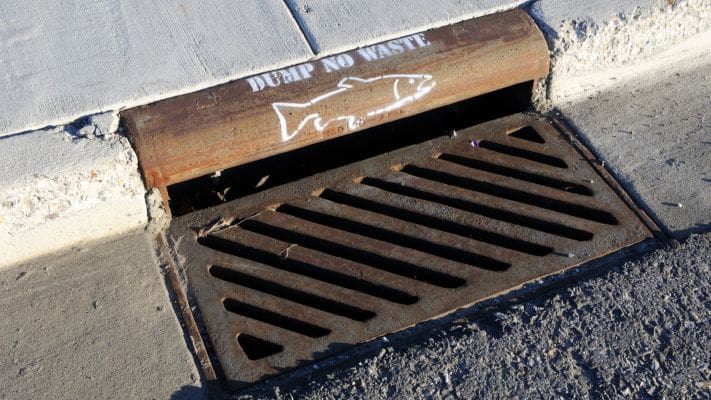
In the City of Norman, our stormwater runoff is not sent to a treatment plant. Instead, stormwater from rain and snowmelt events is transported to local creeks and streams via the Municipal Separate Storm Sewer System (MS4). As it travels from your roof, driveway, or neighborhood street to the MS4, stormwater can encounter and transport pollutants. Common pollutants include oil and grease from vehicles, pesticides and fertilizers from lawns, sediment from construction sites, and trash like cigarette butts, plastic bottles, paper wrappers, and Styrofoam cups. Any pollutants carried by stormwater are discharged directly to waterbodies because the stormwater is not treated before it is discharged from the MS4. it is discharged directly into our waterways. The Stormwater Quality Group is responsible for administering the MS4 Program by implementing measures to keep pollution out of our stormwater through education, inspection, and enforcement activities.
Polluted stormwater runoff is a leading source of contamination of waterbodies nationwide and can lead to water quality impairments that limit their use for recreation, as a source for drinking water, and as habitat for fish and other aquatic organisms. Because of this, the Clean Water Act was amended in 1987 to address stormwater runoff. Regulations under Phase II of the National Pollutant Discharge Elimination System (NPDES) Stormwater Program were issued on December 8, 1999, and require that medium to small sized cities and towns take steps to reduce the amount of pollution in the stormwater discharged from their MS4.
The City of Norman is subject to these regulations and obtained a permit for stormwater discharges from its MS4 from the Oklahoma Department of Environmental Quality (OPDES Permit No. OKR040015). As part of this permit, the City is required to develop and implement a Stormwater Management Program (SWMP) The permit outlines six minimum control measures that the City must address in its Stormwater Management Program.
View State Page
Frequently Asked Questions
Where does stormwater go once it leaves my property in Norman, Oklahoma?
It isn’t treated. Stormwater from your roof, driveway, or street travels through Norman’s Municipal Separate Storm Sewer System (MS4) directly to local creeks and streams, picking up pollutants like oil and grease, pesticides and fertilizers, construction sediment, and trash along the way. Since the MS4 doesn’t treat this water before discharge, whatever it picks up goes straight into local waterways.
Does my Norman business need an industrial stormwater permit?
Possibly, depending on your operations. The city’s Stormwater Quality Group administers an Industrial Stormwater Permit as part of its broader MS4 compliance program. AQUALIS can help business owners in Norman determine whether their operations require this permit.
What is the legal basis for Norman's stormwater requirements?
The City of Norman holds an OPDES permit (No. OKR040015) from the Oklahoma Department of Environmental Quality for its MS4 discharges. As a condition of that permit, the city must develop and implement a Stormwater Management Program addressing six minimum control measures required under Phase II of the federal NPDES Stormwater Program.
The information on this page is provided for general informational purposes only and is not legal advice. Regulations change frequently — AQUALIS makes no warranty as to the accuracy or completeness of this content, and any reliance on it is at your own risk. Consult a qualified professional or your local regulatory authority to confirm requirements applicable to your specific property.