

Last Updated 08/06/2026
North Charleston Stormwater Code
2.2.10 Stormwater Facility Ownership and Maintenance
2.2.10.1 Ownership
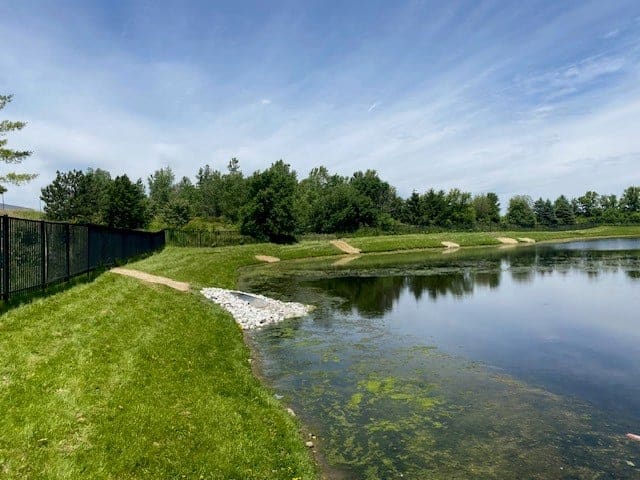
Residential: Ownership of all BMPs (water quantity and quality basins/devices/non-structural practices) in new and re-development projects shall in most cases belong to the owner(s) of the parcel(s) or a homeowners association (HOA) of land under or on which it exists.
Commercial: In new and re-development projects, ownership of the entire stormwater system (conveyances, as well as all BMPs, ponds, etc.) shall belong to the owner, or a lessee(s). For any project, the owner of a portion or the entire stormwater system, as the case may be, shall be clearly designated before a Final MS4 approval will be issued. Ownership shall also be recorded on the final plat. Ownership shall imply responsibility for maintaining the stormwater system, including all ponds and other BMPs used for controlling runoff quantity and quality. Ownership does not imply that the owner(s) may in any way alter the size, or function of any component of the stormwater system without consent from the City of North Charleston. Owners found altering such components will be required to remove any alterations.
2.2.10.2 Maintenance
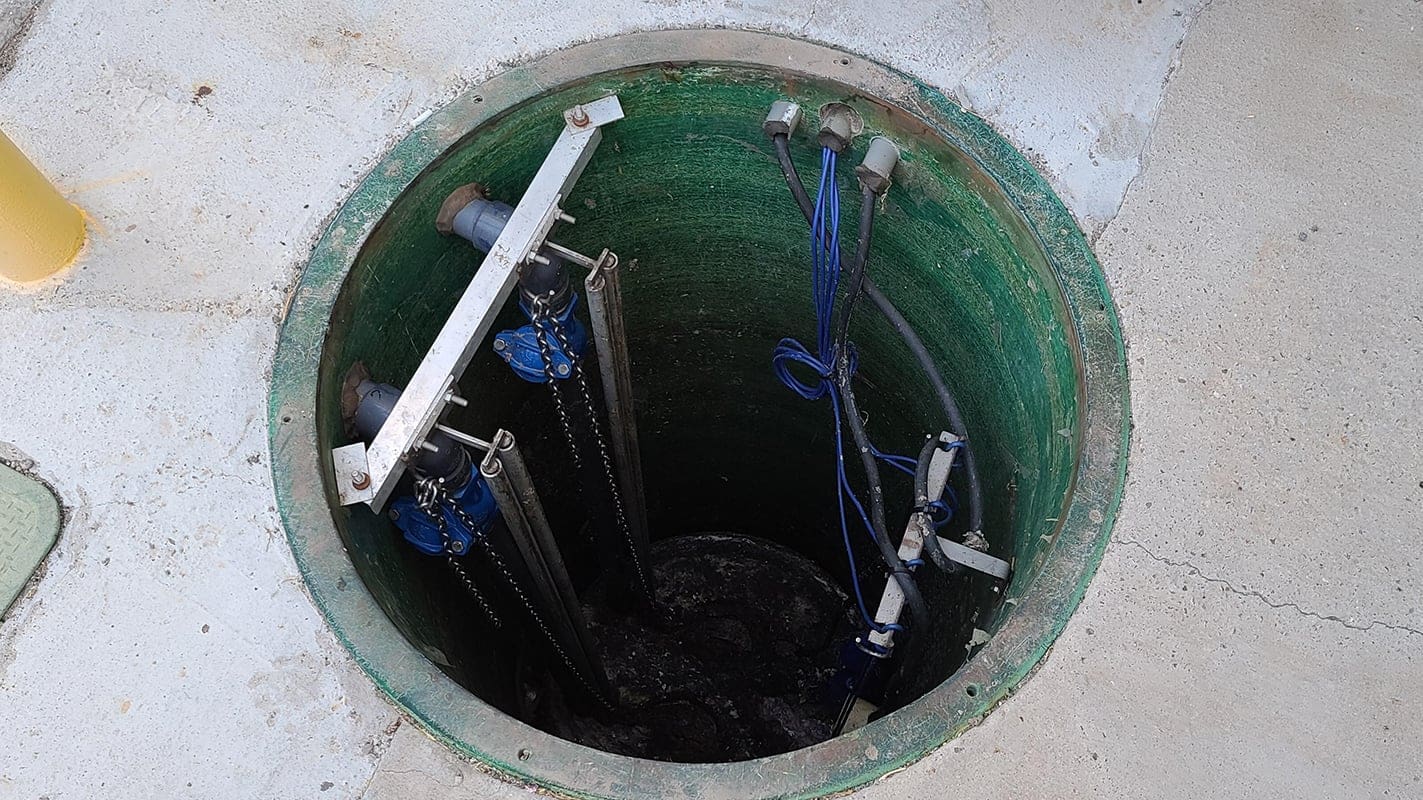
Each component of the stormwater management system (pipes, inlets, BMPs) shall have a maintenance plan (activities and associated schedule) as part of the application package for a Final MS4 approval. The plan shall also cover temporary measures used during construction in addition to the long term maintenance of the system. Suggested maintenance activities and recurrence intervals for water quality BMPs are discussed and referenced in Chapter 3.
In addition, the owner/operator, HOA, or operator as applicable, must enter into a permanent maintenance agreement (Operating Permit) with the City of North Charleston. This Operating Permit is a legal document, recorded in the permanent land records with the County Register of Deeds, in addition to being fully described on the final plat. The Operating Permit is provided in Appendix B. The operating permit must be signed and executed prior to the issuance of a Final MS4 approval. This permit allows for maintenance to be performed by a third party such as an operator or other contractor. However, the owner must also be listed and is ultimately responsible for adherence to the maintenance requirements. The Public Works Director will provide oversight of these permits to ensure adherence by the owner or other responsible party. The Public Works Director will inspect a system as he deems necessary to ensure maintenance is being performed in accordance with this permit. More detail is provided in Chapter 4 on City inspection and enforcement procedures.
CHAPTER 4 INSPECTIONS & ENFORCEMENT
4.1 Stormwater Management Inspections
The City will inspect applicable construction sites from initial land clearing to final stabilization. The purpose of these inspections will be to check for compliance with the City stormwater management plan approved by the Stormwater Division. Maintenance inspections will also be performed on stormwater management systems and facilities throughout their useful life. For each system or facility installed or retrofitted during an approved construction project, the applicant must have submitted a maintenance schedule or plan. City inspectors will be checking for adherence to this plan and any necessary changes that may arise after installation. City inspections are not to be construed as a relaxation of the requirements on owners/operators to conduct self-inspection in accordance with any applicable local, state or federal stormwater requirements.
4.1.1 Inspector Duties/Responsibilities
North Charleston’s Stormwater Management Inspectors shall inspect and enforce the requirements of the City Stormwater Management Ordinance. The job duties/responsibilities of a City Stormwater Inspector shall include, but not be limited to, the following:
1. Conduct and document during construction site inspections to ensure compliance with the approved City permit or stormwater management plan. Frequency of inspections will be determined by City staff on an as needed basis.
2. Ensure that the approved City permit or stormwater management plan, the SWPPP, and the construction plans are on the project site and are properly being followed and implemented.
3. Conduct post-construction inspections to ensure that permanent maintenance is being performed in accordance with the maintenance schedules for the various stormwater management facilities in the City permit or approved stormwater management plan.
4. Provide the owner/operator of the project a written report within seven (7) days after every during construction or post-construction site inspection.
5. Issue enforcement orders, as necessary, to the owner/operator when any portion of the work does not comply with the approved City permit and/or stormwater management plan or work is occurring without appropriate permitting. The enforcement process and types of orders is detailed in Section 4.3.
6. Perform a final inspection upon the completion of the stormwater system to determine if the system is constructed in accordance with the approved City permit and/or, stormwater management plan.
7. Take immediate action if the owner/operator fails to comply with the approved City permit or the approved stormwater management plan and an imminent hazard exists as a result. The inspector should address the situation and notify any applicable local, state and federal agencies.
8. Maintain accurate and comprehensive project inspection files ensuring all relevant information is entered in the files to be maintained in the Public Works Department.
4.1.2 Inspection Process and Procedures
As per the City’s Stormwater Ordinance, the Public Works Director or an authorized representative/designee (inspector) may enter upon all properties for regular inspections, periodic investigations, enforcement and to effectuate the provisions of the Ordinance. Upon refusal by any owner/operator or property owner to permit an inspector to enter upon the property or continue an inspection, the inspector shall terminate the inspection or confine the inspection to portions of the property to which no objection is raised.
Upon completion of a post-construction maintenance inspection, the City inspector should, at a minimum, include the following in this inspection report to be provided to the owner/operator:
1. Date and location of the site inspection.
2. Whether the activities identified in the approved maintenance schedule have been properly implemented and completed.
3. Identification of any maintenance deficiencies.
4. Any corrective actions needed.
4.2 Permittee Inspection Responsibilities
In accordance with any applicable local, state and federal stormwater requirements including, but not limited to, the NPDES Construction General Permit (CGP), owner/operators are responsible for conducting during construction and post-construction site inspections. Records of such inspections should be kept for a minimum of five (5) years and must be made available to the City of North Charleston upon request.
4.3 Enforcement
If the City determines that a project is in non-compliance with the City’s Stormwater Management Ordinance, then the City may direct conformity by proceeding with the appropriate enforcement action. The types of enforcement tools available to the City include a Correction Order, Notice of Violation (NOV), Stop Work Order and/or Civil/Criminal Penalties. The enforcement mechanism to be utilized will depend on the circumstances as described in the following sections.
4.3.1 Correction Orders
The Public Works Director shall issue a Correction Order for first offenses of non-compliance with the City Ordinance, the City permit or the approved stormwater management plan. The purpose of the Correction Order is to give notice of the deficiencies, identify expected corrective results and provide a reasonable timeframe to the contractor prior to the City taking further action to get a problem resolved. Correction Orders shall be submitted in writing, but a verbal notice may be given if the deficiency needs immediate correction to prevent offsite or downstream impacts. The Director of Public Works shall issue Correction Orders within five (5) working days of an inspection. All Correction Orders, verbal or written, shall be noted in the project file.
Correction Orders may be issued in such cases, but not be limited to, when there is:
- Failure to comply with the approved stormwater design plans to include failure to have properly installed and/or maintained BMP measures.
- Failure to properly maintain permanent stormwater management structures.
- Failure to notify the Public Works Director before beginning work on a phase of an approved project.
- Failure to call for a final site inspection.
A Correction Order should at a minimum include, but not be limited to, the following:
- Nature of the violation(s).
- Proposed penalty.
- Required corrective actions.
- The time period for correcting the violation(s).
4.3.2 Notices of Violation (NOV)
If a Correction Order has been previously issued and there is either subsequent non-compliance issues or failure to complete the items on the Correction Order within a specified time period, then a Notice of Violation may be issued. In addition, for violations that do not involve a safety issue or an imminent threat of serious damage to the environment and/or public or private property, a Notice of Violation may be issued for, but are not limited to, the following:
1. If construction activities have been initiated and no BMP measures are in place, or are not working to prevent sediment from leaving the site.
2. Failure to have work inspected and approved before restarting construction activities after a stoppage of work.
A Notice of Violation (NOV) should at a minimum include, but not be limited to, the following:
1. Nature of the violation(s).
2. Proposed penalty.
3. Notification that a Stop Work Order may be issued or that permits for the site may be suspended or revoked if there is continued non-compliance.
4. Required corrective actions.
5. The time period for correcting the violation(s).
4.3.4 Civil Penalties
The Public Works Director may issue a Civil Penalty if a Notice of Violation and/or Stop Work Order has not been complied with or there has not been substantial progress in complying with the Notice of Violation and/or Stop Work Order. In addition, a Civil Penalty may be issued when there are repeated, recurring violations at the same site or when there are repeated, recurring violations by the same responsible party. Violations may subject the owner/operator to Civil Penalties in accordance with the Stormwater Management Ordinance, Division 6. Each separate day of a violation constitutes a new and separate violation.
4.3.5 Criminal Penalties
In addition to any applicable civil penalties, any person who negligently, willfully, or intentionally violates any provision of the Stormwater Management Ordinance shall be guilty of a misdemeanor and shall be punished within the jurisdictional limits of the magistrate’s court. The Public Works Director may issue a uniform summons citation for a violation of the Stormwater Management Ordinance in accordance with Division 6. Each day of a violation shall constitute a new and separate violation.
View State Page
Frequently Asked Questions
Who owns the stormwater system on a residential property in North Charleston?
Ownership of all BMPs, meaning both water quantity and quality basins, devices, and non-structural practices, belongs to the property owner or a homeowners association (HOA), depending on the land involved.
Who owns the stormwater system on a commercial property in North Charleston, South Carolina?
The owner or lessee owns the entire stormwater system, including conveyances, ponds, and other BMPs. Whoever owns any part of the system must be clearly identified before the city issues Final MS4 approval, and that ownership gets recorded on the final plat. AQUALIS can help commercial property owners in North Charleston document ownership correctly during the approval process.
Do I need a maintenance plan for my stormwater system in North Charleston?
Yes. Every component of your stormwater system, including pipes, inlets, and BMPs, needs a maintenance plan covering activities and scheduling, submitted as part of your Final MS4 approval application. This plan needs to address both temporary construction measures and long term maintenance. AQUALIS can help property owners put together a maintenance plan that meets this requirement.
Do I need a formal agreement with the city for stormwater maintenance in North Charleston?
Yes. The owner, operator, or HOA must enter into a permanent maintenance agreement, called an Operating Permit, with the city. This is a legal document recorded with the County Register of Deeds and described on the final plat. It must be signed before Final MS4 approval is issued. You can hire a third party to actually perform the maintenance, but as the owner, you remain the one ultimately responsible for meeting the requirements.
How often does the City of North Charleston inspect stormwater facilities?
The city inspects construction sites from initial land clearing through final stabilization, and continues maintenance inspections on stormwater systems throughout their useful life. Inspectors also conduct post construction inspections to confirm permanent maintenance is happening according to your facility’s schedule, and provide a written report within 7 days of every inspection.
Do I still need to self-inspect if the city inspects my property in North Charleston?
Yes. City inspections don’t reduce your own responsibility to conduct self-inspections under applicable local, state, and federal stormwater requirements, including the NPDES Construction General Permit. Records of your inspections should be kept for at least 5 years and made available to the city upon request.
What happens if my North Charleston property has a first-time stormwater compliance issue?
You’ll likely receive a Correction Order, the city’s tool for first offenses. It identifies the deficiency, the proposed penalty, the required corrective action, and a reasonable timeframe to fix the problem before the city takes further action. AQUALIS can help property owners respond quickly to a Correction Order to prevent it from escalating.
What happens if I don't resolve a Correction Order in North Charleston?
If noncompliance continues, or if the corrective items aren’t completed in time, the city can issue a Notice of Violation. This escalates further to civil penalties if the Notice of Violation or a Stop Work Order isn’t complied with, or if there isn’t substantial progress toward compliance. Civil penalties can also apply for repeated violations at the same site or by the same responsible party, with each day of violation treated as a separate offense.
Can stormwater violations lead to criminal penalties in North Charleston?
Yes, in serious cases. Anyone who negligently, willfully, or intentionally violates the stormwater ordinance can be found guilty of a misdemeanor, punishable within the jurisdiction of the magistrate’s court, with each day of violation again counted separately.
The information on this page is provided for general informational purposes only and is not legal advice. Regulations change frequently — AQUALIS makes no warranty as to the accuracy or completeness of this content, and any reliance on it is at your own risk. Consult a qualified professional or your local regulatory authority to confirm requirements applicable to your specific property.