

Last Updated XX/XX/XXXX
Excerpt from Portland Stormwater Management Manual
Chapter 1.5 Operation & Maintenance Requirements
All stormwater facilities, conveyance features, and related components installed or protected per the SWMM must be operated and maintained in a way that preserves intended functionality. The requirements for operations and maintenance (O&M) depend on the design approach and whether the facility or conveyance feature is located on private or public property or in the public right-of-way. When required, drainageways must be protected with a drainage reserve. A notice describing the drainage reserve must be recorded against the property deed through the applicable county recorder’s office via a Notice of Drainage Reserve Form or an O&M form and maintained per the O&M plan.
1.5.2 Property-Based Facility Requirements
Stormwater facilities and conveyance features on public or private parcels (i.e., outside of the public right-of-way and BES easements) are the responsibility of the property owner(s). Final recorded O&M or Notice of Drainage Reserve documents will be recorded against the property by the City as part of permit review and approval, unless BES requires the applicant to record the document. Applicants will be charged a document recording fee, per the annual BES rate ordinance, Binding City Policy ENB-4.20. 2025 City of Portland Stormwater Management Manual 1-23 Chapter 1. Requirements and Policies See Section 3.3 and Section 5.3 for stormwater facility O&M requirements and Section 7.8 for drainage reserve O&M and Notice of Drainage Reserve requirements.
The following requirements for O&M documents apply to these specific situations:
- City-required stormwater retrofits and retrofits required by other agencies must have an O&M form recorded against the property with the appropriate county.
- If multiple properties share one onsite private stormwater system, an O&M form must be recorded with the appropriate county for each property. All owners of properties that are served by the onsite stormwater system jointly own it and
are equally responsible for its O&M. - If a property served by a private stormwater system covered by existing O&M documents is subsequently divided, a new O&M document submittal must be recorded concurrent with the plat on each newly created parcel or lot that will be served by the stormwater facility.
1.5.4 Enforcement of O&M
The City is authorized to ensure site compliance with the recorded O&M form, Notice of Drainage Reserve Form, and all other O&M documents filed with the City. PCC Chapter 17.38 authorizes BES right-of-entry for inspections, the ability to issue a code violation notice, and the ability to take enforcement actions and levy civil penalties. BES provides post-construction inspections of stormwater facilities and drainage reserves on private property. The administrative rules governing inspections and enforcement are the Maintenance Inspection Program Administrative Rules (ENB4.31) and the BES Enforcement Program Rules (ENB-4.15).
1.5.5 Revisions to Recorded O&M Plans
Property owners must consult with BES stormwater facility maintenance inspection staff to determine if a permit and/or a new O&M submittal is required prior to making onsite stormwater system or stormwater facility modifications. Stormwater system or individual stormwater facility modifications subject to City review and approval include but are not limited to changes to the discharge location, source of runoff, and structural or vegetated components.
The City may require a property owner to submit new or updated O&M documents if the O&M documents on file with BES are inaccurate or otherwise insufficient. This may include recording a new or updated O&M form. The property owner must submit a draft O&M submittal to the City and receive approval prior to recording it with the county. BES will retain a record of the final O&M submittal.
Facility owners are encouraged to follow O&M maintenance activities in the current version of the SWMM.
3.3 Stormwater Facility Operations and Maintenance Requirements
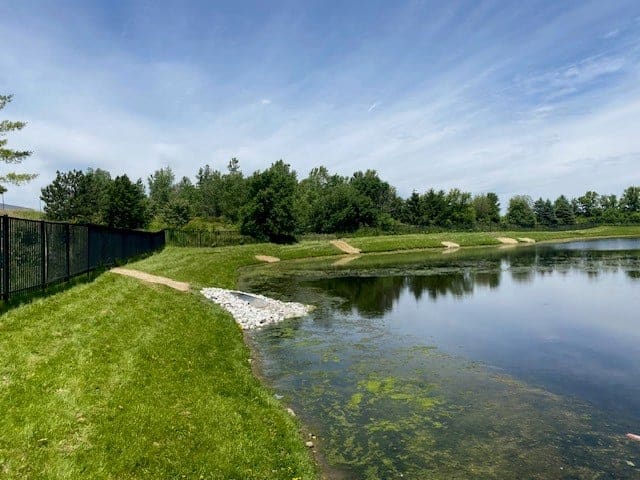
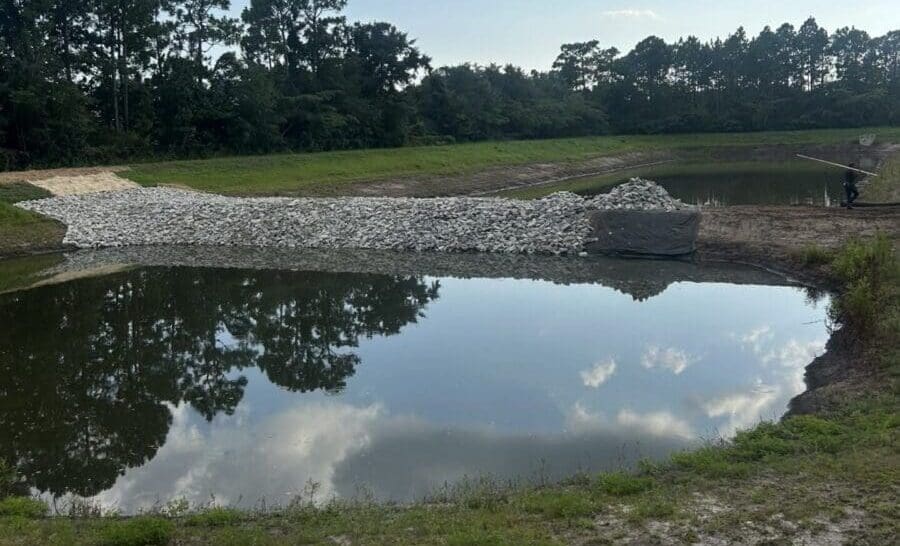
Stormwater facilities must be maintained so they function as intended and limit offsite environmental and drainage impacts. Routine inspection and maintenance can help keep overall maintenance costs at a minimum by detecting problems early. See Chapter 10 for operations and maintenance (O&M) plans and inspection and maintenance logs.
Operations and Maintenance (O&M) Plan
Except for driveway center strips and downspout extensions, each stormwater facility has a standard O&M plan that describes the required maintenance.
The Inspection and Maintenance Log
The Inspection and Maintenance Log documents completed O&M activities. The inspection and maintenance log must include all inspection dates, components inspected, and completed maintenance or repairs. It must also document deficiencies and corrective actions taken to keep structural and vegetative components in good working order. An example of an inspection and maintenance log is included on the back of each standard O&M plan. The City will also accept work orders, invoices, or receipts to document maintenance activities.
O&M Responsibility
The property owner or a designated responsible party is responsible for O&M. (For example, a stormwater facility manager or maintenance company may be the responsible party.) The property owner is responsible for ensuring that maintenance occurs and that maintenance records are kept even if someone other than the property owner is performing the maintenance. O&M practices must be consistent with the version of the stormwater management manual that was in effect when the original O&M form was filed or with the current O&M guidance for the stormwater facility. The property owner or responsible party must keep a copy of the O&M plan and O&M form.
O&M Enforcement
For a stormwater facility with an O&M plan, responsibilities and requirements for O&M are identified and enforced through the O&M plan and any O&M form in City records. Failure to properly operate or maintain a stormwater facility according to the O&M plan may result in a civil penalty, as specified in Portland City Code 17.38.045, Enforcement. This requirement is binding on all current and future owners of the property. The current responsible party is required to update the name of the responsible party as needed whenever the stormwater facility is inspected by BES.
View State Page
Frequently Asked Questions
Do I need to submit an Operations and Maintenance Plan for my Portland property?
If your property has any land-disturbing activity or on-site stormwater control facilities, you are likely subject to Cary’s stormwater requirements. The Town is the permitting authority for all land-disturbing activities and requires property owners to maintain all on-site stormwater control facilities and open-space areas required under an approved stormwater control plan. Construction permits are only issued to projects that establish a plan to manage stormwater runoff during the construction process.
Who is responsible for maintaining stormwater facilities on private property in Portland, Oregon?
The property owner. You must submit your O&M information to the city for approval and record it with the appropriate county for all required stormwater facilities, conveyance features, and impervious area reduction techniques on your property.
What if my Portland property shares a stormwater system with a neighboring property?
Each property owner served by that shared onsite system must record and file their own O&M submittal. All properties and owners served by the shared system jointly own it and are equally responsible for its operation and maintenance.
Do I need to keep a maintenance log for my stormwater facility in Portland?
Yes. Your inspection and maintenance log needs to note all inspection dates, the components inspected, and any maintenance or repairs performed, including documentation of deficiencies and the corrective action taken. The city may accept work orders, invoices, or receipts in place of a formal log.
Can the City of Portland inspect my stormwater facility on private property?
Yes. BES has the right to ensure your site complies with the O&M submittal you filed with the city, backed by code sections authorizing right of entry for inspections, the ability to issue a code violation, and the ability to take enforcement action and levy civil penalties. The city’s Maintenance Inspection Program specifically conducts post construction inspections of stormwater facilities on private property.
What happens after a maintenance inspection in Portland?
The inspector provides a report to the property owner or designated responsible party outlining any required corrective action and the deadline to complete it. BES generally works with owners and operators through technical assistance first; if that doesn’t lead to real improvement, the city may move to formal enforcement action. AQUALIS can help property owners address inspection findings during that initial assistance phase to avoid escalation.
What are the core goals of my Portland stormwater O&M plan?
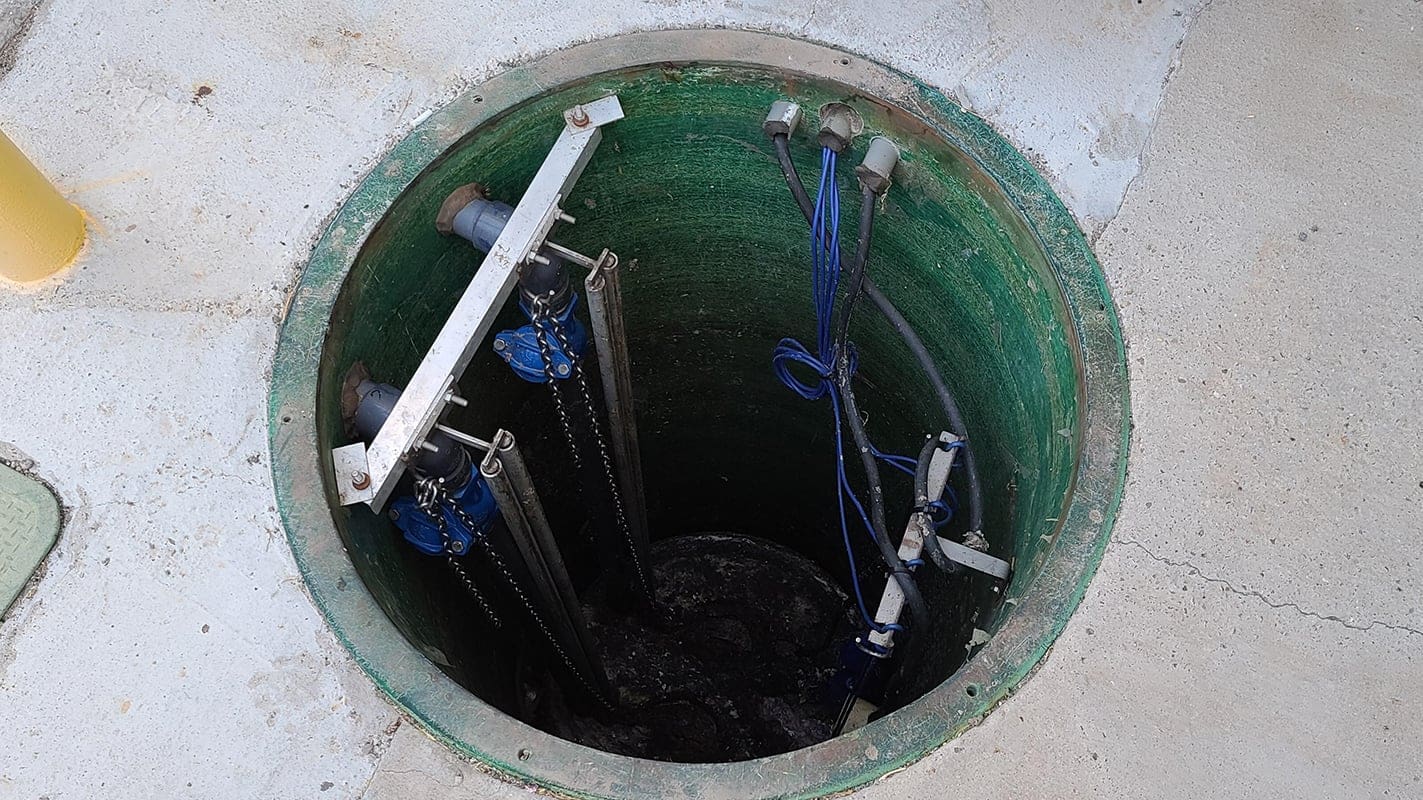
Your plan should relay maintenance information from the original designer or engineer to whoever performs maintenance going forward, identify every element of your onsite system (facilities, runoff sources, discharge locations, and conveyance features like pipes and outfalls), provide long-term guidance to prevent system deterioration, define the visual signs that maintenance is needed, set an inspection and maintenance schedule, and designate who’s responsible for carrying it out.
The information on this page is provided for general informational purposes only and is not legal advice. Regulations change frequently — AQUALIS makes no warranty as to the accuracy or completeness of this content, and any reliance on it is at your own risk. Consult a qualified professional or your local regulatory authority to confirm requirements applicable to your specific property.