



Last Updated 08/24/2026
Santa Fe Stormwater Regulations
The city of Santa Fe’s stormwater regulations primarily center on design and construction stages. Post-construction and maintenance standards come from the federal level, and are also generally addressed from a city ordinance most recently updated in 2002.
Terrain and Stormwater Management Ordinance, Chapter 14-8.2
(K ) Long Term Maintenance Responsibilities and Inspections
1. Responsibilities
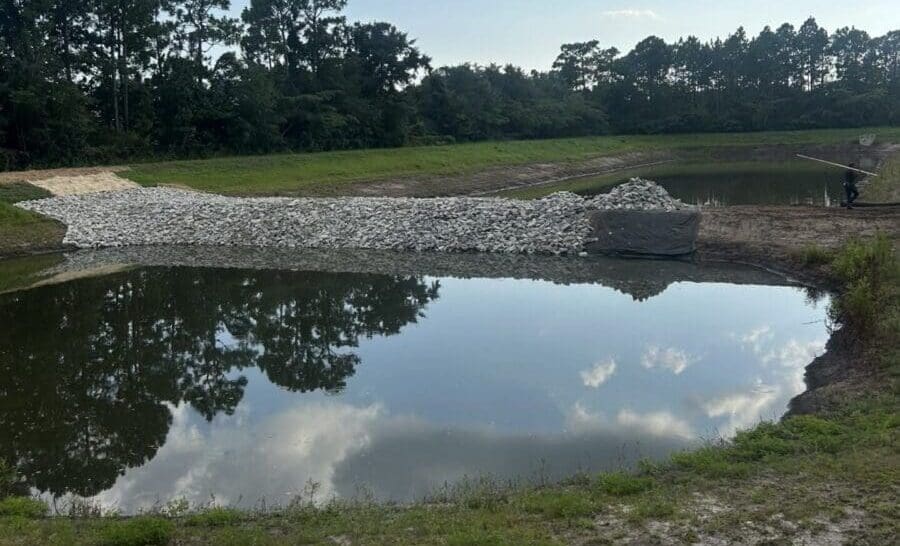
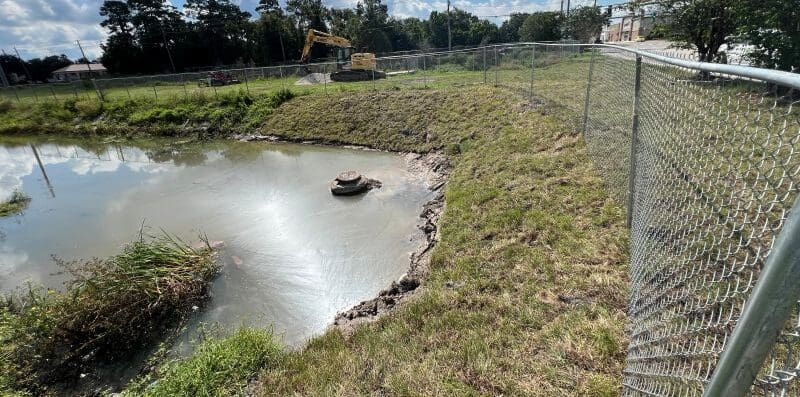
All stormwater management measures and facilities shall be maintained by the owner of the property or a homeowners association, unless a dedication of the stormwater management system has been required or accepted by the City, in which case, the City shall be responsible for maintenance. For developments of 15 or more dwelling units, developers shall provide liability and property damage insurance, in a form approved in writing by the City Attorney, in order to protect adjacent property owners from failure ofdrainage or erosion control structures which were required for the development. For new developments of fifteen or more dwelling units, performance bonds or their equivalent shall be posted by the developer for 10 years and thereafter, shall be renewed by the neighborhood or responsible association for maintaining all common drainage structures. Failure to renew the bond in a timely manner on an annual basis shall be grounds for the City Attorney’s office to call the bond. The bond must be in an amount sufficient to defray maintenance costs for 10 years. The stormwater management system shall be maintained in good condition and promptly repaired. Maintenance shall include the repair and restoration of all grade surfaces, walls, swales, drains, dams, ponds, basins, site restoration measures, associated vegetation, and any other stormwater measure constructed on site. Such maintenance shall be in accordance with approved stormwater management plans.
2. City Inspections
The City or its authorized agent may enter upon a property, which is subject to this section, at reasonable times to access the stormwater management system to ensure that the system is maintained in proper working condition to meet the approved stormwater management plans and the objectives and minimum standards of this section.
3. Maintenance Violations
If after notice by the City to correct a violation requiring maintenance work, satisfactory corrections are not made by the owner(s) or responsible party within a reasonable period of time, the City may perform all necessary work to place the facility in proper working condition. The owner(s) or responsible party of the facility shall be assessed the associated costs of the work.
Standards for Stormwater Management
General Standards
- stormwater management measures shall be selected to best accommodate the specific geologic, hydrologic and topographic features of the land to be developed;
- stormwater management measures shall be designed as both a comprehensive and integral part of the development;
- stormwater management measures shall be designed to directly address additional flows from the proposed development . Compliance with these standards shall not be achieved solely by alterations to flows upstream of a proposed development; and
- stormwater management plans may be designed to incorporate measures that are shared by two or more developments; provided that the measures comply with the minimum standards of this Section 14-8.2, including provision of an enforceable legal agreement for construction and maintenance.
Discharge Standards
- except as otherwise required by this Section 14-8.2, the stormwater runoff peak flow rate discharged from a site shall not exceed pre- development conditions for any frequency storm event up to the one percent chance, twenty-four-hour storm event at each discharge point;
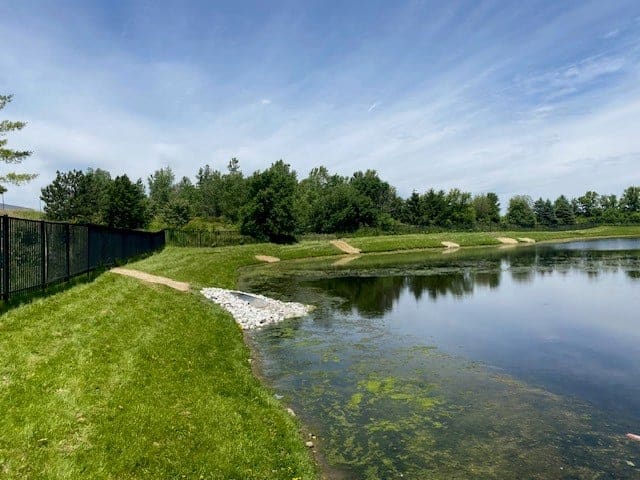
- runoff control measures may include the use of detention or retention basins and active water harvesting and passive water harvesting techniques, swales , berms, check dams, vegetative ground cover, permeable pavements , tree wells, dry wells, cisterns and other techniques appropriate for retaining and infiltrating water on site;
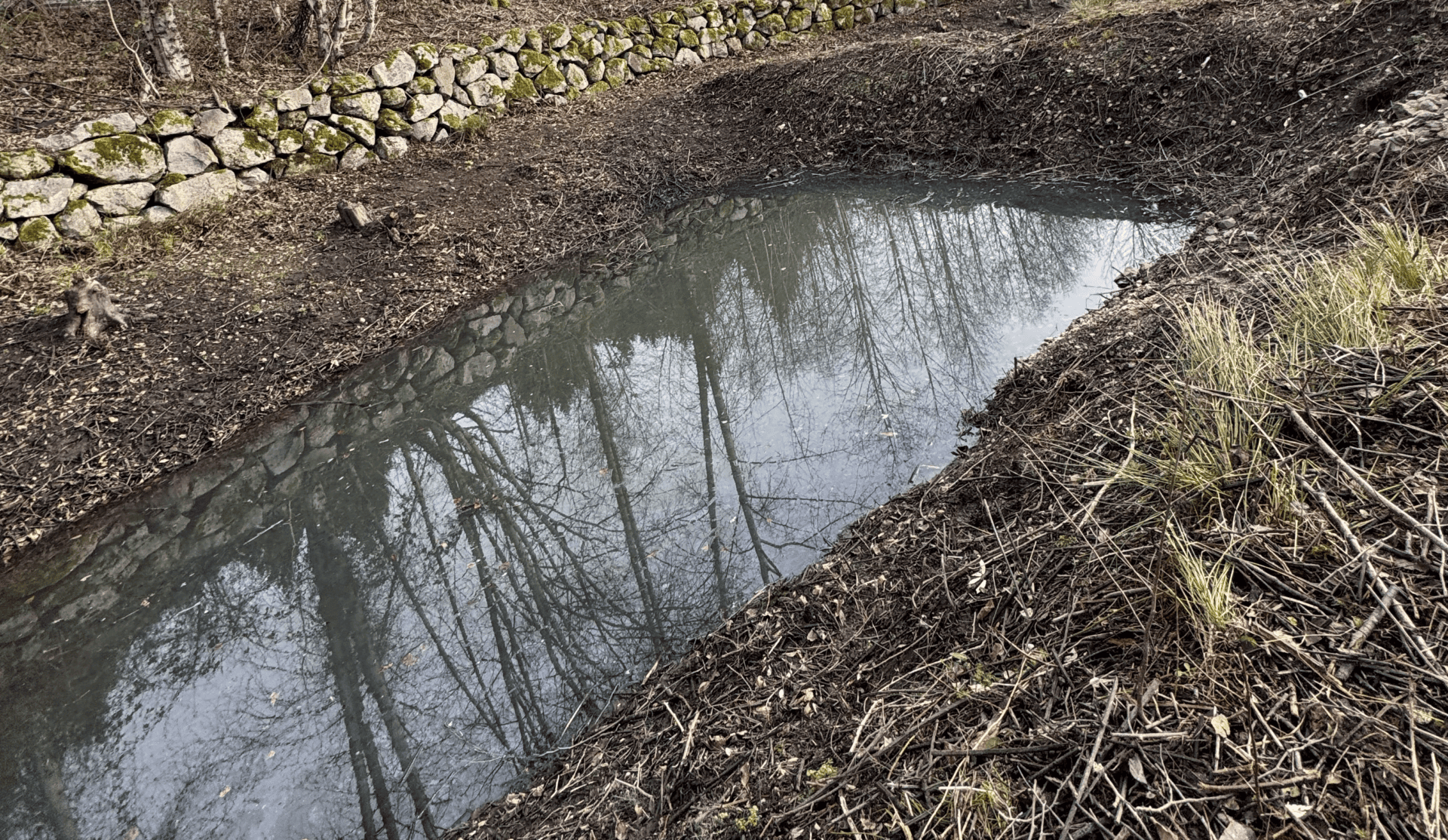
- stormwater shall not be discharged into any watercourse or drainage channel without adequate reduction of flow velocity, which shall be accomplished by erosion control techniques that may include the routing or energy dissipation of stormwater runoff to a vegetated swale , vegetated basin or stone-protected area. The techniques used shall be sufficient to diminish runoff velocity and spread runoff flow adequately to avoid erosion upon entering the watercourse;
- stormwater runoff shall not be routed into irrigation ditches, canals, acequias or watercourses related to an acequia system unless specific plans have been approved in writing by the person legally responsible for the operation and maintenance of the facility and the city engineer. The developer is responsible for obtaining all such approvals before submittal of an application; and
- an active, historic acequia, whether on site or off site, shall not be disturbed in any way by building development or construction activity unless specific plans have been approved in writing by the person or entity legally responsible for the operation and maintenance of the acequia. The developer is responsible for obtaining all such approvals before submittal of an application.
Detention Basin Standards
- stormwater detention basins and overflow structures shall be sized and designed to adequately accommodate flows from one percent chance , twenty-four-hour storm events; provided, however, that such basins shall also be equipped with outflow structures that limit flow-through from lesser magnitude storms to runoff rates equal to or less than pre- development runoff rates;
- infiltration, detention and retention basins shall provide a means of controlling and removing sediment. Methods may include sedimentation settling ponds, sediment traps, filters on drop inlets or other methods. All basins shall be designed to empty within no more than twenty-four hours;
- landscape treatment of detention and retention basins may be required in accordance with Section 14-8.4 (Landscape and Site Design); and
- discharge standards for minor development are provided in Subsection 14-8.2(E)(2).
Detention in Cisterns
- Cisterns may be used if they are connected to an irrigation system or other water use.
- A maximum of fifty percent of required stormwater detention volume may be stored in cisterns , except that one hundred percent may be stored in cisterns for minor development .
- Cisterns shall be installed and operated in compliance with applicable provisions of other regulations, including Section 14-8.4 (Landscape and Site Design) and Chapter 7 SFCC 1987 (Building and Housing).
Arroyo, Stream and Watercourse Standards
- for arroyos, streams or watercourses that carry one hundred (100) cubic feet per second or more of stormwater flow in a one percent chance event , all structures , paved roads, driveways and parking lots shall be set back a minimum of twenty-five (25) feet from the top shoulder of an arroyo plus the depth of the arroyo channel. This setback provision does not apply to stormwater management structures or public access trails. The city engineer may waive this provision, in writing, stating the reasons and basis for such approval, if evidence is provided by a professional engineer demonstrating arroyo bank stability;
- for arroyos, streams or watercourses that carry less than one hundred (100) cubic feet per second in a one percent chance event , the city engineer may require a setback based on soils and hydrologic information supplied by the applicant .
- except for erosion control measures, stormwater management measures, public access trails or the placement of underground utilities required for development , no grading shall occur within the setback area;
- where practical, erosion control and channel stability in arroyos, streams or watercourses shall be achieved using techniques that reduce stormwater velocity and pollution, preserve active floodplains , provide adequate room for flood waters to spread safely and use native vegetation. Arroyo and watercourse banks shall not be armored with concrete, gabion baskets, sheet piling, rip-rap or similar hardened material unless no reasonable alternative exists to protect public infrastructure or pre-existing structures ; and
- fences, walls and similar structures may not be constructed in or across an arroyo, stream or watercourse.
View State Page
Frequently Asked Questions
What is post-construction stormwater management, and does it apply to my property in Santa Fe?
Post-construction stormwater management covers the ongoing responsibility to maintain stormwater measures and facilities on your property under Santa Fe’s Terrain and Stormwater Management Ordinance, Chapter 14-8.2(K), which places this obligation on the property owner unless the City has formally accepted dedication of the system. If your Santa Fe property has grades, walls, swales, drains, dams, ponds, basins, or other stormwater measures installed under an approved plan, maintaining them is a continuing obligation, not a one-time construction requirement. AQUALIS provides post-construction stormwater management for property owners across Santa Fe, so these facilities stay compliant well after a project is finished.
What specific features on my Santa Fe property count as stormwater measures I need to maintain?
Santa Fe’s ordinance is specific about what counts as a stormwater measure requiring maintenance, including grades, walls, swales, drains, dams, ponds, basins, and vegetation, all of which must be kept in accordance with the property’s approved stormwater management plan. This is a broader list than many property owners expect, covering landscaping and grading features as well as engineered structures. AQUALIS maintains this full range of stormwater measures for Santa Fe property owners, keeping every element aligned with the original approved plan.
Can the City of Santa Fe inspect my stormwater facility without much notice?
Yes. The City of Santa Fe may inspect a property at reasonable times to access the stormwater management system and verify it complies with the approved plan and applicable standards. Property owners should be prepared for their facilities to be reviewed without a lengthy advance notice period. AQUALIS keeps Santa Fe properties inspection-ready year-round, so an inspection doesn’t turn into a compliance issue.
What happens if I don't correct a stormwater violation on my Santa Fe property in time?
If a property owner in Santa Fe fails to correct a violation within a reasonable timeframe, the City can perform the necessary work itself and assess the owner for all associated costs. This means delaying a fix doesn’t avoid the expense, it just shifts who performs the work and adds the City’s costs on top. AQUALIS provides non-compliance resolution for Santa Fe property owners, correcting maintenance issues before the City has to step in and bill the owner directly.
Who is responsible for stormwater maintenance if my Santa Fe property is part of a homeowners association?
For developments with 15 or more dwelling units, the homeowners association becomes responsible for the annual bond renewal that backs the stormwater system’s maintenance funding, in addition to whatever maintenance obligations already apply to the property under the ordinance. This puts ongoing compliance in the hands of an association board rather than a single property owner. AQUALIS works directly with homeowner associations in Santa Fe to manage both the physical maintenance and the bond renewal process.
Where can property owners in Santa Fe get help with post-construction stormwater compliance?
Post-construction stormwater compliance in Santa Fe involves maintaining a broad range of stormwater measures according to an approved plan, staying ready for City inspections, and for larger developments, carrying specific insurance and a 10-year performance bond with annual renewals. Managing all of this without dedicated stormwater staff is difficult for most property owners. AQUALIS offers post-construction stormwater management and non-compliance resolution for Santa Fe property owners, so owners can meet the City’s requirements without managing the process themselves.
The information on this page is provided for general informational purposes only and is not legal advice. Regulations change frequently — AQUALIS makes no warranty as to the accuracy or completeness of this content, and any reliance on it is at your own risk. Consult a qualified professional or your local regulatory authority to confirm requirements applicable to your specific property.