Last Updated 07/29/2026
Waco Regulations
City of Waco Code of Ordinance Excerpt
26.8 Section 26-327 Pollution Control Measures
(a) The responsible party of any construction site within the city shall implement measures necessary to control erosion, sedimentation, debris, and stormwater pollution. The responsible party is responsible for the maintenance and performance of the temporary pollution control measures until permanent measures are in place. The pollution controls are designed to be selected by the developer based on the most cost effective and appropriate means to provide the required controls.
City of Waco Stormwater Management Regulations
1.5 Floodplain Management
The intent of these regulations is to leave watercourses in a natural condition. While this is the intent, the developer may, upon approval of the City Engineer, change the location of existing channels and thus the location of the floodplain subject to the requirements of Section 1.7 of these regulations.
All development must comply with Chapter 11 “Flood Prevention and Protection” of the Code of Ordinances of the City of Waco, Texas.
Fences will not be allowed inside floodplains.
If development is planned within a floodplain the developer must mitigate any adverse impact on any other property and redelineate the floodplain based on themitigation implemented.
The ultimate floodplain delineation shall be based on the watershed contributing to the design point assuming upstream properties provide adequate detention.
All floodplains shall be computed utilizing the computer software and methodologies outlined in the Storm Drainage Design Manual.
1.10 Maintenance
The City will maintain drainage facilities that serve more than one property. The property owner will maintain drainage facilities that serve one property.
Mowing will not require a permit; however no excavation may be performed nor fill placed in an easement or floodplain without a permit.
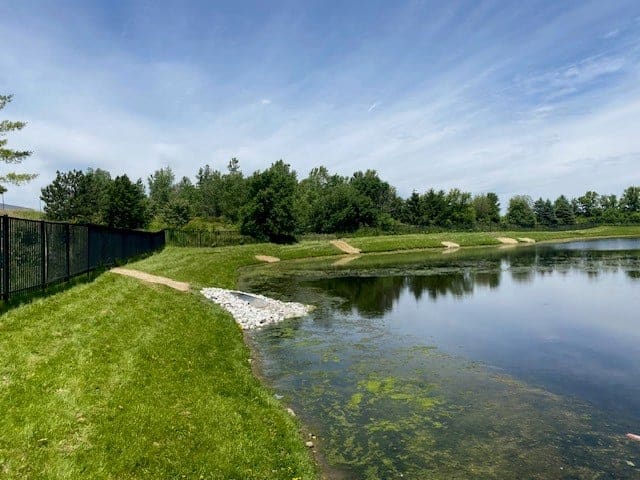
The City will perform major maintenance (e.g. dam maintenance, dredging) on detention facilities. The City will maintain drainage facilities, including mowing, within dedicated parks.
No maintenance may be performed within an identified wetlands prior to obtaining a permit from the US Army Corps of Engineers.
View State Page
Frequently Asked Questions
Who is responsible for pollution control at a construction site?
The responsible party for any construction site in the city must implement measures to control erosion, sedimentation, debris, and stormwater pollution. That party is also responsible for maintaining these temporary controls and keeping them performing properly until permanent measures are in place. The developer gets to choose which controls to use, based on what’s cost effective and appropriate for the site. AQUALIS can help developers select pollution control measures that meet the city’s requirements without overspending.
Can floodplain boundaries be changed during development?
Waco’s regulations are built around keeping watercourses in their natural condition. That said, with the City Engineer’s approval, a developer may change the location of an existing channel, which in turn shifts the floodplain boundary. Any development within a floodplain must comply with the city’s flood prevention and protection rules, and fences are not allowed inside floodplains.
Who maintains stormwater drainage facilities after construction, the city or the property owner?
It depends on how many properties the facility serves:
- Facilities serving more than one property: maintained by the city
- Facilities serving a single property: maintained by the property owner
The city also handles major maintenance on detention facilities, such as dam maintenance and dredging, and maintains drainage facilities (including mowing) within dedicated parks.
The information on this page is provided for general informational purposes only and is not legal advice. Regulations change frequently — AQUALIS makes no warranty as to the accuracy or completeness of this content, and any reliance on it is at your own risk. Consult a qualified professional or your local regulatory authority to confirm requirements applicable to your specific property.