

Last Updated 08/10/2026
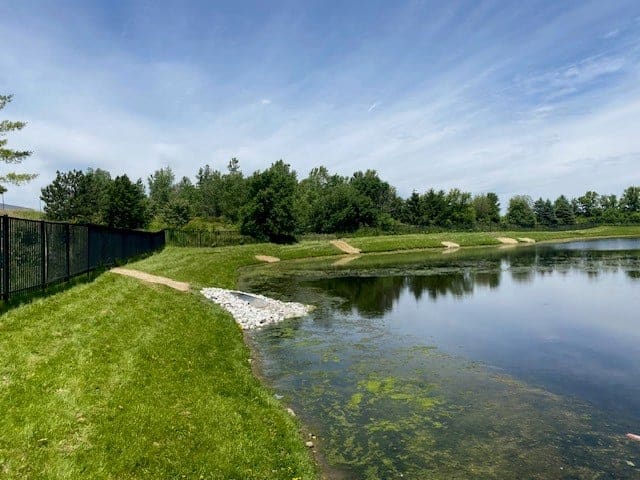
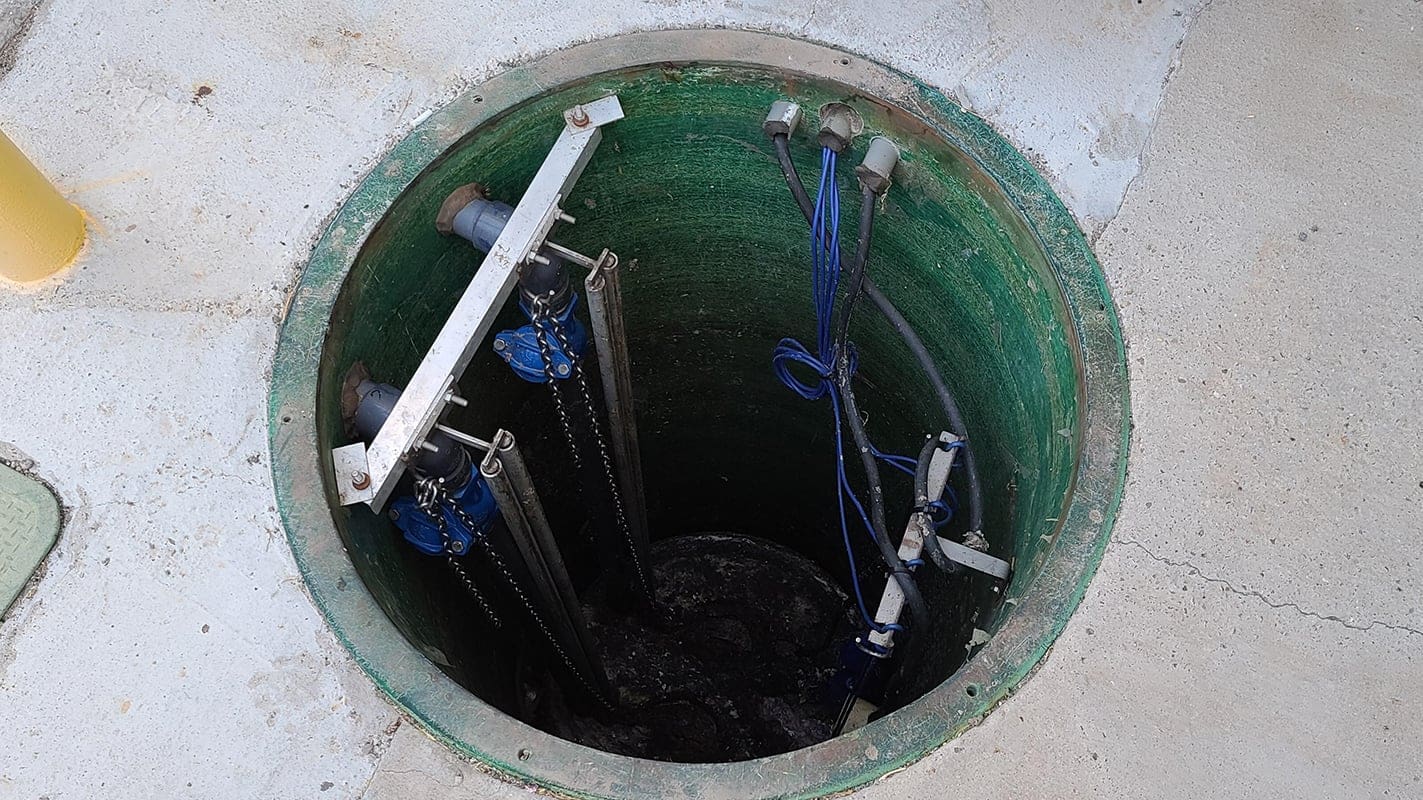
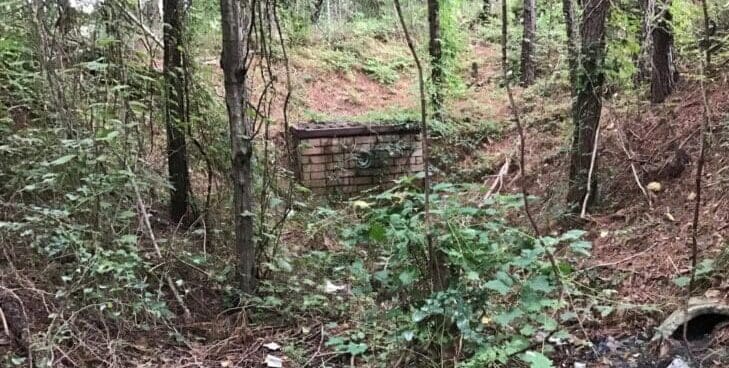
The County of Athens-Clarke has enacted a Stormwater Ordinance in order to establish minimum stormwater management requirements and controls to protect and safeguard the general health, safety, and welfare of the public residing in watersheds within this jurisdiction. The County of Athens-Clarke is the permitting authority for all land disturbing activities and requires the land owner to maintain all on-site stormwater control facilities and all open space areas (e.g. parks or “green” areas) required by the approved stormwater control plan. The County of Athens-Clarke will only provide construction permits to projects that establish a plan to manage stormwater runoff occurring during the construction process. The County of Athens-Clarke, under the NPDES program, also has the authority to inspect properties for noncompliance and can issue a notice of violation (NOV) for any deficiency or infraction onsite. Property owners are responsible for the maintenance of any stormwater facilities or practices located on the property. The County of Athens-Clarke has the authority to inspect stormwater facilities and practices in order to ascertain that they are properly maintained and functioning.
Stormwater Utility Fee
On October 18, 1972, the Federal Water Pollution Act of 1972 was enacted. Better known as the Clean Water Act, it was established “… to restore and maintain the chemical, physical, and biological integrity of the nation’s waters.” This act ensures that residents can be confident that their local communities are working diligently to protect the waters in their area.
Nonpoint source pollution is one of the biggest threats facing the health of our nation’s waters. For this reason, the federal government has required that Athens-Clarke County, and hundreds of other towns of similar size all across the country, meet certain guidelines in how to properly manage stormwater. The U.S. Environmental Protection Agency (EPA) established the Municipal Separate Sewer System (MS4) National Pollutant Discharge Elimination System (NPDES) Permit System to address nonpoint source pollution. The MS4 stormwater discharge permit establishes guidelines for local governments to minimize pollutants in stormwater runoff to the “…maximum extent practicable.”
In 1990, the EPA required large and medium cities (population greater than 100,000) to receive an NPDES Phase I permit. In 1999, the EPA expanded the NPDES permit to Phase II, which included smaller urban areas (population greater than 10,000). Athens-Clarke County received its NPDES Phase II permit under this expansion. This designation required Athens-Clarke County to develop a stormwater management program addressing six key areas:
- Public education and outreach
- Public involvement and participation in the stormwater program
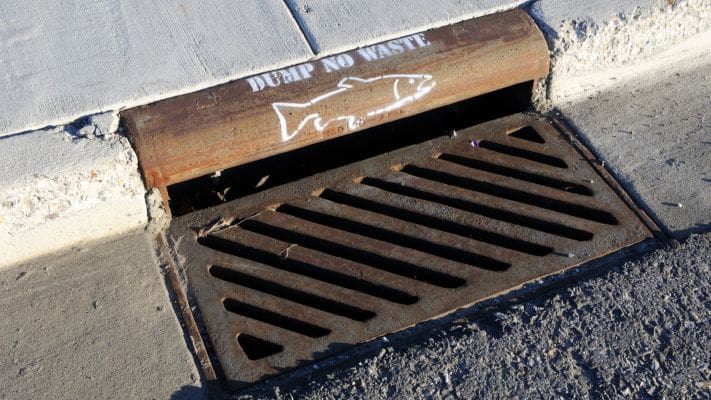
- Elimination of unlawful or illicit discharges
- Controls on new construction
- Post-construction management of wet-weather runoff
- Implementation of good housekeeping activities for municipal operations
In accordance with the Phase II permit, Athens-Clarke County was required to develop, implement, and enforce best management practices (BMPs) for stormwater management. Though Athens-Clarke County provided stormwater services for the county before these regulations took effect, the mandated program represented a significant increase from existing services. The Athens-Clarke County Unified Government chose to fund the implementation of these measures through the establishment of a stormwater utility in July of 2005, and with the establishment of this fee came a decrease in property tax rates (the millage rate was reduced from 13.40 to 12.80).
The Athens-Clarke County commissioners, with the input of the community through the Stormwater Advisory Committee, determined that establishing a stormwater utility would be the ideal way to successfully implement and fund an effective stormwater management program. Alternative sources of funding, such as property tax assessments for stormwater management, were also considered. However, raising property tax assessments to fully fund the program would not distribute the costs fairly. Ideally, the owners of properties who contribute considerable amounts of runoff to the stormwater system should be charged more than those that do not. By raising the tax rate, everyone is charged a similar rate regardless of their specific property use or on-site stormwater controls.
Some of the largest contributors to stormwater runoff, including schools, churches, and government buildings, are tax-exempt and would not pay their share through property taxes. Through the utility, these property owners pay a stormwater utility fee just as they pay for their water and sewer utility fees. The establishment of a stormwater utility ensures that everyone pays their fair share for the safe management of stormwater and sound protection of water quality in Athens-Clarke County.
Code of Ordinance
Sec. 5-4-9. – Ongoing inspection and maintenance of stormwater facilities and practices.
(a) Long-term maintenance inspection of stormwater facilities and practices. Stormwater management facilities and practices included in a stormwater management plan which are subject to an inspection and maintenance agreement must undergo ongoing inspections to document maintenance and repair needs and ensure compliance with the requirements of the agreement, the plan and this article.
A stormwater management facility or practice shall be inspected on a periodic basis by the responsible person in accordance with the approved inspection and maintenance agreement. In the event that the stormwater management facility has not been maintained and/or becomes a danger to public safety or public health, or threatens downstream water resources, the Department shall notify the person responsible for carrying out the maintenance plan by registered or certified mail to the person specified in the inspection and maintenance agreement. The notice shall specify the measures needed to comply with the agreement and the plan and shall specify the time within which such measures shall be completed. If the responsible person fails or refuses to meet the requirements of the inspection and maintenance agreement, the Department may correct the violation as provided in subsection 5-4-9(d) hereof.
Inspection programs by the Department may be established on any reasonable basis, including but not limited to: routine inspections; random inspections; inspections based upon complaints or other notice of possible violations; and joint inspections with other agencies inspecting under environmental or safety laws. Inspections may include, but are not limited to: reviewing maintenance and repair records; sampling discharges, surface water, groundwater, and material or water in stormwater management facilities; and evaluating the condition of stormwater management facilities and practices.
(b) Right-of-entry for inspection. The terms of the inspection and maintenance agreement shall provide for the Department to enter the property at reasonable times and in a reasonable manner for the purpose of inspection. This includes the right to enter a property for general inspections or when the Department has a reasonable basis to believe that a violation of this article is occurring or has occurred and to enter when necessary for abatement of a public nuisance or correction of a violation of this article.
(c) Records of maintenance activities. Parties responsible for the operation and maintenance of a stormwater management facility shall provide records of all maintenance and repairs to the Department.
(d) Failure to maintain. If a responsible person fails or refuses to meet the requirements of the inspection and maintenance agreement, the Department, after 30 days’ written notice by certified mail (except, that in the event the violation constitutes an immediate danger to public health or public safety, 24 hours’ notice shall be sufficient), may correct a violation of the design standards or maintenance requirements by performing the necessary work to place the facility or practice in proper working condition. The costs of the repair work shall be billed to the owner(s) of the facility. Failure of the owner(s) to pay the costs within 30 days of receipt of the bill shall result in 1.5 percent late charge on the unpaid balance of any bill that becomes delinquent. Suits for collection shall be commenced by Athens-Clarke County in the county of the owner’s residence; provided, however, if the owner is not a resident of this state, suit may be filed in the Superior Court of Athens-Clarke County.
(Ord. of 6-1-2004, § 1)
Lorem ipsum dolor sit amet
Any action or inaction which violates the provisions of this article or the requirements of an approved stormwater management plan or permit, may be subject to the enforcement actions outlined in this section. Any such action or inaction which is continuous with respect to time is deemed to be a public nuisance and may be abated by injunctive or other equitable relief. The imposition of any of the penalties described below shall not prevent such equitable relief.
(1) Notice of violation. If the applicant or other responsible person has failed to comply with the terms and conditions of a permit, an approved stormwater management plan or the provisions of this article, the Department shall issue a written notice of violation to such applicant or other responsible person. The violator shall have the amount of time specified in the written notice to correct the violation. If the violation is not corrected within the time specified in the written notice, the Department shall issue a stop work order requiring that all land disturbing activities on the project be stopped. Where a person is engaged in activity covered by this article without having first secured a stormwater permit, the Department shall issue an immediate stop work order in lieu of a written notice.
(2) Penalties. In the event the applicant or other responsible person fails to correct the violation by the date set forth in the notice of violation, any one or more of the following actions or penalties may be taken or assessed against the person to whom the notice of violation was directed.
a. Stop work order. The Department may issue a stop work order which shall be served on the applicant or other responsible person. A stop work order shall mean that all work on the project must stop unless the work pertains to correcting the violation or installing/maintaining erosion control best management practices in accordance with applicable local ordinances and state law. The stop work order shall remain in effect until the applicant or other responsible person has taken the remedial measures set forth in the notice of violation or has otherwise cured the violation or violations described therein, provided the stop work order may be withdrawn or modified to enable the applicant or other responsible person to take the necessary remedial measures to cure such violation or violations.
b. Withhold certificate of occupancy. The Department may request that the Athens-Clarke County Building Permits and Inspections Department refuse to issue a certificate of occupancy for the building or other improvements constructed or being constructed on the site until the applicant or other responsible person has taken the remedial measures set forth in the notice of violation or has otherwise cured the violations described therein.
c. Suspension, revocation or modification of permit. The Department may suspend, revoke or modify the permit authorizing the land development project. A suspended, revoked or modified permit may be reinstated after the applicant or other responsible person has taken the remedial measures set forth in the notice of violation or has otherwise cured the violations described therein, provided such permit may be reinstated upon such conditions as the Department may deem necessary to enable the applicant or other responsible person to take the necessary remedial measures to cure such violations.
d. Criminal penalties. Any person who violates any provision of this article shall be punished as provided in section 1-1-5 of this Code. Each act of violation and each day upon which any violation shall occur shall constitute a separate offense.
View State Page
Frequently Asked Questions
Why does Athens-Clarke County charge a stormwater utility fee instead of just raising property taxes?
When the county’s NPDES Phase II permit required a full stormwater management program in the early 2000s, commissioners considered funding it through higher property taxes but rejected that approach because it would spread costs evenly regardless of how much runoff a property actually generates. A stormwater utility fee lets the county charge property owners based on their actual impact on the system instead. It also captures revenue from major runoff contributors like schools, churches and government buildings that are tax-exempt and wouldn’t otherwise pay into the program, which is part of why the fee’s creation came paired with an actual reduction in the county’s millage rate.
How does Athens-Clarke County handle a stormwater facility that's falling out of maintenance?
If a facility under an inspection and maintenance agreement isn’t being kept up, the department notifies the responsible party by certified mail, specifying what needs fixing and a deadline to do it. That notice period is 30 days under normal circumstances, but drops to just 24 hours if the condition poses an immediate danger to public health or safety. If the owner still doesn’t act, the county can perform the repair itself and bill the cost back, with a 1.5% monthly late charge kicking in on any unpaid balance after 30 days.
What can Athens-Clarke County inspect, and how often?
Inspections can happen on a routine, random or complaint-driven basis, and the county’s right of entry covers reviewing maintenance records, sampling discharge or surface water, and physically evaluating a facility’s condition. There’s no single fixed schedule since the county built flexibility into how often it checks, which means a property with a clean maintenance history might see far fewer inspections than one with a history of complaints or violations.
What happens if a stormwater violation stops active construction in Athens-Clarke County?
The department first issues a written notice specifying the correction needed and a deadline. If that deadline passes without resolution, the county can issue a stop work order halting all land disturbing activity on the project except work directly tied to fixing the violation. Beyond stopping work, the county can also withhold a certificate of occupancy or suspend, revoke or modify the project’s permit until the violation is cured, so an unresolved issue can hold up an entire project’s timeline, not just draw a fine.
What are the penalties for an ongoing stormwater violation in Athens-Clarke County?
Beyond a stop work order or permit action, violations carry criminal penalties under the county’s general code, and each day a violation continues counts as a separate offense. A continuous violation is also treated as a public nuisance, which the county can address through injunctive relief on top of any other penalty. That layered approach, criminal, civil and equitable, gives the county several ways to compel a fix if a property owner doesn’t respond to the initial notice.
The information on this page is provided for general informational purposes only and is not legal advice. Regulations change frequently — AQUALIS makes no warranty as to the accuracy or completeness of this content, and any reliance on it is at your own risk. Consult a qualified professional or your local regulatory authority to confirm requirements applicable to your specific property.