
Last Updated 07/22/2026
California Stormwater Laws & Regulations
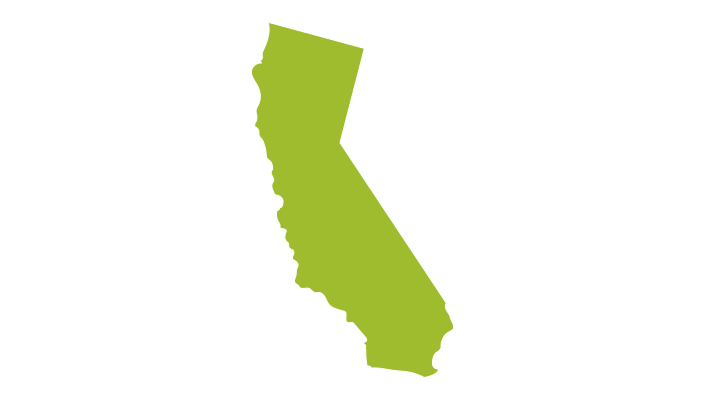
The State of California operates under the National Pollutant Discharge Elimination System (NPDES) program under the authorization of the U.S. Environmental Protection Agency (EPA). The State Water Resources Control Board (State Water Board) manages the permitting and compliance of stormwater discharge with nine regional water quality control boards across the state.
EXCERPT- Construction Stormwater Program
Construction General Permit
Dischargers whose projects disturb one (1) or more acres of soil or whose projects disturb less than one acre but are part of a larger common plan of development that in total disturbs one or more acres, are required to obtain coverage under the General Permit for Discharges of Storm Water Associated with Construction Activity Construction General Permit Order 2009-0009-DWQ. Construction activity subject to this permit includes clearing, grading and disturbances to the ground such as stockpiling, or excavation, but does not include regular maintenance activities performed to restore the original line, grade, or capacity of the facility.
The Construction General Permit requires the development of a Storm Water Pollution Prevention Plan (SWPPP) by a certified Qualified SWPPP Developer (QSD). Many California Board of Professional Engineers, Land Surveyors and Geologists (CBPELSG) have self-certified. In addition the California Stormwater Quality Association (CASQA) has a lookup tool to find licensed QSDs: CASQA QSP/QSD Lookup Tool.
Other Permits
The Lahontan Regional Water Board (Regional Water Board 6SLT) has adopted its own permit to regulate storm water discharges from construction activity in the Lake Tahoe Hydrologic Unit. Owners of construction projects in this watershed must apply for the Regional Water Board permit rather than the statewide Construction General Permit. Construction projects within the Lake Tahoe Hydrologic Unit must comply with the Construction General NPDES Permit for the Lake Tahoe Basin (R6T-2011-0019) for remainder of 2016. Construction General NPDES Permit for the Lake Tahoe Basin (R6T -2016-0010, effective January 1, 2017).
EXCERPT- California NPDES Wastewater Website
WHERE DO I DISCHARGE?
WHERE SHOULD I GET MY PERMIT?
This map shows the nine Regional Water Board boundaries which are based on watersheds. Using the map, determine where your discharge will occur and contact the appropriate Regional Water Board NPDES Program Manager for that region. The contact information for the Regional Water Board NPDES Program Managers is shown in the table below.
View State Page
Frequently Asked Questions
Who administers stormwater permitting in California, the state or the EPA?
The State Water Resources Control Board, operating under NPDES authorization from the EPA. The State Water Board manages permitting and compliance directly, working through nine regional water quality control boards organized around the state’s watersheds rather than a single statewide office.
What size construction project needs Construction General Permit coverage in California?
Any project disturbing one acre or more of soil, and smaller projects count too if they’re part of a larger common plan of development that totals one acre or more once combined. Covered activity includes clearing, grading, and ground disturbances like stockpiling or excavation, but doesn’t include regular maintenance work that simply restores a facility’s original line, grade, or capacity.
Who can prepare my Stormwater Pollution Prevention Plan in California?
A certified Qualified SWPPP Developer, or QSD. Many California-licensed professional engineers, land surveyors, and geologists have self-certified in this role, and the California Stormwater Quality Association maintains a lookup tool to help you find one if your own engineer or surveyor isn’t already certified.
Does the statewide Construction General Permit apply everywhere in California?
Almost everywhere, with one notable exception. The Lahontan Regional Water Board has adopted its own separate permit for construction stormwater discharges within the Lake Tahoe Hydrologic Unit, so projects in that watershed apply for the regional Lake Tahoe permit instead of the statewide Construction General Permit.
How do I know which regional water board has jurisdiction over my California property?
It depends on the watershed your discharge flows into, not county or city lines. The State Water Board publishes a map of the nine regional board boundaries, and once you identify which region your property falls in, you can contact that board’s NPDES Program Manager directly for permit-specific guidance.
Does a state Construction General Permit replace local city or county stormwater requirements?
No. As we’ve seen across California cities and counties, from Roseville’s annual permit cycle to LA County’s facility registration program, local jurisdictions layer their own ordinances and inspection requirements on top of the state permit. Meeting the Construction General Permit’s terms is necessary but often not sufficient on its own.
How can AQUALIS help my property navigate California's Construction Stormwater Program?
AQUALIS helps California property owners and developers determine whether their project needs Construction General Permit coverage, connects with qualified SWPPP Developers to prepare required plans, and confirms which regional water board and local jurisdiction apply to a specific site.
The information on this page is provided for general informational purposes only and is not legal advice. Regulations change frequently — AQUALIS makes no warranty as to the accuracy or completeness of this content, and any reliance on it is at your own risk. Consult a qualified professional or your local regulatory authority to confirm requirements applicable to your specific property.