

Last Updated 08/25/ 2026
Stormwater Code: Excerpts from Hamilton, New Jersey, Code of Ordinance
550-133 Stormwater Management
Purpose
Development often changes the hydrologic and hydraulic regime of the watersheds in which it is effected. Increased flooding, increased erosion of channels and increased pollutant loadings are some of the problems associated with uncontrolled development. The objectives, therefore, of this section of the Code of the Township of Hamilton, Mercer County, New Jersey, are:
- To effectively and efficiently control and manage the quantity of stormwater runoff for flood mitigation.
- To reduce pollutant loadings to both surface waters and groundwaters due to developments.
- To preserve and enhance environmentally sensitive areas.
- To uphold the quality of life and the public good.
General standards
Each site shall take into consideration the general and specific concerns of the Township, county and state on the environment and flood control. To this end, a stormwater management system shall be designed and installed for the development and shall satisfy the following:
- The system shall be adequate to carry off or store the stormwater and natural drainage water which originates not only within the lot or tract boundaries but also that which originates beyond the lot or tract boundaries. No stormwater runoff or natural drainage water shall be so diverted as to overload existing drainage systems or create flooding or increase erosion or cause the need for additional drainage structures on other private properties or public lands without proper and approved provisions being made for management of these conditions.
- Wherever possible, all lots shall be designed to provide positive drainage to the roadway fronting the same. Where this is impossible, the disposal of storm drainage through adjacent properties shall be through easement areas.
- Drainage structures which are proposed to be located on state or county highway rights-of-way shall be approved by the state or county highway engineer’s office. Any drainage structures within wetlands or resulting in stream encroachments shall be submitted to the New Jersey Department of Environmental Protection, and a letter from that office shall be directed to the administrative officer prior to final approval or any construction.
- Where a lot or tract is traversed by a watercourse, surface or underground drainageway or drainage system, channel or stream, there shall be provided and dedicated a drainage easement to the Township. This easement shall substantially conform to the lines of such watercourse and be of such width as will be adequate to accommodate expected stormwater runoff in the future.
Design criteria
Water quality control
Water quality control shall be accomplished without considering infiltration of the runoff generated by the one-year twenty-four-hour Type III storm or 1 1/4 inches of rainfall in two hours. Provisions shall be made for the runoff to be detained and released at a rate so that not more than 90% is evacuated in 18 hours for residential developments and 36 hours for other developments or, alternatively, utilize a minimum orifice of three inches.
Flood mitigation
Detention facilities.
- Detention storage shall be above the elevation of the one-hundred-year flood. If this cannot be maintained, then the usable storage shall be a proportionate share of the actual volume of the basin.
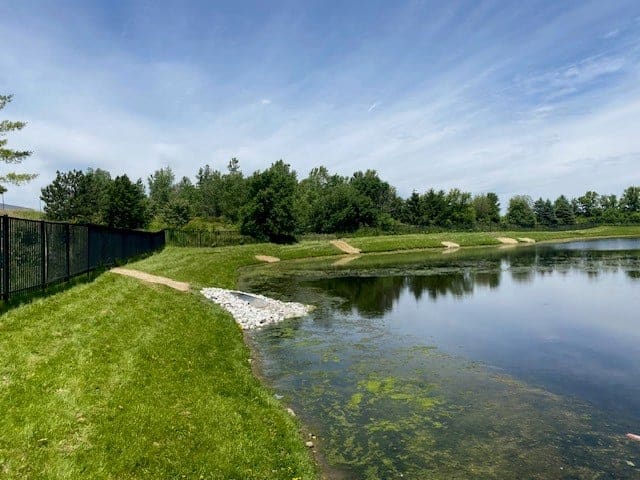
- Detention basins and their outfalls shall have sufficient easement for the facility plus an unobstructed access around the top of the basin for maintenance. The size of the easement shall be 10 feet to 30 feet, as site conditions dictate. All detention basins shall have a one-foot or greater freeboard above the maximum one-hundred-year flood elevation.
- Where safety is a concern, the Township may request the installation of fences around detention basins. For safe movement of personnel and safe operation of equipment, fences should not be constructed within five feet of either the top or toe of any side slope that exceeds five horizontal to one vertical.
- Maximum side slopes for detention basins shall be three horizontal to one vertical for detention basins not greater than five feet deep. For basins five feet deep and greater, the maximum side slope shall be four horizontal to one vertical. Flatter side slopes are recommended whenever possible.
- Minimum bottom slopes for detention basins shall be 2% and graded to the outlet structure. Concrete low-flow channels are acceptable if the minimum grade is 1/2 of 1%.
- All outfalls, flare-end sections, headwalls and erodible soils shall be adequately protected according to the Standards for Soil Erosion and Sediment Control in New Jersey.
- It shall be the responsibility of the applicant to demonstrate that existing storm sewer systems are not overloaded by the discharge of additional stormwater into the system.
- Basins shall be designed and landscaped to be an aesthetic asset to the site.
- The basin must be readily accessible from a street or other public right-of-way. Inspection and maintenance easements, connected to the street or right-of-way, should be provided. The exact limits of the easements and rights-of-way shall be specified on the project plans and other appropriate documents.
- Access roads shall be wide enough to allow the passage of necessary maintenance vehicles and equipment, including trucks, backhoes, grass mowers and mosquito-control equipment. In general, a minimum right-of-way width of 15 feet and a minimum roadway width of 10 feet shall be provided. To facilitate entry, a curb cut shall be provided where an access road meets a curbed roadway. To allow a safe movement of maintenance vehicles, access ramps shall be provided to the bottoms of all detention facilities greater than five feet in depth. Access ramps shall not exceed 10% in grade.
Outlet devices.
- In all cases, multiple-level outlets or other fully automatic outlets shall be designed so that discharge rates from the development for the design storms will not be increased from that which would occur if the development were not constructed. Outlets’ waters shall be discharged from the development at such locations and velocities as not to cause additional erosion. No outlets shall be permitted directly into adjacent lands without proof of a zero increase in the rate or runoff at the point of discharge and a stability analysis of the off-site channel.
- If there is no stable outlet downstream, an off-site easement must be obtained to a stable outlet. Outlets from detention facilities shall be designed to function without manual or electric controls. The location of the principal outlet shall allow for easy access.
- Grading and landscaping around outlet structures shall be designed to facilitate mowing, trimming, debris removal and other general maintenance tasks.
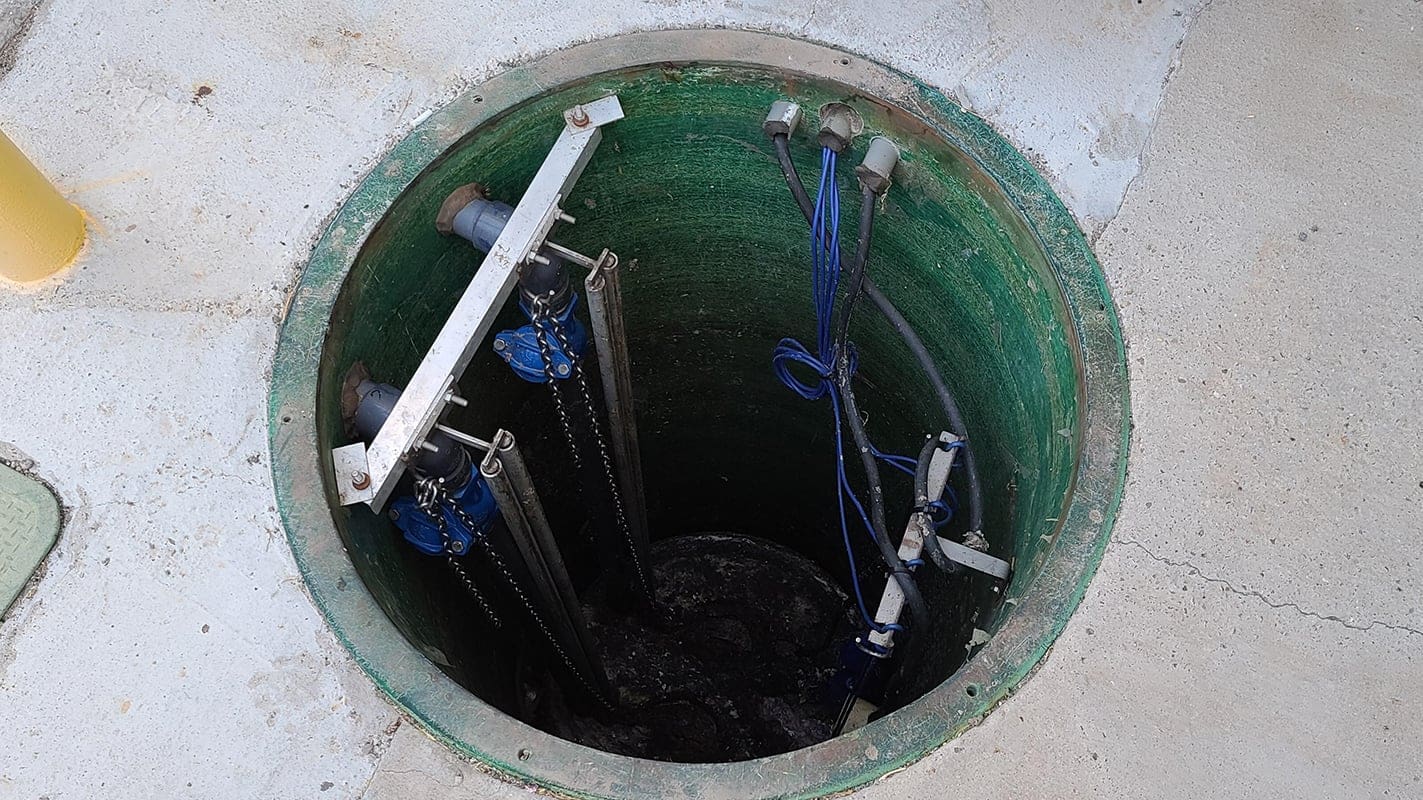
- Trash racks with hinges are required to protect the outlet from clogging. The inside of the outlet structure should be depressed below the lowest outlet to minimize clogging of this outlet due to sedimentation.
Submission requirements
The principles and standards stipulated in this section shall be applicable to all developments which are subject to review and approval by the Township of Hamilton. The stormwater management report to be submitted shall include, at a minimum, the following:
- A summary page to include drainage area, predevelopment and post-development curve number (CN), time of concentration (TC), predevelopment and post-development discharge (CFS) for the two-, ten- and one-hundred-year storms and the total storage volume in the basin.
- Computations of runoff curve numbers (CN), which shall include soil types and existing and proposed land uses. A predevelopment and post-development drainage map is required.
- Calculations for determination of the time of concentration. The path of surface runoff used to determine the time of concentration for predevelopment and post-development conditions shall be shown. Calculations shall include off-site drainage, if applicable. A plan is required to show the predevelopment and post-development drainage areas as well as the path used for time of concentration (TC).
- Calculations for predevelopment and post-development discharges for all required design storms. The detention basin chart shall include for incremental elevations the basin area, basin volume and cumulative basin volume.
- Design and calculations of emergency spillways, riprap aprons, swales and other soil erosion and sediment control features. Design and calculations shall be in conformance with the Standards for Soil Erosion and Sediment Control in New Jersey.
- Hydrologic and hydraulic calculations for the storm sewer collection system, culverts and other stormwater facilities. A drainage area map showing subdrainage areas shall be submitted.
- Hydrologic and hydraulic calculations for stream delineations, floodway and flood hazard limits in accordance with the NJDEP Stream Encroachment Manual, where the Federal Emergency Management Agency (FEMA) or the state has not delineated a stream.
In order to provide general guidelines for the many types of development covered by this section, the following categorizations are made:
- Category No. 1: development that concurrently contains mostly impervious area and where additional development and/or site modifications will cause no increase in runoff and/or impervious area. Stormwater management reports for this type of development shall address water quality control as the dominant concern. However, if the area is known to have persistent flooding problems, a detention basin or some other kind of storage or flood mitigation shall be required.
- Category No. 2: development not covered in Category No. 1 and where the site is less than 10 acres in total area. Stormwater management reports shall require both water quality control and flood mitigation measures. Calculations shall be performed in accordance with the current NJDEP Standards.
- Category No. 3: development not covered under either of the two categories above. Stormwater management reports shall require both water quality control and flood mitigation measures. Calculations shall be performed in accordance with the current NJDEP Standards.
Maintenance and repair
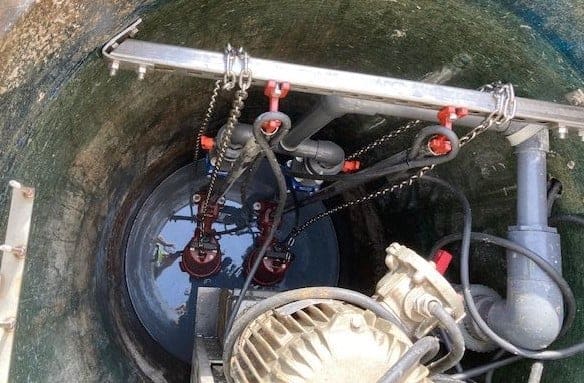
- Unless assumed by a governmental agency, responsibility for the operation and maintenance of stormwater management facilities shall remain with the owner or owners of the property with permanent deed provisions requiring that it shall pass to any successive owner or operator of the site. The operation and maintenance of detention facilities shall include but not be limited to the periodic removal and disposal of accumulated particulate material and debris.
- If portions of the land are to be sold, legally binding arrangements shall be made to pass the basic responsibility to successors in title. These arrangements shall designate for each project the property owner, governmental agency or other legally established entity to be permanently responsible for maintenance.
- Prior to granting final approval to any project subject to review under this section, the applicant or responsible party shall enter into an agreement with a government agency or a legally established entity to ensure the continued operation and maintenance of the stormwater management facility. The responsible party may be but is not limited to a homeowners’ association if the property is subdivided and sold separately. This agreement shall be in a form satisfactory to the Township and may include but may not necessarily be limited to personal responsibility, covenants and bonds. Penalties for noncompliance with the maintenance requirements shall be part of the agreement.
- An easement shall be executed with the governmental agency or other entity to ensure the continued operation and maintenance of the stormwater management facility. If the responsible party fails to maintain the stormwater management facility, the governmental agency or entity shall perform the maintenance, charge the owner and place a lien upon the property of the owner until such charges are satisfied.
- The applicant or owner shall submit an as-built plan of the basin and its outlet structure after construction to ensure proper volume and outlet structure construction.
View State Page
Frequently Asked Questions
Who is responsible for maintaining a stormwater facility on my property in Hamilton Township?
Property owners in Hamilton Township retain permanent responsibility for the operation and maintenance of stormwater control facilities on their site, and this obligation is transferable through deed provisions to any successive owner of the property. That means the maintenance responsibility does not go away when a property changes hands. AQUALIS manages this ongoing maintenance obligation for Hamilton Township property owners, so the facility keeps performing as intended regardless of ownership changes.
What ongoing maintenance tasks does my stormwater facility in Hamilton Township require?
Under the township’s stormwater ordinance, property owners are responsible for the periodic removal and disposal of accumulated particulate material and debris from their stormwater facilities. Left unaddressed, this kind of buildup can reduce a system’s capacity and interfere with proper drainage. AQUALIS handles this periodic maintenance for Hamilton Township property owners, keeping facilities clear and functioning as designed.
What happens if I don't keep up with stormwater maintenance on my Hamilton Township property?
If a property owner in Hamilton Township fails to maintain a stormwater facility, the township or a designated entity can step in to perform the necessary work and place a lien on the property to recover the cost. That makes ongoing maintenance far less expensive than letting a deficiency go unaddressed. AQUALIS helps Hamilton Township property owners stay ahead of maintenance needs, so the township never has reason to intervene.
How does the Township of Hamilton verify that my stormwater facility is being properly maintained?
Hamilton Township inspects stormwater facilities to verify that they are being properly maintained and are functioning as intended, using its authority under the NPDES program. Deficiencies found during these inspections can result in a notice of violation to the property owner. AQUALIS conducts proactive inspections on Hamilton Township properties ahead of township visits, helping owners catch and resolve issues before they become violations.
Where can I find help managing all of my stormwater compliance needs in Hamilton Township?
Between design criteria that span water quality control to emergency spillways, permanent deed-linked maintenance responsibility, as-built documentation requirements, and a township enforcement process that can end in a lien, staying compliant in Hamilton Township involves more than most property owners want to manage alone. AQUALIS offers Hamilton Township property owners a single point of contact for stormwater management, covering maintenance, inspections, documentation, and violation response, so property owners can meet the township’s requirements without handling every detail themselves.
The information on this page is provided for general informational purposes only and is not legal advice. Regulations change frequently — AQUALIS makes no warranty as to the accuracy or completeness of this content, and any reliance on it is at your own risk. Consult a qualified professional or your local regulatory authority to confirm requirements applicable to your specific property.