

Last Updated 08/25/2026
Excerpts from Jersey City, New Jersey Code of Ordinance
Article VI- Stormwater Control
Stormwater control
A. Policy statement. As Jersey City is developed, additional Impervious Surfaces are added throughout the Municipality. These Impervious Surfaces disrupt the natural flow of the watershed, resulting in increased amounts of Stormwater Runoff during precipitation events. Stormwater Runoff collects Pollutants as it flows over parking lots, roadways, rooftops, and other paved or hardened surfaces, through Stormwater conveyances, and into our rivers. In addition to conveying Pollutants into our waterbodies, increased Stormwater Runoff also leads to Erosion and flooding downstream.
Further, Jersey City’s Stormwater infrastructure is mainly comprised of Combined Sewer Systems (“CSS”). CSS carry Stormwater and wastewater in the same pipes to treatment facilities. The volume of runoff produced during storm events routinely overwhelms the capacity of these systems, resulting in combined sewer overflow (“CSO”) events, which discharge untreated sewage and polluted Stormwater directly to nearby waterbodies.
Low Impact Development or “LID” (also referred to as “Green Infrastructure”) practices restore or mimic natural conditions, allowing rainwater to infiltrate the Soil, evapotranspirate into the air, or be captured for re-use. These practices deal with the Stormwater at its source rather than after it has been channeled downstream. LID techniques can be implemented at Site, neighborhood, or regional scales and include both nonstructural practices such as Site planning and design, and structural Best Management Practices (“BMPs”). Nonstructural BMPs include the implementation of Green Infrastructure such as Porous Pavement, green roofs, parks, roadside plantings, and rain barrels (GI BMPs).
GI BMPs and Low Impact Development (LID) should be utilized to meet the goal of maintaining natural hydrology to reduce Stormwater Runoff volume, reduce Erosion, encourage Infiltration and groundwater Recharge where feasible, and reduce pollution. GI BMPs and LID should be developed based upon physical Site conditions and the origin, nature and the anticipated quantity, or amount, of potential Pollutants. Multiple Stormwater management BMPs may be necessary to achieve the established performance standards for water quality, quantity, and groundwater Recharge. By capturing rainwater and runoff, GI BMPs can lessen the impact on Jersey City’s CSS, and reduce or eliminate the number of CSO events. LID practices also result in additional benefits for Jersey City, including providing open space and beautifying neighborhoods, cooling and cleansing the air, reducing asthma and heat-related illnesses, raising property values, and saving on heating and cooling energy costs.
Design and performance standards for Stormwater Management Measures:
A. Stormwater Management Measures for Major and Minor Development shall be designed to provide Erosion control, groundwater Recharge, Stormwater Runoff quantity control, and Stormwater Runoff quality treatment as follows:
- The minimum standards for Erosion control are those established under the Soil and Sediment Control Act, N.J.S.A. 4:24-39 et seq., and implementing rules at N.J.A.C. 2:90.
- The minimum standards for groundwater Recharge, Stormwater quality, and Stormwater Runoff quantity shall be met by incorporating Green Infrastructure.
B. Unless otherwise indicated, the standards in this section apply only to new Major and Minor Development as defined herein and are intended to minimize the impact of Stormwater Runoff on water quality and water quantity in receiving water bodies and achieve additional environmental benefits, including maintaining groundwater Recharge. The standards do not apply to new Major Development to the extent that alternative design and performance standards are applicable under a regional Stormwater management plan or Water Quality Management Plan adopted in accordance with Department rules.
Stormwater management requirements for Major Development:
- Any Stormwater Management Measure authorized pursuant to this article shall be reflected in a deed notice recorded in the Office of the County Clerk or the registrar of deeds and mortgages of the county in which the Development, project, project Site, or mitigation area containing the Stormwater Management Measure is located. A form of deed notice shall be submitted to the reviewing agency for approval prior to filing. The deed notice shall contain a description of the Stormwater Management Measure(s) used to meet the Green Infrastructure, Stormwater retention, groundwater Recharge, Stormwater Runoff quality, and Stormwater Runoff quantity standards at Sections 5, 6, 7, 8, 9, and 10 and shall identify the location of the Stormwater Management Measure(s) in NAD 1983 State Plane New Jersey FIPS 2900 US Feet or Latitude and Longitude in decimal degrees. The deed notice shall also reference the maintenance plan required to be recorded upon the deed pursuant to Section 15.B.5 Prior to the commencement of construction, proof that the above required deed notice has been filed shall be submitted to the Review Agency. Proof that the required information has been recorded on the deed shall be in the form of either a copy of the complete recorded document or a receipt from the clerk or other proof of recordation provided by the recording office. However, if the initial proof provided to the Review Agency is not a copy of the complete recorded document, a copy of the complete recorded document shall be provided to the Review Agency within 180 calendar days of the authorization granted by the Review Agency.
- A Stormwater Management Measure approved under article may be altered or replaced with the approval of the applicable Review Agency, if the Review Agency determines that the proposed alteration or replacement meets the design and performance standards pursuant to this article and provides the same level of Stormwater management as the previously approved Stormwater Management Measure that is being altered or replaced. If an alteration or replacement is approved, a revised deed notice shall be submitted to the reviewing agency for approval and subsequently recorded with the appropriate Office of the County Clerk or the registrar of deeds and mortgages and shall contain a description and location of the Stormwater Management Measure, as well as reference to the maintenance plan, in accordance with 4.M above. Prior to the commencement of construction, proof that the above required deed notice has been filed shall be submitted to the Review Agency in accordance with 4.M above.
Maintenance and repair:
General maintenance.
- The Design Engineer shall prepare a maintenance plan for the Stormwater Management Measures incorporated into the design of a Major Development.
- The maintenance plan shall contain specific preventative maintenance tasks and schedules; cost estimates, including estimated cost of Sediment, debris, or trash removal; and the name, address, and telephone number of the Person or Persons responsible for preventative and corrective maintenance (including replacement). Maintenance guidelines for Stormwater Management Measures are available in the New Jersey Stormwater Best Management Practices Manual. If the maintenance plan identifies a Person other than the developer (for example, a public agency or homeowners’ association) as having the responsibility for maintenance, the plan shall include documentation of such Person’s agreement to assume this responsibility, or of the developer’s obligation to dedicate a Stormwater management facility to such Person under an applicable ordinance or regulation.
- The maintenance plan shall specifically provide a municipal right of access, which may include Stormwater easements or covenants. The maintenance access shall be provided by the property owner(s) for access regarding facility inspections and maintenance, as required. Easements and covenants shall be recorded prior to issuance of any permit or approval.
- Responsibility for maintenance shall not be assigned or transferred to the owner or tenant of an individual property in a residential Development or project, unless such owner or tenant owns or leases the entire residential Development or project.
- If the Person responsible for maintenance identified under Subsection 15.B.2 above is not a public agency, the maintenance plan and any future revisions shall be recorded upon the deed of record for each property on which the maintenance described in the maintenance plan must be undertaken.
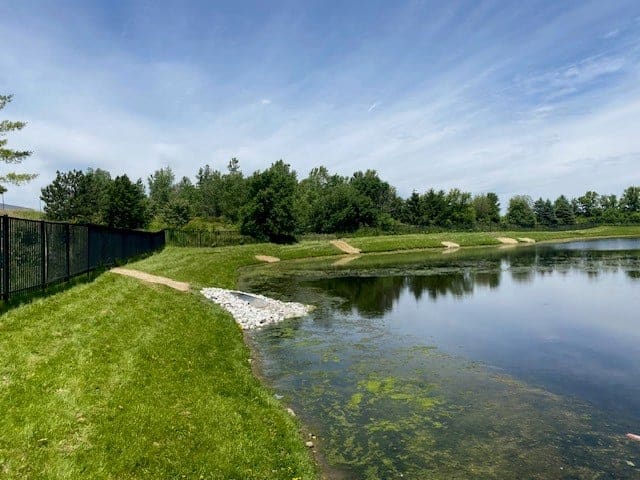
- Preventative and corrective maintenance shall be performed to maintain the function of the Stormwater Management Measure, including repairs to or replacement of the structure; removal of Sediment, debris, or trash; restoration of eroded areas; snow and ice removal; fence repair or replacement; restoration of vegetation; and repair or replacement of non-vegetated linings.
C. The Person responsible for maintenance identified under Subsection 15.B.2 above shall perform all the following requirements:
- Maintain a detailed log of all preventative and corrective maintenance for the structural Stormwater Management Measures incorporated into the design of the Development, including a record of all inspections and copies of all maintenance-related work orders;
- Evaluate the effectiveness of the maintenance plan at least once per year and adjust the plan and the deed as needed; and
- Retain and make available, upon request by any public entity with administrative, health, environmental, or safety authority over the Site, the maintenance plan and the required documentation.
View State Page
Frequently Asked Questions
What are my ongoing maintenance responsibilities for a stormwater facility in Jersey City?
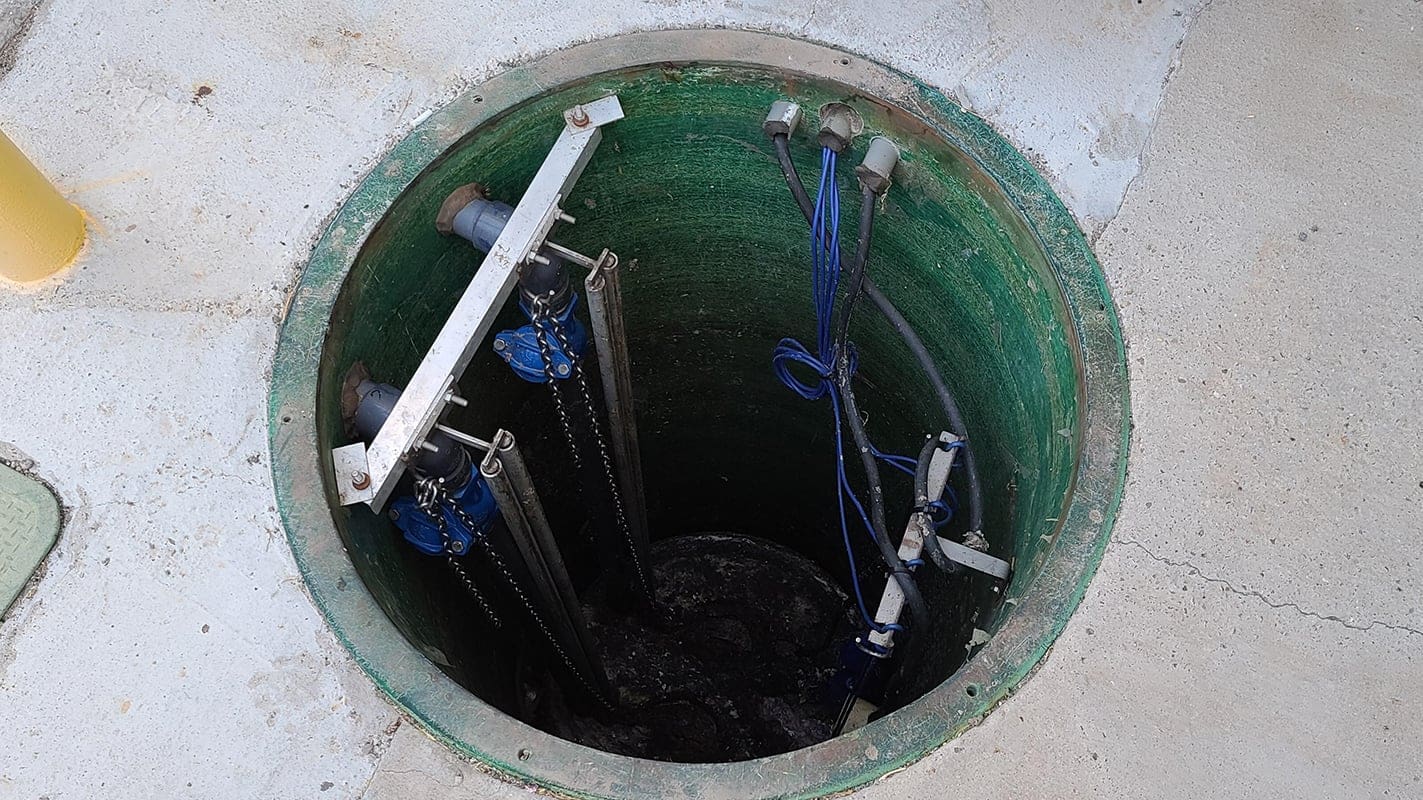
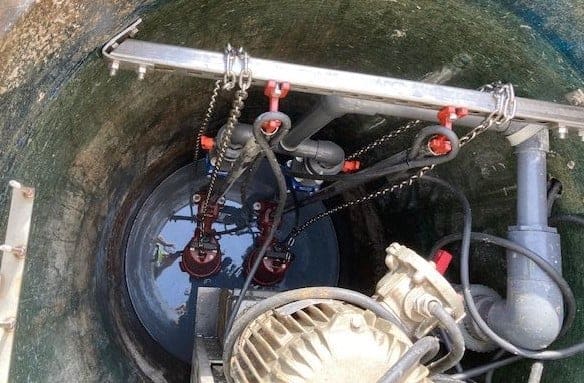
Property owners in Jersey City are responsible for maintaining all on-site stormwater facilities after construction is complete, keeping systems like detention basins, outlet structures, and green infrastructure components functioning as originally designed. The city expects these facilities to continue meeting their intended standards for groundwater recharge, stormwater quality, and runoff quantity control long after a project is finished. AQUALIS manages this ongoing maintenance obligation for Jersey City property owners, so the system keeps performing well past the construction phase.
Do I need a maintenance plan for my stormwater facility in Jersey City, and who has to prepare it?
Yes. In Jersey City, the design engineer must prepare a detailed maintenance plan that identifies the responsible party, preventative maintenance tasks and schedules, cost estimates, and contact information. Notably, Jersey City does not allow this maintenance responsibility to be assigned or transferred to the owner or tenant of an individual property within a residential development, unless that owner or tenant owns the entire development. AQUALIS helps Jersey City property owners understand exactly where their maintenance responsibility begins and prepares the documentation the city requires.
What happens if my stormwater facility in Jersey City falls out of compliance?
Jersey City can issue a notice requiring corrective action on a noncompliant stormwater facility, and property owners generally have 14 days to address the deficiency once notified. Noncompliance in Jersey City carries real financial consequences, with fines of up to $1,250.00 per day for continued violations. AQUALIS helps Jersey City property owners respond quickly to a corrective action notice, resolving the underlying issue before penalties accumulate.
Does Jersey City require green infrastructure for stormwater management, and does that change my maintenance needs?
Yes. Jersey City mandates that stormwater management measures incorporate green infrastructure to meet standards for groundwater recharge, stormwater quality, and stormwater runoff quantity, and both major and minor development projects must demonstrate erosion control along with these performance standards. Green infrastructure components often require different upkeep than traditional detention systems, from vegetation management to sediment monitoring. AQUALIS manages the specific post-construction maintenance needs of green infrastructure on Jersey City properties, keeping these systems performing as intended.
Who inspects stormwater facilities in Jersey City, and how does that connect to the NPDES program?
Jersey City maintains inspection authority over stormwater facilities as part of its enforcement of the National Pollutant Discharge Elimination System, and the city itself acts as the permitting authority for all land-disturbing activities within its borders. That gives Jersey City the ability to inspect properties and require corrective action when facilities are not properly maintained. AQUALIS conducts proactive inspections on Jersey City properties ahead of city visits, helping owners catch and correct issues before they become violations.
Where can I get help managing all of my stormwater compliance obligations in Jersey City?
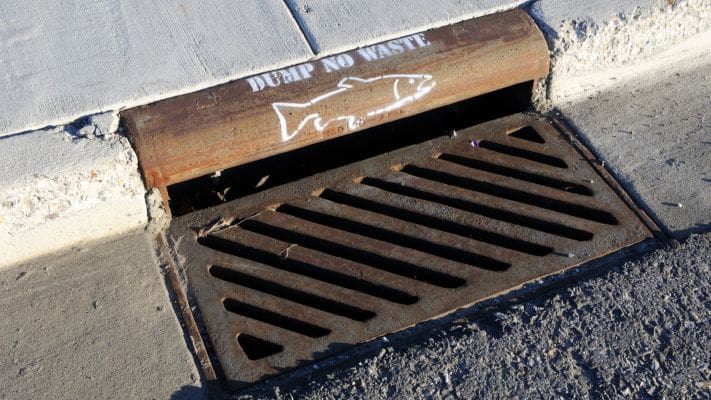
Between green infrastructure design standards, engineer-prepared maintenance plans, basin safety requirements, illicit discharge rules, and a city enforcement program with daily fines for noncompliance, keeping a Jersey City property compliant involves a lot of moving parts. AQUALIS offers Jersey City property owners a single point of contact for stormwater management, covering maintenance plan oversight, inspections, corrective action response, and general compliance consulting, so property owners can meet the city’s requirements without managing every detail themselves.
The information on this page is provided for general informational purposes only and is not legal advice. Regulations change frequently — AQUALIS makes no warranty as to the accuracy or completeness of this content, and any reliance on it is at your own risk. Consult a qualified professional or your local regulatory authority to confirm requirements applicable to your specific property.