

Last Updated 07/20/2026
Excerpt from Bellevue Municipal Code
CHAPTER 24.06 STORM AND SURFACE WATER UTILITY CODE
Maintenance of Drainage Facilities
A. Maintenance Responsibility.
- The utility shall maintain public drainage facilities;
- Property owners of private drainage facilities, including but not limited to detention facilities, runoff treatment facilities and conveyance facilities, are responsible for the operation and maintenance of those facilities;
- In new subdivisions and short plats, maintenance responsibility for private drainage facilities shall be specified on the recorded subdivision or short plat or in a separately recorded document;
- If a private drainage facility serves multiple lots and the responsibility for maintenance has not been specified on the subdivision plat, short plat or other legal document, maintenance responsibility shall rest with the homeowners association, if one exists, or otherwise with the properties served by the facility, or, finally, with the owners of the property on which the facilities are located;
B. Maintenance Standards. Drainage facilities shall be maintained so that they operate as intended. Maintenance shall be in accordance with the utility’s maintenance standards and in accordance with the project operation and maintenance manual, if one was prepared.
Prohibited, permissible, and conditional discharges.
A. General.
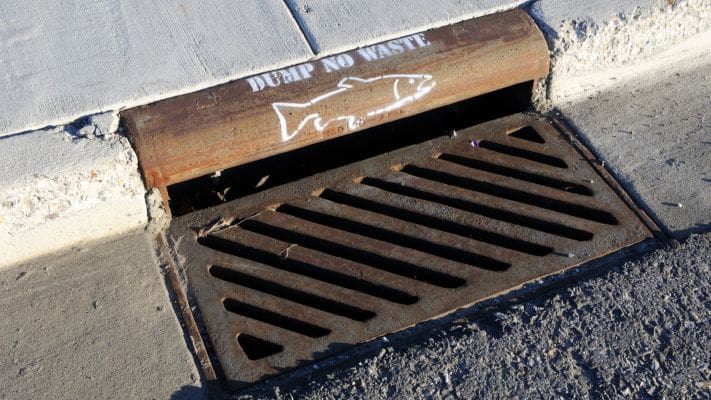
1. No person, whether singly or in combination with others, shall dump, throw, drain or otherwise discharge, either directly or indirectly, nonstormwater and/or prohibited discharges into the storm and surface water system or receiving water within or contiguous to city of Bellevue municipal limits; and
2. Every permit issued to implement this code shall contain a performance standard requiring that no discharge of nonstormwater and/or prohibited discharges from a site or real property, directly or indirectly, to the storm and surface water system or a receiving water occurs.
B. Prohibited Discharges.
1. The following substances are prohibited from entering, either directly or indirectly, a storm and surface water system or receiving water within or contiguous to city of Bellevue municipal limits, including but not limited to:
Petroleum products including but not limited to oil, gasoline, grease, fuel oil and heating oil
Trash or debris
Domestic animal wastes
Chemicals
Paints
Steam cleaning wastes
Washing of fresh concrete for cleaning and/or finishing purposes or to expose aggregates
Laundry wastes
Soaps, including biodegradable soaps, detergents, or ammonia
Pesticides, herbicides, or fertilizers
Sewage
Heated water
Chlorinated water, chlorine, bromine, or other disinfectants
Degreasers and/or solvents
Bark and other fibrous material
Antifreeze or other automotive products
Lawn clippings, leaves, or branches
Animal carcasses
Silt or sediment
Concrete, cement or gravel
Acids, alkalis, or bases
Recreational vehicle wastes
Dyes (without prior permission of the utility)
Construction materials
Food wastes
Metals in either particulate or dissolved form
Flammable or explosive materials
Radioactive material
Batteries
Paints, stains, resins, lacquers, or varnishes
Drain cleaners
Swimming pool or spa filter backwash
Chemicals not normally found in uncontaminated water
Any other process-associated discharges except as otherwise allowed in this section
Any hazardous material or waste not listed above
E. Prohibition of Nonstormwater Connections. The construction, use, maintenance, or continued existence of nonstormwater connections (also known as illicit connections) to the storm and surface water system is prohibited regardless of whether such connections were previously made or lawful under past regulations in place at the time of connection.
F. Discharge of Pollutants – Liability for Expenses Incurred by the Utility. Any person responsible for pollutant discharge into the storm and surface water system who fails to immediately collect, remove, contain, treat or disperse such pollutant materials at the director’s request shall be responsible for the necessary expenses incurred by the city in carrying out any pollutant abatement procedures, including the collection, removal, containment, treatment or disposal of such materials.
Code violations, enforcement, and penalties.
The enforcement procedures and penalties associated with violations of this code are set forth in BCC 1.18.075. The provisions of this chapter are not exclusive, and may be used in addition to other enforcement provisions authorized by the Bellevue City Code except as precluded by law. (Ord. 6384 § 1, 2017; Ord. 5905 § 1, 2009.)
Right of entry for inspection.
A. An authorized representative of the utility may enter private property at all reasonable times to conduct inspections, tests or to carry out other duties imposed by the code, provided the utility shall first notify the proper owner or person responsible for the premises. If entry is refused, the director shall have recourse to every remedy provided by law to secure entry.
B. For inspection programs authorized by BCC 24.06.045, the utility may provide advance mailings of its intent to inspect properties consistent with such inspection programs; provided the utility receives no objection from the property owner, the city may inspect private facilities consistent with the terms provided in the advance mailings.
View State Page
Frequently Asked Questions
What is stormwater compliance in the City of Bellevue?
Stormwater compliance in Bellevue means following Chapter 24.06 of the Bellevue Municipal Code, which establishes minimum requirements for how new development, redevelopment, and construction projects manage stormwater runoff.
The City of Bellevue is the permitting authority for all land disturbing activities. Before construction can begin, you must have a plan in place to manage stormwater runoff during the construction process. Once construction is complete, property owners are responsible for maintaining all on-site stormwater control facilities and any open space areas required by the approved stormwater control plan.
The City also operates under the NPDES program, which gives it the authority to inspect properties for noncompliance and issue a Notice of Violation (NOV) for any deficiency or infraction found on site.
Who is responsible for stormwater compliance in Bellevue?
In Bellevue, Washington the property owner is responsible for the drainage design and performance of their private drainage facilities. This responsibility includes ensuring the system is properly designed, maintained, and performing as intended over time.
A few important points about how responsibility is assigned in Bellevue.
New subdivisions and short plats. Maintenance responsibility for private drainage facilities must be specified on the recorded subdivision or short plat, or in a separately recorded document. If it is not specified and no homeowners association exists, responsibility rests with the owners of the property on which the facilities are located.
Multi-lot facilities. If a private drainage facility serves multiple lots and responsibility has not been clearly assigned in a legal document, the homeowners association is responsible first. If none exists, responsibility falls to the properties served by the facility.
Licensed engineers. Drainage design must be performed by a civil engineer licensed in the state of Washington, with limited exceptions for single-family development.
AQUALIS can help you understand your specific maintenance obligations and manage compliance on your behalf.
How often does Bellevue inspect stormwater facilities?
The City of Bellevue has the authority to inspect private stormwater facilities at all reasonable times. Under Section 24.06.135, an authorized representative of the utility may enter private property to conduct inspections after notifying the property owner. For scheduled inspection programs, the City may send advance mailings of its intent to inspect and, if no objection is received, may proceed with the inspection on the terms described in that notice.
The ordinance does not specify a fixed inspection interval for property owners. However, Section 24.06.105 requires that drainage facilities be maintained so they operate as intended, in accordance with the utility’s maintenance standards and any project operation and maintenance manual prepared for the site.
AQUALIS recommends conducting your own inspections at least twice a year to make sure your facilities are functioning correctly and to stay ahead of any issues before a City inspection occurs.
Why does stormwater maintenance matter for Bellevue property owners?
Bellevue’s ordinance places full responsibility for the operation and performance of private drainage facilities on the property owner. Section 24.06.105 requires that all private drainage facilities, including detention facilities, runoff treatment facilities, and conveyance facilities, be maintained so that they operate as intended. When they are not, two categories of risk emerge.
Regulatory risk. The City has the authority to inspect at any reasonable time and issue a Notice of Violation for any facility that is not properly maintained and functioning. Enforcement procedures and penalties are governed by BCC 1.18.075. Violations can result in fines, mandated repairs, and remediation timelines set by the City.
Downstream liability. Bellevue’s code explicitly states that property owners are responsible for minimizing impact to downstream properties and for maintaining natural drainage patterns to the maximum extent practicable. If your system fails and causes damage to a neighboring property, the ordinance places that responsibility squarely on you. The City is not liable for impacts to downstream properties from private drainage failures.
What are the most common stormwater compliance failures in Bellevue?
Based on AQUALIS’s inspection experience and the requirements of Bellevue’s Chapter 24.06, these are the compliance failures we see most often.
Facilities not maintained to design standards. Section 24.06.105 requires that drainage facilities operate as intended and be maintained in accordance with the utility’s standards and any project operation and maintenance manual. Sediment buildup, overgrown vegetation, clogged outlets, and deteriorated components are all common findings that indicate a facility is no longer meeting this standard.
Drainage alterations made without utility approval. Any changes to existing drainage patterns or conveyance systems require review and approval. Property owners who make informal modifications, such as redirecting drainage, filling low areas, or adding impervious surfaces, without going through the proper process are in violation of the code.
Natural drainage patterns not preserved. Section 24.06.070 requires that drainage be discharged in a manner and location consistent with conditions that existed before any land or runoff altering activities took place. Developments that have altered natural drainage without compensating measures are a common source of downstream impact claims and City enforcement actions.
Conveyance systems undersized for storm events. Bellevue requires that drainage conveyance be designed to accommodate runoff from a 100 year, 24 hour storm. Older systems that were not designed to this standard or that have degraded over time may not meet current requirements, particularly after upstream development has increased runoff volumes.
Missing or incomplete maintenance documentation. If a project operation and maintenance manual was prepared for your site, the City can ask to review it. Properties that cannot produce documentation showing their facilities are being maintained have no way to demonstrate compliance during an inspection.
How do I know if my Bellevue property's stormwater system is at risk?
Watch for these warning signs that your system may not be functioning as required under Bellevue’s ordinance.
Water is pooling or not draining after storms. If standing water remains on your property more than 72 hours after rainfall, or if drainage from your site is backing up or overflowing, your conveyance or detention facilities may not be operating as designed.
Your system is discharging to a different location than before. Bellevue requires that drainage be discharged in a manner and location consistent with pre-development conditions to the maximum extent practicable. If changes to your property have altered where water leaves the site, that may be a violation.
You have made changes to drainage without approval. Any modification to existing drainage systems, including filling, redirecting, widening, or obstructing flow paths, requires City review. If work was done without that approval, it is an unpermitted alteration under the code.
You cannot locate your operation and maintenance manual. If a maintenance manual was prepared as part of your project approval, it specifies how your facilities are to be maintained. Not being able to locate it means you may not know what is required, and you cannot demonstrate compliance if the City asks.
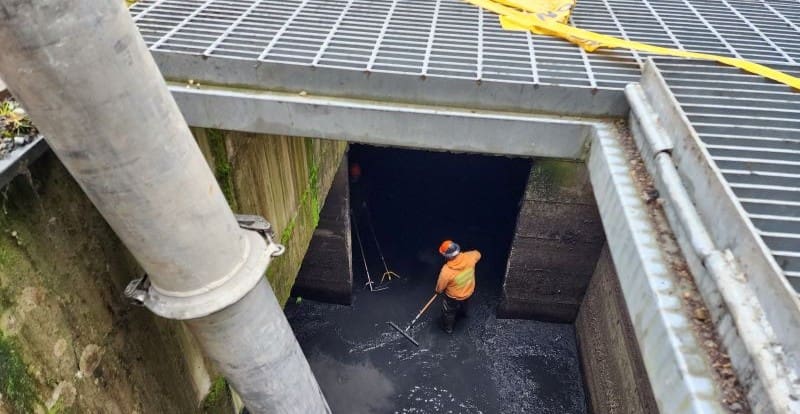
Visible deterioration in drainage structures. Cracked or clogged catch basins, eroded areas around inlets and outlets, sediment buildup in detention facilities, and overgrown vegetation around drainage infrastructure are all signs that maintenance is overdue.
Upcoming sale or change in ownership. Maintenance responsibility in Bellevue stays with the property and must be clearly assigned in recorded documents. If you are selling a property or taking ownership of one, verifying the condition of stormwater facilities and confirming maintenance responsibility is clearly documented will protect you from inheriting unresolved issues. AQUALIS can conduct a pre-transaction assessment to give you a clear picture before closing.
The information on this page is provided for general informational purposes only and is not legal advice. Regulations change frequently — AQUALIS makes no warranty as to the accuracy or completeness of this content, and any reliance on it is at your own risk. Consult a qualified professional or your local regulatory authority to confirm requirements applicable to your specific property.