


Last Updated 08/04/2026
EXCERPT- Bristol Code of Ordinances
Chapter 74 Utilities ARTICLE VII Post-Construction Water Quality Management
Sec. 74-412. - Exemptions from plan submittal
(a) Unless the city manager has determined that treatment of stormwater runoff for water quality is needed under section 74-411(b) or to comply with other applicable water quality regulations, the following shall not require submittal and approval of a water quality management plan:
(1) Developments or redevelopments that disturb less than one acre of land unless such is part of a larger common plan of development or sale that would disturb at least one acre and the stormwater runoff therefrom is not treated for water quality in a manner that meets the requirements of this article. Lots less than one acre and part of a common plan of development that was approved by the city prior to March 4, 2008 are exempt;
(2) Gardens (at residential premises only), landscaping, repairs or maintenance work;
(3) Installation of utility service connections, unless such is in conjunction with the clearing, grading, excavating, transporting, or filling of a lot or lots for which a water quality management plan would otherwise be required;
(4) Installation, maintenance or repair of septic tank lines or drainage fields, unless such is carried in conjunction with the clearing, grading, excavating, transporting, or filling of a lot or lots for which a water quality management plan would otherwise be required;
(5) Farming and agricultural activities; and
(6) Emergency work to protect life, limb or property, and emergency repairs.
(b) The exemptions noted in section 74-412(a) shall not be construed as releasing owners, operators, and contractors of exempt activities and properties from employing and maintaining best management practices or stormwater control measures to protect adjacent properties, the public right-of-way, the municipal separate storm sewer system, or waters of the state from pollution in stormwater that may discharge from such activities and properties.
Sec. 74-413. - Requirements of plan.
(a) The water quality management plan shall be prepared in accordance with the Water Quality SCM Manual. The city manager may authorize the use of other methods when they determine such will meet or exceed the standards provided in the Water Quality SCM Manual.
(b) The water quality management plan shall fully describe how the applicable development, redevelopment, or existing land use will comply with the required standards for stormwater quality, downstream channel protection, and vegetated buffers as set forth in this chapter and the Water Quality SCM Manual.
(c) The water quality management plan shall include vegetated buffers as follows:
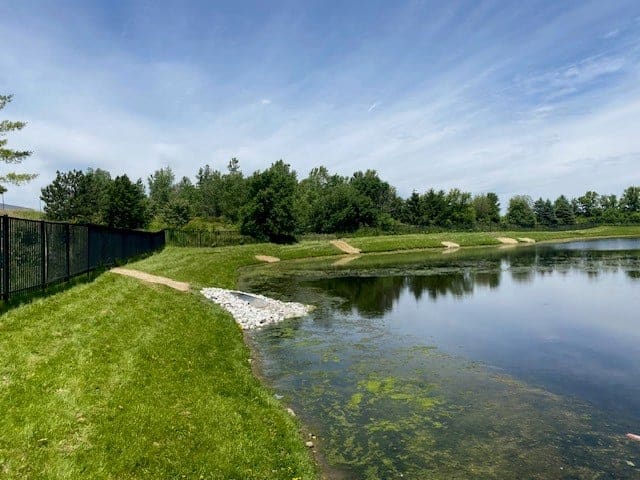
(1) Vegetated buffers shall be established along streams, ponds, lakes, and wetlands or portions thereof located in the city. Vegetated buffers are not required for man-made ponds and wetlands that are design and constructed as a stormwater control measure or for stormwater storage.
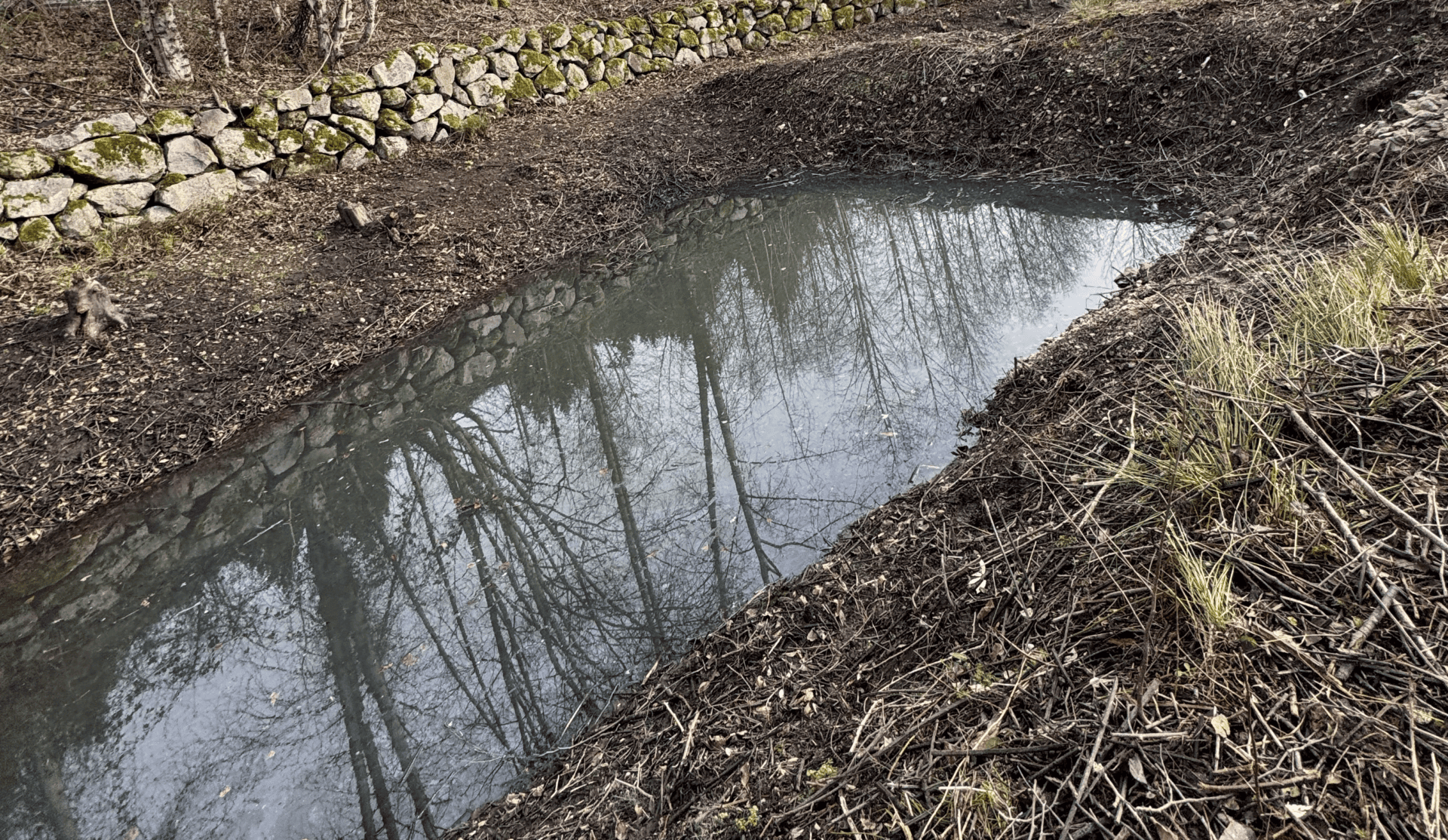
(2) The predominant vegetation within the minimum buffer width shall be trees. The predominant vegetation in the remaining buffer shall be herbaceous plants. Areas of bare soil and erosion are not allowed at any location in the vegetated buffer. The city manager may require vegetation enhancement if the existing vegetation at the time of development or redevelopment does not conform with these requirements and is unlikely to achieve them in the future as a result of the existing vegetation’s natural growth. Additional requirements are established in the Water Quality SCM Manual.
(3) The design of a vegetated buffer will adhere to the restrictions set forth in section 74-432, with the exception of the introduction of impervious areas provided they are accommodated by buffer width averaging to be indicated in the water quality management plan.
(d) A listing of any legally protected state or federally listed threatened or endangered species or critical habitat located in the area of land disturbing activities, and a description of the measures that will be used to protect them during and after grading and construction, shall be included in the water quality management plan.
(e) The city manager may require the water quality management plan to include any additional items and information which they deem necessary.
(f) The water quality management plan shall be prepared and stamped by an engineer or landscape architect licensed to practice in the State of Tennessee. Those portions of the plan that require hydraulic or hydrologic calculations and design shall be prepared and stamped by a professional engineer or landscape architect competent in civil and site design and licensed to practice in the State of Tennessee.
Sec. 74-414. - Adherence to plan.
(a) Required facilities shall be designed and constructed in accordance with the approved water quality management plan.
(b) All grading and construction activity shall be conducted in accordance with the approved water quality management plan.
(c) All required facilities shall be located within a permanent water quality easement that is identified on a recorded instrument.
(d) There shall be no deviation from the approved water quality management plan in the absence of an amendment to the plan approved by the city manager.
(e) If there are material changes in the conditions of the development site after the water quality management plan is approved, the city manager may require that the plan be amended to address those conditions.
Sec. 74-431. - Maintenance and integrity.
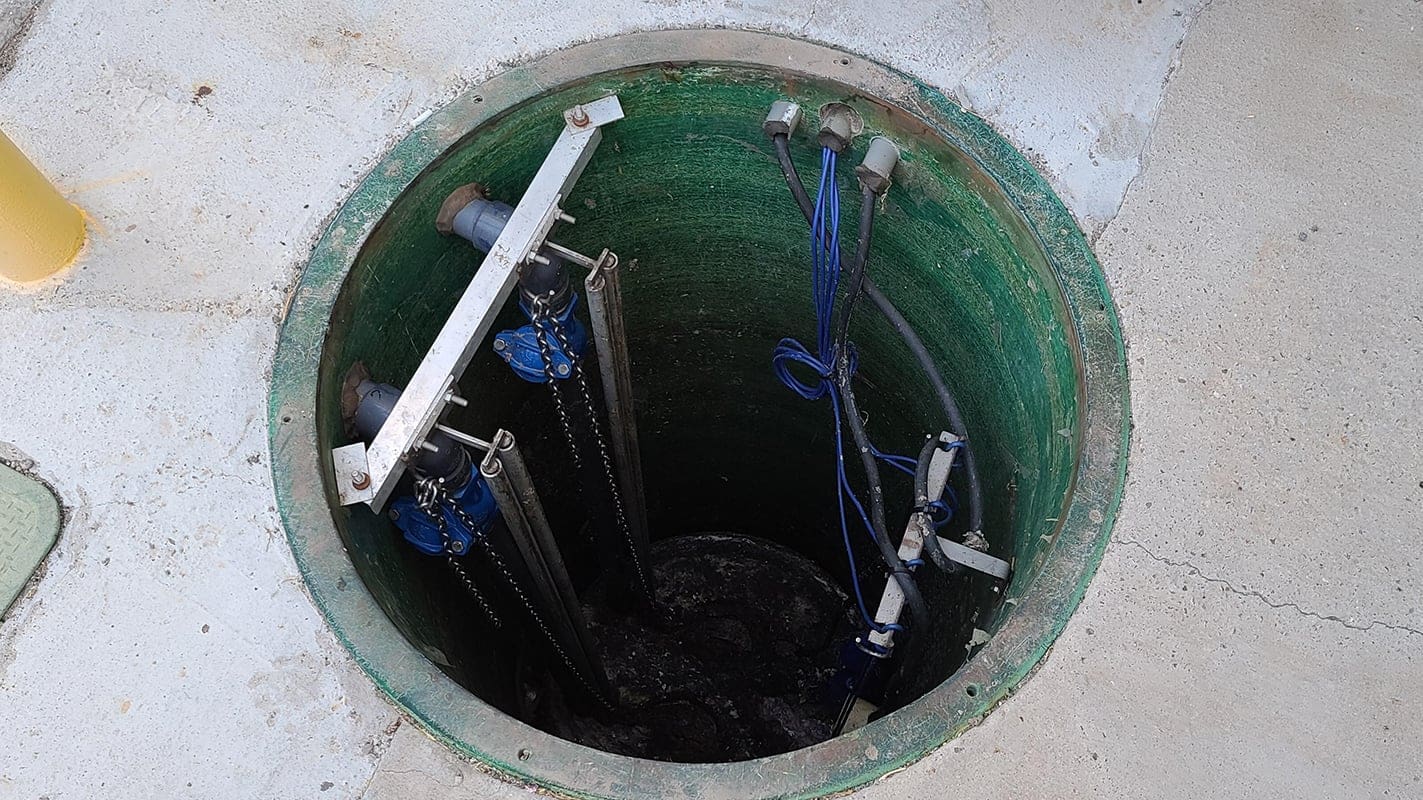
(a) Owners of required facilities shall inspect and maintain them in accordance with the requirements established in this article and the Water Quality SCM Maintenance Manual to ensure said facilities are, at all times, in compliance with this article and fully functioning as indicated by their design in the approved water quality management plan.
(b) All maintenance shall be documented by the owner, and such documentation shall be maintained for at least five years, and shall be available for inspection by the city manager upon request.
(c) There shall be no alteration, improvement or disturbance to a required facility without the approval of the city manager except as may be necessary to maintain its intended performance.
Sec. 74-433. - Inspections by the city.
(a) The city manager shall have the right to enter onto private property for the purposes of conducting periodic inspections to verify compliance with the approved plan or this article, to determine whether such a plan is necessary, to enforce this article, or to perform corrective actions.
(b) The city manager shall have the right to enter onto private property for the purposes of investigating a suspected violation of this article.
(c) Failure on the part of an owner or occupier to allow such inspection by the city manager shall be cause for the issuance of a stop work order, withholding of a certificate of occupancy or the assessment of civil penalties and damages.
Sec. 74-434. - Corrective actions.
(a) The city manager may order corrective actions as may be necessary to properly maintain the required facilities.
(b) If the owner fails to perform the corrective actions ordered, the city manager may cause such corrective actions to be performed with the cost thereof to be charged to the owner. Should the owner fail to timely reimburse the city for such cost, then the city manager may cause a lien to be recorded against the property and may take such other actions as they deem appropriate to collect the same.
Sec. 74-435. - Violations.
(a) The violation of any provision of this article shall be subject to penalty as provided in section 1-8 of this Code.
(b) In addition, any such violation shall be cause for the requiring for corrective action, issuance of a stop work order, withholding of a permit, withholding of a certificate of occupancy and the assessment of civil penalties and damages.
(c) Should the city manager determine that a violation of this article has occurred, or that construction activity does not have a required plan or permit, or that work does not comply with an approved plan or permit, or that mandatory inspections of required facilities have not occurred or been documented, or that required facilities have not been maintained, the city manager may issue a notice of violation to the owner, or to any other person or entity having responsibility for such work.
Sec. 74-436. - Civil penalties, damages and expenses; appeals.
(a) Any person who violates any provision of this article may be assessed an administrative civil penalty by the city manager of not less than $50.00 and not more than $5,000.00 for each day of violations in accordance with T.C.A. § 68-221-1106. Each day of violation shall constitute a separate violation.
(b) In assessing a civil penalty, the city manager may consider:
(1) The harm done to the public health or the environment;
(2) Whether the civil penalty imposed will be a substantial economic deterrent to the illegal activity;
(3) The economic benefit gained by the violator;
(4) The amount of effort put forth by the violator to remedy the violation;
(5) Any unusual or extraordinary enforcement costs incurred by the city;
(6) Any amount of penalty established by ordinance or resolution for specific categories of violations; and
(7) Any equities of the situation which outweigh the benefit of imposing any penalty or damage assessment.
(c) In addition to the civil penalty, the city manager may assess:
(1) All damages proximately caused by the violator to the city, which may include any reasonable expenses incurred in investigating violations of, and enforcing compliance with, this article, or any other actual damages caused by the violation; and
(2) The costs of the city’s maintenance of stormwater facilities when the user of such facilities fails to maintain them as required by this article.
(d) The remedies provided in this section shall be cumulative, and the existence of any other remedy at law or in equity shall not be a defense to any such actions.
(e) Any person aggrieved by the imposition of a civil penalty or damage assessment as provided by this section may appeal the penalty or damage assessment to the city council. The appeal shall be in writing and filed with the recorder within 30 days after the civil penalty or damage assessment is served in any manner authorized by law. Upon receipt of an appeal, the city council shall hold a public hearing on the appeal within 45 days unless otherwise agreed by the aggrieved party. At least ten days prior to the hearing, notice of the time, date, and location of the hearing shall be mailed to the aggrieved party at the address provided by the aggrieved party at the time of appeal. The decision of the city council shall be final, and the aggrieved party may appeal therefrom in the manner provided by Tennessee law. If an appeal of a civil penalty or damage assessment is not filed with the city recorder within 30 days as provided herein, the violator shall be deemed to have consented to the civil penalty or damage assessment and it shall become final.
View State Page
Frequently Asked Questions
Does every development project need a water quality management plan?
No. A few categories are exempt from having to submit and get a plan approved, unless the city manager determines treatment is still needed to meet other water quality rules:
- Small disturbances: projects disturbing less than one acre, unless they’re part of a larger plan that will disturb an acre or more
- Residential gardens, landscaping, repairs, or maintenance work
- Utility service connections, unless tied to grading or clearing that would otherwise require a plan
- Septic tank or drainage field work, unless tied to grading or clearing that would otherwise require a plan
- Farming and agricultural activities
- Emergency work to protect life, limb, or property
What does a water quality management plan need to include?
The plan must be prepared according to Bristol’s Water Quality BMP Manual, or another method the city manager approves as meeting or exceeding that standard. It also needs to list any legally protected threatened or endangered species or critical habitat in the area of land disturbance, along with the measures that will protect them during and after construction. The city manager can require additional information as needed.
Who is qualified to prepare my water quality management plan?
The plan must be prepared and stamped by an engineer or landscape architect licensed in Tennessee. Any portions involving hydraulic or hydrologic calculations and design must specifically be handled by a professional engineer or landscape architect competent in civil and site design. AQUALIS can help property owners connect with the right licensed professionals for this step.
What are my ongoing responsibilities once my stormwater facilities are built in Bristol, Tennessee?
As the property owner, you must maintain your facilities according to the approved plan and the Water Quality BMP Manual. You’re also responsible for documenting all maintenance activity and keeping those records for at least 3 years, since the city manager can request them for inspection. You cannot alter, improve, or disturb a required facility without city approval, except when necessary to keep it performing as intended.
Can the City of Bristol inspect my property after construction is finished?
Yes. The city manager has the right to enter private property to conduct periodic inspections, confirm the property is following its approved plan, determine whether a plan is even needed, or carry out corrective action. The city manager can also enter to investigate a suspected violation. AQUALIS can help property owners prepare for these inspections and stay in good standing.
What happens if I refuse to allow an inspection?
Refusing to allow an inspection is treated seriously. It can lead to a stop work order, withholding of your certificate of occupancy, or civil penalties and damages, even if no other violation has been identified yet.
What triggers a notice of violation in the City of Bristol?
The city manager can issue a notice of violation to the property owner, or to anyone else responsible for the work, if a violation of the ordinance has occurred, if construction is happening without a required plan or permit, or if the work doesn’t match an approved plan or permit.
What financial penalties apply to stormwater violations in Bristol, Tennessee?
Violations can carry a civil penalty ranging from $50 to $5,000 per day, with each day of noncompliance counted as a separate violation. Beyond the financial penalty, the city can also require corrective action, issue a stop work order, or withhold permits and certificates of occupancy until the issue is resolved.
The information on this page is provided for general informational purposes only and is not legal advice. Regulations change frequently — AQUALIS makes no warranty as to the accuracy or completeness of this content, and any reliance on it is at your own risk. Consult a qualified professional or your local regulatory authority to confirm requirements applicable to your specific property.