

Last Updated XX/XX/XXXX
City of Duluth Engineering Guidelines
The City of Duluth, Minnesota is an MPCA designated Municipal Separate Stormwater System (MS4) NPDES Permit holder with a special “selected-NonDegradation” status that results in stringent requirements for stormwater discharge. Additionally, Lake Superior is a MCPA designated Outstanding Resource Value Water (ORVW) which requires additional stormwater discharge restrictions. Duluth is required to minimize impervious surface so as to reduce the total runoff volume load of stormwater to the level that occurred prior to 1988. Duluth must also have specific methods to eliminate new and expanded (storm water) discharges.
The current City of Duluth MS4 permit states that no “new or expanded” storm water discharge to Lake Superior should occur. This implies that all storm water runoff from newly installed impervious surfaces shall be fully contained on site and infiltrated whenever possible. When this is not possible, the developer must restrict discharges to the maximum extent possible (MEP). During planning, preliminary design and final design, the developer shall document in the drainage report what actions were taken to avoid, minimize and mitigate the volume of storm water discharged to the MEP level. Utilization of Low Impact Development methods shall be evaluated for all projects. The MPCA reserves the right to make the final determination of all prudent and feasible alternatives and determine whether the methods proposed are significant enough to preserve the high quality of the ORVW.
Excerpt from Stormwater Homepage
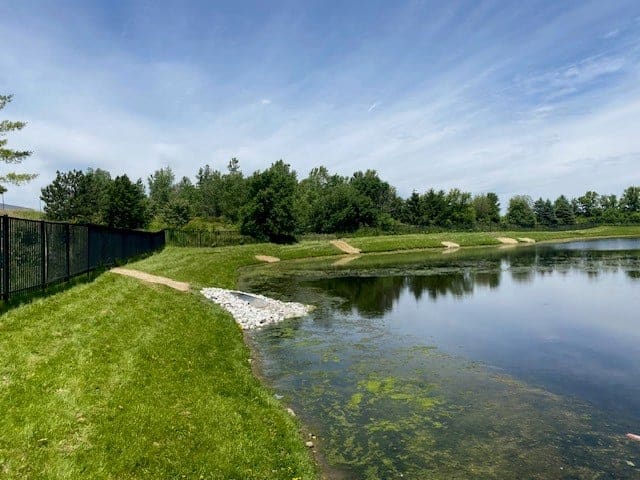
Credits for installing engineered Best Management Practices (BMPs) are available for non-residential properties. Most properties that install stormwater BMPs receive a reduction of 37.16% for the area of the property that flows to the BMP.
In order to receive credit, the BMP must (at a minimum):
- Be designed (and signed) by a licensed, professional engineer.
- Be sized to capture at least the first 0.5” of runoff.
- Have annual, documented inspections by the property owner, licensed professional engineer, or other qualified individual.
- Be maintained as needed based on the annual inspections.
Additional water quality benefits including temperature reduction, habitat creation, and runoff rate control are preferred, if possible.
The best thing you can do to reduce your stormwater fee is to reduce your impervious surface. Vegetating gravel areas, removing excess concrete and blacktop parking areas, and even removing vacant buildings can all quickly reduce your stormwater fees. Note: The City of Duluth recommends contacting the Stormwater Utility Programs Coordinator 218-730-4130 (or submit the billing request form) before proceeding with efforts to reduce your stormwater fee as the property may already be receiving credit.
Excerpt from Stormwater Ordinance
Ownership and maintenance.
(a) Maintenance of temporary erosion and sediment control practices. During the period of a land disturbing activity, the person engaging in the construction shall be responsible for installing and maintaining erosion and sediment control practices. After construction is completed, the owner of the property shall be responsible for installing and maintaining erosion and sediment control practices. For the purposes of inspection during construction monitoring, the permittee shall maintain inspection logs and will make them available to the city upon request. The permittee shall retain the inspection logs for three years after the project is complete;
(b) Ownership.
(i) All components of the stormwater management system shall be constructed, owned, operated and maintained by the developer or owner(s) to their confluence with the major system or city owned minor system;
(ii) In the case of developments in which right-of-way is transferred to public ownership, the storm drain system within the city right-of-way shall be owned and maintained by the city. Stormwater treatment facilities and ponds shall be in common space and shall be owned and maintained by the developer or the owners of the development. Stormwater treatment facilities shall not be located in the public right of-way;
(c) Owner inspection, operation and maintenance.
(i) A stormwater management facilities operation and maintenance manual shall be prepared by an engineer for the development and approved by the city engineer;
(ii) Stormwater management facilities shall be designed to minimize maintenance and provide inspection and maintenance access;
(iii) All facilities shall have a plan of operation and maintenance that assures continued effective removal of runoff pollutants and accumulated sediment;
(iv) The developer or the owner(s) shall be responsible for inspection, maintenance and reporting for all non-publicly owned stormwater management facilities associated with the development. Facilities shall include structural components and all non-structural components (buffer strips, swales and other stormwater management practices that were part of the approved development);
(v) An annual inspection and maintenance report shall be submitted to the city engineer. Inspection and maintenance shall be performed on a regular basis so the stormwater management facilities function as designed, but not less than annually. Maintenance work and repairs identified in the annual report shall be completed within three month of the annual inspection;
(vi) The inspection and maintenance of the stormwater facility shall be performed by a qualified professional and who will prepare and sign the annual inspection/maintenance report. Copies of the inspection and maintenance records shall be maintained by the developer or owner for a period of six years. Copies of all inspection records shall be provided to the city upon request
View State Page
Frequently Asked Questions
Why does Duluth have stricter stormwater rules than other Minnesota cities?
Duluth holds a special selected-nondegradation status under its MS4 permit, and Lake Superior is designated an Outstanding Resource Value Water by the state, which triggers additional discharge restrictions. The city must minimize impervious surface so total stormwater runoff volume doesn’t exceed pre-1988 levels, and it must have specific methods in place to eliminate new and expanded stormwater discharges to the lake.
What does Duluth's "no new or expanded discharge" standard mean for a development project?
It means stormwater runoff from any newly installed impervious surface must be fully contained on-site and infiltrated whenever possible. When full containment isn’t achievable, the developer must restrict discharges to the maximum extent practicable and document, during planning and design, what steps were taken to avoid, minimize, and mitigate the discharge volume. Low Impact Development methods must be evaluated for every project, and the state reserves final say on whether the proposed methods sufficiently protect the lake’s water quality.
How much can a commercial property save by installing a stormwater BMP in Duluth?
Most properties that install an engineered BMP receive a 37.16% reduction in their stormwater fee for the portion of the property that drains to it. To qualify, the BMP must be designed and signed by a licensed professional engineer, sized to capture at least the first half inch of runoff, and inspected annually by the owner, the engineer, or another qualified individual, with maintenance performed based on those inspection findings.
What's the fastest way to reduce a stormwater fee in Duluth?
Reducing impervious surface area is the most direct route, whether through vegetating gravel areas, removing excess concrete or blacktop parking, or removing vacant buildings. The city recommends contacting the Stormwater Utility Programs Coordinator before starting any of this work, since the property may already be receiving credit that a change in surface area could affect.
Who owns and maintains stormwater treatment facilities in Duluth after construction?
It depends on location. Storm drain systems within public right-of-way transferred to the city are owned and maintained by the city. Stormwater treatment facilities and ponds, however, must sit in common space and stay under the ownership and maintenance responsibility of the developer or the development’s owners. These facilities can’t be located within public right-of-way.
How often must stormwater facilities be inspected in Duluth, and how long are records kept?
Facilities need inspection and maintenance on a regular basis, but no less than annually, performed by a qualified professional who prepares and signs the annual report. Any maintenance or repairs identified must be completed within three months of that inspection. Records must be kept by the developer or owner for six years and provided to the city on request.
The information on this page is provided for general informational purposes only and is not legal advice. Regulations change frequently — AQUALIS makes no warranty as to the accuracy or completeness of this content, and any reliance on it is at your own risk. Consult a qualified professional or your local regulatory authority to confirm requirements applicable to your specific property.