
Last Updated 08/21/2026
Stormwater Fee Ordinance
(1) Introduction
(1) Introduction. The city is implementing a combined sewer overflow program that is requiring a significant investment by the city and the existing stormwater management system is deteriorating and may be inadequate to meet existing and future needs, and flooding concerns may arise. The U.S. Environmental Protection Agency (EPA) demands a comprehensive approach to municipal stormwater management.
In order to establish, operate, and maintain the stormwater infrastructure of the city, ensure the future usefulness of the existing system through additions and improvements, and provide other services associated with stormwater management, sufficient and stable funding is required for the operation, maintenance and improvement of the stormwater management programs, services, systems, and facilities of the city; and to equitably fund the CSO abatement program. A stormwater utility service fee based on impervious surface area consistent with the Massachusetts General Laws is the most appropriate and equitable method of allocating the cost of stormwater management programs and CSO abatement programs among residents and businesses in the city.
(2) Authority and jurisdiction.
- Under the authority of M.G.L.A. c. 83, § 16, the city hereby establishes the city impervious fee or stormwater fee to pay the costs of the city’s stormwater management and combined sewer overflow abatement program.
- The utility or its designee is authorized to assess and collect service fees from all persons owning land within the municipality that benefit from the city’s stormwater management and CSO abatement programs.
- The fee will fund services provided through the sewer commission for stormwater management and CSO abatement programs.
(3) Definitions.
City utility. City utility shall mean the Fall River Sewer Commission.
Credit. Credit shall mean a conditional reduction in the amount of the stormwater service fee to an individual property based on the provision and continuing presence of an effectively maintained and operational on-site stormwater system or facility or other service or activity that reduces the stormwater management utility’s cost of providing services.
Credits can be applied as follows at the discretion of the sewer commission: Credits shall not be eligible below the base ERU, meaning that any property that is subject to this fee shall be required to pay at least the cost of one ERU per quarter. As residential properties (single through eight family) pay the lowest possible cost credits are not available.
The purpose of the credit process is to enable nonresidential parcel owners to seek reduction in storm water charges, if specific value added onsite storm water control that significantly reduces the volume of stormwater runoff to the city’s stormwater or combined sewer facilities. Said facilities must be beyond those facilities required by law and/or required as a condition of site development.
Credit shall not exceed 25 percent of the total charge.
Credit requests filed after June 30 of any year shall not be applicable to the previous fiscal year(s).
Customers of the stormwater utility. Customers of the stormwater utility shall include all persons, properties, and entities served by and/or benefiting from the utility’s acquisition, management, maintenance, extension, and improvement of the public stormwater management systems and facilities and regulation of public and private stormwater systems, facilities, and activities related thereto, and persons, properties, and entities which will ultimately be served or benefited as a result of the stormwater management program.
Developed land. Developed land shall mean property altered from its natural state by removal of vegetation, construction, or installation of improvements such as buildings, structures, or other impervious surfaces, or by other alteration of the property that results in a meaningful change in the hydrology of the property during and following rainfall events (agricultural and forestry operations that do not create impervious surface area excepted).
Equivalent residential unit (ERU). Equivalent residential unit (ERU) is a measure used to standardize the utility service fees for residential properties, or classes of residential properties, and based on the average amount of impervious area of a base residential parcel. The ERU shall also be used as the basis for standardizing and determining the equivalent size of nonresidential properties and Other Developed Lands.
The ERU is defined as the average amount of impervious area on residential parcels in land use classes 101, 104, 105, and 111. These classes are defined by the assessor’s department as (101, single-family residential; 104, two-family residential; 105, three-family residential; 111, four- to eight-family residential).
The ERU is a method for standardization for measurement and billing purposes. Stormwater runoff from pervious surfaces on a developed lot is not a reason for exemption.
Exemption. Exemption shall mean not applying to, or removing the application of the stormwater management utility service fee from, a property. No permanent exemption shall be granted based on taxable or non-taxable status or economic status of the property owner.
Exemptions are granted to those properties that do not contribute stormwater to any City facility of any kind.
Exemptions shall not be applied to properties that contribute directly or indirectly to city facilities. Indirectly includes stormwater flow from a property that moves overland impacting the watershed flow to a city stormwater facility.
Exemption requests filed after June 30 of any year shall not be applicable to the previous fiscal year(s).
Impervious surfaces. Impervious surfaces are those areas that prevent or impede the infiltration of stormwater into the soil as it entered in natural conditions prior to development. Impervious areas include, but are not limited to, rooftops, sidewalks, walkways, patio areas, driveways, parking lots, storage areas, compacted gravel surfaces, awnings and other fabric or plastic coverings, and other surfaces that prevent or impede the natural infiltration of stormwater runoff which existed prior to development.
Opt out provision. Properties that can completely eliminate storm water discharge from their property, thus, not utilizing any city stormwater facilities can be exempt from the fee. Said exemption must be certified by an engineering report that clearly delineates that stormwater is collected on site and held on site for reuse for all levels of storms. Groundwater injection that impacts stormwater disposal facilities may be cause for denial.
Other developed lands. Other developed lands shall mean, but not be limited to, mobile home parks, apartment buildings with more than eight dwelling units, residential condominium developments, mixed use buildings, commercial and office buildings, public buildings and structures, industrial and manufacturing buildings, storage buildings and storage areas covered with impervious surfaces, parking lots, parks, recreation properties, public and private schools and universities, governmental facilities, colleges, research facilities and stations, hospitals and convalescent centers, airports, agricultural uses covered by impervious surfaces and lands in other uses which alter the hydrology of the property from that which would exist in a natural state.
Pervious surfaces. Pervious surfaces are those areas that enhance the infiltration of stormwater into the soil. Pervious areas include, but are not limited to, lawns, wooded areas, meadows, gravel parking areas and other surfaces that enhance the natural infiltration of stormwater runoff into the soil. There is expected stormwater runoff to occur from pervious surfaces however it is significantly less than impervious surfaces.
Residential property. Residential property shall mean developed land assigned land use code 101, 104, 105, or 111 by the city’s office of the assessor. (101, single-family residential; 104, two-family residential; 105, three-family residential; 111, four- to eight-family residential).
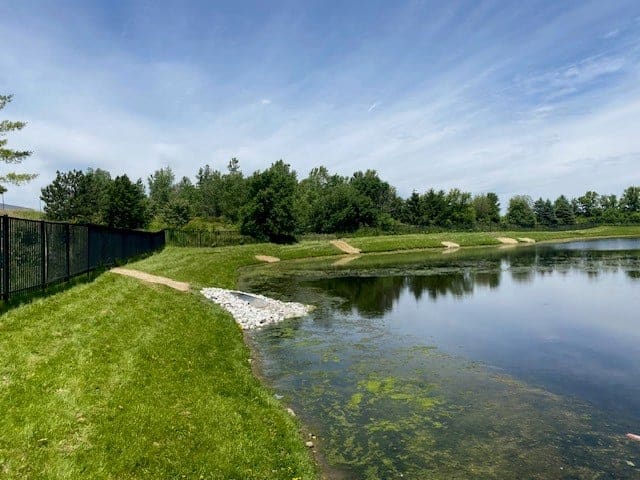
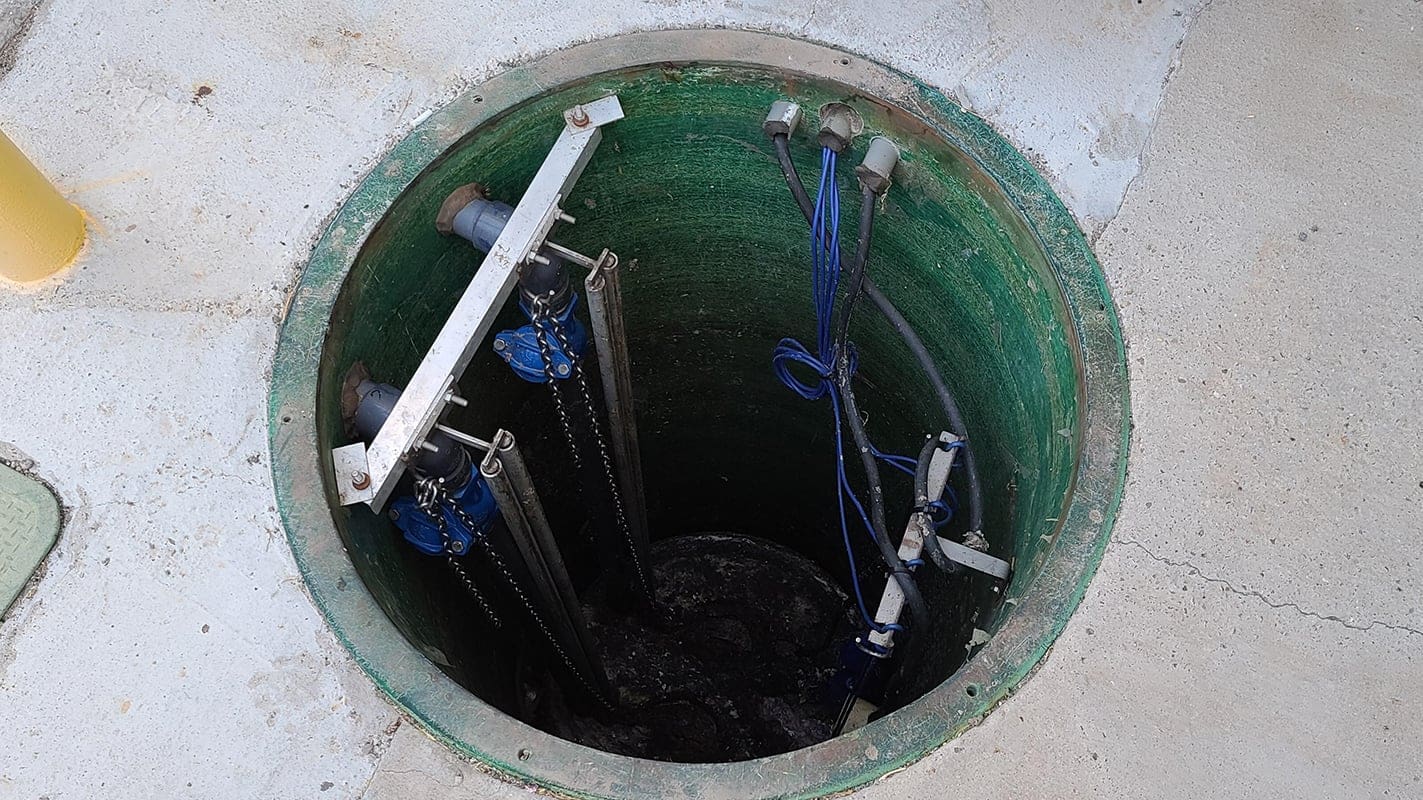
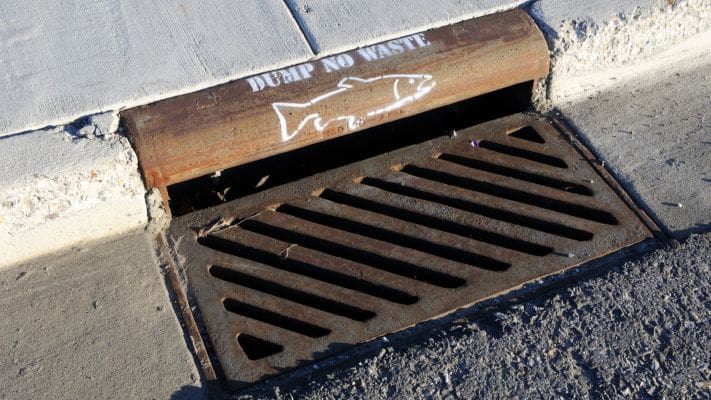
Stormwater facility. Stormwater facility includes combined sewers, catch basins, storm drains, drainage pipes, culverts, streams, swales, wetlands, detention ponds, and ponds that have control structures such as dams and gatehouses.
Stormwater service fees. Stormwater service fees shall mean the periodic service fee imposed pursuant to this article for the purpose of funding costs related to stormwater management programs, services, systems, facilities, debt, operations, maintenance, capital improvements, and any related costs.
Undeveloped land. Land in its unaltered natural state or which has been modified to such minimal degree as to have a hydrologic response comparable to land in an unaltered natural state shall be deemed undeveloped.
Undeveloped land shall have no pavement, asphalt, or compacted dirt or gravel surfaces or structures which create an impervious surface that would prevent infiltration of stormwater or cause stormwater to collect, concentrate, or flow in a manner materially different than that which would occur naturally.
(4) Establishment of the stormwater fund.
- The city shall establish a dedicated stormwater fund in the city budget and an accounting system for the purpose of managing all funds collected for the purposes and responsibilities of the utility. All revenues and receipts of the utility shall be placed in the stormwater fund, which shall be separate from all other funds, and only the expenses of stormwater management programs, services, systems, facilities, and CSO abatement of the city shall be paid by the fund.
- The utility and the stormwater fund may also accept loans, state, federal and private grants, and allocations of funds from the city’s general fund or special purpose funds.
- Stormwater service fees will be set at a rate that covers the costs necessary to carry out the stormwater management programs, services, systems and facilities approved by the city as necessary to carry out the functions of the utility. Expenditure of funds from the stormwater fund is limited to the following:
- Operating expenses;
- Nonoperating expenses, such as equipment and supplies;
- Payment on principal and interest on debt obligations including those for combined sewer overflow abatement facilities.
- Capital investments including stormwater best management practices (BMPs) and components (e.g., purchase of plants and other amenities to support stormwater management alternatives utilizing vegetation);
- Reserve expenses; and
- Other costs as deemed necessary by the sewer commission.
(5) Service area.
The service area of the utility will include all areas within the municipal boundaries of the City of Fall River.
(6) Stormwater utility service fees.
- The city may determine and modify from time to time the service fees of the utility in order that the funds generated correspond to the cost of stormwater management programs, services, systems, and facilities of the city. In general, funding for the stormwater utility shall be equitably derived based on methods that establish a link between the fees and degree of impact imposed on the stormwater management system and facilities.
- Rate studies may be conducted periodically by the utility to determine all changes and future updates to the stormwater utility use fee schedule. Any revision to the stormwater service fee schedule will be approved by the city council prior to implementation.
(7) Right to enforcement and violations.
- The administrator of community utilities, or his authorized designee is the enforcement authority who shall administer, implement, and enforce the provisions of this article.
- The city has the right to utilize the lien processes to enforce provisions of this article and for nonpayment of stormwater fees.
- Delinquent fees. The city has the right to use all legal means as authorized within chapter 74 of this Code and any other legal processes under local, state, and federal regulations.
(8) Severability.
Each subsection of this section is severable from all other sections. If any part of this section is deemed invalid by a court or competent jurisdiction, remaining portions of the section shall not be affected and shall continue in full force. Whenever this section conflicts with any other ordinance of the city, Commonwealth of Massachusetts, or federal government, the stricter standard shall apply, except as limited by state or federal law.
(9) Applicability.
This section and the fees, obligations and requirements identified herein shall apply to all use of and benefit from the city’s stormwater management systems and facilities, occurring on or after July 1, 2008.
All persons owning land within the municipality that benefit from the services provided by the utility shall be subject to service fees for their use of the stormwater management systems and facilities occurring on or after July 1, 2008. Property with less than 100 square feet of impervious area will be exempted from the fee.
View State Page
Frequently Asked Questions
Why does Fall River charge a stormwater fee?
The fee funds the city’s combined sewer overflow abatement program along with general stormwater management. Fall River’s existing system faces significant investment needs, and the city determined that a fee based on impervious surface area, consistent with Massachusetts General Laws, is the most equitable way to distribute the cost of both programs across residents and businesses.
How is a commercial property's stormwater fee calculated in Fall River?
Non-residential properties, along with other developed land like mobile home parks, apartment buildings with more than eight units, and mixed-use buildings, are billed using the Equivalent Residential Unit as a baseline. The ERU is based on the average impervious area of single-family through eight-family residential parcels, and non-residential fees scale up from that baseline according to a property’s own impervious surface area.
Can a commercial property in Fall River reduce its stormwater fee?
Yes, through a credit. Non-residential property owners can request a reduction if they maintain on-site stormwater controls beyond what’s legally required or required as a development condition, and that control significantly reduces runoff volume to the city’s stormwater or combined sewer facilities. Credit is capped at 25% of the total charge, and no property can be credited below the cost of one ERU per quarter.
Can a property in Fall River be fully exempt from the stormwater fee?
Yes, in specific cases. Properties with less than 100 square feet of impervious area are exempt outright. There’s also an opt-out provision for properties that completely eliminate stormwater discharge by collecting and holding all runoff on-site for reuse, verified through an engineering report. This exemption doesn’t apply to properties that contribute stormwater to city facilities, directly or indirectly through overland flow into the watershed.
What happens if a Fall River property doesn't pay its stormwater fee?
The city can pursue lien processes against the property for nonpayment. Delinquent fees are handled under the same enforcement mechanisms the city uses for other municipal charges under its general code, alongside any applicable state and federal collection processes.
When did Fall River's stormwater fee take effect, and does it apply to all developed properties?
The fee applies to any use of or benefit from the city’s stormwater management systems occurring on or after July 1, 2008. It covers all persons and properties that benefit from the utility’s stormwater management and CSO abatement services, including properties that contribute runoff indirectly through overland flow into a city facility’s watershed.
The information on this page is provided for general informational purposes only and is not legal advice. Regulations change frequently — AQUALIS makes no warranty as to the accuracy or completeness of this content, and any reliance on it is at your own risk. Consult a qualified professional or your local regulatory authority to confirm requirements applicable to your specific property.
Did you receive an NOV? Have an urgent need? We can help.
Notices of Violation (NOVs) or Corrective Notices should be taken seriously. Contact AQUALIS today to learn how to resolve the issue and comply with regulations.