

Did you receive a Notice of Violation (NOV)? Contact AQUALIS today to learn how to resolve the issue.

Back to Compliance
Kentucky Local Compliance

City of Florence

At AQUALIS, we know Florence, KY sustainable water compliance standards and manage regulator relations for our clients.

It is our mission to help you become compliant with these stormwater, wastewater and drinking water regulations through inspections, maintenance, repairs and rehabilitation services. As your water compliance provider, we handle the regulatory guidelines specific to Florence, KY and ensure that our services meet the highest compliant procedures to keep you in compliance with local regulators.

Last Updated 08/26/2026

Excerpt from Florence Municipal Code

 (A)   Authorization to adopt and impose best management practices. The city may adopt or amend requirements identifying best management practices for any activity, operation, or facility which may cause or contribute to pollution or contamination of storm water, the storm drain system, or waters of the United States as a separate BMP Manual. Where best management practices requirements are promulgated by the City or any federal, Commonwealth of Kentucky, or regional agency for any activity, operation, or facility which would otherwise cause the discharge of pollutants to the storm drain system or water of the United States, every person undertaking such activity or operation, or owning or operating such facility shall comply with such requirements.
 
   (B)   New development and redevelopment. The city may adopt or amend requirements identifying appropriate best management practices to control the volume, rate, and potential pollutant load of storm water runoff from new development and redevelopment projects as may be appropriate to minimize the generation, transport and discharge of pollutants. The city shall incorporate such requirements in any land use entitlement and construction or building-related permit to be issued relative to such development or redevelopment. The owner and developer shall comply with the terms, provisions, and conditions of such land use entitlements and building permits as required in this subchapter and the Boone County Subdivision or Zoning Regulations.
 
   (C)   Responsibility to implement best management practices. Notwithstanding the presence or absence of requirements promulgated pursuant to divisions (A) and (B) of this section, any person engaged in activities or operations, or owning facilities or property which will or may result in pollutants entering storm water, the storm drain system, or waters of the United States shall implement best management practices to the extent they are technologically achievable to prevent and reduce such pollutants. The owner or operator of a commercial or industrial establishment shall provide reasonable protection from accidental discharge of prohibited materials or other wastes into the municipal storm drain system or watercourses. Facilities to prevent accidental discharge of prohibited materials or other wastes shall be provided and maintained at the owners or operators expense.
   (A)   The Public Services Director may require by written notice that a person responsible for an illicit connection to the storm drain system comply with the requirements of this subchapter and the best management practices requirements authorized herein to eliminate or secure approval for the connection by a specified date, regardless of whether or not the connection or discharges to it had been established or approved prior to the effective date of this subchapter.
 
   (B)   If, subsequent to eliminating a connection found to be in violation of this subchapter or the best management practices requirements authorized herein, the responsible person can demonstrate that an illegal discharge will no longer occur, the person may request city approval to reconnect. The reconnection or reinstallation of the connection shall be at the responsible person’s expense.
   The Public Services Director may require by written notice of requirement that any person engaged in any activity and/or owning or operating any facility which may cause or contribute to storm water pollution, illegal discharges, and/or non-storm water discharges to the storm drain system or waters of the United States, to undertake at said persons expense such monitoring and analyses and furnish such reports to the city as deemed necessary to determine compliance with this subchapter.
   Whenever the Public Services Director finds that a discharge of pollutants is taking place or has occurred which will result in or has resulted in pollution of storm water, the storm drain system, or water of the United States, the Public Services Director may require by written notice to the owner of the property and/or the responsible person that the pollution be remediated and the affected property restored within a specified time pursuant to the provisions of §§ 54.49 through 54.52 of this subchapter.
 
 
(A)   Whenever the Public Services Director or his/her designee finds that a person has violated a prohibition or failed to meet a requirement of this subchapter, the Director may order compliance by written notice of violation to the owner, lessee, or other responsible person. Such notice may require without limitation:

  1.  The performance of monitoring, analyses, and reporting;
  2. The elimination of illicit connections or discharges;
  3. That violating discharges, practices, or operations shall cease and desist or a stop work order may issue pending correction, elimination of discharges or their abatement;
  4. The abatement or remediation of storm water pollution or contamination hazards and the restoration of any affected property
  5. Payment of a fine to cover administrative and remediation costs; and
  6. The implementation of source control or treatment BMPs.

(B)   If abatement of a violation and/or restoration of affected property is required, the notice shall set forth a deadline within which such remediation or restoration must be completed. Said notice shall further advise that, should the violator fail to remediate or restore within the established deadline, the work may be done by the city or a contractor designated by the Public Services Director and the expense thereof shall be charged to the violator pursuant to § 54.51.

From Kentucky Best Management Practices Manual

  1. When land is developed, the hydrology, or the natural cycle of water is disrupted, altering the delivery of water and sediment to local waterways. Clearing removes the vegetation that intercepts, slows and returns rainfall to the air through evaporation and transpiration. Grading flattens hilly terrain and fills in natural depressions that slow and provide temporary storage for rainfall. Rainfall that once seeped into the ground now runs off the surface. The addition of buildings, roadways, parking lots and other surfaces that are impervious to rainfall further reduces infiltration and increases runoff.

    Nonpoint source (NPS) pollution, a primary cause of water quality impairment, is largely caused by polluted or poorly managed storm water runoff. NPS pollution comes from many diffuse or scattered sources—most of which are the result of human activities within a watershed. Development concentrate and increases the amount of these nonpoint source pollutants. As storm water runoff moves across the land surface, it picks up and carries away both natural and human-made pollutants, depositing them into Northern Kentucky’s streams, rivers, lakes, wetlands, marshes, and underground aquifers. Nonpoint source pollution is a leading source of water quality degradation in Northern Kentucky.

View State Page

Frequently Asked Questions

Yes. The city can adopt or amend a BMP Manual identifying best management practices for any activity, operation, or facility that could pollute or contaminate stormwater, the storm drain system, or waters of the United States. Anyone undertaking such activity, or owning or operating such a facility, must comply once those requirements are in place, whether promulgated by the city or a federal, state, or regional agency.

Yes. The city can adopt requirements identifying BMPs to control the volume, rate, and pollutant load of runoff from new development and redevelopment, and it incorporates those requirements directly into land use entitlements and construction or building permits. Owners and developers must comply with those terms, along with the Boone County Subdivision or Zoning Regulations.

Yes. Regardless of whether the city has adopted formal BMP requirements, anyone engaged in an activity or owning a facility that will or may result in pollutants entering stormwater, the storm drain system, or waters of the United States must implement BMPs to the extent technologically achievable.

The owner or operator. Commercial and industrial establishments must provide reasonable protection against accidental discharge of prohibited materials into the municipal storm drain system or watercourses, and any facilities needed to prevent that discharge must be installed and maintained at the owner’s or operator’s own expense.

The information on this page is provided for general informational purposes only and is not legal advice. Regulations change frequently — AQUALIS makes no warranty as to the accuracy or completeness of this content, and any reliance on it is at your own risk. Consult a qualified professional or your local regulatory authority to confirm requirements applicable to your specific property.
Services Offered in City of Florence and Surrounding Area

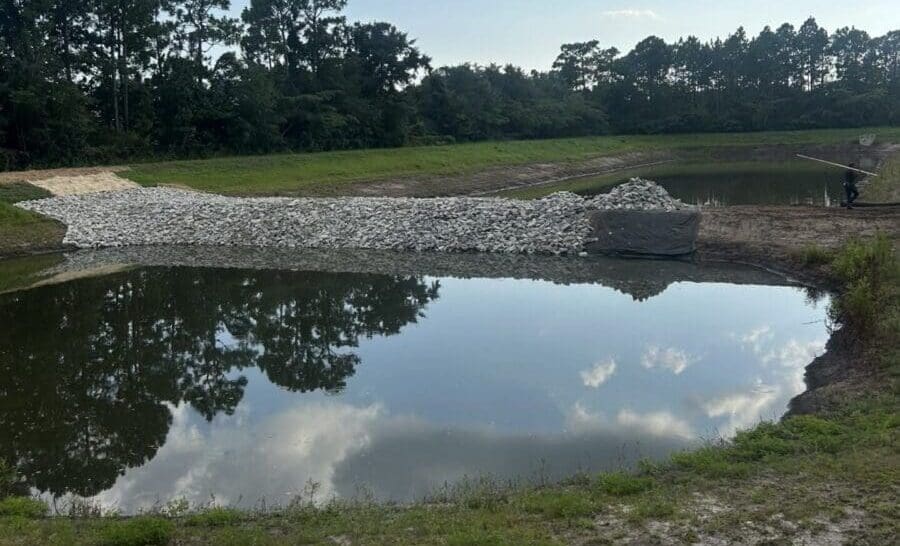
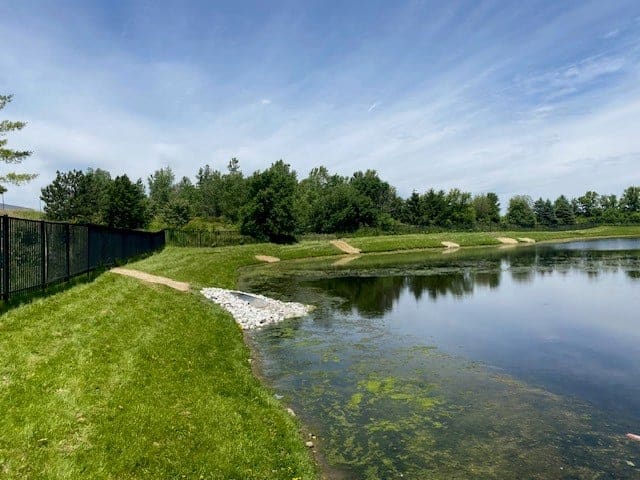
retention pond and grass shore

Stormwater Management

AQUALIS provides comprehensive stormwater services across the United States. From inspection and maintenance to repairs and rehabilitations, AQUALIS manages water on your property so you do not have to.
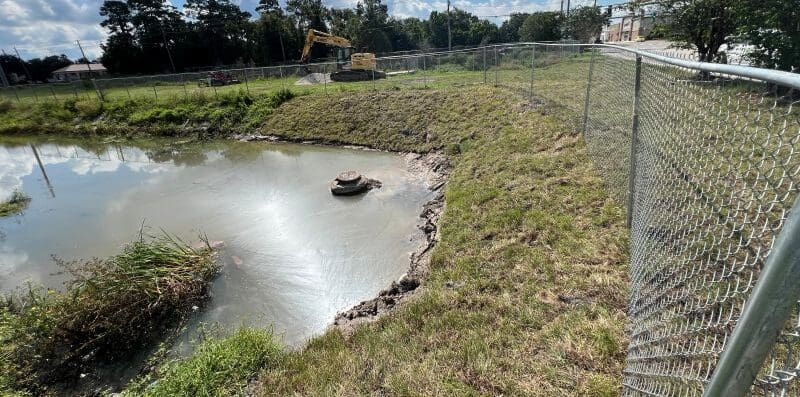
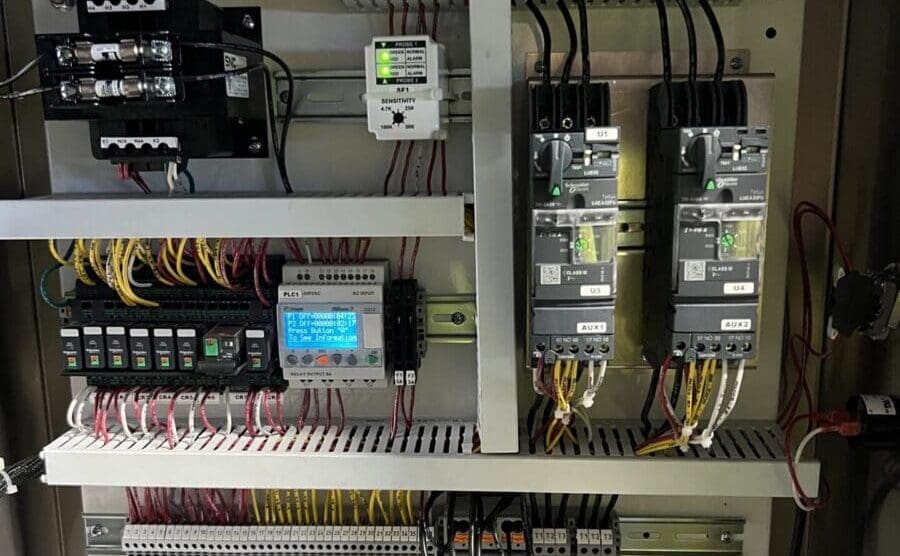
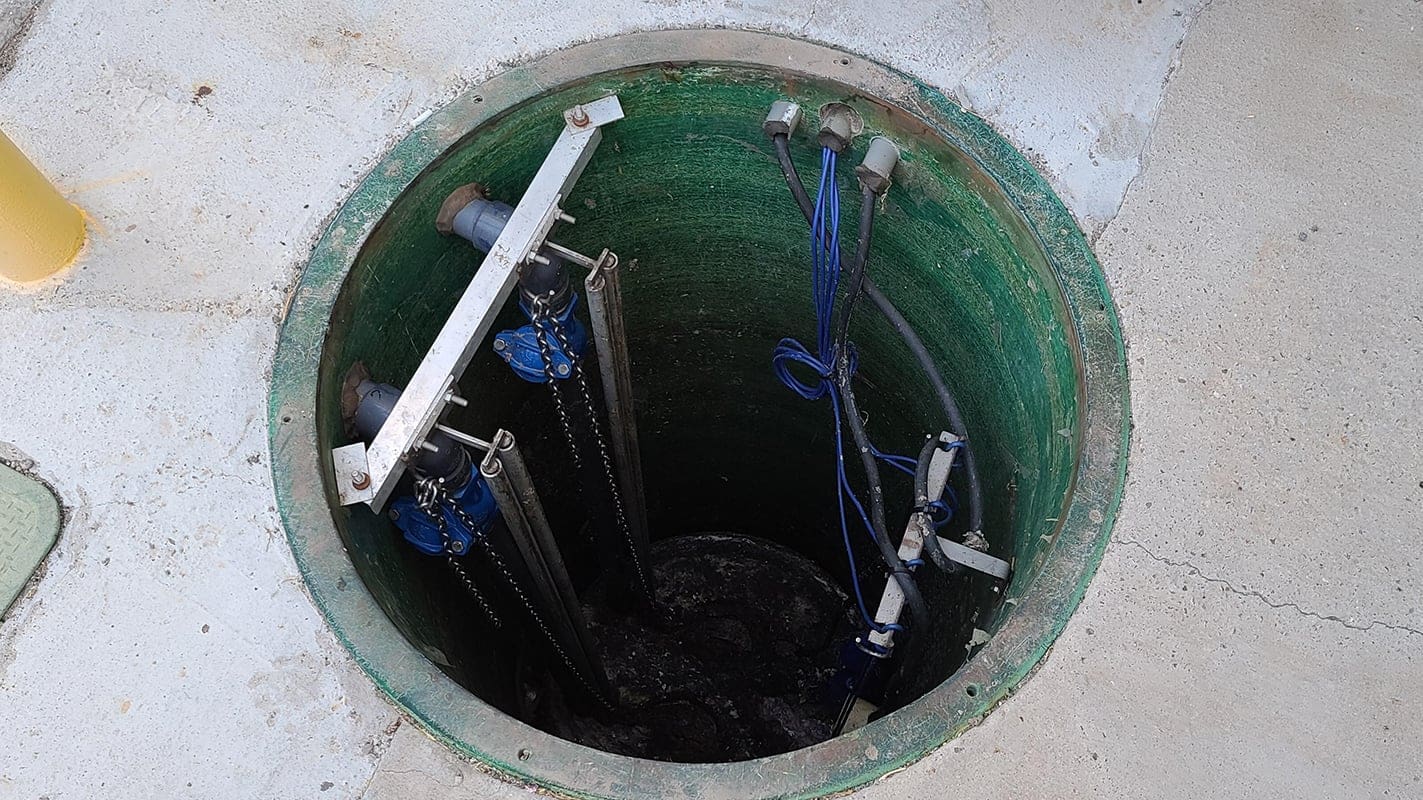
lift station

Wastewater Management

AQUALIS offers sustainable wastewater solutions including inspection, maintenance and repairs.
Three people reviewing plans

Sustainable Water Engineering

AQUALIS provides sustainable engineering services, in states in which we are licensed, from concept through construction, working closely with our clients to identify and deliver their ideal solutions.
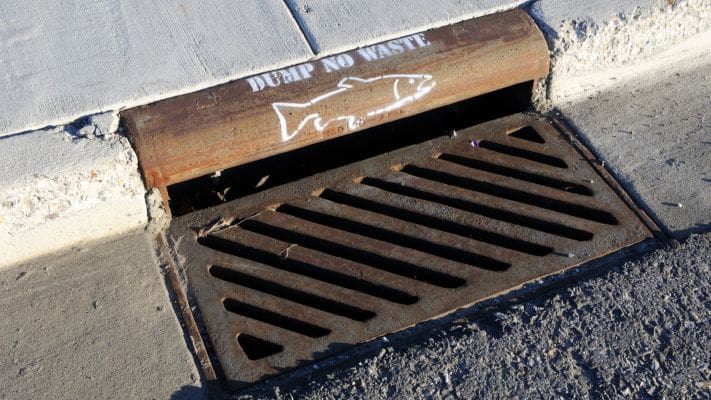
storm drain

Monitoring & Reporting

There are multiple requirements and records that need to be kept from your SWPPP to inspections and depending on your industry, stormwater sampling and analysis.
person holding a beaker

Water Quality Testing

AQUALIS offers water quality testing for stormwater, wastewater and drinking water.

Case Studies

CIPP Lining and Structural Pipe Repair in Shelby Crossings, Fla.  

AQUALIS rehabilitated failing stormwater infrastructure at a commercial property in Shelby Crossings, Florida, using CIPP lining and structural pipe repair. Three pipe runs were lined, while two collapsed sections were excavated and replaced to restore the system.

Multiphase Stormwater Infrastructure Rehabilitation in Atl. GA

AQUALIS helped an Atlanta, Georgia property owner rehabilitate aging stormwater infrastructure through a phased approach. The project addressed critical repairs while allowing the owner to plan for future stormwater improvements.

How a Hidden Pipe Failure Created a Sinkhole and Pond Erosion at a Commercial Property in Orange City, Fla. 

A hidden stormwater pipe failure caused a sinkhole and pond erosion at a commercial property in Orange City, Florida. AQUALIS identified the damage through CCTV inspection and completed pipe and pond repairs to restore the stormwater system.

Lift Station Overhaul Restores Critical Sewage Infrastructure Tacoma, Wash.

AQUALIS completed a lift station overhaul for a critical wastewater system in Tacoma, Washington. The project replaced failing pumps, piping and electrical components, restoring reliable sanitary sewer service without disrupting terminal operations.
during construction of a new bridge in fox point, wisconsin

Green Infrastructure Protects Bridges in Fox Point, Wis.

Severe erosion threatened twin bridges spanning a ravine overlooking Lake Michigan. AQUALIS combined green and gray infrastructure to stabilize the slopes and protect critical infrastructure.

Comprehensive Lift Station Overhaul Restores Sanitary Service at Industrial Facility in Mount Vernon, Wash. 

After years of continuous service, an industrial facility's sanitary lift station had reached the end of its serviceable life. AQUALIS executed a full overhaul, replacing the pumps, plumbing, controls and in-well hardware to return the station to reliable, code-compliant operation.
Muffin Monster installation

Sanitary Lift Station Grinder Installation and System Reliability Improvement in Katy, Texas

AQUALIS addressed recurring sanitary lift station failures at a retail facility in Katy, TX, by identifying the upstream solids issue driving repeated emergency callouts. The project included installation of an inline Muffin Monster grinder, controls integration and full site restoration to improve system reliability and reduce reactive maintenance.
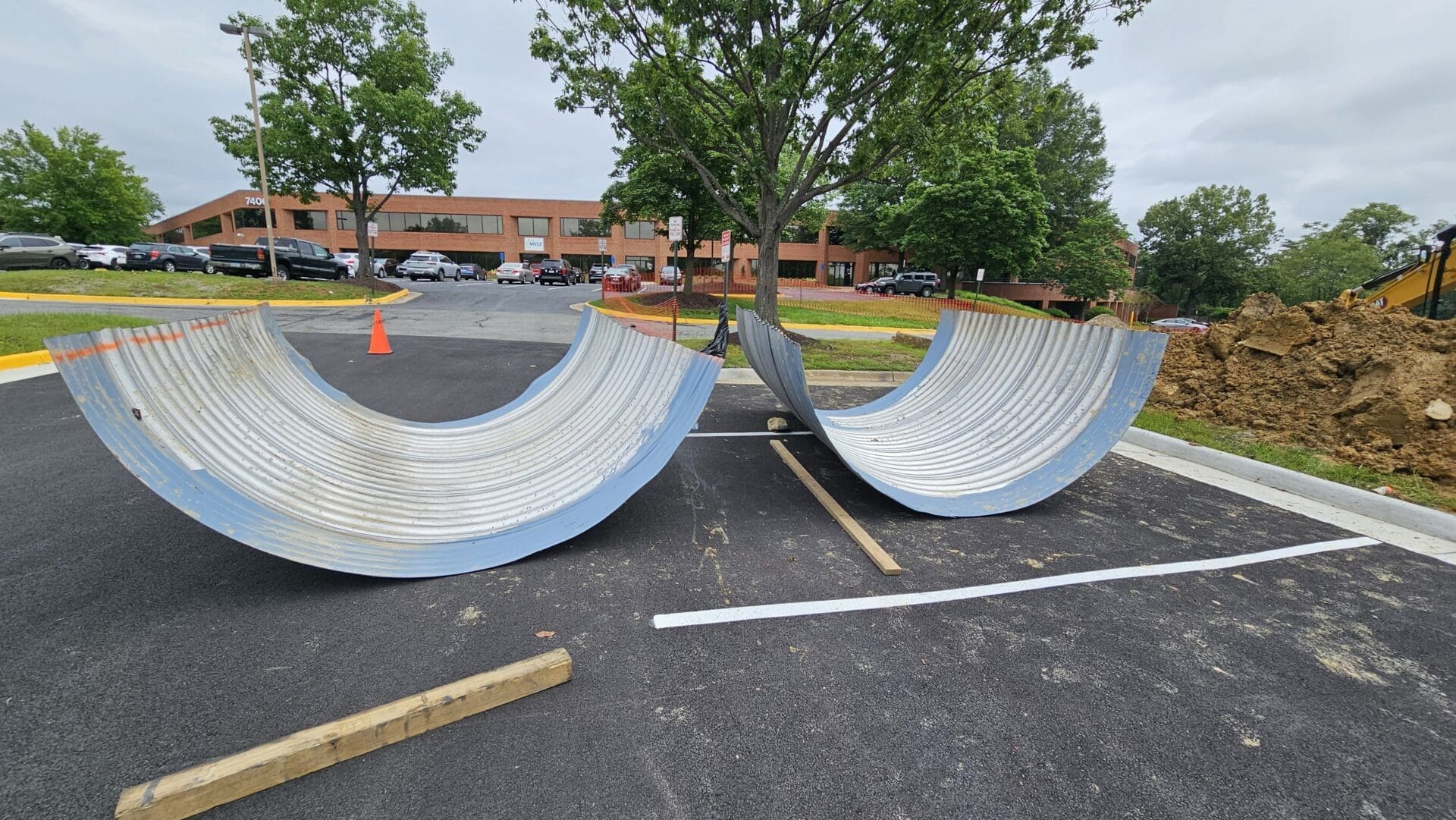
cut pipes laying in a parking lot

Parking Lot Sinkhole Leads to Underground Pipeline Reconstruction in Springfield, Va.

A large sinkhole at a commercial property in Springfield, Virginia led to full reconstruction of the site’s underground stormwater detention system. AQUALIS managed the phased demolition, geotechnical evaluation, utility coordination and installation to restore long-term stability and performance.
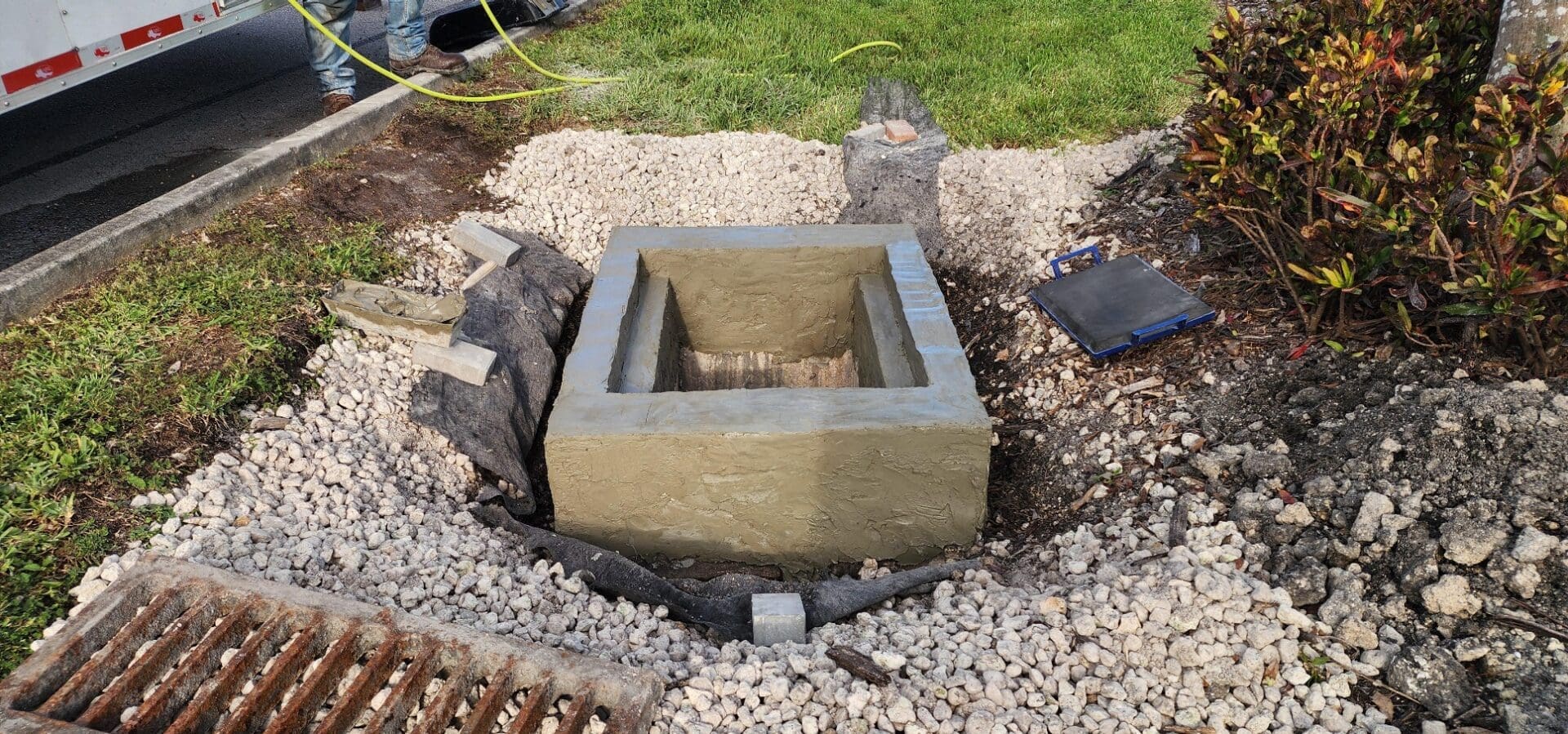
new catch basin

Manhole Root Intrusion Repair and System Assessment in Miami, Fla.

Sediment buildup, buried structures and root intrusion prompted a Miami shopping center to partner with AQUALIS to inspect, clean and restore key components of its stormwater system
uv light entering pipe

How Stormwater Pipe Inspection & UV Rehabilitation Restored Flow in New Bern, N.C.

A facility relies on an underground stormwater system to move runoff to a nearby retention basin. A 36-inch pipe plays a key role, but concerns emerged as flooding occurred during heavier rainfall.
new riprap for a pond

Facility Pond Shoreline Stabilization Addresses Erosion in Findlay, Ohio

Years of erosion driven by fluctuating pond levels and site runoff led to shoreline damage across this distribution property. AQUALIS implemented targeted repairs to stabilize the pond and restore stormwater control.
retention pond

Fixing Pond Erosion to Restore and Improve Stormwater Function in Mebane, N.C.

The customer requested maintenance of stormwater management principles located on the property. Lack of routine preventive maintenance had caused overgrowth, leading to insufficient stormwater systems.

Did you receive an NOV? Have an urgent need? We can help.

Notices of Violation (NOVs) or Corrective Notices should be taken seriously. Contact AQUALIS today to learn how to resolve the issue and comply with regulations.