

Last Updated 08/18/2026
Sec. 23-27.3.
Requirement to prevent, control, and reduce stormwater pollutants by the use of best management practices, including new development and redevelopment projects.
(a) Best management practices required. The Henderson Water Utility will adopt requirements identifying best management practices for any activity, operation, or facility which may cause or contribute to pollution or contamination of stormwater, the storm drain system, or waters of the state, including requirements during construction of new or redevelopment projects.
(b) Stormwater management measures post-construction. Owners or operators of any new development or redevelopment project shall design, construct and perpetually maintain stormwater management facilities or measures that will treat, filter, infiltrate, screen, harvest or reuse stormwater runoff from all impervious areas to manage stormwater quality. Facilities constructed or measures used to meet this requirement shall capture or treat all such runoff up to and including that from an eightieth percentile storm event. HWU will publish the eightieth percentile storm intensity and technical details of treatment requirements in the HWU Technical Stormwater Manual.
(c) Accidental discharges. The owner or operator of any development or redevelopment project, or any commercial or industrial establishment shall provide, at their own expense, reasonable protection from accidental discharge of prohibited materials or other wastes into the MS4 or watercourses through the use of structural and non-structural BMPs. Further, any person responsible for any property or premises, which is, or may be, the source of an illicit discharge, may be required to implement, at said person’s expense, additional structural and non-structural BMPs to prevent the further discharge of pollutants to the municipal separate storm sewer system.
(d) Other permits. Compliance with all terms and conditions of a valid NPDES permit authorizing the discharge of stormwater associated with industrial activity, to the extent practicable, shall be deemed compliance with the provisions of this section. These BMPs shall be part of a stormwater pollution prevention plan (SWPPP) as necessary for compliance with requirements of the NPDES permit.
Sec. 23-27.4
Depositing material on streets, rights-of-way, drainage systems; post construction stormwater management in new development, redevelopment, and existing systems.
(a) Depositing of material in streets, rights-of-way, or drainage systems. It shall be a violation of this chapter for any person to do, or permit, authorize or direct another person to do, any of the following:
(1) Erect, construct, deposit, or plant, any building, outbuilding, shed, fence, playground equipment, concrete, landscape berm, trees, bushes, shrubs, flowers, rocks, dirt, or any other substance or structure that covers, alters, obstructs, impairs or encroaches on the MS4 or any private stormwater system, unless such activity is authorized by the general manager.
(2) Deposit any concrete, pollutants, building materials, or yard waste on the surface of any street or alley located within public right-of-way that drains into the combined sewer system, the MS4, or any private stormwater system.
(3) Cover, alter, excavate, fill, divert, obstruct, impair, or encroach on any portion of the MS4 or any private stormwater system.
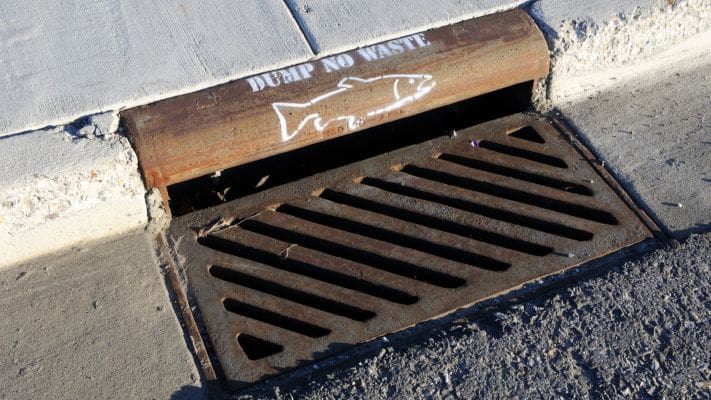
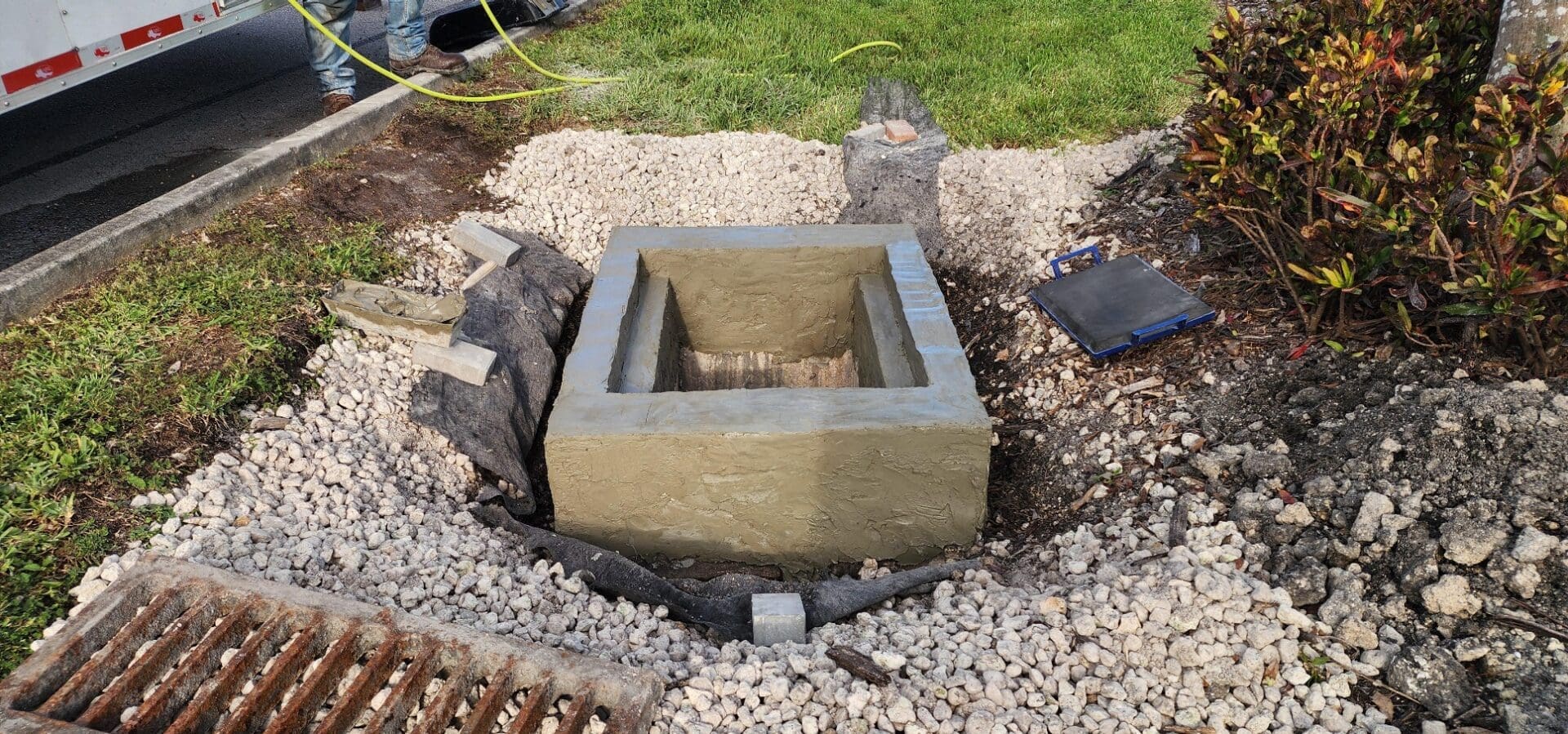
(4) Deposit or place any solid waste, debris, yard waste, pollutants, wastewater, concrete, building materials, tires, appliances, animal waste or carcasses, or any other substance, material or obstruction of any kind in an open ditch, sewer, stormwater inlet or catch basin, manhole, curb and gutter, or over, under, or across any portion of the MS4 or any private stormwater system.
(b) Construction of private stormwater drainage systems. All private stormwater drainage and treatment systems shall be in place, functioning, and certified by a Kentucky licensed professional engineer prior to the occupation of any property improvements by the owner. It shall be unlawful for any person to refuse to construct any part of a private stormwater drainage or treatment system or component that has been required by the City of Henderson or the Henderson City-County Planning Commission on any development plan or site plan.
(c) Maintenance of private stormwater drainage systems. The owner of the property on which the private stormwater drainage system is located, which includes but is not limited to the conveyance system, treatment system or detention/retention basin, shall, at the written request of HWU, employ a Kentucky licensed professional engineer to certify that the private storm sewer system is being maintained at the level of service for which it was originally designed. If a determination is made by HWU that the property owner is not maintaining the private system at or above the level of service indicated in the original design, a notice of deficiency shall be issued and enforcement initiated. It shall be unlawful for any person to refuse to maintain any part of a private storm sewer system that has been approved by the City of Henderson or the Henderson City-County Planning Commission as part of any development or site plan. The system shall be maintained at all times to the level of service for which it was designed.
Sec. 23-27.5.
Maintenance of stormwater drainage systems and control devices.
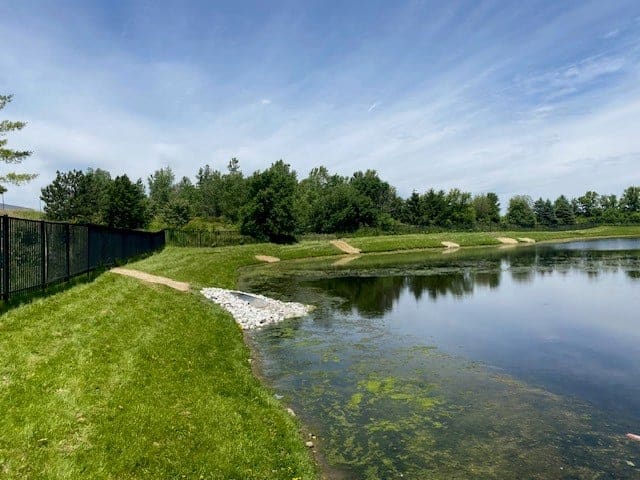
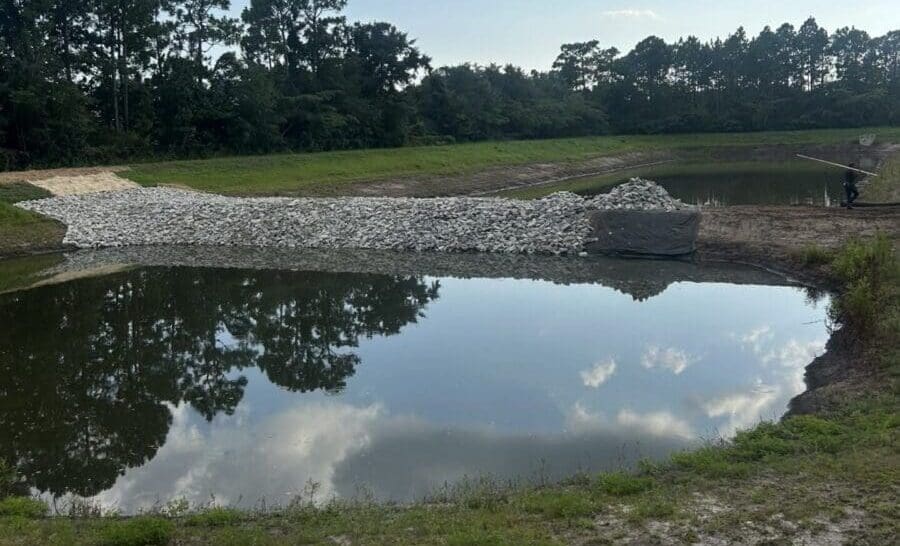
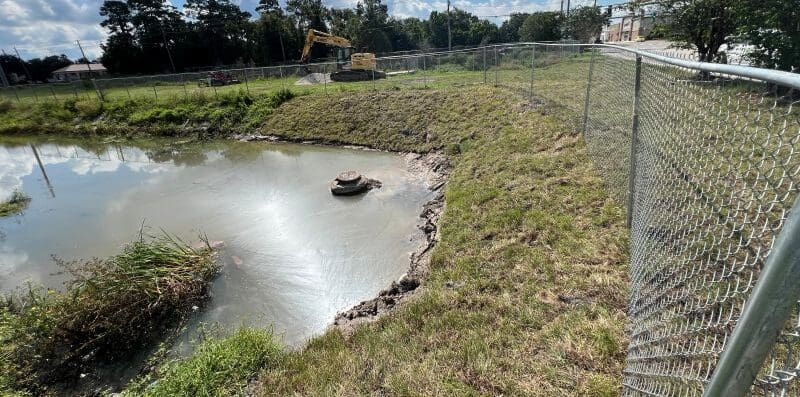
(a) Where a public drainage easement for a public stormwater drainage system exists, the private property owner is responsible for non-structural maintenance of any ditch, channel, detention/retention basin, or any other stormwater conveyance, treatment or control device located on the owner’s property, including but not limited to mowing the area (including any embankment or slope), removing small debris that accumulates in the system including litter and yard waste, sodding or seeding bare areas, (including any embankment or slope), and maintenance of landscape items, such as trees and shrubs.
(i) Maintenance and repair of detention/retention basins and other stormwater conveyance, treatment or control devices located on private property is the responsibility of the property owner who shall ensure the facilities are operating as intended. Property owners shall address requirements for continuing maintenance and repair of stormwater treatment or control devices through a note or clause on the face of a final recorded plat, or the execution of a stormwater management system maintenance agreement, recorded in the office of the county court clerk at the expense of the property owner.
(j) The owner of any property may be notified in writing by the city of any problems or maintenance or repairs that must be addressed or corrected in stormwater conveyance, treatment or control devices, or in stormwater basins, such as removing debris from a basin, repairing eroded areas on the embankment, replacing a crushed pipe, repairing or replacing a stormwater BMP, or improving embankment stability. Such notification shall include a time limit for correction of deficiencies, after which time enforcement shall be initiated. The scale of enforcement actions will be as detailed in the appropriate HWU enforcement response plan.
Sec. 23-35
Penalties.
(a) Written notice.
(1) Any user found to be violating any provision of this division or a permit or order issued hereunder, shall be served by the general manager or his/her designee with written notice stating the nature of the violation. The user shall permanently remedy all violations upon receipt of this notice.
(2) As contained in Section 23-34, the notice may be of several forms. Also as contained in Section 23-34, penalties of various forms may be levied against users for violations of this division. The penalties, if levied, shall range from publication of violators in the local newspaper to administrative fines of up to ten thousand dollars ($10,000.00) per day per violation.
(b) Revocation of permit.
(1) Any user violating any of the provisions of this division or a permit or order issued hereunder, may be subject to termination of its authority to discharge sewage into the municipal sewer system. Such termination may be immediate if necessary for the protection of the POTW. Said user may also have water service terminated.
(2) Any user who violates the following conditions of this division, or applicable state and federal regulations, is subject to having his permit revoked in accordance with the procedures of this chapter:
a. Failure of a user to factually report the wastewater constituents and characteristics of his discharge;
b. Failure of the user to report significant changes in operations, or wastewater constituents and characteristics;
c. Refusal of reasonable access to the user’s premises for the purpose of inspection or monitoring; and/or
d. Violation(s) of conditions of the industrial user permit.
View State Page
Frequently Asked Questions
What water quality standard does Henderson require for new development?
Owners of any new development or redevelopment project have to design, construct and perpetually maintain stormwater facilities that treat, filter, infiltrate, screen, harvest or reuse runoff from every impervious area on the site. The standard is specific: facilities have to capture or treat runoff up to and including an 80th percentile storm event, with the exact storm intensity and technical treatment details published in HWU’s own Technical Stormwater Manual.
Who's responsible for maintaining a private stormwater system in Henderson?
The property owner, and Henderson Water Utility can request proof of it directly. At HWU’s written request, the owner has to hire a Kentucky licensed professional engineer to certify the system is still being maintained at the level of service it was originally designed for. If HWU determines the system has fallen below that standard, a notice of deficiency goes out and enforcement follows, and refusing to maintain any part of an approved private storm sewer system is itself unlawful under the code.
Can I alter or landscape over a stormwater easement on my Henderson property?
Not without prior authorization. The code prohibits erecting structures, planting trees or shrubs, or depositing concrete, dirt or other material that covers, alters, obstructs or encroaches on the MS4 or any private stormwater system, unless the general manager specifically authorizes the activity. Depositing pollutants, building materials or yard waste anywhere that drains into the system, whether directly into a catch basin or onto a street that feeds it, is treated the same way.
How does Henderson handle continuing stormwater maintenance obligations after a property sale?
Property owners have to address ongoing maintenance and repair responsibility through either a note on the face of the final recorded plat or a separate stormwater management system maintenance agreement, recorded with the county court clerk at the owner’s expense. That recording is what carries the obligation forward through future ownership changes, so a buyer doing due diligence should confirm that documentation exists rather than assume responsibility transfers automatically.
What penalties apply to a stormwater violation in Henderson?
Penalties range from having the violator’s name published in the local newspaper to administrative fines up to $10,000 per day per violation, and a user can also face termination of their authority to discharge into the municipal sewer system, which can be immediate if necessary to protect the treatment works. Beyond fines, Henderson can revoke a permit entirely for specific violations, including refusing reasonable access to the property for inspection or monitoring, so blocking an inspector’s entry carries its own separate enforcement risk.
The information on this page is provided for general informational purposes only and is not legal advice. Regulations change frequently — AQUALIS makes no warranty as to the accuracy or completeness of this content, and any reliance on it is at your own risk. Consult a qualified professional or your local regulatory authority to confirm requirements applicable to your specific property.