

Last Updated 03/07/2024
Huntington Stormwater Management Requirements
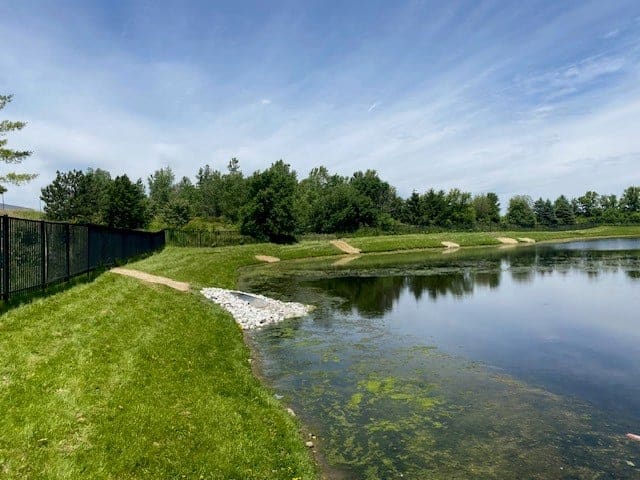
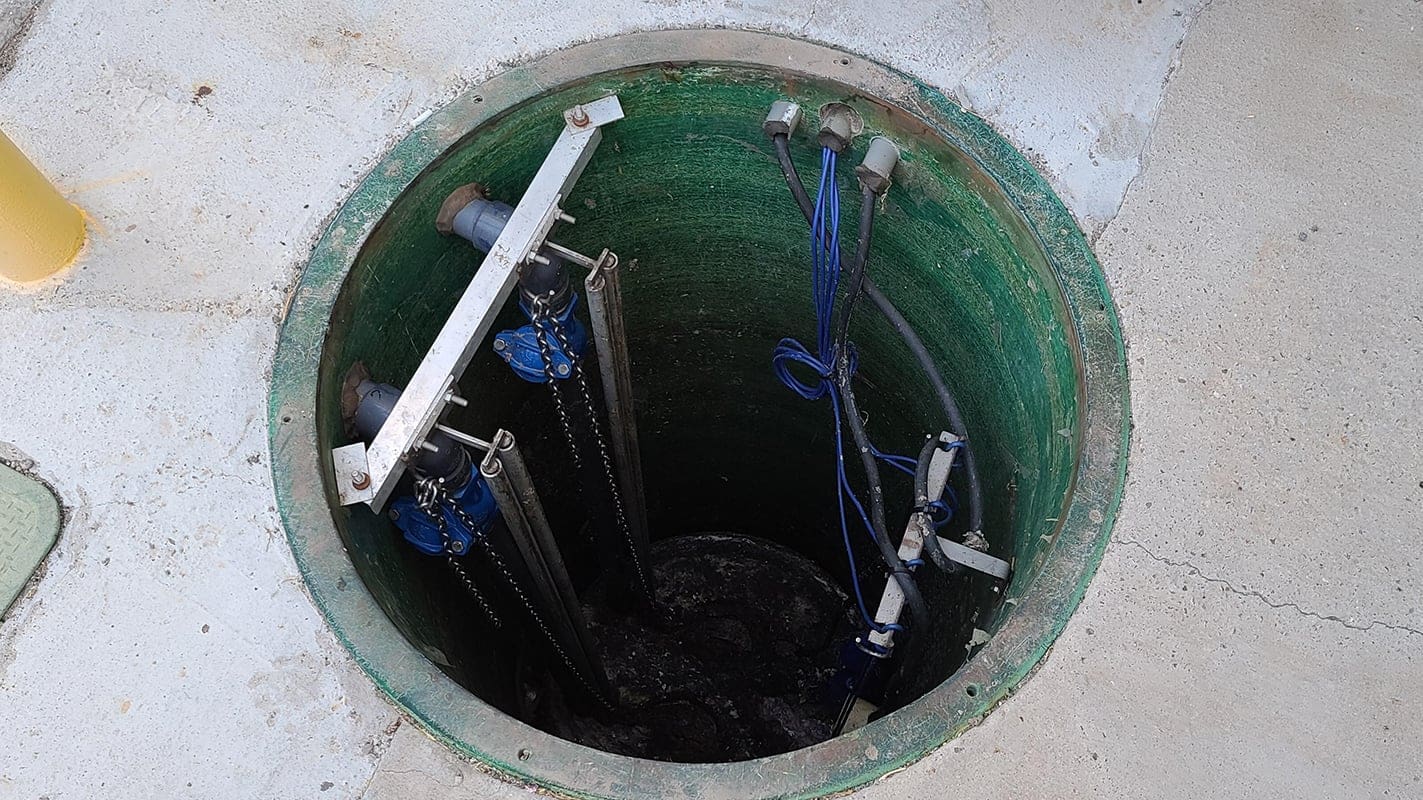
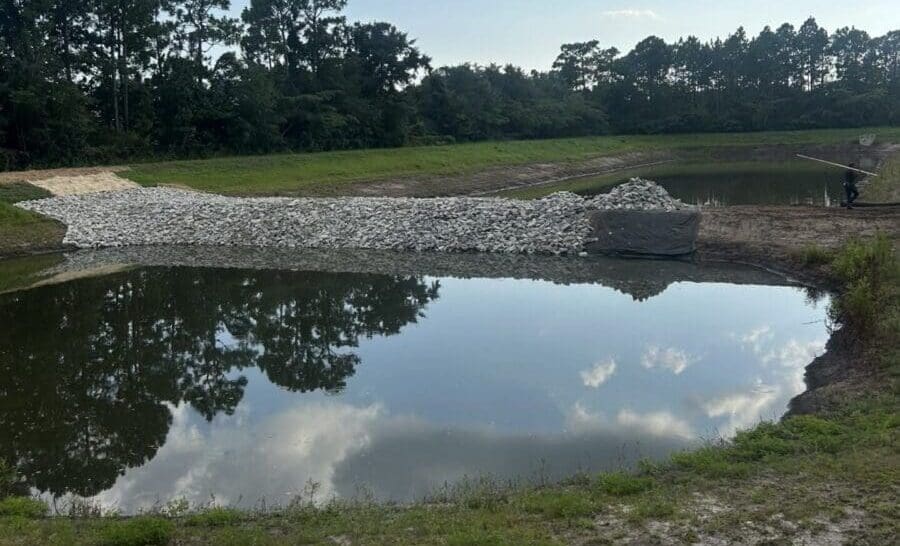
Once construction and landscaping is complete, the City will require a maintenance plan and signed maintenance agreement from the site owner that describes the inspection and maintenance activities and inspection frequency for the stormwater control practices. The maintenance plan must also include remediation action in the event the structure requires maintenance or repair. The property owner or operator must provide verification of maintenance for the approved stormwater management practices. It is important that the hydraulic function of stormwater controls be maintained and function as intended in perpetuity.
Excerpt from Huntington Code of Ordinance
Article 969- Illicit Discharge and Detection
969.12 – REQUIREMENTS TO PREVENT, CONTROL, AND REDUCE STORMWATER POLLUTANTS BY THE USE OF BEST MANAGEMENT PRACTICES
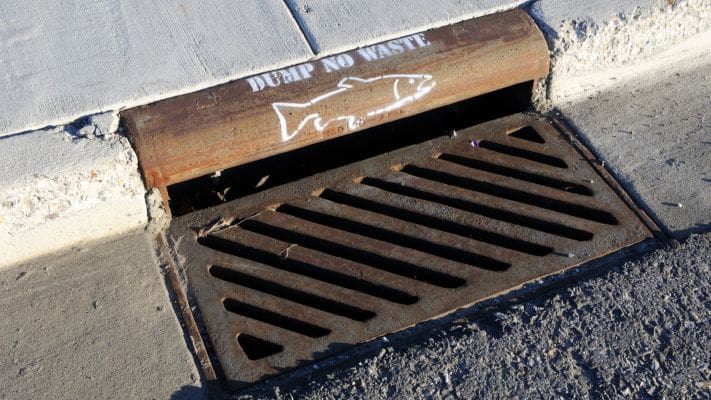
The City of Huntington will adopt requirements identifying best management practices for any activity, operation, or facility which may cause or contribute to pollution or contamination of storm water, the storm drain system, or waters of the United States. The owner or operator of a commercial or industrial establishment shall provide, at their own expense, reasonable protection from accidental discharge of prohibited materials or other wastes into the municipal storm drain system or watercourses through the use of these structural and non-structural BMPs. Further, any person responsible for a property or premise, which is, or may be, the source of an illicit discharge, may be required to implement, at said person’s expense, additional structural and non-structural BMPs to prevent the further discharge of pollutants to the municipal separate storm sewer system. Compliance with all terms and conditions of a valid NPDES permit authorizing the discharge of storm water associated with industrial activity, to the extent practicable, shall be deemed compliance with the provisions of this section. These BMPs shall be part of a stormwater pollution prevention plan (SWPPP) as necessary for compliance with requirements of the NPDES permit.
969.13 – REQUIREMENT TO REMEDIATE
Whenever the public works director finds that a discharge of pollutants is taking place or has occurred which will result in or has resulted in pollution of storm water, the storm drain system, or water of the United States, the public works director may require by written notice to the owner of the property and/or the responsible person that the pollution be remediated and the affected property restored within a specified time pursuant to the provisions of this article.
969.17 – ENFORCEMENT
(a) Notice of violation. Whenever the City of Huntington finds that a person has violated a prohibition or failed to meet a requirement of this ordinance, the city may order compliance by written “Notice of Violation” to the responsible person
Article 971 – Control of Post Construction Stormwater Runoff
971.06 – CONTROL OF POST CONSTRUCTION STORMWATER.
- The Huntington Stormwater Utility shall, by regulation, establish requirements for all development and redevelopment in the Huntington Urban watershed that meet or exceed the requirements for “Controlling Runoff from New Development and Redevelopment” set forth in NPDES Permit No. WV0116025.
- These regulations shall promote the use of stormwater facilities that:
- Minimize the amount of impervious surfaces within the Huntington Urban Watershed by minimizing the creation, extension, and widening of parking lots, roads, and associated development and encouraging the use of low impact development or green infrastructure practices;
- Preserve, protect, create and restore ecologically sensitive areas within the Huntington Urban Watershed that provide water quality benefits and serve critical watershed functions. These areas may include, but are not limited to; riparian corridors, headwaters, floodplains and wetlands;
- Implement stormwater management practices that prevent or reduce thermal impacts to streams;
- Avoid or prevent hydromodification of streams and other water bodies caused by development, including roads, highways and bridges;
- Implement standards to protect trees and other vegetation with important evapo-transpirative qualities;
- Protect native soils, prevent topsoil stripping and prevent compaction of soils.
971.08 – ENFORCEMENT—INSPECTIONS AND INVESTIGATIONS.
- Authority to inspect and investigate. Pursuant to W. Va. Code § 16-13-23a(1) and other relevant West Virginia laws and regulations, the Stormwater Utility shall have the authority, upon presentation of identification and credentials, to enter and inspect any land, building, structure, or premises within the Huntington Urban Watershed to ensure compliance with this article, or any regulations, permits, agreements, or orders adopted or issued pursuant to this article, and to investigate to determine whether the activity is being conducted in accordance with this article and the approved stormwater management plan, and whether the measures required in the plan are effective. The stormwater utility shall also have the power to require written statements, or the filing of reports under oath as part of an investigation.
- No person shall resist, delay, obstruct, hamper or interfere with the stormwater utility while the stormwater utility is inspecting and/or investigating or attempting to inspect and/or investigate an activity under this article. Failure to provide access to the stormwater utility is a violation of this article and may result in the assessment civil penalties pursuant to this article.
- Inspection and/or investigation frequency. The inspections and investigations outlined above in subsection (a) may be conducted or established on any reasonable basis, including but not limited to: routine inspections and/or investigations; random inspections and/or investigations; inspections and/or investigations based upon complaints or other notice of possible violations; and joint inspections and/or investigations with other agencies inspecting and/or investigating pursuant to environmental or safety laws. Inspections may include, but are not limited to: reviewing maintenance and repair records; sampling discharges, surface water, groundwater, and material or water in stormwater management facilities; and evaluating the condition of stormwater management facilities.
971.09 – ENFORCEMENT—VIOLATIONS.
- Violations. Any failure to comply with an applicable requirement, prohibition, standard, or limitation imposed by this article or any regulations, permits, agreements, or orders adopted or issued pursuant to this article, is unlawful and shall constitute a violation of this article.
- Responsible persons/entities. Any person who erects, constructs, reconstructs, alters (whether actively or passively), or fails to erect, construct, reconstruct, alter, repair or maintain any structure, stormwater management facility, practice, or condition in violation of this article, as well as any person who participates in, assists, directs, creates, causes, or maintains a condition that results in or constitutes a violation of this article, or fails to take appropriate action, so that a violation of this article results or persists; or an owner, any tenant or occupant, or any other person, who has control over, or responsibility for, the use, development or redevelopment of the property on which the violation occurs shall be subject to the remedies, penalties, and/or enforcement actions in accordance with this section. For the purposes of this article, responsible person(s) shall include but not be limited to:
- Person maintaining condition resulting in or constituting violation. Any person who participates in, assists, directs, creates, causes, or maintains a condition that constitutes a violation of this article, or fails to take appropriate action, so that a violation of this article results or persists.
- Person who owns or controls use of property. The owner of the land on which the violation occurs, any tenant or occupant of the property, any person who is responsible for stormwater controls or practices pursuant to a private agreement or public document, or any person, who has control over, or responsibility for, the use, development or redevelopment of the property.
- Notice of violation and order to correct. If, through inspection and/or investigation, it is found that any building, structure, or land is in violation of this article, the stormwater utility shall notify in writing the responsible person/entity. The notice may be served in person or by certified mail, return receipt requested. The notification shall indicate the nature of the violation, contain the address or other description of the site upon which the violation occurred or is occurring, order the necessary action to abate the violation, and give a deadline for correcting the violation. The notice shall, if necessary, specify a date by which the responsible person/entity must comply with this article, and advise that the responsible person/entity is subject to remedies and/or penalties or that failure to correct the violation within the time specified will subject the responsible person/entity to remedies and/or penalties as described section 971-10 of this article. If a violation is not corrected within a reasonable period of time, as provided in the notification, the stormwater utility may take appropriate action, as provided in this article to correct and abate the violation.
- Extension of time. A responsible person/entity who receives a notice of violation and correction order, or the owner of the land on which the violation occurs, may submit to the stormwater utility a written request for an extension of time for correction of the violation. On determining that the request includes enough information to show that the violation cannot be corrected within the specified time limit for reasons beyond the control of the responsible person/entity requesting the extension, the stormwater utility may extend the corrective action deadline, in its sole discretion, as long as is reasonably necessary to allow timely correction of the violation. The stormwater utility may grant an extension only by written notice of extension. The notice of extension shall state the date prior to which correction must be made, after which the violator will be subject to the penalties described in the notice of violation and correction order.
- Emergency enforcement. If a violation threatens the effective enforcement of this article or poses an immediate threat to the public health, safety, or the environment, then the stormwater utility may order the immediate cessation of a violation. Any person so ordered shall cease any violation immediately. The stormwater utility may seek immediate enforcement, without prior written notice, through any remedy or penalty specified in this article.
971.10 – ENFORCEMENT—PENALTIES AND REMEDIES
- Civil penalties. Any person who violates any of the provisions of this article or any regulations, permits, agreements, or orders adopted or issued pursuant to this article may, at the sole discretion of the stormwater utility, be subject to a civil penalty. A civil penalty may be assessed from the date a violation occurs. The stormwater utility shall determine the amount of the civil penalty and shall notify the violator of the amount of the penalty and the reason for assessing the penalty. No penalty shall be assessed until the person alleged to be in violation has been notified of the violation except as provided in subsection 971-09(e), in which case the penalty is assessed concurrently with a notice of violation. Refusal to accept the notice or failure to notify the stormwater utility of a change of address shall not relieve the violator’s obligation to comply with the article or to pay such a penalty.
- Calculation of Violations. Each day that a violation continues shall constitute a separate and distinct violation or offense.
- Penalties assessed concurrent with notice of violation. Penalties may be assessed concurrently with a notice of violation for any of the following, in which case the notice of violation shall also contain a statement of the civil penalties to be assessed, the time of their accrual, and the time within which they must be paid or be subject to collection as a debt:
- Failure to submit a stormwater management plan;
- Performing land disturbing activities or beginning development or redevelopment work without an approved stormwater management plan;
- Obstructing, hampering or interfering in any way with an authorized representative who is in the process of carrying out official duties, including failing to provide access to property within the Huntington Urban Watershed for inspection or investigation purposes;
- A repeated violation for which a notice was previously given on the same project or property or to the same responsible person/entity responsible for the violation;
- Willful violation of this article or any regulations, permits, agreements, or orders adopted or issued pursuant to this article; and
- Failure to install or maintain stormwater facilities per an approved plan.
- Reserved.
- Amount of civil penalty. The civil penalty for each violation of this article may be up to $500 per violation per day. The determination of an appropriate civil penalty shall be at the sole discretion of the stormwater utility. In determining the amount of the civil penalty, the stormwater utility may consider any relevant mitigating and aggravating factors including, but not limited to: the degree and extent of harm caused by the violation; the cost of rectifying the damage; the economic benefit of noncompliance; whether the violation was committed willfully; cooperation with the stormwater utility; and the prior record of the violator in complying or failing to comply with this article or any other ordinance or law.
- Failure to pay civil penalty. If a violator does not pay a civil penalty assessed by the stormwater utility within 30 days after it is due, or does not request a hearing as provided in subsection 971-10(f), the stormwater utility may initiate a civil action to recover the amount of the assessment. The civil action shall be brought in either Wayne or Cabell County Circuit Court or in any other court of competent jurisdiction. A civil action must be filed within three years of the date the assessment was due. An assessment that is appealed is due at the conclusion of the administrative and judicial review of the assessment. If the stormwater utility obtains a judgment against a violator for unpaid civil penalties issued pursuant to this article, the violator shall be responsible for any costs and/or attorney fees incurred by the stormwater utility.
- Appeal of remedy or penalty. The issuance of an order of restoration and/or notice of assessment of a civil penalty shall entitle the responsible party or entity to an appeal before the stormwater utility if such person submits a written demand for an appeal hearing to the Huntington Stormwater Utility Board within 30 days of the receipt of an order of restoration and/or notice of assessment of a civil penalty. The stormwater utility may, in its sole discretion, develop procedural rules for appeals by regulation.
- Additional remedies.
- Withholding of certificate of occupancy. The stormwater utility or other authorized agent may refuse to issue a certificate of occupancy for the building, property or other improvements constructed or being constructed on the site and served by the stormwater practices in question until the applicant or other responsible person has taken the remedial measures set forth in the notice of violation or has otherwise cured the violations.
- Disapproval of subsequent permits and plan approvals. As long as a violation of this article continues and remains uncorrected, the stormwater utility or other authorized agent may withhold, and the stormwater utility may disapprove, any subsequent request for permit or plan approval or authorization provided for by this article or the zoning, subdivision, and/or building regulations, as appropriate for the property on which the violation occurs. The stormwater utility is also authorized to deny applications by responsible parties for properties not associated with or connected to the existing violations.
- Disconnection of water and sewer service. Pursuant to W. Va. Code § 16-13-16(m), the stormwater utility, the City of Huntington or other authorized agent may discontinue both water and sewer service to any building, property or person for the failure to comply with an order of the stormwater utility, pay penalties, violations or fees assessed by the stormwater utility or to correct ongoing violations of this article or any regulations enacted pursuant to this article.
- Correction as public health nuisance, costs as lien, etc. If a violation is deemed to pose a threat to the public health, safety, or the environment and is within the Huntington Urban Watershed, the stormwater utility, with the written authorization of Huntington Stormwater Utility Board, may cause the violation to be corrected and the costs to be assessed as a lien against the property. Pursuant to W. Va. Code § 16-13-23a(m), the stormwater utility may also collect the costs of correcting any violation by instituting a civil action.
- Restoration of areas affected by failure to comply. By issuance of an order of restoration, the stormwater utility may require a person who engaged in a land disturbing activity and failed to comply with this article to restore the waters and land affected by such failure so as to minimize the detrimental effects to the environment. This authority is in addition to any other civil penalty or injunctive relief authorized under this article.
- Criminal penalties. Violation of this article may be enforced as a misdemeanor subject to the maximum fine permissible under state law.
View State Page
Frequently Asked Questions
What is stormwater compliance in the City of Huntington?
Stormwater compliance in Huntington means following the City’s Storm Water Management Plan, which was adopted to meet the requirements of the Clean Water Act and to keep local waterways free of pollutants.
The City of Huntington is the permitting authority for all land disturbing activities within the Huntington Urban Watershed. This means that before any construction or land development project can begin, a stormwater management plan must be approved and a construction permit issued. Once construction is complete, property owners are required to maintain all on-site stormwater control facilities and any open space areas required by the approved plan, so that those systems continue to function as intended.
Who is responsible for stormwater compliance in Huntington?
Huntington’s ordinance casts a wide net when it comes to responsibility. Under Article 971, any of the following can be held accountable for a stormwater violation:
- The property owner.
- Tenants and occupants.
- Anyone who creates or maintains a violation.
- Anyone responsible under a private agreement.
In short, responsibility is not limited to the person who caused a problem. If you own, occupy, or have any control over a property where a stormwater violation exists, you may be held responsible for fixing it. AQUALIS can help you understand your obligations and manage compliance on your behalf.
How often does Huntington inspect stormwater facilities?
The City of Huntington’s Stormwater Utility has broad authority to inspect any land, building, structure, or premises within the Huntington Urban Watershed at any reasonable time. Inspections can be conducted on a routine basis, randomly, in response to a complaint, or jointly with other agencies.
Why does stormwater maintenance matter for Huntington property owners?
The City of Huntington’s ordinance includes some of the most detailed enforcement provisions of any local stormwater code, which means the consequences of deferred maintenance are specific and significant.
- Civil penalties up to $500 per day.
- Criminal penalties.
- Loss of permits and certificates of occupancy.
- Disconnection of water and sewer service.
- Liens against the property.
The ordinance also requires commercial and industrial property owners to implement best management practices (BMPs) at their own expense to prevent pollutants from reaching the storm drain system. Failing to do so is an independent violation.
The information on this page is provided for general informational purposes only and is not legal advice. Regulations change frequently — AQUALIS makes no warranty as to the accuracy or completeness of this content, and any reliance on it is at your own risk. Consult a qualified professional or your local regulatory authority to confirm requirements applicable to your specific property.