

Last Updated 08/04/2026
Excerpt-Kingsport Code of Ordinances
Chapter 38 Environment Article III Stormwater Management
Sec. 38-172. - Sinkhole requirements.
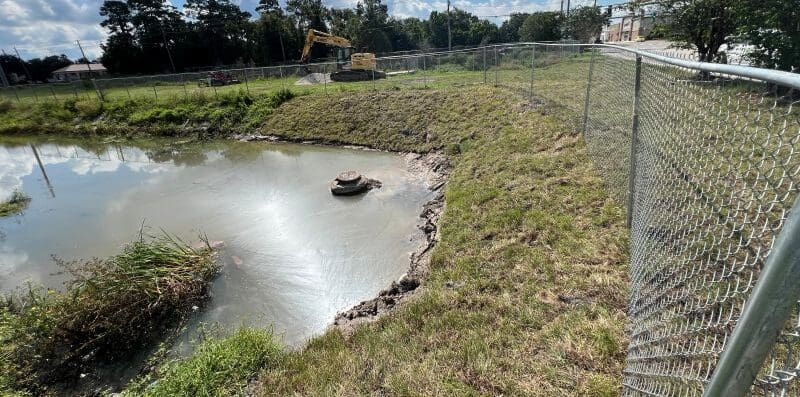
The following sinkhole and drainage well plan information or approval from the appropriate regulating agency must be provided prior to the alteration of the natural drainage for watershed discharging to such features as sinkholes and drainage wells:
(1) Proposed on-site and offsite drainage channels that are tributary to a sinkhole throat or drainage well inlet shall be delineated, along with appropriate hydraulic calculations to define the existing and altered (if appropriate) 100 year floodplain and to confirm that off-site flooding will not be increased;
(2) Detailed contours are to be shown for all sinkholes that are to receive stormwater runoff from the site. These contours are to have a maximum interval of two feet and are to be verified by field surveys;
(3) A geologic investigation of all sinkholes receiving stormwater runoff from the site shall be performed. The report from this investigation shall be signed and sealed by a registered professional experienced in geology and groundwater hydrology and shall contain the following:
a. Location and nature of aquifers;
b. Potential for siltation problems;
c. Foundation problems that may be expected around sinkholes;
d. Details of drainage structures to be built in sinkholes;
e. Any other factors relevant to the design of drainage from sinkholes;
f. Plans showing the 100 year flood-plain;
g. The 100 year floodplain shall be designated as a drainage easement on final subdivision plat; and
h. Details of plan for grading and clearing of vegetation within the 100 year floodplain;
(4) Compliance with any and all conditions that may be required by the federal government or the state shall be documented. The state division of groundwater is the primary regulatory agency for sinkholes and drainage wells. Drainage into a sinkhole may require a permit for a Class V well under rules for underground injection control (UIC); and
(5) Demonstration that development will not occur within the area flooded by the 100 year flood. The 100 year flood elevation may be lowered by construction of a detention pond. Calculations that document a lowering of the 100 year flood elevation shall be based on the 100 year, 24 hour storm using an appropriate safety factor for discharge into the sinkhole.
Sec. 38-173. - Drainage requirements.
(a) Private drainage systems, where drainage originates in its entirety on private property and terminates on same said property, shall be the sole responsibility of the owner.
(b) Private drainage originating on private property and draining to an adjacent parcel of private property shall be resolved by the owners involved.
(c) In cases where flooding stemming from the drainage system or streams are of significant magnitude, the health and welfare of private and/or public property may prompt the city to participate in mitigating the frequency and effects. All such projects shall meet with the approval of the director prior to implementation.
(d) The requirements of subsections (a) through (c) of this section may be waived and emergency measures taken to protect the public safety during those circumstances in which, due to unforeseen events, development and/or acts of nature, the public welfare requires it. The director shall have the power to exercise all due discretion, judgment and executive directives to address any such situation and/or emergency.
(e) No watercourse shall be obstructed.
(f) Stormwater drainage shall not:
(1) Adversely impact adjacent properties or public rights-of-way;
(2) Circumvent stormwater management facilities for which that flow contribution was designed; or
(3) Be directed through a curb without a permit approved by the director.
(h) Additional curbing to control stormwater shall be installed only with approval of the director.
DIVISION 7. - INSPECTIONS, OPERATION AND MAINTENANCE
Sec. 38-254. - Requirements.
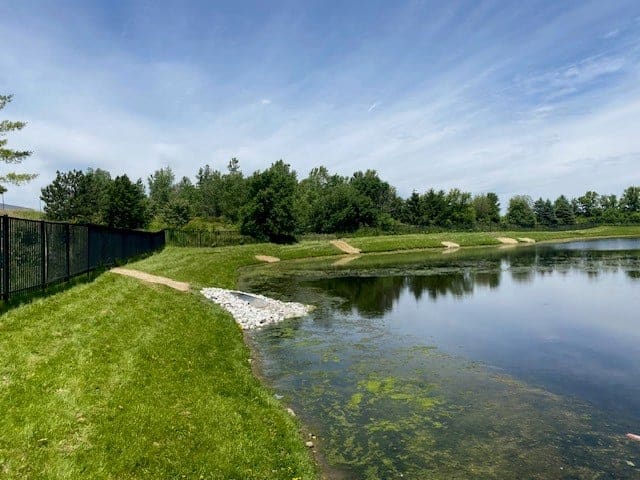
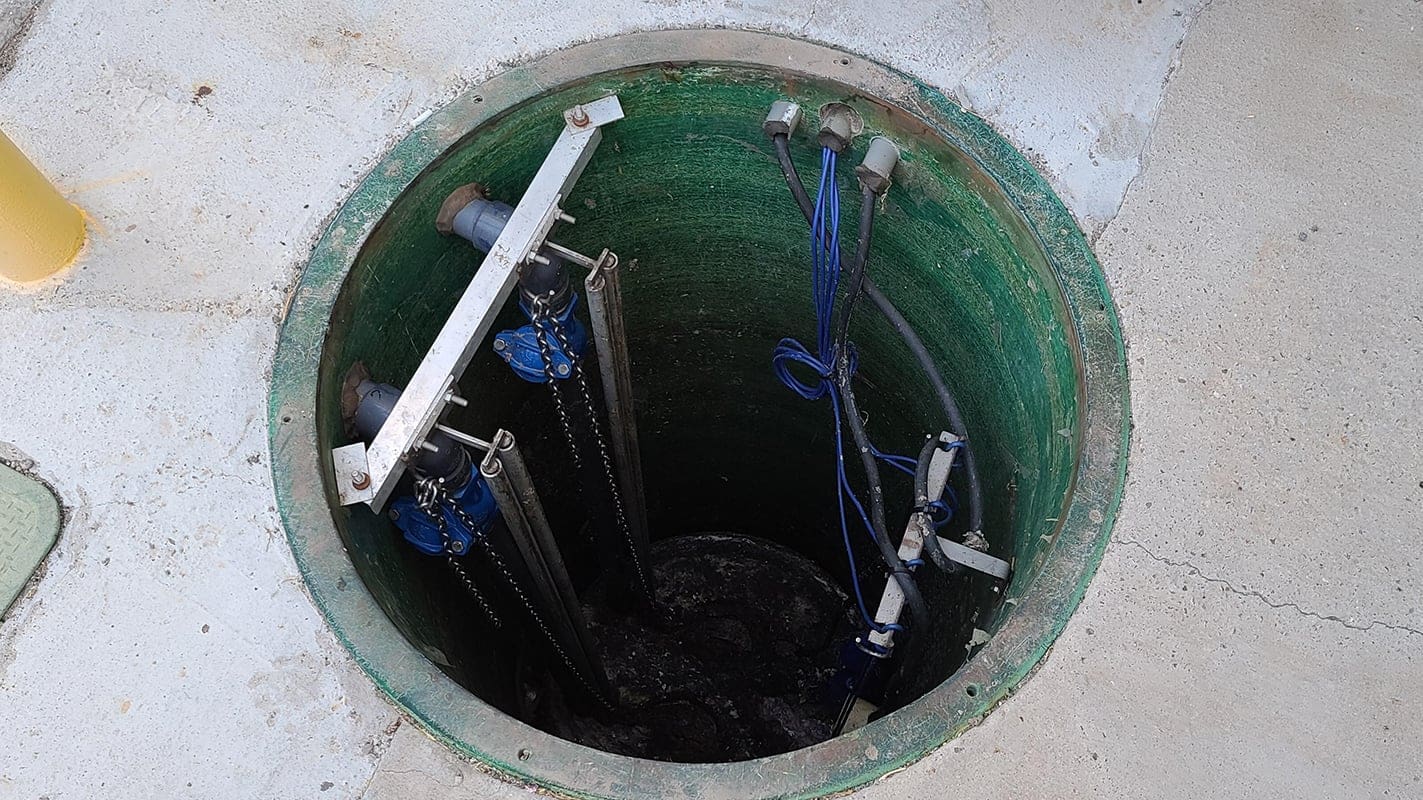
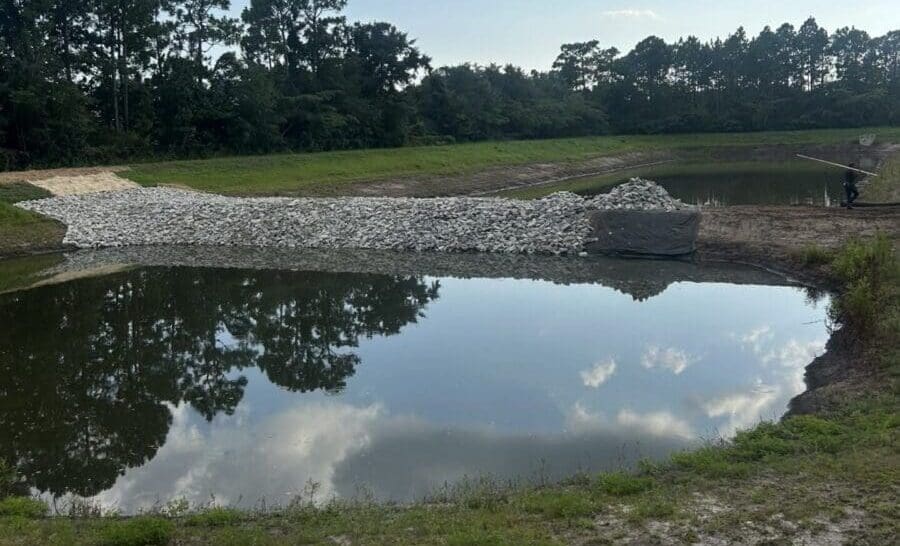
(a) The owners of stormwater management facilities, BMPs, buffer zones, and water quality volume credit areas shall at all times inspect, properly operate, and maintain all facilities and systems of stormwater treatment and control (and related appurtenances), and all buffer zones and water quality volume credit areas in such a manner as to maintain their full function as described in the approved as-built certification, or stormwater management plan if the as-built certification is not available.
(b) Inspection and maintenance of privately owned stormwater management facilities, BMP’s, buffer zones and water quality volume credit areas shall be performed at the sole cost and expense of the owners of such facilities/areas.
(c) Inspection and maintenance shall be performed in accordance with specific requirements and guidance provided in the maintenance manual. Inspection and maintenance activities shall be documented by the owner or their designee, and such documentation shall be maintained by the owner for a minimum of five years, and shall be made available for review by the director upon request.
(d) The director has the authority to impose more stringent inspection requirements as necessary for purposes of water quality protection and public safety.
(f) The removal of sediment and/or other debris from stormwater management facilities and BMP’s shall be performed in accordance with all city, state, and federal laws. The director may stipulate additional guidelines if deemed necessary for public safety.
(g) The director may order corrective actions as are necessary to properly maintain and operate erosion prevention and sediment control measures, BMPs, stormwater management facilities, buffer zones, and/or water quality volume credit areas within the city for the purposes of stormwater pollution prevention, water quality treatment, channel erosion protection, adherence to local performance standards and/or public safety. If the owner fails to perform corrective actions, the director shall have the authority to order the city or others to take corrective actions. In such cases where a performance bond exists, the city shall utilize the bond to perform the corrective actions. In such cases where a performance bond does not exist, the owner shall reimburse the city for all of its direct and related expenses. If the owner fails to reimburse the city, the city is authorized to file a lien for said costs against the property and to enforce the lien by judicial foreclosure proceedings.
(h) This article does not authorize access to adjoining private property by the owner or site operator. Arrangements concerning removal of sediment or pollutants on adjoining property must be settled by the owner or operator with the adjoining land owner.
Sec. 38-336. - Method of assessment for noncompliance.
Civil penalties shall be assessed in the following manner:
(1) The director may issue an assessment against any owner responsible for the violation;
(2) Any person against whom an assessment has been issued may secure a review of said assessment by filing with the director a written petition setting forth the grounds and reasons for their objections and asking for a hearing on the matter before the appeals board. If a petition for review of the assessment is not filed within 30 days after the date the assessment is served, the owner shall be deemed to have consented to the assessment and it shall become final;
(3) If any assessment becomes final because of an owner’s failure to appeal the city’s assessment, the director may apply to the appropriate court for a judgment and seek execution of said judgment, and the court in such proceedings shall treat a failure to appeal such assessment as a confession of judgment in the amount of the assessment. Upon final order, if payment is not made, the director may issue a cease and desist order;
(4) In assessing a civil penalty, the following factors may be considered:
a. The harm done to the public health or the environment;
b. Whether the civil penalty imposed will be a substantial economic deterrent to the illegal activity;
c. The economic benefit gained by the violator;
d. The amount of effort put forth by the violator to remedy this violation;
e. Any unusual or extraordinary enforcement costs incurred by the city;
f. The amount of penalty established by ordinance or resolution for specific categories of violations; and
g. Any equities of the situation which outweigh the benefit of imposing any penalty or damage assessment;
(5) Damages may also include any expenses incurred in investigating and enforcing the requirements of this article; removing, correcting and terminating any discharge or connection; and also compensation for any actual damages to the property or personnel of the city caused by the violation, and any reasonable expenses incurred in investigating and enforcing violations of this article;
(6) Where the director has issued progressive enforcement to achieve compliance with this article, and in the judgment of the director such has not been successful, the director may refer the violation to TDEC.
View State Page
Frequently Asked Questions
Does every development in Kingsport, Tennessee need to treat stormwater for water quality?
Yes, if your development is required to submit a stormwater management plan. Runoff must be treated for water quality before it leaves the site, using structural or nonstructural stormwater control measures (SCMs) designed according to the city’s manual. Alternative methods not listed in the manual can be submitted for approval if they meet or exceed the manual’s water quality standards. AQUALIS can help property owners choose SCMs that fit both the site and the city’s requirements.
How does Kingsport calculate whether my development controls stormwater properly?
Your plan needs to account for both on-site and off-site stormwater, preserve natural drainage patterns, and include soils information. Runoff and peak discharge must be controlled using predeveloped conditions as the baseline (unless the director specifies otherwise), and developed discharge from the site must be less than or equal to pre-development discharge across storm events ranging from a 2-year to a 100-year event.
Who is responsible for maintaining stormwater facilities on my Kingsport property?
The property owner is responsible for inspecting, operating, and maintaining all stormwater facilities, BMPs, and buffer zones so they keep functioning as designed, entirely at the owner’s own cost. Maintenance and inspection activity must be documented and those records kept for at least 3 years, since the director can request them at any time.
What happens if my stormwater facility in Kingsport isn't properly maintained?
The director can order corrective action for water quality treatment, erosion protection, or public safety reasons. If the owner doesn’t act, the city can perform the work itself, drawing on a performance bond if one exists. Without a bond, the owner must reimburse the city for its full direct and related expenses, and unpaid costs can become a lien on the property. Staying ahead of routine maintenance is the simplest way to avoid this kind of cost, and AQUALIS can help set up a maintenance plan that keeps facilities compliant.
The information on this page is provided for general informational purposes only and is not legal advice. Regulations change frequently — AQUALIS makes no warranty as to the accuracy or completeness of this content, and any reliance on it is at your own risk. Consult a qualified professional or your local regulatory authority to confirm requirements applicable to your specific property.