

Last Updated 08/04/2026
Knoxville Municipal Ordinance
Chapter 22.5 - STORMWATER AND STREET ORDINANCE[
Sec. 22.5-6. - Notice of violation.
Whenever the director determines that a violation of any provision of this chapter has occurred, that work does not have a required plan or permit, or that work does not comply with an approved plan or permit, the director may issue a notice of violation to the property owner, utility, facility operator, lessee, tenant, contractor, permittee, equipment operator, any other person doing work on the site, or any combination thereof. The notice of violation shall:
(1) Be in writing;
(2) Include a description of the property sufficient for identification of where violation has occurred;
(3) List the violation;
(4) State the action required; and
(5) Provide a deadline for compliance or to stop work.
Sec. 22.5-7. - Penalties (articles I, II, and III).
(a) Any person violating the provisions of articles I, II, and III of this chapter may be assessed a civil penalty by the city of not less than fifty dollars ($50.00) or more than five thousand dollars ($5,000.00) per violation, per site, per day for each day of violation. A person may be deemed guilty of a separate violation for each day during any continuing violation of any provision of articles I, II, and III of this chapter, of any regulation, or of any permit issued hereunder. All penalties collected under the provisions of this section shall inure exclusively to the use and benefit of the engineering department for remediation projects and educational endeavors associated with stormwater activities.
(b) In assessing a civil penalty, the city considers the following:
(1) The harm done to the public health or the environment;
(2) Whether the civil penalty imposed will be a substantial economic deterrent to the illegal activity;
(3) The economic benefit gained by the violator;
(4) The amount of effort put forth by the violator to remedy this violation;
(5) Any unusual or extraordinary enforcement costs incurred by the city;
(6) The amount of penalty established by ordinance or resolution for specific categories of violations;
(7) Any equities of the situation that outweigh the benefit of imposing any penalty or damage assessment;
(8) Willingness and cooperation of the violator to remedy this violation and remediate any damage;
(9) Whether the violation was intentional, negligent, or accidental;
(10) Costs incurred by the city for any administrative or remediation costs, including the investigative and monitoring activities. This is often computed in terms of number of man-hours necessary to deal with the problem; and
(11) Prior violations for this violator or at this location.
(c) In addition to the civil penalty, the city may recover all damages proximately caused by the violator to the city, which may include any expenses and attorney’s fees incurred in investigating, enforcing, and correcting violations of articles I, II, and III of this chapter.
(d) An expedited order for partial civil penalty assessment may be issued at the time of violation. The amount of the expedited order shall be set by ordinance for specific categories of violations as mentioned in section 22.5-7(b)(6).
(e) The director has the authority to allow a reduction in civil penalty assessments for penalties paid within thirty (30) days of issuance. Reductions shall not be considered for violations that have been repeated within twelve (12) months of the subject violation.
(f) The city may bring legal action to enjoin the continuing violation of articles I, II, and III of this chapter, and the existence of any other remedy, at law or in equity, shall be no defense to any such actions.
(g) The remedies set forth in this section shall be cumulative, not exclusive, and it shall not be a defense to any action, civil or criminal, that one (1) or more of the remedies set forth herein has been sought or granted.
Sec. 22.5-31. - Design standards for attenuation stormwater control measures (SCMs).
(a) The calculated peak flow rate of stormwater runoff resulting from a 1-year, 2-year, 5-year, 10-year, 25-year, and 100-year frequency storm shall be no greater after site development of the site than that which would result from a 1-year, 2-year, 5-year, 10-year, 25-year, and 100-year frequency storm on the same site prior to site development.
(b) Adequate attention must be given to safety and sanitation in the design of any stormwater basin. This includes, but is not limited to:
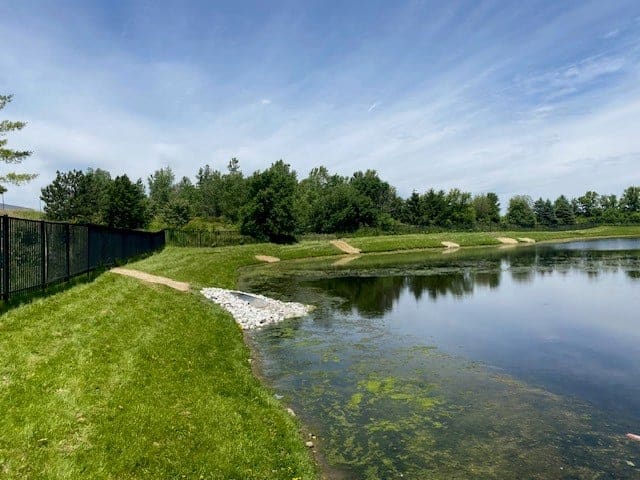
(1) A minimum of two (2) percent slope in the bottom of all stormwater basins;
a. An exception can be made to the minimum slope requirement in the bottom of the basin if the first flush requirement is not managed in the basin and the basin invert is finished in concrete.
(2) A 3:1 (H:V) or flatter side slope used for traversable access to the bottom of a stormwater basin for maintenance;
(3) Fifteen (15) percent additional area for each two-foot contour of the stormwater basin based on the appropriately sized basin for the 1-year, 2-year, 5-year, 10-year, 25-year, and 100-year frequency storms;
a. When stormwater pretreatment is utilized to treat the first flush prior to discharging water into a stormwater basin, the basin is not required to have fifteen (15) percent additional volume.
(4) A minimum of four thousand five hundred (4,500) cubic feet of storage volume in all stormwater basins; and
(5) A minimum of one (1) foot of freeboard from the highest water surface elevation for the largest required design storm to the top of the berm before the fifteen (15) percent additional volume is added.
(c) The plans shall include sufficient design information to show that the facility will operate as required. This design shall include:
(1) Pre-development and post-development peak flow discharges;
(2) Volumes of stormwater runoff based on the proposed site development;
(3) All computations used to determine the reduced peak flow rates for the design storms; and
(4) The capacity of the facility shall be sufficient to control the volume of stormwater runoff resulting from 1-year, 2-year, 5-year, 10-year, 25-year, and 100-year frequency storm within the peak flow requirements stated in this section.
(d) Discharge from attenuation SCMs shall be routed to a stormwater system of adequate capacity.
(1) Calculations showing the capacity of the adjacent downstream system and its capability to convey a 10-year frequency storm shall be provided.
(2) If examination of the adjacent downstream system finds inadequate conveyance of the 10-year frequency storm, the director has authority to condition the approval of a permit upon the compliance with additional requirements, including but not limited to, installation or modification of the stormwater system or other stormwater control measures required to reduce the adverse impact of the proposed development.
ARTICLE IV. - PROPERTY OWNER MAINTENANCE REQUIREMENTS FOR THE STORMWATER SYSTEM
Sec. 22.5-62. - Prohibition.
Property owners are responsible for maintaining stormwater systems located on their property. It shall be unlawful for any property owner to cause or allow a nuisance for any component of the stormwater system located on private property.
Sec. 22.5-63. - Notice to correct conditions
(a) Upon the failure of any property owner to maintain the stormwater system sufficiently to prevent a nuisance as described in this article, the director may serve notice to the property owner ordering the person to remediate the nuisance.
(b) Notice may be served by any of the following methods and is effective as noted:
(1) Personally delivering the notice to the owner, lessee, occupant, or person having control of such property. Notice occurs on the date such delivery is made;
(2) Mailing the notice to the last known address of the owner, lessee, occupant, or person having control of such property by first class, United States mail. Notice occurs three (3) days after the notice is deposited in the mail, properly addressed, and affixed with sufficient postage to carry it to its destination; or
(3) Posting the notice on the property on which a nuisance exist. Notice occurs on the date the notice is posted.
(c) Service of notice by any of the methods set out in subsection 22.5-63(b) shall be due notice within the meaning of this article, provided, however, that no owner out of possession shall be liable to the penalty imposed by Section 22.5-7 unless there shall be personal service of such notice upon such owner or such notice mailed to such owner by first class, United States mail, as provided in this section.
(d) The notice shall be written in plain language and shall also include, at a minimum, the following elements:
(1) A statement that the property owner is entitled to a hearing;
(2) A brief statement of this article, which shall contain the consequences of failing to remedy the noted condition;
(3) The name, office, address, and telephone number of the department or Person giving notice;
(4) A description of the violation;
(5) A description of the minimum measures required to remedy the violation, and the deadline(s) to complete; and
(6) A place wherein the notified party may return a copy of the notice, indicating the desire for a hearing. Failure to make the request within the time specified in this article shall, without exception, constitute a waiver of the right to a hearing.
View State Page
Frequently Asked Questions
Who is responsible for maintaining stormwater facilities in Knoxville, Tennessee?
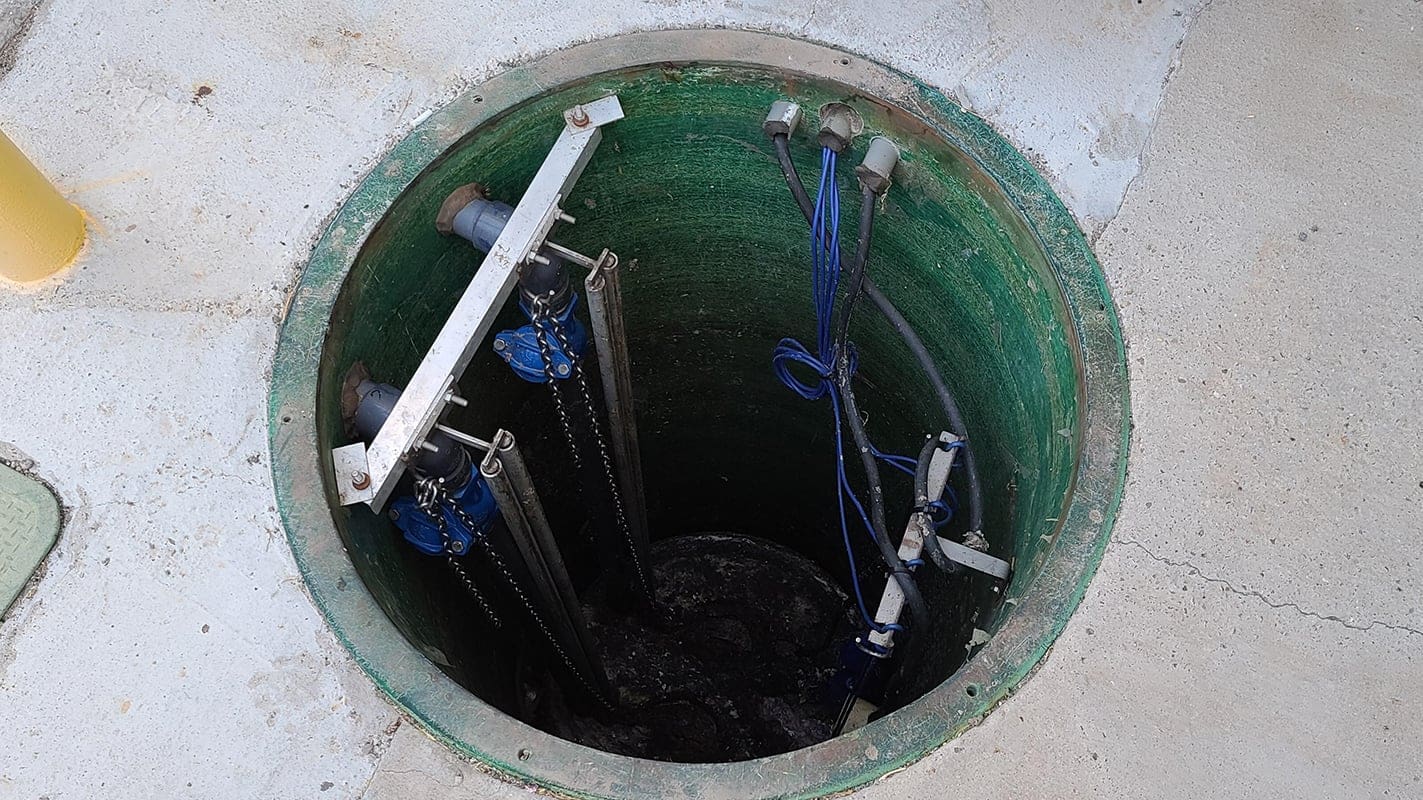
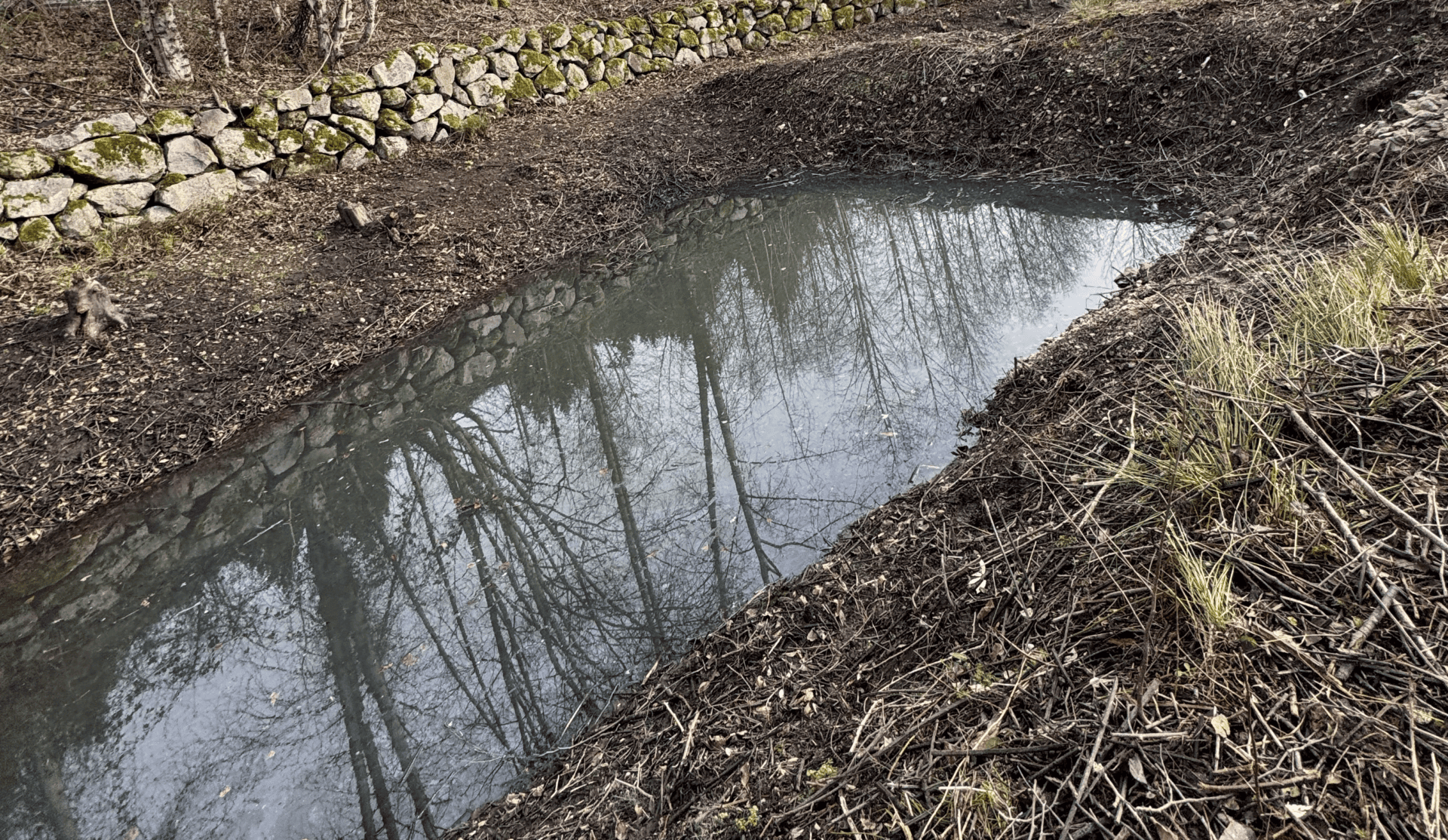
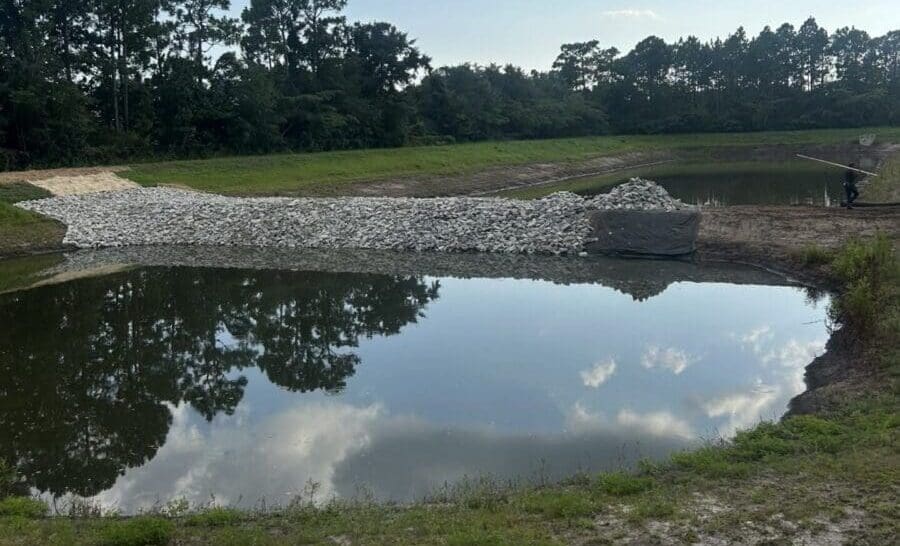
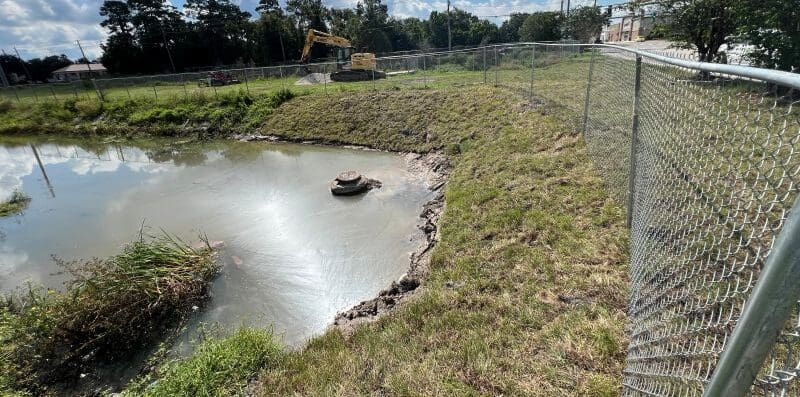
Property owners and lessees are responsible for maintaining stormwater facilities located on their property. This covers detention basins, retention basins, infiltration ponds, oil and water separators, and grit chambers, among other facility types. The City of Knoxville assumes no responsibility for the maintenance, installation, or improvement of stormwater facilities on private property, though in some cases a neighborhood association may have formally accepted that responsibility instead. AQUALIS can help property owners in Knoxville understand exactly where their maintenance obligations begin.
Can my stormwater facility become a nuisance issue in Knox County?
Yes, and it’s treated as unlawful. Property owners cannot cause or allow a nuisance condition involving any component of the stormwater system on their property. Keeping facilities properly maintained is the most direct way to avoid this kind of violation.
What triggers a notice of violation in Knoxville?
The director can issue a notice of violation to the property owner, utility, facility operator, lessee, tenant, contractor, permittee, equipment operator, or anyone else doing work on the site, whenever a violation has occurred, work is being done without a required plan or permit, or work doesn’t match an approved plan or permit. The notice must be in writing, describe the property, list the violation, state what action is required, and set a compliance deadline.
What are the financial penalties for stormwater violations in Knoxville, Tennessee?
Civil penalties range from $50 to $5,000 per violation, per site, per day. Each day a violation continues counts as a separate offense. Penalties collected go directly toward the city’s stormwater remediation projects and educational programs, rather than the general fund. AQUALIS can help property owners resolve issues quickly to limit this kind of ongoing exposure.
Why does the City of Knoxville require BMPs on development projects?
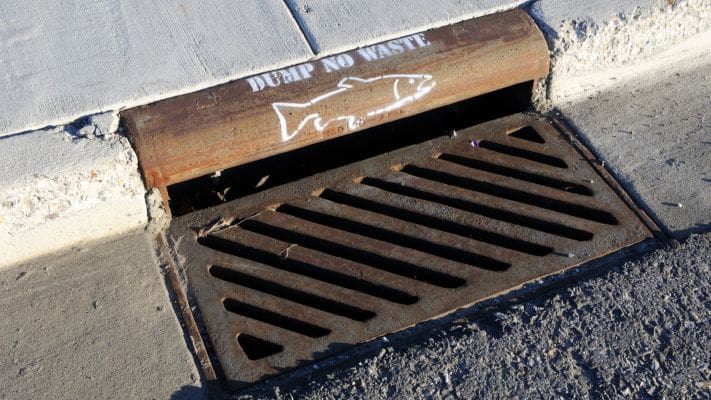
Knoxville operates under a National Pollutant Discharge Elimination System (NPDES) permit for its municipal separate storm drain system. Because development can significantly contribute pollutants to that system, the permit requires the city to encourage and require best management practices (BMPs) as part of land development activities, both through stormwater specific ordinances and other city standards that also help protect water quality.
The information on this page is provided for general informational purposes only and is not legal advice. Regulations change frequently — AQUALIS makes no warranty as to the accuracy or completeness of this content, and any reliance on it is at your own risk. Consult a qualified professional or your local regulatory authority to confirm requirements applicable to your specific property.