Did you receive a Notice of Violation (NOV)? Contact AQUALIS today to learn how to resolve the issue.

Back to Compliance
Ohio Local Compliance

City of Parma

At AQUALIS, we know Parma's sustainable water compliance standards and manage regulator relations for our clients.

It is our mission to help you become compliant with these stormwater, wastewater and drinking water regulations through inspections, maintenance, repairs and rehabilitation services. As your water compliance provider, we handle the regulatory guidelines specific to Parma, Ohio and ensure that our services meet the highest compliant procedures to keep you in compliance with local regulators.

Last Updated 08/14/2026

Excerpt from Parma Municipal Code

Chapter 2301 Comprehensive Stormwater Management

2301.08 COMPREHENSIVE STORM WATER MANAGEMENT PLANS.

(a)   Comprehensive Storm Water Management Plan Required. The applicant shall develop a Comprehensive Storm Water Management Plan describing how the quantity and quality of storm water will be managed after construction is complete for every discharge from the site and/or into a water resource. The Plan will illustrate the type, location, and dimensions of every structural and non-structural storm water management practice incorporated into the site design, and the rationale for their selection. The rationale must address how these storm water management practices will address flooding within the site as well as flooding that may be caused by the development upstream and downstream of the site. The rationale will also describe how the storm water management practices minimize impacts to the physical, chemical, and biological characteristics of on-site and downstream water resources and, if necessary, correct current degradation of water resources that is occurring or take measures to prevent predictable degradation of water resources.
 
   (b)   Preparation by Certified Professional. The Comprehensive Storm Water Management Plan shall be prepared by a registered professional engineer, a Certified Professional Erosion and Sediment Control, or Landscape Architect and include supporting calculations, plan sheets, and design details. To the extent necessary, as determined by the City Engineer, a site survey shall be performed by a registered professional surveyor to establish boundary lines, measurements, or land surfaces.
 
   (c)   Community Procedures. The City Engineer shall prepare and maintain procedures providing specific criteria and guidance to be followed when designing the storm water management system for the site. These procedures may be updated from time to time, at the discretion of the City Engineer based on improvements in engineering, science, monitoring, and local maintenance experience. The City Engineer shall make the final determination of whether the practices proposed in the Comprehensive Storm Water Management Plan meet the requirements of this regulation. The City Engineer may also maintain a list of acceptable best management practices that meet the criteria of this regulation to be used in the City.
 
   (d)   Contents of Comprehensive Storm Water Management Plan. The Comprehensive Storm Water Management Plan shall contain an application, narrative report, construction site plan sheets, a long-term inspection and maintenance agreement, and a site description with the following information provided:
 
      (1)   Site description:
 
         A.   A description of the nature and type of the construction activity (e.g. residential, shopping mall, highway, etc.).
 
         B.   Total area of the site and the area of the site that is expected to be disturbed (i.e. grubbing, clearing, excavation, filling or grading, including off-site borrow areas).
 
         C.   A description of prior land uses at the site.
 
         D.   An estimate of the impervious area and percent of imperviousness created by the soil-disturbing activity at the beginning and at the conclusion of the project.
 
         E.   Existing data describing the soils throughout the site, including the soil series and association, hydrologic soil group, porosity, infiltration characteristics, depth to ground water, depth to bedrock, and any impermeable layers.
 
         F.   If available, the quality of any known pollutant discharge from the site such as that which may result from previous contamination caused by prior land uses.
 
         G.   The location and name of the immediate water resource(s) and the first subsequent water resource(s).
 
         H.   The aerial (plan view) extent and description of water resources at or near the site that will be disturbed or will receive discharges from the project.
 
         I.   Describe the current condition of water resources including the vertical stability of stream channels and indications of channel incision that may be responsible for current or future sources of high sediment loading or loss of channel stability.
 
      (2)   Site map showing:
 
         A.   Limits of soil-disturbing activity on the site.
 
         B.   Soils types for the entire site, including locations of unstable or highly erodible soils.
 
         C.   Existing and proposed one-foot contours. This must include a delineation of drainage watersheds expected before, during, and after major grading activities as well as the size of each drainage watershed in acres.
 
         D.   Water resource locations, including springs, wetlands, streams, lakes, water wells, and associated setbacks on or within 200 feet of the site, including the boundaries of wetlands or streams and first subsequent named receiving water(s) the applicant intends to fill or relocate for which the applicant is seeking approval from the U.S. Army Corps of Engineers and/or Ohio EPA.
 
         E.   Existing and planned locations of buildings, roads, parking facilities, and utilities.
 
         F.   The location of any in-stream activities, including stream crossings.
 
      (3)   Contact information: Company name and contact information as well as contact name, addresses, and phone numbers for the following:
 
         A.   The certified professional who prepared the Comprehensive Storm Water Management Plan.
 
         B.   The site owner.
 
      (4)   Phase, if applicable, of the overall development plan.
 
      (5)   List of sublot numbers if project is a subdivision.
 
      (6)   Ohio EPA NPDES Permit number and other applicable State and Federal permit numbers, if available, or status of various permitting requirements if final approvals have not been received.
 
      (7)   Location, including complete site address and sublot number if applicable.
 
      (8)   Location of any easements or other restrictions placed on the use of the property.
 
      (9)   A site plan sheet showing:
 
         A.   The location of each proposed post-construction storm water management practice.
 
         B.   The geographic coordinates of the site and each proposed practice in North American Datum Ohio State Plan North.
 
      It is necessary that the entire site be shown on one plan sheet to allow a complete view of the site during plan review. If a smaller scale is used to accomplish this, separate sheets providing an enlarged view of areas on individual sheets shall also be provided.
 
      (10)   An inspection and maintenance agreement. The inspection and maintenance agreement required for storm water management practices under this regulation shall be a stand-alone document between the City and the applicant and shall contain the following information and provisions:
 
         A.   The location of each storm water management practice, including those practices permitted to be located in, or within 50 feet of, water resources, and identification of the drainage area served by each storm water management practice.
 
         B.   A schedule for regular maintenance for each aspect of the storm water management system and description of routine and non-routine maintenance tasks to ensure continued performance of the system as is detailed in the approved Comprehensive Storm Water Management Plan. This schedule may include additional standards, as required by the City Engineer, to ensure continued performance of storm water management practices permitted to be located in, or within 50 feet of, water resources.
 
         C.   The location and documentation of all access and maintenance easements on the property.
 
         D.   Identification of the landowner(s), organization, or municipality that responsible for long-term maintenance, including repairs, of the storm water management practices.
 
         E.   The landowner(s), organization, or municipality shall maintain storm water management practices in accordance with this regulation.
 
         F.   The City has the authority to enter upon the property to conduct inspections as necessary to verify that the storm water management practices are being maintained and operated in accordance with this regulation.
 
         G.   The City shall maintain public records of the results of site inspections, shall inform the landowner(s), organization, or municipality responsible for maintenance of the inspection results, and shall specifically indicate any corrective actions required to bring the storm water practices into proper working condition.
 
         H.   If the City notifies the landowner(s), organization, or municipality responsible for maintenance of the maintenance problems that require correction, the specific corrective actions shall be taken within a reasonable time frame as determined by the City.
 
         I.   The City is authorized to enter upon the property and to perform the corrective actions identified in the inspection report if the landowner(s), organization, or municipality responsible for maintenance does not make the required corrections in the specified time period. The City shall be reimbursed by the landowner(s), organization, or municipality responsible for maintenance for all expenses incurred within ten days of receipt of invoice from the City.
 
         J.   The method of funding long-term maintenance and inspections of all storm water management practices.
 
         K.   A release of the City from all damages, accidents, casualties, occurrences, or claims that might arise or be asserted against the City from the construction, presence, existence, or maintenance of the storm water management practices.
 
      Alteration or termination of these stipulations is prohibited. The applicant must provide a draft of this inspection and maintenance agreement as part of the Comprehensive Storm Water Management Plan submittal. Once a draft is approved, a recorded copy of the agreement must be submitted to the City to receive final inspection approval of the site.
 
      (11)   Calculations required. The applicant shall submit calculations for projected storm water runoff flows, volumes, and timing into and through all storm water management practices for flood control, channel protection, water quality, and the condition of the habitat, stability, and incision of each water resource and its floodplain, as required in Section 2301.09 of this regulation. These submittals shall be completed for both pre- and post-development land use conditions and shall include the underlying assumptions and hydrologic and hydraulic methods and parameters used for these calculations. The applicant shall also include critical storm determination and demonstrate that the runoff from upper watershed areas have been considered in the calculations.
 
      (12)   List of all contractors and subcontractors before construction: Prior to construction or before the pre-construction meeting, provide the list of all contractors and subcontractors names, addresses, and phones involved with the implementation of the Comprehensive Storm Water Management Plan including a written document containing signatures of all parties as proof of acknowledgment that they have reviewed and understand the requirements and responsibilities of the Comprehensive Storm Water Management Plan. The list of contractors and subcontractors shall be updated to keep the list current and before any such contractors or subcontractors perform work on the site.
 
      (13)   Existing and proposed drainage patterns: The location and description of existing and proposed drainage patterns and storm water management practices, including any related storm water management practices beyond the development area and the larger common development area.
 
      (14)   For each storm water management practice to be employed on the development area, include the following:
 
         A.   Location and size, including detail drawings, maintenance requirements during and after construction, and design calculations, all where applicable.
 
         B.   Final site conditions including storm water inlets and permanent nonstructural and structural storm water management practices. Details of storm water management practices shall be drawn to scale and shall show volumes and sizes of contributing drainage areas.
 
         C.   Any other structural and/or non-structural storm water management practices necessary to meet the design criteria in this regulation and any supplemental information requested by the City Engineer.


2301.12 MAINTENANCE AND FINAL INSPECTION APPROVAL.

To receive final inspection and acceptance of any project, or portion thereof, the following must be completed and provided to the City Engineer:
 
   (a)   Final stabilization must be achieved and all permanent storm water management practices must be installed and made functional, as determined by the City Engineer and per the approved Comprehensive Storm Water Management Plan.
 
   (b)   An As-Built Certification, including a survey and inspection, must be sealed, signed and dated by a professional engineer, Certified Professional in Erosion and Sediment Control, Landscape Architect, and a professional surveyor with a statement certifying that the storm water management practices, as designed and installed, meet the requirements of the Comprehensive Storm Water Management Plan approved by the City Engineer. In evaluating this certification, the City Engineer may require the submission of a new set of storm water practice calculations if he or she determines that the design was altered significantly from the approved Comprehensive Storm Water Management Plan. The As-Built Survey must provide the location, dimensions, and bearing of such practices and include the entity responsible for long-term maintenance as detailed in the Inspection and Maintenance Agreement.
 
   (c)   A copy of the complete and recorded Inspection and Maintenance Agreement as specified in Section 2301.08 must be provided to the City Engineer.

2301.13 ON-GOING INSPECTIONS.

   The City shall inspect storm water management practices periodically. Upon finding a malfunction or other need for maintenance, the City shall provide written notification to the responsible party, as detailed in the Inspection and Maintenance Agreement, of the need for maintenance. Upon notification, the responsible party shall have five working days, or other mutually agreed upon time, to makes repairs or submit a plan with detailed action items and established timelines. Should repairs not be made within this time, or a plan approved by the City Engineer for these repairs not be in place, the City may undertake the necessary repairs and assess the responsible party.

2301.17 VIOLATIONS.

   (a)   No person shall violate or cause or knowingly permit to be violated any of the provisions of this regulation, or fail to comply with any of such provisions or with any lawful requirements of any public authority made pursuant to this regulation, or knowingly use or cause or permit the use of any lands in violation of this regulation or in violation of any permit granted under this regulation.
 
   (b)   Upon notice, the City Engineer and/or his or her designee may suspend any active soil-disturbing activity for a period not to exceed 90 days, and may require immediate erosion and sediment control measures whenever he or she determines that such activity is not meeting the intent of this regulation. Such notice shall be in writing, shall be given to the permittee and shall state the conditions under which work may be resumed. In instances, however, where the City Engineer and/or his or her designee finds that immediate action is necessary for public safety or the public interest, he or she may require that work be stopped upon verbal order pending issuance of the written notice. In the event the permittee does not correct the violations within 90 days, the City Engineer may revoke the Storm Water Management Permit.
 
   (c)   When a permit has been revoked, it shall not be reinstated until all existing violations have been corrected and a superintendent provided, if required. Written notice of the reinstatement of a permit shall be given to the owner before the work may proceed.
 
   (d)   No person shall remove, deface or conceal the notice of revocation, after the same has been posted, except at the order of the City Engineer.

2301.18 APPEALS.

   Any person aggrieved by any order, requirement, determination, or any other action or inaction by the City in relation to this regulation may appeal to the court of common pleas after all municipal remedies are exhausted. Such an appeal shall be made in conformity with Ohio R.C. Chapter 2505 or 2506. Written notice of appeal shall be served on the City.

2301.99 PENALTY.

   (a)   Whoever violates or fails to comply with any provision of these regulations is guilty of a misdemeanor of the first degree and shall be fined no more than one thousand dollars ($1,000) or imprisoned for no more than 180 days, or both, for each offense.
 
   (b)   A separate offense shall be deemed committed each day during or on which a violation or noncompliance occurs or continues.
 
   (c)   Upon notice from the City Engineer, or designated representative, that work is being performed contrary to these regulations, such work shall immediately stop. Such notice shall be in writing and shall be given to the owner or person responsible for the development area, or person performing the work, and shall state the conditions under which such work may be resumed; provided, however, in instances where immediate action is deemed necessary for public safety or the public interest, the City Engineer may require that work be stopped upon verbal order pending issuance of the written order.
 
   (d)   The imposition of any penalties provided herein shall not preclude the City, by or through its Law Director and/or any of their assistants, from instituting an appropriate action or proceeding in a court of proper jurisdiction to prevent an unlawful development or to restrain, correct or abate a violation, or to require compliance with the provisions of these regulations or applicable laws, or ordinances, rules or regulations or the orders of the City Engineer.
 
   (e)   Nothing herein contained shall prevent the City from taking such other lawful action as is necessary to prevent or remedy any violation. The City shall prosecute any violation of these regulation in accordance with the penalties stated herein.

View State Page

Frequently Asked Questions

Properties in Parma are governed by the city’s stormwater ordinance, which the City of Parma enforces as the local permitting authority. The ordinance is designed to establish technically feasible and economically reasonable stormwater management standards for developed properties.

The City of Parma enforces its stormwater requirements, including inspecting stormwater facilities to confirm they are properly maintained and functioning as approved.

Property owners must maintain all on-site stormwater control facilities and open space areas in accordance with the approved plans for the property.

An as-built certification is required documentation confirming a stormwater facility was constructed as designed. It must be sealed, signed, and dated by a professional engineer, and include survey details, location dimensions, and identification of the party responsible for long-term maintenance.

It’s a recorded, stand-alone document tied to a property’s stormwater facilities. It must identify the location and drainage areas of each stormwater practice, set a maintenance schedule for routine and non-routine tasks, name the party responsible for repairs, document how maintenance will be funded, and acknowledge the city’s authority to enter the property for inspections and to perform corrective work if needed.

Yes. The city can inspect stormwater facilities to verify they are properly maintained and functioning, and the property’s inspection and maintenance agreement specifically grants the city authority to enter the property for that purpose.

If repairs aren’t completed within the required timeframe, the City of Parma may perform the work itself and bill the responsible party for the cost within ten days.

AQUALIS helps property owners prepare as-built certifications and inspection and maintenance agreements, performs the routine and non-routine maintenance those agreements require, and responds quickly to city repair notifications so property owners can meet Parma’s 5 working day repair window and avoid city-performed work and billback.

The information on this page is provided for general informational purposes only and is not legal advice. Regulations change frequently — AQUALIS makes no warranty as to the accuracy or completeness of this content, and any reliance on it is at your own risk. Consult a qualified professional or your local regulatory authority to confirm requirements applicable to your specific property.

Services Offered in City of Parma and Surrounding Area

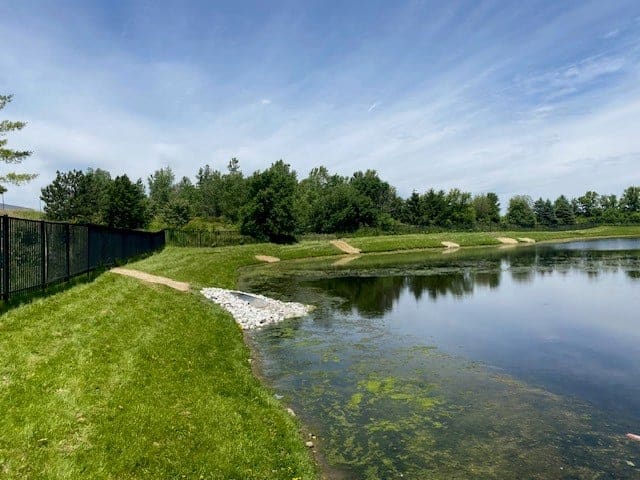
retention pond and grass shore

Stormwater Management

AQUALIS provides comprehensive stormwater services across the United States. From inspection and maintenance to repairs and rehabilitations, AQUALIS manages water on your property so you do not have to.
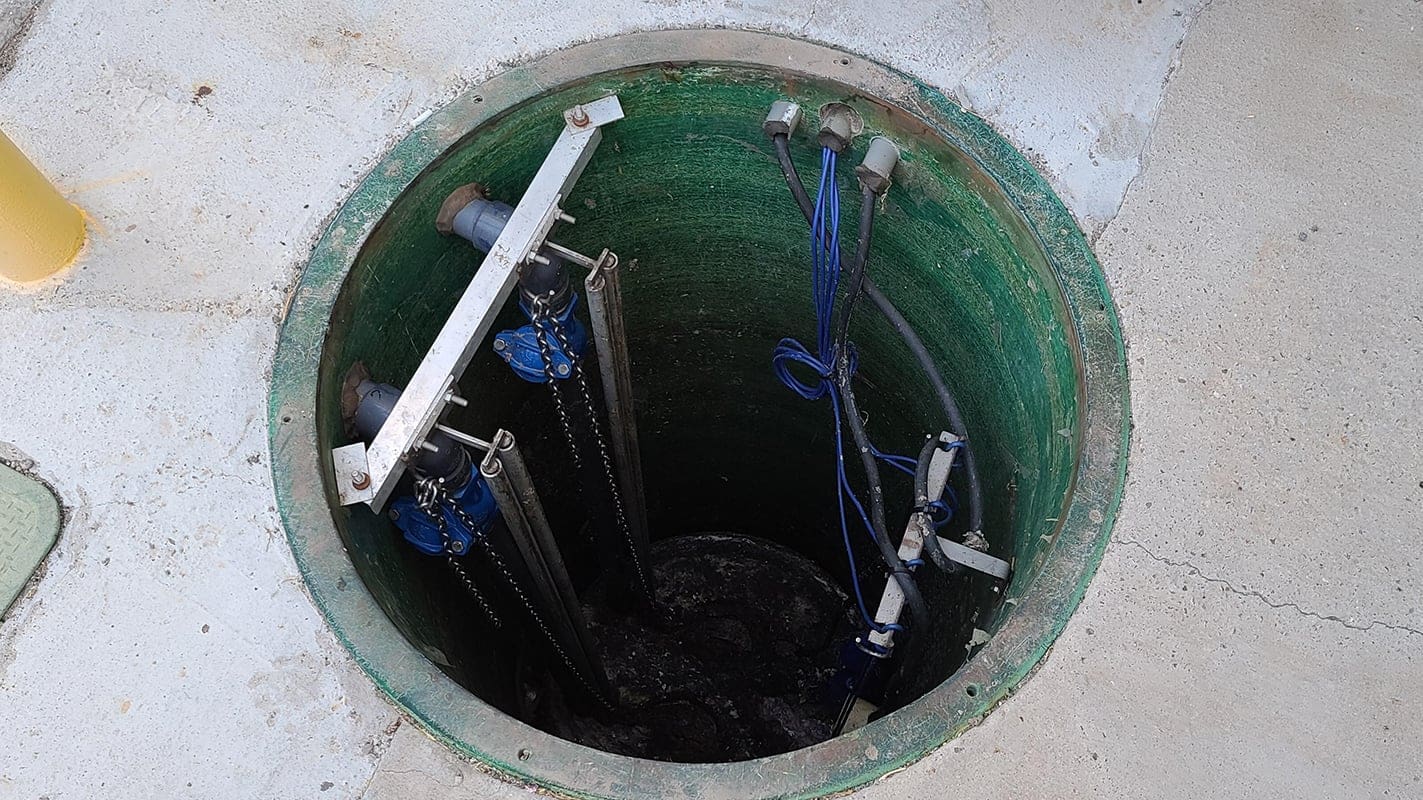
lift station

Wastewater Management

AQUALIS offers sustainable wastewater solutions including inspection, maintenance and repairs.
Three people reviewing plans

Sustainable Water Engineering

AQUALIS provides sustainable engineering services, in states in which we are licensed, from concept through construction, working closely with our clients to identify and deliver their ideal solutions.
storm drain

Monitoring & Reporting

There are multiple requirements and records that need to be kept from your SWPPP to inspections and depending on your industry, stormwater sampling and analysis.
person holding a beaker

Water Quality Testing

AQUALIS offers water quality testing for stormwater, wastewater and drinking water.

Case Studies

new riprap for a pond

Facility Pond Shoreline Stabilization Addresses Erosion in Findlay, Ohio

Years of erosion driven by fluctuating pond levels and site runoff led to shoreline damage across this distribution property. AQUALIS implemented targeted repairs to stabilize the pond and restore stormwater control.
control panel of a lift station pump

Lift Station Pump Replacement Prevents System Failure in Mansfield, Ohio

This lift station, servicing a large commercial property, experienced a complete failure of both pumps, leading to a sanitary sewer overflow (SSO). City officials and the Health Department were called to the site, and a Notice of Violation (NOV) was issued.

Pond Aeration Improves Stormwater Quality in Pataskala, Ohio

This commercial distribution center has four retention ponds on the property to offset the impervious surface area. These ponds collect, store and treat stormwater runoff.

Stormwater Slope Stabilization Following a Collapse in Steubenville, Ohio

The stormwater pipe on this property failed leading to a catastrophic sinkhole that affected a nearby wastewater line. Quick, efficient work was of the upmost importance to repair both pipelines, the sinkhole and surrounding area.

Did you receive an NOV? Have an urgent need? We can help.

Notices of Violation (NOVs) or Corrective Notices should be taken seriously. Contact AQUALIS today to learn how to resolve the issue and comply with regulations.