

Last Updated 08/07/2026
Stormwater Code: Excerpts from Pawtucket, RI Municipal Code
The EPA’s Storm Water Phase II Rule of 1999 requires operators of municipal separate storm sewer systems (MS4s) to obtain permits and establish a stormwater management program that is intended to improve waterbodies by reducing the quantity of pollutants that can enter storm sewer systems during storm events. Under the requirements of its Rhode Island Pollutant discharge Elimination System (RIPDES) permit, the City of Pawtucket must develop a Storm Water Management Program Plan (SWMPP) describing the Best Management Practices (BMPs) to be implemented in the six minimum measure areas.
The RIPDES Program amended the RIPDES Regulations and has included Phase II storm water requirements (amended February 5, 2003). The Rhode Island Department of Environmental Management (DEM) has implemented 11 minimum standards for the management of stormwater runoff. Of these standards include: LID Site Planning and Design Strategies, Groundwater Recharge, Water Quality, Pollution Prevention, and Stormwater Management System Operation and Maintenance.
The SWMPP for Small MS4 Operators must contain the measurable goals for each minimum control measure as well as an implementation schedule including interim milestones and frequency of activities and reporting of results. Additional permit requirements may also be required of MS4 operators based on total maximum daily load (TMDL) restrictions placed on impaired waterbodies. The City of Pawtucket has codified an article on the control of post-construction stormwater (Ch. 410, Article XB) into the city ordinance:
Chapter 410. ZONING: Article XB. Post-Construction Stormwater Control
410-92.15. Findings; purpose
- Unmitigated stormwater from areas altered by development may pose public health and safety threats. Potential contaminants in stormwater runoff may include suspended solids, nitrogen, phosphorus, hydrocarbons, heavy metals, pathogenic organisms (bacteria and viruses), and road salts.
- This article establishes the administrative mechanisms necessary for Pawtucket to ensure proper stormwater management. The article is written to work in conjunction with current state regulations.
410-92.16. Applicability
This article shall apply to all development occurring within the City of Pawtucket that requires development plan review in accordance with §410-15.1. No person shall engage in land development activities without receiving approval from the City Planning Commission or the Department of Planning and Redevelopment. Development that does not require development plan review in accordance with §410-15.1, but does increase the amount of impervious surface on a parcel, but more than 300 square feet must demonstrate compliance with §410-92.19 below.
410-92.17. Technical standards
All applicants are required to develop and submit a stormwater management plan. All stormwater management plans must address stormwater management on a site-by-site basis and all requirements of this article. All stormwater management practices shall be consistent with the Rhode Island Stormwater Design and Installation Standards Manual and the Rhode Island Soil Erosion and Sediment Control Handbook, as amended.
- Performance standards. Stormwater management plans shall incorporate best management practices for water quality control, which in combination are demonstrated to reduce the average annual total suspended solids in post-development runoff by 80%. Development in drinking water supply watersheds or watersheds where impaired waters as defined by the state’s 303(d) list exist may be held to higher standards.
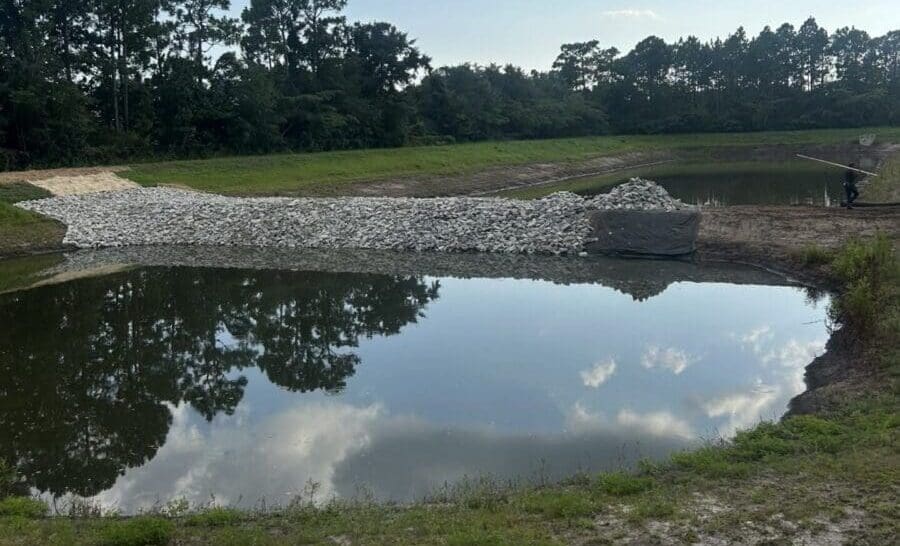
- Disallowed stormwater best management practices. The placement of detention basins and other stormwater structures within a floodplain shall be avoided. If there is no alternative, the applicant must show what effects, if any, the tailwaters created by the floodplain will have on the outflow and effective storage capacity of the detention facility.
- Facilitation of maintenance. Facilities that require maintenance shall be designed to minimize the need for regular maintenance, facilitate required maintenance, and ensure accessibility of components that require maintenance. At a minimum, all stormwater management plans must incorporate best management practices with appropriate maintenance design in accordance with the Rhode Island Stormwater Design and Installation Standards Manual, as amended; or the Rhode Island Soil Erosion and Sediment Control Handbook, as amended.
- Flood protection. Stormwater management plans shall demonstrate that a proposed project provides for protection of life and property from flooding and flood flows. Water quantities must be controlled in accordance with the Rhode Island Stormwater Design and Installation Standards Manual, as amended, or a municipally approved regional stormwater management plan for the watershed in which the development site is located. Stormwater management plans shall demonstrate incorporation of the following standards into the proposed project:
- Control and maintenance of post-development peak discharge rates from the two-year, ten-year, twenty-five-year, and one-hundred-year storm events and predevelopment levels.
- Downstream analysis of the one-hundred-year storm event and control of the peak discharge rate for the one-hundred-year storm to mitigate significant downstream impacts.
- Discharge from any stormwater facility must be conveyed through properly constructed conveyance system to provide for nonerosive flows during all storm events. The proposed stormwater conveyance system consisting of open channels, pipes, and other conveyance devices shall at a minimum accommodate the runoff from a twenty-five-year storm event. The stormwater conveyance system must provide for nonerosive flows to receiving waters.
- Surface water and groundwater. Stormwater management plans shall demonstrate that during develop and post-development, all receiving waters will be recharged in a manner closely resembling predevelopment conditions and that the developed site will retain hydrological conditions that closely resemble those prior to disturbance.
410-92.18. Maintenance requirements for best management practices
- Routine maintenance and repair procedures.
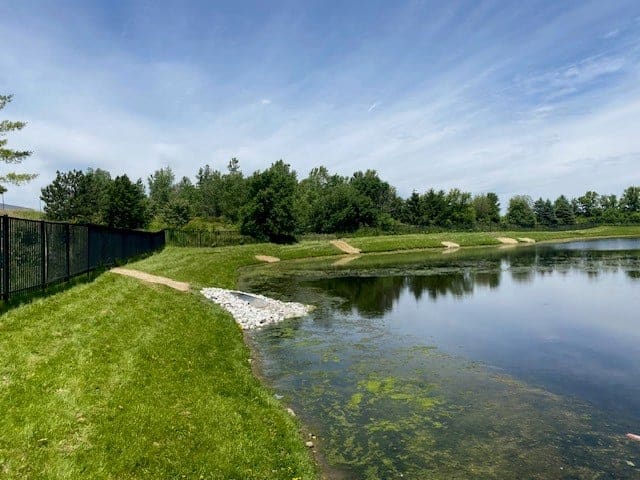
- Preventative maintenance procedures are required to maintain the intended operation and safe condition of the stormwater management facility by greatly reducing the occurrence of problems and malfunctions. To be effective, preventative maintenance shall be performed on a regular basis and include such routine procedures as training of staff, periodic inspections, grass cutting, elimination of mosquito breeding habitats, and pond maintenance. Disposal of sediment and debris must occur on a regular basis (unless otherwise specified within an approved plan), at suitable disposal sites or recycling sites and comply with applicable local, state and federal regulations.
- Corrective maintenance procedures are required to correct a problem or malfunction at a stormwater management facility and to restore the facility’s intended operation and safe condition. Based upon the severity of the problem, corrective maintenance must be performed on an as-needed or emergency basis and include such procedures as structural repairs, removal of debris, sediment and trash removal which threaten discharge capacity, erosion repair, snow and ice removal, fence repair, mosquito extermination, and restoration of vegetated and nonvegetated linings.
- General maintenance standards.
- Maintenance design and maintenance procedures for all stormwater best management practices shall be in accordance with the Rhode Island Stormwater Design and Installation Standards Manual, as amended; or the Rhode Island Soil Erosion and Sediment Control Handbook, as amended. Stormwater management plans shall demonstrate appropriate maintenance design and procedures for each proposed best management practice.
- A maintenance schedule for each type of BMP must be included in the stormwater management plan. These schedules shall list the frequency and type of maintenance operations necessary along with the legally responsible party’s name, address, and telephone number. If the stormwater drainage system is to be deeded to the local municipality, the applicant must obtain a letter from the municipality acknowledging maintenance responsibility and intent of ownership.
410-92.19. Stormwater management plans
- Calculations. In addition to the information required for stormwater management plans, the following information must also be included with the application, where applicable:
- The area of each subbasin as identified on final site plans.
- The area of impervious surfaces (including all roads, driveways, rooftops, sidewalks, etc.) for each subbasin as identified in the Rhode Island Stormwater Design and Installation Standards Manual, as amended.
- Weighted curve numbers (CN), as determined by the SCS TR-55 method, for each subbasin as identified in the Rhode Island Stormwater Design and Installation Standards Manual, as amended.
- Invert elevations for all applicable BMPs. In addition, the elevations for permanent and/or flood pool stages, including peak discharge rates for each stage, within all basins are required.
- The total volume capacity for all flood control and water quality BMPs (e.g., infiltration basin, detention basins, wet ponds, etc.). Volumes must be segregated into permanent and flood pool stage volumes where applicable. Furthermore, the volumes of all sediment storage (basins, forebays, etc.) areas must also be shown.
- Predevelopment and post-development peak discharge rates and runoff volumes for the two-year, ten-year, twenty-five-year, and one-hundred-year frequency storm events for each subwatershed. The water quality volume must also be calculated for each subwatershed. All relevant variables such as curve numbers and time of concentration, along with the supporting computations and worksheets, must be included.
- Narrative description. As part of the stormwater management plan, the applicant shall include a discussion of the protection of environmental resource functions and values. The following outline is provided as guidance for preparing a narrative description for the stormwater management plan. Depending on the size and scope of the proposed project, the amount of information required by the permitting agency may vary; therefore, it is advised to consult the appropriate permitting agency for specific requirements.
- Site description: general topography, soil types, current vegetative composition and relative abundance, existing infrastructure, and/or adjacent properties, identification of major resources (e.g., wetlands, groundwater, surface waters, etc.), name of receiving water(s), potential water quality and/or hydrologic impacts on resources.
- Site input data: watershed characteristics, area of all impervious surfaces, total area of site, annual mean rainfall, runoff coefficients, curve numbers for various land uses, peak discharge rates.
- Land use planning and source control plan.
- Best management practices: identify the type of BMP(s) employed both during and post-construction and justification for selection, including any deviation from the Rhode Island Stormwater Design and Installation Standards Manual, as amended, and the potential effect on pollutant removal efficiency.
- Technical feasibility of BMPs, including sizing, location, hydraulic and environmental impacts. Alternatives, which were considered but determined not to be feasible, should also be discussed.
- Maintenance schedule of BMPs to be used, both during and post-construction, including frequency of inspection and maintenance.
410-92.20. Maintenance agreements
Maintenance agreements shall provide written, contractual documentation, which demonstrates compliance with this article and legal arrangements for the upkeep of stormwater facilities to assure their functionality and safety in accordance with this article. Maintenance agreements, which describe all maintenance schedules and requirements, must be developed for each stormwater management facility unless the facility is dedicated to and accepted by the City of Pawtucket.
- Recognition of municipal inspection requirements. Maintenance agreements shall include a reasonable and regular schedule for the City of Pawtucket, or designee, to conduct on-site inspection of the functionality and safety of stormwater management facilities. Inspection schedules shall be based on the complexity and frequency of maintenance needs and shall be subject to the approval of City of Pawtucket. At a minimum, maintenance frequency should be in accordance with the Rhode Island Stormwater Design and Installation Standards Manual, as amended.
- Record keeping for maintenance activities. Maintenance agreements shall include provisions for maintenance recordkeeping. All activities conducted in accordance with a maintenance agreement must be recorded in a work order and inspection log. Timely updates of the log shall be the responsibility of the stormwater management facility owner or other responsible party pursuant to this article. Review of the maintenance and inspection log shall be completed by the City of Pawtucket, or designee, to determine the effectiveness of operation, maintenance and safety activities. Reviews shall occur as part of each on-site inspection. Additional reviews may be made as deemed appropriate by the City of Pawtucket or designee.
- Responsibility for maintenance to assure functionality and safety. Appropriate maintenance to assure functionality and safety of stormwater management facilities shall be the responsibility the owner or may be assumed by another party via a written contractual arrangement in accordance with this article.
- Alterations to maintenance agreements. Any alterations in maintenance responsibility or alterations to maintenance agreements must be reviewed and approved by the Department of Zoning and Code Enforcement. If portions of the land serviced by a stormwater management facility are to be sold, written contractual arrangements shall be made to pass all responsibility of the maintenance agreement to the purchaser and shall be subject to review and approval of the Department of Zoning and Code Enforcement. All alterations to maintenance agreements shall be recorded in accordance with this article.
- Recordation of maintenance agreements. All maintenance agreements and alterations to maintenance agreements shall be recorded in the land evidence records of the City of Pawtucket. Copies of all maintenance agreements and alterations to maintenance agreements shall be included in stormwater management plans. Recordation of maintenance agreements in accordance with this article shall be the responsibility of the owner.
410-92.22. Enforcement
The City of Pawtucket shall have the authority and discretion to penalties and/or impose a lien, whenever a stormwater management facility is not implemented, operated, and/or maintained in accordance with its approval and this article. Any penalty invoked shall be in accordance with this article.
- Notification of violation. In the event that the stormwater management facility becomes a danger to public safety or public health, or in need of maintenance or has not been maintained in accordance with the maintenance agreement, the City of Pawtucket shall so notify the responsible person in writing by certified mail. Upon receipt of that notice, the responsible person shall have five calendar days to temporarily correct the violations and 30 calendar days to complete maintenance and permanently repair the facility in a manner that is approved by the municipality. If the responsible person fails or refuses to perform such maintenance and repair, the municipality may immediately summon the applicant/owner to appear before the Municipal Court.
- Enforcement of penalties and liens. Should the applicant/owner fail to take the corrective actions, the City of Pawtucket shall then have the right to summon the applicant/owner to appear before the Municipal Court. The Municipal Court may issue an order authorizing the City to take the available appropriate remedies it deems necessary to correct the violations and may also order a fine of $100 per day that the violation goes unrepaired. The Municipal Court may also authorize the City to assert a lien on the subject property in an amount equal to the costs of remedial actions. The lien shall be enforced in the manner provided or authorized by law for the enforcement of common law liens on personal property. The lien shall be recorded in the land evidence records of the City of Pawtucket, and shall incur legal interest from the date of recording. The imposition of any penalty shall not exempt the offender from compliance with the provisions of this article, including assessment of a lien on the property.
- Administrative hearing. Any owner or responsible party receiving a written notice of violation shall be given an opportunity for a hearing before the City of Pawtucket Board of Appeals to state his/her case. Application for said appeal shall be received by the Board of Appeals prior to the date of compliance stipulated by the written notice of violation. In exercising its powers in ruling, the Board may, in conformity with the provisions of this chapter, reverse or affirm, wholly or partly, and may modify the order, requirement, decision or determination appealed from and may make such order, requirement, decision or determination as ought to be made, and to that end shall have the powers of the officer or agency from whom the appeal was taken.
View State Page
Frequently Asked Questions
Do I need a maintenance agreement for my stormwater facility in Pawtucket?
Yes, unless the facility is dedicated to and accepted by the city. Your agreement needs a maintenance schedule, a reasonable inspection schedule for the city to check functionality and safety, and provisions for keeping a work order and inspection log. If you sell land served by the facility, written arrangements are required to pass maintenance responsibility to the buyer, subject to city approval. AQUALIS can help property owners put together an agreement that covers all of these elements.
What happens if my stormwater facility in Pawtucket isn't being maintained?
If the facility becomes a danger to public safety or health, or falls out of compliance with its maintenance agreement, the city will notify you in writing by certified mail. You’ll have 5 calendar days to temporarily correct the issue and 30 calendar days to complete permanent repairs. If you don’t act, the city can summon you to Municipal Court. AQUALIS can help property owners resolve issues within these windows to avoid that step.
What are the financial penalties for a stormwater violation in Pawtucket, Rhode Island?
If the Municipal Court finds you in violation, it can order a fine of $100 per day that the violation goes unrepaired, and can authorize the city to take necessary corrective action and place a lien on your property for the cost. That lien is recorded in the city’s land evidence records and accrues legal interest from the recording date.
Can I appeal a stormwater violation notice in Pawtucket?
Yes. Any owner or responsible party who receives a written notice of violation can request a hearing before the Pawtucket Board of Appeals, but the application needs to be submitted before the compliance deadline in your notice. The board has the authority to affirm, reverse, or modify the original decision.
The information on this page is provided for general informational purposes only and is not legal advice. Regulations change frequently — AQUALIS makes no warranty as to the accuracy or completeness of this content, and any reliance on it is at your own risk. Consult a qualified professional or your local regulatory authority to confirm requirements applicable to your specific property.