

Last Updated 07/22/2026
Redmond, Washington Municipal Code
Chapter 13.06 RMC Stormwater Management
Compliance Required
Property owners are responsible for the maintenance, operation and repair of stormwater systems and source control BMPs within their property. Property owners shall maintain, operate and repair stormwater systems and source controls in compliance with the requirements of this chapter and the City of Redmond Stormwater Technical Notebook.
Inspection Requirements
The Public Works Director is authorized to develop inspection procedures and maintenance requirements for all stormwater systems in the City of Redmond that do not have an operation and maintenance manual developed by the stormwater system design engineer.
Stormwater system access procedures – Public stormwater facilities
The Public Works Director, City Engineer or other city officials or employees, bearing proper credentials and identification, shall be permitted to enter upon any and all premises at all reasonable times for the purpose of inspection, observation, maintenance, measurement, sampling and testing of public stormwater systems in accordance with the provisions of this chapter. It is unlawful for any person to prevent or attempt to prevent any such entrance or obstruct or interfere with any such officer or employee while so engaged.
Inspection and maintenance schedule
The Public Works Director shall establish inspection and maintenance scheduling and standards for all publicly and privately owned stormwater facilities. At a minimum, the base frequency for inspection and maintenance shall be in accordance with the National Pollution Discharge Elimination System (NPDES) Western Washington Phase II Municipal Stormwater Permit currently in effect. Adjustment to the maintenance and inspection frequency may be authorized when found appropriate by the Public Works Director.
Inspection and maintenance records
Private stormwater system owners shall keep a maintenance log and operation and maintenance manual on-site or within reasonable access to the site. Operation and maintenance manuals, as defined by the City of Redmond Stormwater Technical Notebook, shall be transferred with ownership of the property, clearly indicating the party responsible for maintenance, and include a log of maintenance activities. Maintenance logs, and any record drawing or drainage system plan, shall be provided to the Public Works Director upon request.
Orders
The Public Works Director shall have the authority to issue to an owner or person(s) representing an owner an order to maintain or repair a component of a stormwater system, operational source control BMP, or structural source control BMP, to bring the stormwater system in compliance with this chapter.
Penalty for violations
Persons Subject to Penalty
Any person who violates or fails to comply with the requirements of this chapter or who fails to conform with the terms of an approval or order issued by the Public Works Director shall be subject to a civil penalty as provided in RMC Chapter 1.14. Each day of continued violation shall constitute a separate violation for purposes of this penalty.
Aiding or Abetting
Any person who, through an act of commission or omission, aids or abets in the violation shall be considered to have committed a violation for the purposes of civil penalty.
Procedure for Imposing Penalty
The Public Works Director may, at their discretion, impose a penalty. The procedure for notice of violation and imposition of penalties under this chapter shall be the same as for other code violations as described in RMC Chapter 1.14.
Re-Inspection Fees
In addition to the penalties to be imposed by the Code Compliance Hearing Examiner, the Public Works Director may impose a re-inspection fee for any account or storm drainage facility found not to be within compliance of this chapter. This inspection fee shall be independent of any current or future penalties that may be incurred by the property owner for noncompliance of this chapter. Re-inspection fees shall be applied if re-inspection occurs beyond the normal routine of inspection and verification of maintenance or correction of non-stormwater discharges to the stormwater system, surface water bodies, or groundwater.
Business License Revocation
In addition to any other penalty imposed, the Public Works Director may seek revocation of any business license held by the person violating this chapter. The Public Works Director may request that the City Clerk revoke a person’s business license for any of the following reasons: (1) noncompliance with this chapter; (2) not allowing for inspection of their stormwater facility; and (3) nonpayment of any fines or inspection fees incurred by the owner of the utility account.
Require Source Control Best Management Practices (BMPs) or Treatment BMPs
The City may require implementation of additional source control or treatment BMPs/facilities to reduce or eliminate pollutants and non-stormwater discharges.
Reimbursement for Abatement
If the City uses Stormwater Utility funds, equipment, or staff to correct a non-stormwater discharge, abate pollution from the stormwater system, or remove/disconnect an illicit connection, or correct/repair any private stormwater system the Stormwater Utility will charge the responsible person for those expenses, and overhead costs, incurred. These costs shall be charged to the property owner and shall become immediately payable to the Finance Director upon written notice of the total amount due to the property owner or posted upon the premises
View State Page
Frequently Asked Questions
What is stormwater compliance in the City of Redmond?
Stormwater compliance in Redmond means maintaining, operating, and repairing all stormwater drainage systems and source control BMPs on your property in accordance with the City’s Municipal Code and the Redmond Stormwater Technical Notebook. The City is responsible for public stormwater infrastructure, but private property owners are responsible for everything on their own land. The City inspects private systems on a periodic basis and can require corrective action whenever a facility is found not meeting minimum maintenance standards.
Does Redmond's private drainage inspection program apply to my property?
Redmond’s active private drainage inspection program currently focuses on commercial, industrial, manufacturing, and multifamily residential properties with stormwater drainage systems installed after 2009. This is a minimum requirement of Redmond’s municipal stormwater permit from the Department of Ecology.
If your system was installed before 2009 it may not currently be on the City’s active inspection schedule, but you are still legally required to maintain it to the City’s minimum maintenance standards. All stormwater drainage systems in Redmond must comply with the Municipal Code regardless of when they were built. AQUALIS can help you understand what standard applies to your property and keep your system in good standing.
Who is responsible for stormwater maintenance in Redmond?
Property owners are responsible for the maintenance, operation, and repair of all stormwater drainage systems and source control BMPs on their property. This includes keeping a maintenance log and maintenance manual on site or within reasonable access, and making those records available to the City upon request.
When a property changes hands, the maintenance manual must be transferred to the new owner, clearly identifying who is responsible for maintenance. If you recently purchased a property and did not receive a maintenance manual, that is a documentation gap that needs to be resolved. AQUALIS can manage your stormwater maintenance obligations and recordkeeping on your behalf.
How quickly do I need to respond to maintenance issues in Redmond?
It depends on the nature of the problem.
Immediately for anything that poses a health or safety risk, could allow pollutants to enter the stormwater system, or could degrade surface water or groundwater quality. The code uses the word “immediately” and there is no grace period for these situations.
Per the NPDES maintenance schedule for all other maintenance and repair needs identified during inspection. This schedule is set by Washington State’s Phase II Municipal Stormwater Permit and gives property owners a defined window to complete non-emergency work.
If the City has to step in and perform abatement or cleanup itself, it will charge the responsible party for all expenses and overhead incurred.
What are the penalties for stormwater violations in Redmond?
Redmond’s enforcement options are broad and each day of continued violation is treated as a separate offense.
Civil penalties are imposed under Redmond Municipal Code Chapter 1.14, with each day of non-compliance counted as a separate violation.
Re-inspection fees are assessed independently of any civil penalty whenever a re-inspection is required beyond the normal inspection cycle. These fees apply even if no formal penalty has been imposed yet.
Business license revocation is available for three specific reasons: failing to comply with the stormwater code, refusing to allow an inspection of your stormwater facility, or not paying fines or inspection fees. The revocation process follows the City’s general business licensing procedures.
Aiding or abetting a violation is also penalized. Anyone who contributes to a violation through action or inaction can be held liable, not just the property owner directly responsible for the facility.
How do I know if my Redmond stormwater system is at risk of failure or violation?
Watch for these warning signs.
Your system was installed after 2009 and you have not been inspected. Redmond actively inspects commercial, industrial, and multifamily properties with post-2009 stormwater systems. If you have not been contacted by the City for an inspection, it is worth confirming your system is on the schedule and in compliance before an inspector arrives.
Water is not draining after rain. Standing water more than 72 hours after a storm suggests your system is not functioning as designed, which is an immediate maintenance obligation under the code.
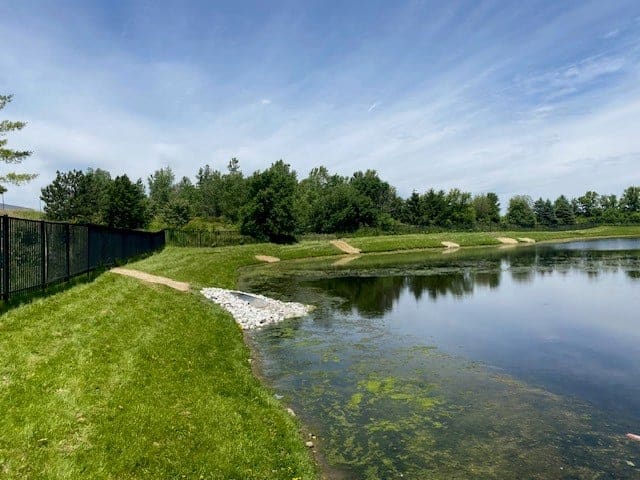
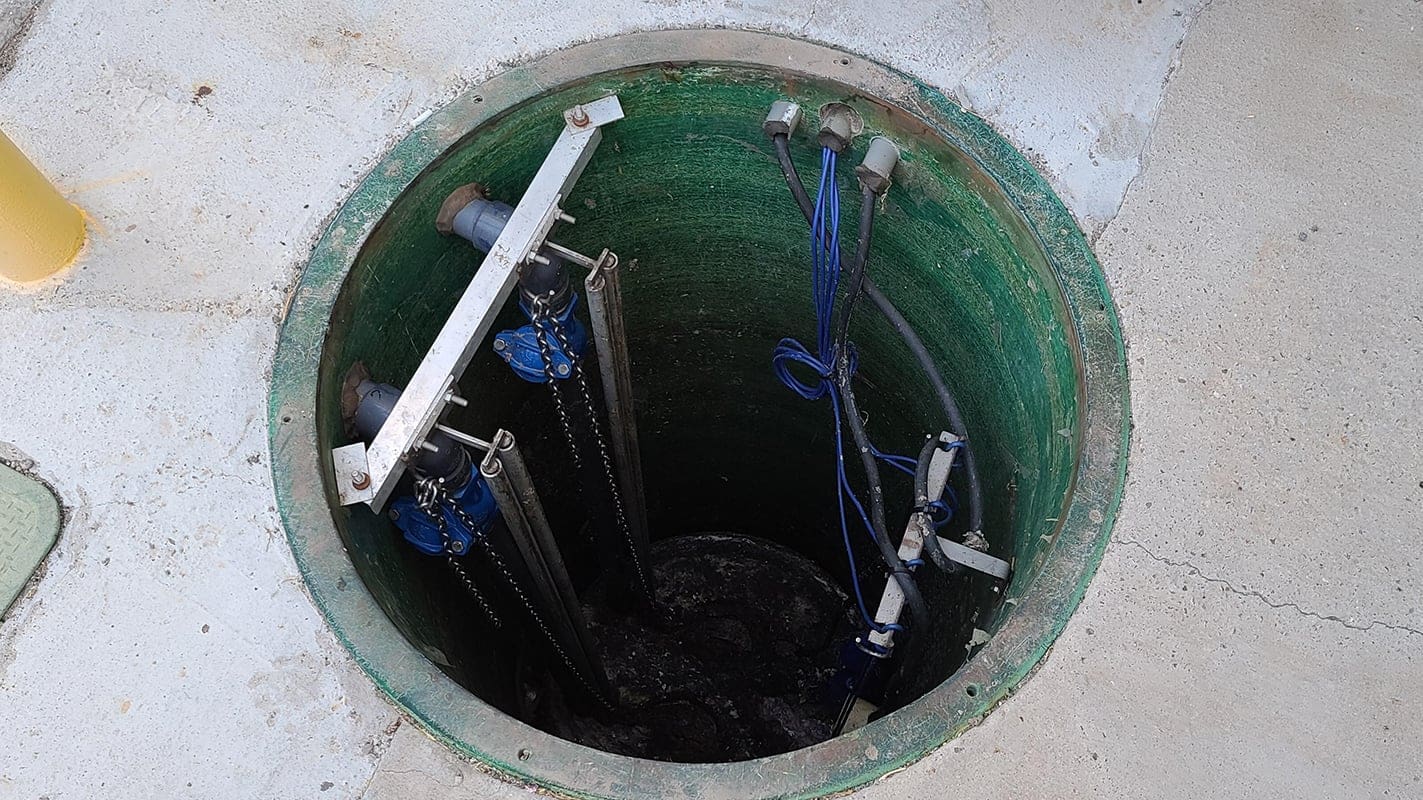
Visible deterioration. Sediment in ponds or catch basins, overgrown vegetation, clogged inlets or outlets, and any structural damage are signs maintenance is overdue.
No maintenance log or manual on site. Redmond requires these records to be kept and transferred with the property. If you cannot locate them, that is an active compliance gap the City can act on during an inspection.
Recent property purchase. The maintenance manual is required to transfer with ownership. If you did not receive one when you bought the property, AQUALIS can help you reconstruct the documentation and assess the current condition of your stormwater system.
The information on this page is provided for general informational purposes only and is not legal advice. Regulations change frequently — AQUALIS makes no warranty as to the accuracy or completeness of this content, and any reliance on it is at your own risk. Consult a qualified professional or your local regulatory authority to confirm requirements applicable to your specific property.