

Last Updated 08/13/2026
Excerpt from Stormwater Management Manual
2.5 Post-Construction Stormwater Management (PC)
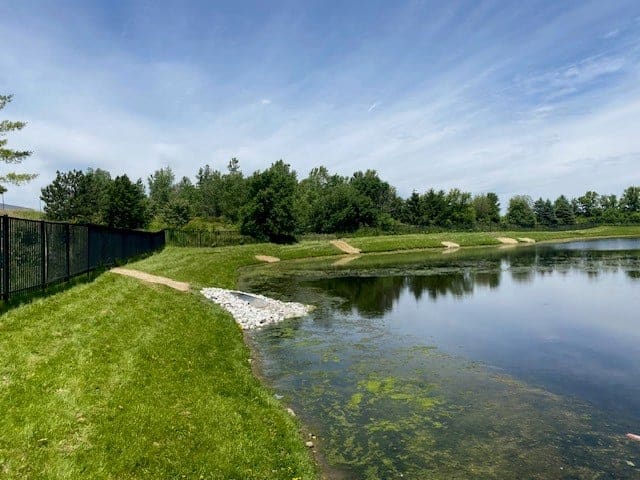
Stormwater runoff from new development and redevelopment of urban areas impacts the quality and quantity of stormwater discharges. Stormwater that flows through developed areas has the potential to carry pollutants such as sediment, nutrients, metals, hydrocarbons, and litter to water bodies degrading the water quality. Degraded water quality negatively impacts aquatic habitats and threatens human uses. Increases in impervious area associated with development decreases the amount of stormwater that can percolate into the ground which increases the flow rate and quantity of stormwater discharged to receiving waters. An increase to the quantity and flow rate of stormwater discharge can cause streambank scouring, channel incising, and downstream flooding, which could lead to a loss of aquatic habitats and damage to property.
The NPDES MS4 Permit requires that the City develop a site performance standard based on a numeric stormwater retention requirement (NSRR). The site performance standards should target natural surface or predevelopment hydrologic function and encourage a retention first approach to stormwater control designs. If onsite retention is not feasible for a given site, the City may establish alternative site performance standards that will result in treatment of a design storm representing at least 80 percent of average annual runoff. The permit requires the City to continue to prioritize Low Impact Development (LID) and GSI to reduce pollution by retaining and treating stormwater near where it falls. The City’s codes and standards will be evaluated and updated as needed during the permit term to align with required performance standards.
Information on the City’s current approach to managing stormwater from new and redevelopment is provided in the City’s Stormwater Management Design Standards and SRC, Chapter 71. The standards require use of LID practices to the MEP for new and redevelopment activities that meet defined project thresholds. The standards require the use of infiltration where feasible and emphasize the use of GSI on small projects. Additional details about the City’s LID/GSI strategy will be documented by November 1, 2023.
The City’s NPDES permit requirements for the PC Program are primarily listed in Table 2-5. The NPDES MS4 Permit requires a robust program for long-term operations and maintenance (O&M) of stormwater management facilities and similar requirements are outlined in two sections of the NPDES MS4 Permit (Schedule A.3.e.vi and Schedule A.3.f.i). In this SWMP, the details of the stormwater management facility maintenance BMPs to address both Schedule A.3.e.vi and A.3.f.i are outlined in Section 2.6 (Municipal Operations and Maintenance [OM]) and Table 2-6.
The City’s NPDES permit requirements for post-construction stormwater management are listed in the BMP reference matrix in Appendix A.
Table 2-5 provides a description, implementation schedule, measurable goals, annual tracking measures, and a list of TMDL pollutants addressed for each PC BMP. Measurable goals and tracking measures will be evaluated annually to assess the impact of the PC Program BMPs and to inform future new development and redevelopment management activities.
Excerpt from Salem Stormwater Code
CHAPTER 71. - STORMWATER
Sec. 71.015. - More stringent or additional best management practices.
(a) The Director is authorized to issue an order requiring more stringent or additional best management practices if:
(1) A discharge to a public stormwater system, a private stormwater system, or a receiving water cannot be adequately addressed by the required best management practices, and the discharge:
(A) Exceeded, exceeds, or will exceed water quality standards; or
(B) Caused or contributed, is causing or contributing, or will cause or contribute to a prohibited discharge or a known or likely violation of water quality standards in the receiving water or a known or likely violation of the City’s NPDES municipal stormwater permit.
(b) An order issued by the Director may be appealed to the Hearings Officer pursuant to SRC chapter 20J.
Sec. 71.065. - Requirements for all property.
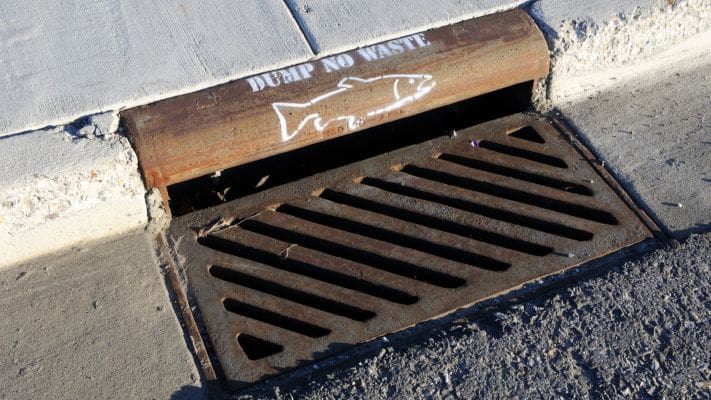
Any person owning, engaging in any activity on, or occupying property shall implement and maintain best management practices to prevent pollutants from leaving the property and entering into a stormwater system or receiving water. Best management practices include, but are not limited to:
(a) Identifying and eliminating illicit connections to the public stormwater system or a private stormwater system;
(b) Disposing of fluids and wastes in a manner that minimizes the risk of contaminating stormwater;
(c) Storing solid wastes in a manner that minimizes the risk of contaminating stormwater; and
(d) Undertaking measures to prevent spills of pollutants and to properly cleanup spills that may occur.
View State Page
Frequently Asked Questions
Who is responsible for maintaining stormwater facilities in Salem, Oregon?
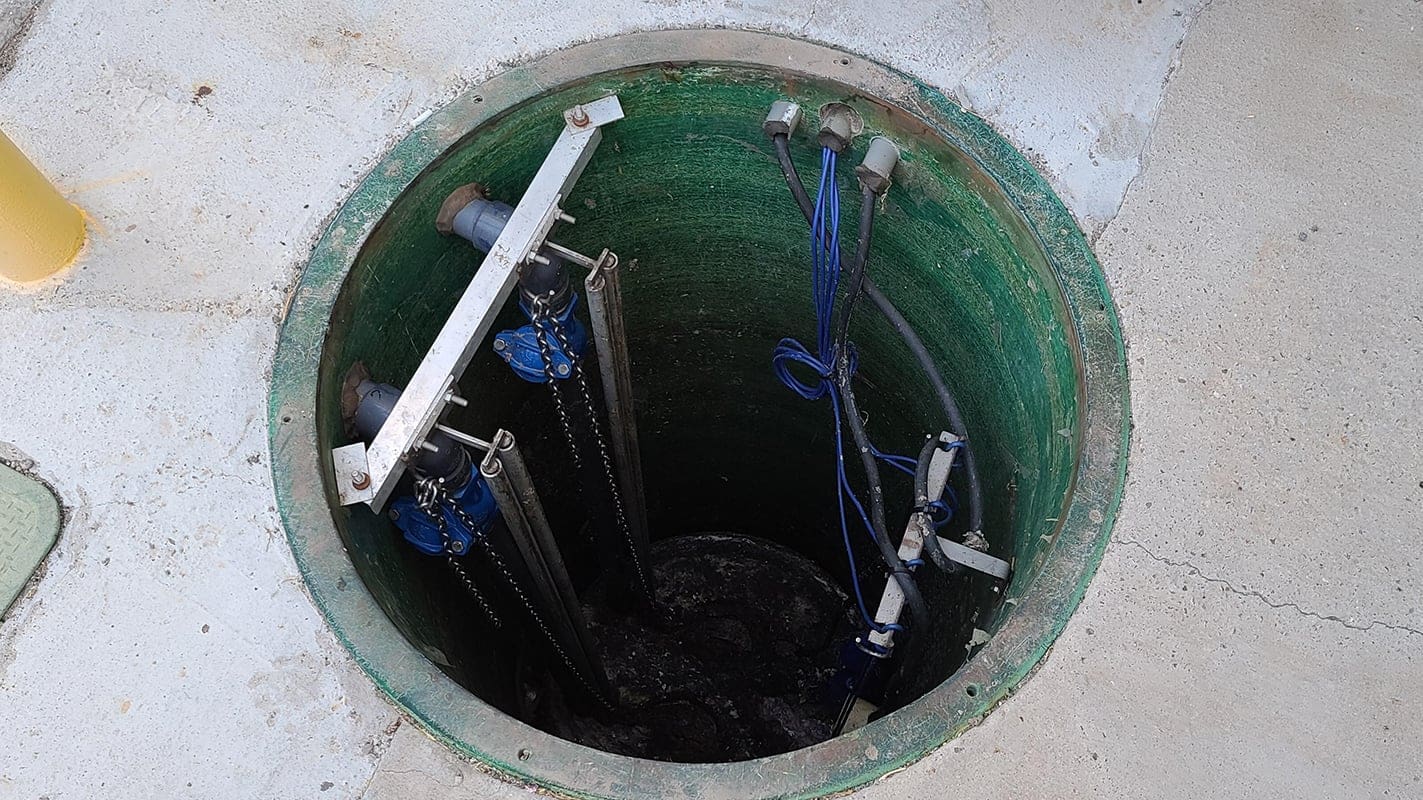
It depends on ownership. The City of Salem operates and maintains public stormwater facilities, while private stormwater facilities are the responsibility of whoever owns, operates, or occupies the property. Even for facilities intended to eventually be city maintained, the property owner remains responsible until the city formally completes and acknowledges the transfer.
What are my inspection and recordkeeping duties for a private stormwater facility in Salem?
As the responsible party, you need to periodically inspect your facility to confirm it’s working properly for pollutant removal, infiltration, or flow control, and keep records of construction, inspection, maintenance, and repair activities. You also need to make those plans, records, and schedules available to the Director during an inspection or upon reasonable request. AQUALIS can help property owners in Salem set up a recordkeeping system that meets these requirements.
What happens to my stormwater maintenance records if I sell my Salem property?
You’re required to transfer all installation, inspection, repair, and maintenance records to the new owner, and inform them and any other future purchasers or successors about the existence of the facility and their ongoing obligation to inspect and maintain it.
Do I need a formal agreement for a privately maintained stormwater facility in Salem?
Yes. A Private Stormwater Facility Agreement is required for any development that includes a privately operated and maintained stormwater facility, submitted as part of your development permit application. At minimum, it documents your property and contact information, the number, type, and location of your facilities, your responsibility to inspect and maintain them to approved standards, and the specific maintenance activities required to keep them functioning long term. AQUALIS can help property owners put together an agreement that covers all of these elements.
Does my Salem stormwater agreement give the city access to my property?
Yes. Your Private Stormwater Facility Agreement grants the city access to inspect your facilities, and separately to correct any deficiencies you don’t fix in a timely manner, or to take emergency action if the city determines your facility poses a threat to public health, safety, or welfare.
How is my stormwater utility fee calculated in Salem, Oregon?
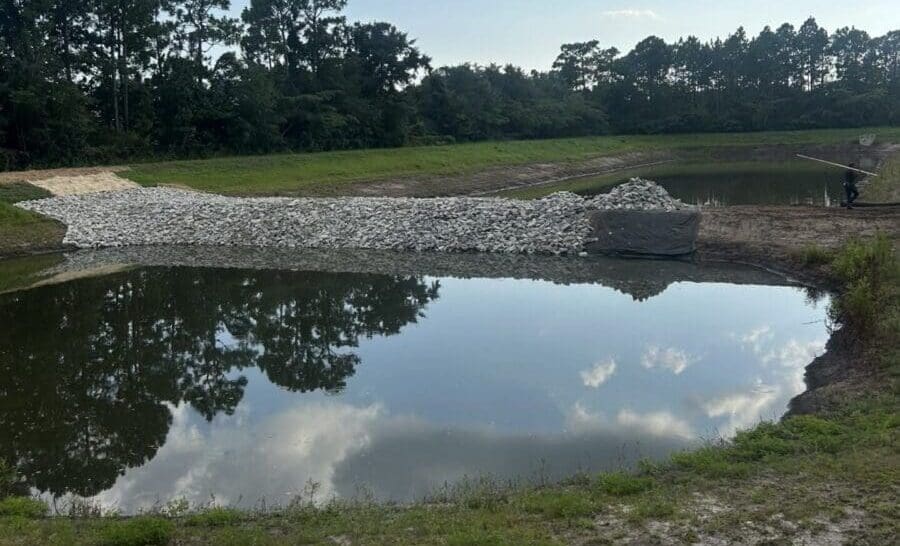
Salem’s stormwater fee, phased in starting January 1, 2013 and fully implemented since 2016, is designed to more fairly distribute the cost of stormwater services the city already provides, including operating and maintaining an extensive system of ditches, streams, pipes, and detention basins across the city.
Can I get a stormwater fee credit in Salem?
Yes, but only for commercial and industrial accounts, single-family residential ratepayers aren’t eligible. To qualify, you need a properly maintained stormwater treatment or flow control facility on your property, built to approved city standards. Credit amounts range from roughly 3% to 50%, based on your facility type, how much stormwater flows through it, and how it supports the city’s stormwater quality or quantity goals. AQUALIS can help property owners in Salem document their facility to support a credit application.
How do I apply for a stormwater utility credit in Salem?
You’ll need to complete a Stormwater Utility Credit Application and sign an access agreement, then mail the completed package to Development Services in the Public Works Department. City staff generally follow up within two weeks to confirm eligibility or request additional information.
The information on this page is provided for general informational purposes only and is not legal advice. Regulations change frequently — AQUALIS makes no warranty as to the accuracy or completeness of this content, and any reliance on it is at your own risk. Consult a qualified professional or your local regulatory authority to confirm requirements applicable to your specific property.