

Last Updated 08/24/2026
EPA Regulation of Stormwater in Bernalillo County
These programs regulate the stormwater discharges of Bernalillo County as part of Phase II regulations issued in 1999. These regulations require that small Municipal Separate Storm Sewer Systems (MS4s) apply for permits.
New Mexico is one of four states that do not have authorization to issue permits under the Clean Water Act, including also Idaho, Massachusetts and New Hampshire. This means that the Federal agency, EPA, issues permits directly to local governments (cities and counties) and to New Mexico businesses and construction sites.
While new stormwater regulations have not yet been formally proposed or codified, EPA has incorporated many new features into the Watershed General Permit for the Middle Rio Grande. This Watershed General Permit was proposed on Feb. 12, 2013.
Bernalillo County’s Stormwater Program
Bernalillo County is required to obtain permits to allow discharges to the Rio Grande. In anticipation of permit issuance, Bernalillo County first created a Stormwater Quality Management Plan, and submitted this plan to EPA in March of 2003.
Once the general permit was published in 2007, Bernalillo County Public Works Division revised the original plan and submitted a revised Stormwater Management Plan (SWMP) with a formal permit application on April 1, 2007. The first general permit for small MS4s in New Mexico was issued by EPA and became effective on July 1, 2007. Bernalillo County’s 2007 permit application and SWMP were approved without modification on May 11, 2011.
Stormwater Quality Ordinance
The Bernalillo County Code, Chapter 38 (commonly referred to as the Drainage Ordinance or “Floods”) addresses storm drainage and storm runoff and provides standards for the design of storm water control facilities. However, the Drainage Ordinance does not address stormwater quality. The County’s NPDES Permit (or MS4 Permit) issued by EPA Region 6 on December 22, 2014 specifies that the County must perform certain actions, develop processes and procedures, and in some cases develop ordinances to ensure regulatory controls to provide stormwater quality protection and improvement. Specifically, stormwater quality control measures for Construction, Post Construction, and Illicit Discharge Detection and Elimination (or IDDE) require the development of an ordinance(s) or other regulatory mechanism(s) per the MS4 Permit.
Bernalillo County Code of Ordinances Chapter 38 Floods, Article IV Stormwater Quality
Sec. 38-409. – Inspections.
- The provisions of article III section 38-174 apply to this article.
- Within the scope of this article, the county engineer is hereby authorized to make such inspections, surveys and investigations of buildings, lots, premises, and establishments, together with their operations, as are necessary to administer and enforce the provisions of this article.
- In the event a recognized or observable spill, release, illicit discharge, illegal dumping, or illegal disposal, in the opinion of the county engineer or stormwater compliance manager, constitutes an imminent threat to the waters of the US or its tributaries, to the MS4, to the environment generally, or to the public health or public safety, immediate entry to the property, under the direction of fire or law enforcement officials or state environmental officials, is authorized for the purposes of stabilizing, containing, neutralizing, or otherwise removing the imminent threat. The costs of such remedies may be addressed per the provisions of article III section 38-143 and imposed against the responsible party and/or the property owner.
- Subject to the provisions above, no person having charge, care or control of any building or premises shall fail or neglect, after proper request or identification is made, to promptly permit entry therein by the county engineer or other authorized county or state official or enforcement or inspection personnel for the purpose of inspection, investigation, or emergency response pursuant to this article or other laws relating to stormwater quality.
Sec. 38-411. - Role of the water protection advisory board in stormwater protection
- Bernalillo County Code, chapter 30, article V establishes the formation, membership, terms, structure, duties and powers, and interagency composition of the water protection advisory board (WPAB) and states that responsibilities and powers may be jointly delegated to it by the city, the Albuquerque Bernalillo County Water Utility Authority (ABCWUA), and the county.
- The duties of the water protection advisory board regarding surface water are described in section 30-157 and are adopted herein and are taken by the county to apply equally to stormwater quality protection, in as much as stormwater is an element of surface water and contributes to surface water flows.
- Given the intergovernmental nature of the WPAB through appointment of membership by the city, county, and the ABCWUA as prescribed through ordinance, subject to the county’s continued participation in and county staff support of and interaction with the WPAB and the related policy implementation committee, the WPAB is hereby considered by the county to be a cooperative agreement for purposes of MS4 permit compliance with regard to all elements of the MS4 permit where cooperative agreements are encouraged.
- The WPAB is hereby designated by the county as the primary citizen advisory board for the county regarding stormwater quality protection policy matters. The WPAB is directed in these policy and implementation matters to work jointly and cooperatively with other boards and technical advisory groups of the city, the ABCWUA, AMAFCA, and other NPDES MS4 permittees as the WPAB deems appropriate and necessary.
- The WPAB is hereby designated as the county’s “water committee/advisor group” and “stormwater management panel” as mentioned in the MS4 permit for purposes of public education, outreach, and public participation process, and provides the opportunity to serve as a citizen representative on a local stormwater management panel through the vacancy notice and appointment processes of the respective governmental bodies.
- The WPAB is hereby assigned the responsibility to assist county staff in stormwater quality policy matters and will facilitate annual public review and comment of the county’s stormwater management plan and annual report as required per the MS4 permit. The WPAB will be briefed on the county’s NPDES stormwater program at least annually or more frequently as the WPAB may request.
Sec. 38-414. – Post-construction phase stormwater quality protection.
(a) State water law, flood control authorities, and application to post-construction BMP selection and limitations.
- It is the county’s understanding for the purposes of this article that the office of the state engineer’s position is that all detained stormwater must be infiltrated or released within 96 hours and local flood control authority requirements prevail over the requirements of the MS4 permit.
- The MS4 permit provides that where state water law limits the ability to fully manage stormwater quality design volume on site, measures to minimize increased discharge consistent with requirements under state water law must still be implemented, and also that local flood control requirements and MS4 permit requirements may be met through a combination of on-site and off-site controls.
- The MS4 permit contains a list of possible infeasibility considerations for post-construction BMPs including: The lot being too small to allow for infiltration capacity; soil instability; a site use that is inconsistent with capture and reuse; other physical conditions; and compliance with on-site flood-control requirements leaves insufficient area. The permit allows for consideration of “multiple criteria that rule out an adequate combination of the practices” set forth in the permit, and further indicates that state water law may limit the ability to fully manage the stormwater quality design volume on site.
- Where applicable state water law requires permits that limit the ability to use stormwater BMPs requiring infiltration, reuse, or other beneficial uses, BMPs may be determined by the county to be infeasible and alternative compliance may be considered.
(b) Post-construction BMP design requirements and implementation.
- For all development and redevelopment projects with land disturbances equal to or greater than one acre, including sites which disturb less than one acre but are part of a larger common plan of development, that discharge into the county’s storm drainage system, post-construction water quality BMPs to manage the stormwater quality design volume are required. This requirement is in addition to any other requirements that may apply. These BMPs shall be subject to the approval of the county engineer and stormwater compliance manager.
- The selection of management BMPs must be included in a stormwater quality design (incorporated into the grading and drainage plan as part of the preconstruction review process and as such, subject to inspection during construction, at final inspection, and as a condition of final construction approval) that manages the 90 thpercentile stormwater quality design volume for new development and the 80 thpercentile stormwater quality design volume associated with redevelopment sites. The stormwater quality design volume will be managed on-site, as defined in this article, consistent with the MS4 permit intent to reduce pollutants in stormwater. Calculation of the stormwater quality design volume is defined in the Bernalillo County Technical Standards and the Bernalillo County Green Stormwater Infrastructure Low Impact Design Standards. Where an infeasibility determination is made, the stormwater quality volume will be treated to the extent feasible and as approved by the county engineer and stormwater compliance manager.
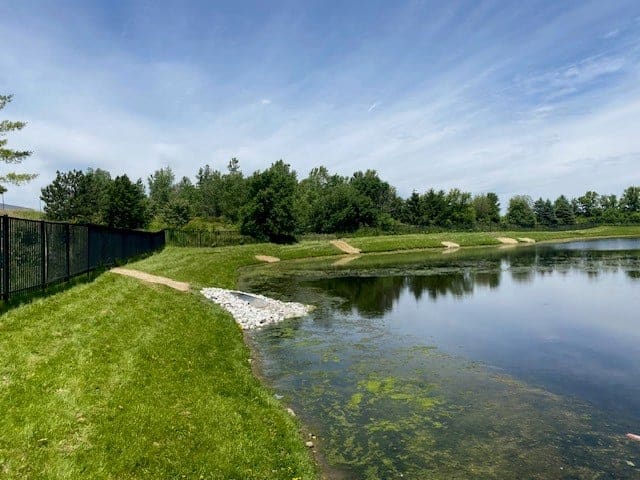
- BMPs will be selected and designed to manage flow from the contributing area impervious surfaces. Selected BMPs should include the following elements to improve on-site stormwater runoff quality:
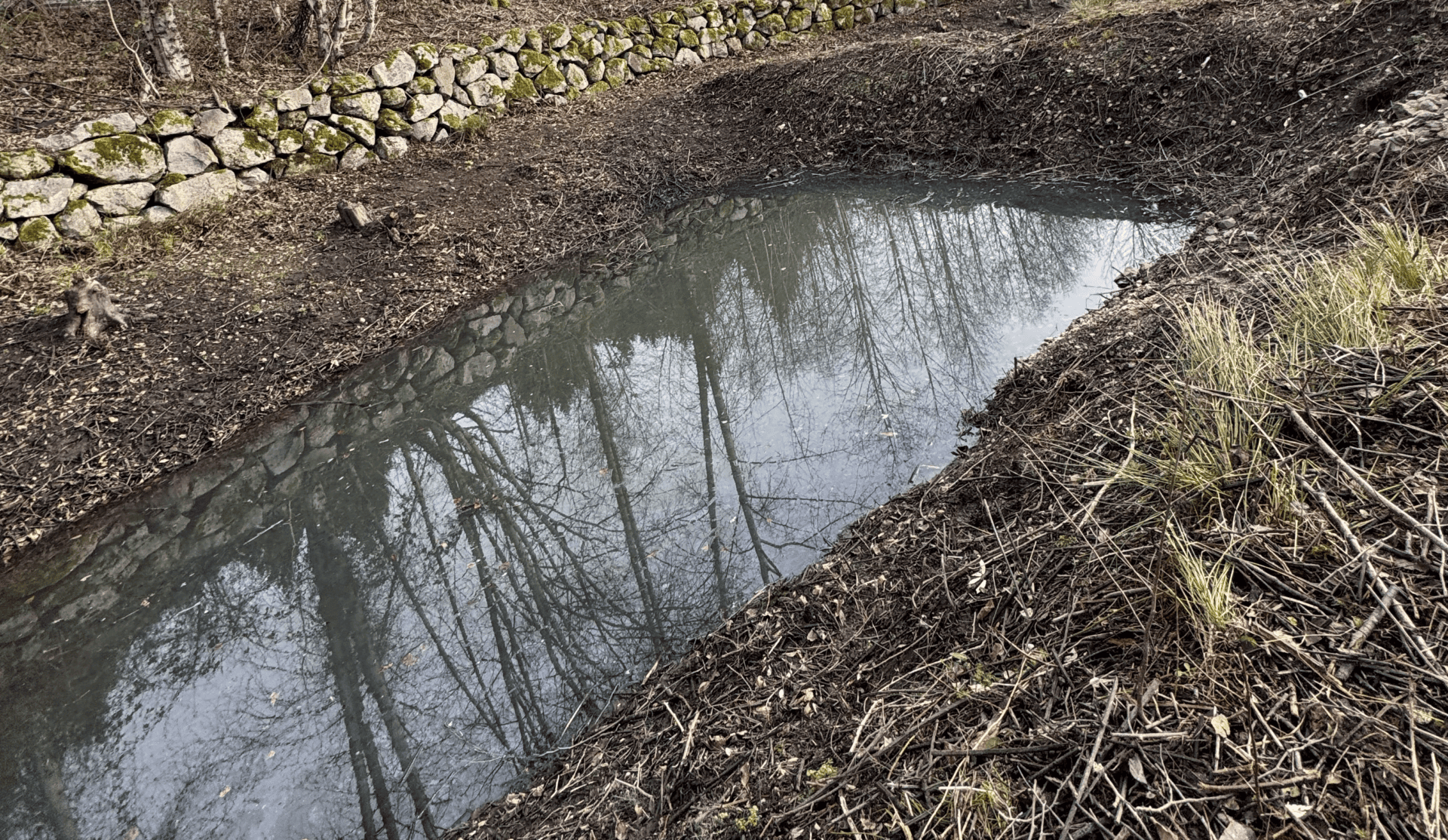
a. Incorporate stormwater harvesting basins, bioswales, depressed landscaping, and other features to manage stormwater runoff and increase infiltration into the soil media.
b. Grade impervious surfaces, such as driveways, during construction to drain to vegetated areas.
c. Minimize the area of impervious surfaces such as paved areas, roofs, and concrete driveways.
d. Incorporate pervious or porous surfaces where allowable (e.g. permeable pavement or pavers, or other pervious/semi-pervious materials) that minimize runoff.
e. Direct runoff from impervious surfaces/areas into active water harvesting systems (e.g. rainwater collection systems such as barrels or cisterns) or passive water harvesting areas (e.g. depressed landscape areas, swales, etc.).
- The BMPs must include an evaluation by the applicant of the GSI/LID practices as provided in the county’s Green Stormwater Infrastructure Low Impact Design Standards, Development Guidelines for Water Conservation, and the Bernalillo County Technical Standards. The evaluation must include selected GSI/LID BMPs that will be implemented.
- As-built plans for stormwater quality designs must be submitted prior to final inspection. Grading and drainage plans or other required planning documents must specifically identify post-construction BMPs that are required to be maintained and inspected.
- BMP(s) must be inspected by the stormwater compliance manager or other county-designated qualified person and found to be in compliance with all approved plans and specifications prior to the release of certificate of occupancy or other county-required approval for the site.
- Post-construction agreements and inspection and maintenance requirements are as outlined in subsections 38-414(c) and 38-414(d).
(c) Alternative compliance for post-construction due to infeasibility.
- The applicant may submit to the stormwater compliance manager and county engineer, or designees, a request for a determination of infeasibility for on-site management of all or a portion of the stormwater quality design volume based on the limitations provided in subsection 38-412(a)(4) above. If the request is confirmed, an alternative compliance strategy acceptable to the stormwater compliance manager and the county engineer, or designees, shall be implemented to address stormwater quality concerns prior to discharge from the property.
- The limitations of section 38-412(a)(4) above should not be construed to be exclusive, and other valid basis, other than costs, may be considered. Such basis may include, but is not limited to:
a. Entitlements granted prior to the effective date of the permit.
b. Previous authorization from the county or MS4 permittees to utilize existing public off-site infrastructure granted prior to the effective date of the permit.
c. Proposed use of a public, common, or private facility that is not strictly on-site, but that is designed to be utilized by an area or plan of common development (i.e., minor facilities incorporated into a master plan, planned community, subdivision, or village center).
d. Proposed and contracted use of a joint private facility, with agreement terms subject to approval by the county engineer, though not an area of common development, and located prior to a discharge to the MS4 (e.g., reciprocal drainage agreements and easements).
e. Instances where an infeasibility determination has been made and appropriate public or private drainage facilities are available off site, and will be used in a manner consistent with the goals and intent of this division to manage the stormwater quality design volume to mimic predevelopment hydrology and to address stormwater quality improvement, and located prior to discharge to waters of the US, and as determined and approved by the county engineer, stormwater compliance manager, and by the receiving facility owner.
- Availability of off-site private facilities will be demonstrated through appropriate engineering reports demonstrating the shared capacity of the facility and a joint voluntary agreement between parties that addresses ownership, maintenance, and inspection responsibilities that is equally, jointly, and severably enforceable against and between all parties.
- Availability of off-site public facilities of the county or other MS4 permittees as documented by and subject to:
a. A determination by the county, a letter from the applicable MS4 permittee, as pertains to their respective facilities conditioned as needed, indicating that:
- Existing infrastructure capacity is adequate to accept the stormwater quality design volume from the fully developed watershed or sub-watershed within which the development or redevelopment is located.
- The requirement for on-site retention from the releasing property may, accordingly, be waived for all or a portion of the stormwater quality design volume, and clearly stating the proportional volume that must be addressed on-site.
- Specifying any water quality treatment that is required prior to release.
- Assurance to the county that stormwater quality treatment requirements will be fully addressed by the accepting parties’ infrastructure prior to discharge to an MS4 and/or waters of the US.
b. Full or partial on-site treatment for stormwater quality treatment acceptable to the county engineer and to owner and operator of the alternate compliance facility will be required prior to discharge to the receiving facility. The more stringent treatment requirement specified by the county engineer, stormwater compliance manager, and the MS4 permittee will apply.
c. No discharge of any portion of the stormwater quality design volume (other than under those approved through other NPDES or MS4 permits) will be discharged from the site to any MS4 without a minimum level of treatment (GSI/LID or structural) to address floatables, gross pollutants, and/or site-specific pollutants of concern as determined by the county engineer and the stormwater compliance manager.
d. The maintenance of the on-site stormwater quality feature remains the responsibility of the property owner/operator, subject to the provisions of sections 38-415 through 38-417 and related enforcement provisions.
e. Annual inspection of the installed on-site water quality feature will be performed and documented by the owner/operator and records will be provided upon request by the county engineer and/or equivalent position of the MS4 permittee. Because of the reliance on off-site public facilities, an annual inspection applies rather than the three-year inspection schedule for private facilities specified for post-construction inspection and maintenance, as described in subsection 38-414(d)(2) of this article.
(d) Post-construction inspection and maintenance.
- Private stormwater facilities shall be maintained by the facility or property owner to standards established by the county engineer, published in the Bernalillo County Green Stormwater Infrastructure Low Impact Development Standards and the Bernalillo County Technical Standards, and/or in related county rules.
- Periodic inspection and certification of private facilities by a state professional engineer or otherwise qualified stormwater person (as determined by the county engineer, stormwater compliance manager, or designees) are required of the facility/property owner and shall occur no less frequently than once every three years from the date of final construction inspection.
For facilities that have been approved for off-site treatment of the stormwater quality design volume due to infeasibility, as described in subsection 38-412(c), due to reliance on off-site public facilities, an annual inspection applies rather than the three-year inspection schedule for private facilities specified for post-construction inspection and maintenance.
The responsibility and cost for the inspection is the responsibility of the private facility owner and/or property owner. The facility owner and/or property owner of each structural BMP shall keep records of inspections, maintenance, and repairs for at least five years from the date of creation of the record, whether the inspection schedule is annual or every three years.
Documentation of the inspection, maintenance activities, and repairs shall be provided to the county engineer and stormwater compliance manager, or designees, upon request and shall be maintained electronically as part of the county’s permit tracking system. Copies of the inspection reports shall be kept on file at the subject property/facility or at the offices of the property owner and/or manager, and shall be made available within two working days of an inspection request (whether verbal or written). A facility or BMP that cannot be certified or for which records cannot be provided in a timely manner shall be certified by current inspection at cost to the owner. Deficiencies noted in the inspection will be corrected within 60 days of notice from the county that such correction or inspection is needed unless a more immediate action is deemed necessary by the county engineer and stormwater compliance manager.- All on-site post-construction BMPs or alternate compliance methods and techniques are subject to random inspections by the county engineer per the inspection provisions of section 38-409.
- Inspections and inspection programs by the county may be conducted or established on any reasonable basis, including but not limited to routine inspections; random inspections; inspections based upon complaints or other notice of possible violations; and joint inspections with other agencies inspecting under environmental or safety laws. Inspections may include, but are not limited to: Reviewing maintenance and repair records; sampling discharges of surface water, groundwater, and material or water in BMPs; and evaluating the condition of BMPs.
- Enforcement provisions will apply per section 38-402 of this article.
View State Page
Frequently Asked Questions
What is post-construction stormwater management, and does it apply to my property in Bernalillo County?
Post-construction stormwater management covers the ongoing responsibility to maintain both on-site and off-site structural BMPs on your property according to the standards published in the county engineer’s Development Process Manual. If your property in Bernalillo County has a stormwater facility installed under an approved plan, keeping it maintained to those standards is a continuing obligation, not a one-time construction requirement. AQUALIS provides post-construction stormwater management and compliance support for property owners across Bernalillo County, so BMPs stay compliant well after a project is finished.
How often does Bernalillo County require inspections of private stormwater facilities?
Owners of private stormwater facilities in Bernalillo County must arrange a periodic inspection by a state professional engineer or a qualified stormwater person every three years, starting from the facility’s final construction inspection. Property owners bear the cost of these inspections themselves. AQUALIS coordinates these three-year professional inspections for Bernalillo County property owners and manages the process so nothing is missed.
How long do I need to keep stormwater inspection records for my Bernalillo County property?
Bernalillo County requires property owners to maintain inspection records for at least five years, and documentation must be provided to the county engineer within two working days of a request. That two-day turnaround makes disorganized recordkeeping a real risk if the county ever asks to see it. AQUALIS maintains complete, up to date inspection records for every property it services in Bernalillo County, so documentation can be produced well within that two-day window.
What happens if my stormwater facility in Bernalillo County fails its required inspection or certification?
If a property owner in Bernalillo County falls out of compliance with inspection or certification requirements, the county engineer issues a notice, and the owner has 90 days from that notice to correct the issue. Waiting until close to the deadline to begin repairs can leave little room for error if the work takes longer than expected. AQUALIS provides non-compliance resolution for Bernalillo County property owners, addressing maintenance issues well within the county’s 90-day correction window.
Can Bernalillo County inspect my stormwater facility outside of the required three-year cycle?
Yes. Beyond the mandatory three-year inspection, the county engineer may also conduct routine, random, or complaint-based inspections at any time. Property owners in Bernalillo County should be prepared for their facilities to be reviewed outside of the standard inspection schedule. AQUALIS keeps Bernalillo County properties inspection-ready year-round, so an unscheduled review doesn’t turn into a compliance issue.
What standards does my stormwater BMP need to meet in Bernalillo County?
Bernalillo County requires stormwater facilities to be maintained to the standards established by the county engineer and published in the Development Process Manual, covering both on-site and off-site structural BMPs under Chapter 38 of the county code. Maintenance work that doesn’t reference this manual risks drifting away from what the county actually expects. AQUALIS follows the Development Process Manual’s standards when performing maintenance for Bernalillo County property owners, keeping repairs aligned with county requirements.
Where can property owners in Bernalillo County get help with post-construction stormwater compliance?
Post-construction stormwater compliance in Bernalillo County involves three-year professional inspections, five-year recordkeeping with a two-day response requirement, a 90-day correction window for violations, and maintenance standards set by the county’s Development Process Manual. Managing all of this without dedicated stormwater staff is difficult for most property owners. AQUALIS offers post-construction stormwater management, inspection coordination, recordkeeping, and non-compliance resolution for Bernalillo County property owners, so owners can meet the county’s requirements without managing the process themselves.
The information on this page is provided for general informational purposes only and is not legal advice. Regulations change frequently — AQUALIS makes no warranty as to the accuracy or completeness of this content, and any reliance on it is at your own risk. Consult a qualified professional or your local regulatory authority to confirm requirements applicable to your specific property.