

Last Updated 08/19/2016
Carroll Stormwater Laws & Regulations
The Carrol County regulations (Carrol County Code Chapter 151) are compliant with the National Pollutant Discharge and Elimination System (NPDES) permit requirements for the county’s Municipal Separate Storm Sewer System (MS4). The Department of Land and Resource Management is responsible for the implementation of the NPDES MS4 program in Carrol County. Within the department, the Bureau of Development Review (BDR) reviews all residential, commercial, and industrial plans in the county, and the Bureau of Resource Management (BRM) ensures compliance with permit requirements within the county.
Carrol County encompasses 9 watershed areas, including:
- Upper Monocacy
- Conewago Creek
- Prettyboy Reservoir
- Loch Raven Reservoir
- Liberty Reservoir
- Double Pipe Creek
- Lower Monocacy
- South Branch Patapsco
- Patapsco River Lower North Branch
EXCERPT- Carroll County, MD Code of Ordinances, June 2018
151.015 SCOPE.
(A) No person shall develop any land for residential, commercial, industrial, or institutional uses without providing for SWM measures that control or manage runoff, from such development except as otherwise provided in this chapter. The SWM measures shall be designed in accordance with this chapter, the Design Manual and the Supplement and constructed in accordance with the approved plan.
(B) This chapter does not apply to development projects with valid final SWM and sediment control approvals prior to May 4, 2010. Where phased developments are approved, each phase is a separate project. Phases where valid individual final SWM and sediment control approvals have not been obtained by May 4, 2010 are subject to the process and requirements of this chapter.
(C) The county may determine that this chapter applies to any development project if downstream flooding problems or danger to health and safety, or damage to property or the environment exist or may be created by runoff from the development.
(2004 Code, § 191-4) (Ord. 01-12, passed 9-27-2001; Ord. 04-07, passed 4-1-2004; Ord. 2010-05, passed 4-29-2010)
151.019 REDEVELOPMENT.
(A) SWM plans for redevelopment shall provide ESD to the MEP consistent with the Design Manual and the Supplement. Overbank flood protection volume requirements do not apply unless required by the county in uncommon situations such as historic flooding, or extreme erosion where more stormwater control than the minimum required may be necessary.
(C) All redevelopment project designs shall reduce those existing site impervious areas within the limit of disturbance (LOD) built in accordance with an approved site plan by at least 50% below conditions existing on the date of the most recent county geographic information system orthophotography or as depicted on the original approved site plan. Where site conditions prevent the reduction of impervious area, then SWM practices shall implement ESD to the MEP for at least 50% of the site’s impervious area. When a combination of impervious area reduction and ESD is used, the combined reduced and treated area shall equal no less than 50% of the site’s impervious area within the LOD. Where existing site impervious areas were constructed after July 1, 1984, without an approved SWM plan, SWM shall be provided in accordance with § 151.035 for all impervious surfaces on the parcel.
(D) Alternative SWM measures may be used to meet the requirements in division (B) above if the owner or developer satisfactorily demonstrates to the county that impervious area reduction has been maximized and ESD has been implemented to the MEP. Alternative stormwater management measures include but are not limited to:
(1) An on site structural BMP;
(2) An off site structural BMP to provide water quality treatment for an impervious area equal to or greater than 70% of the existing impervious area;
(3) A combination of impervious area reduction, ESD implementation, and an on site structural BMP for an area equal to or greater than 50% of the existing site impervious area within the LOD; or
(4) A combination of impervious area reduction, ESD implementation and an off site structural BMP for an area equal to or greater than 70% of the existing site impervious area within the LOD.
(E) The county policies for providing stormwater runoff treatment for redevelopment projects if it is proven to the county’s satisfaction that the requirements of divisions (A), (B), and (C) above cannot be met are as follows:
(1) Retrofitting of existing on site or off site BMPs that provide inadequate stormwater treatment for the impervious areas draining to them, identified by the county within the eight digit drainage basin of the project, to bring them up to current standards in accordance with the Design Manual and the Supplement. The retrofitted facilities must treat drainage from impervious areas that require additional treatment greater than that required for all site imperviousness within the LOD; or
(2) Fees paid into the Stormwater Management Fund established in § 151.067 for the exclusive purpose of providing management of stormwater . The fees shall be listed in the Supplement and updated annually based upon cost history and the square footage of site imperviousness within the LOD.
(2004 Code, § 191-8) (Ord. 01-12, passed 9-27-2001; Ord. 04-07, passed 4-1-2004; Ord. 2010-05, passed 4-29-2010,passed 11-29-2018)
151.053 PREPARATION OF THE STORMWATER MANAGEMENT PLAN.
(A) The design of SWM plans shall be prepared by a professional land surveyor or engineer.
(B) If a stormwater BMP requires a dam safety permit or small pond approval, the design shall be prepared by a professional engineer.
(2004 Code, § 191-15) (Ord. 01-12, passed 9-27-2001; Ord. 04-07, passed 4-1-2004)
151.067 STORMWATER MANAGEMENT FUND.
(A) There is hereby established a Stormwater Management Fund (“the Fund”) to be administered by the Department of the Comptroller, or its successor agency.
(B) All penalties, fines, and retrofit, variance, or other fees paid pursuant to this chapter shall be deposited to the SWM Fund. Interest shall be deposited to the Fund. All money deposited to the Fund shall be used for program management and compliance with this chapter.
(2004 Code, § 191-17.1) (Ord. 01-12, passed 9-27-2001; Ord. 04-07, passed 4-1-2004; Ord. 2010-05, passed 4-29-2010)
151.068 PERMIT SUSPENSION AND REVOCATION.
Any grading or building permit issued by the county may be suspended or revoked after written notice is given to the permittee for any of the following reasons:
(A) Any violation of the conditions of the SWM plan approval;
(B) Changes in site runoff characteristics upon which an approval or waiver was granted;
(C) Construction not in accordance with the approved plan;
(D) Noncompliance with a correction notice or stop work order issued for the construction of the SWM ESD nonstructural or structural practices; or
(E) Immediate danger exists in a downstream area as determined by the county.
(2004 Code, § 191-18) (Ord. 01-12, passed 9-27-2001; Ord. 04-07, passed 4-1-2004; Ord. 2010-05, passed 4-29-2010)
151.110 MAINTENANCE INSPECTIONS.
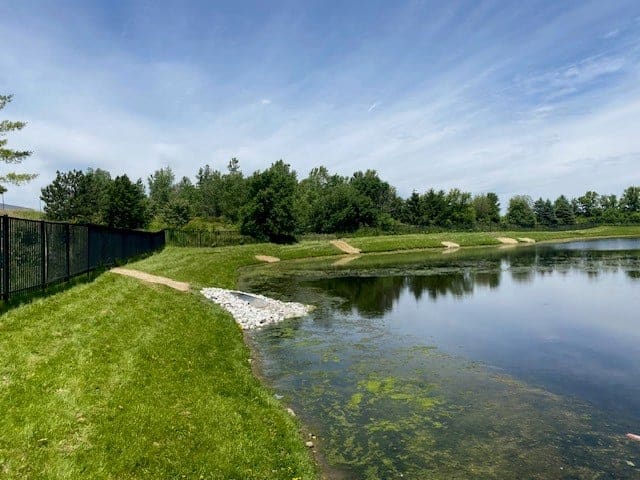
(A) The county shall ensure that preventative maintenance is performed by inspecting all ESD, non-structural treatment systems and structural stormwater treatment measures. Inspection shall occur during the first year of operation and at least once every three years thereafter. In addition, a Stormwater Management Deed of Easement and Maintenance Agreement between the owner and the county shall be executed for ESD, non-structural treatment systems and structural stormwater treatment measures as required by this chapter.
(B) Inspection reports shall be maintained by the county for ESD, non-structural treatment systems and structural stormwater treatment measures.
(C) Inspection reports for ESD, non-structural treatment systems and structural stormwater treatment measures shall include the following:
- The date of inspection;
- Name of the inspector;
- An assessment of the quality of the SWM system related to ESD treatment practice efficiency and the control of runoff to the MEP;
- The condition of:
- Vegetation or filter media;
- Fences or other safety devices;
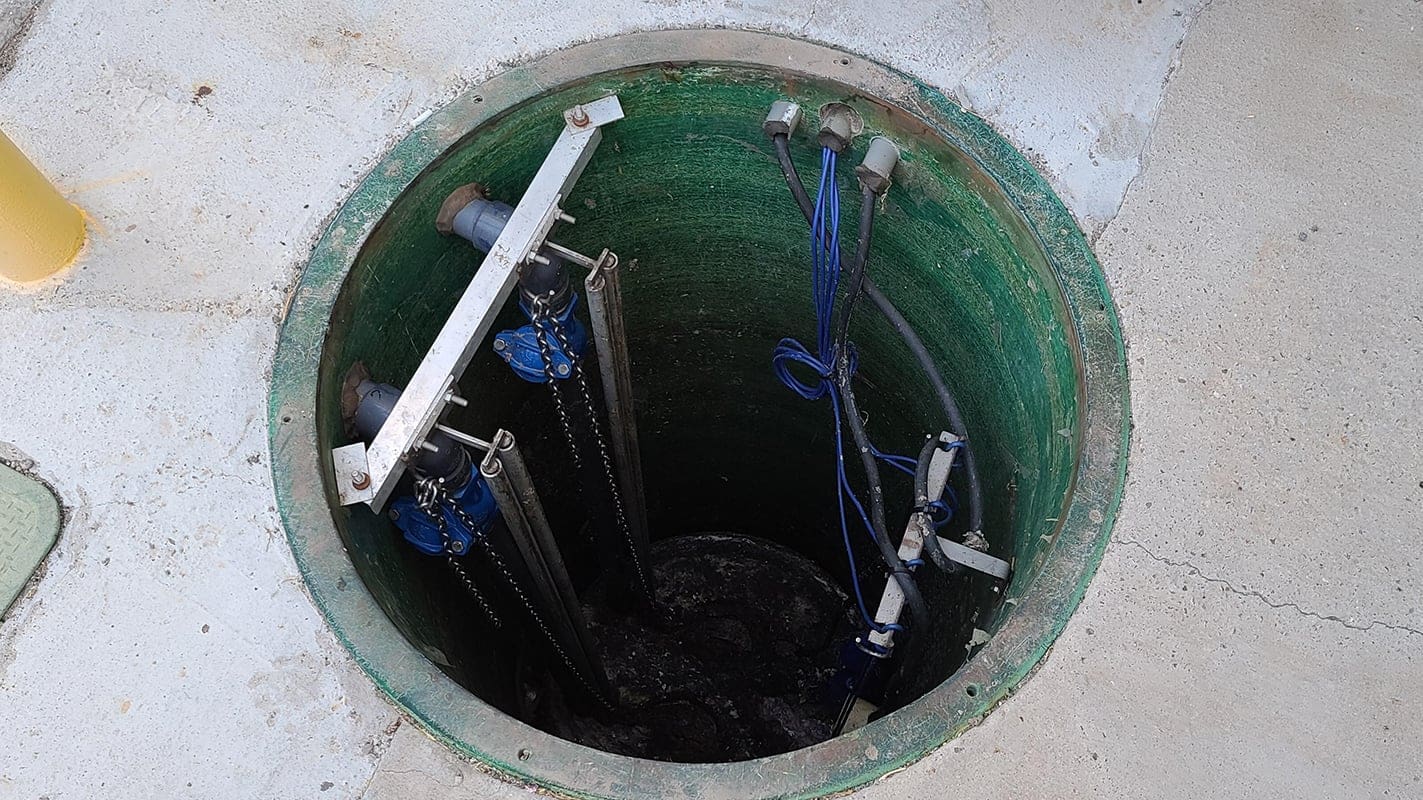
- Spillways, valves, or other control structures;
- Embankments, slopes, and safety benches;
- Reservoir or treatment areas;
- Inlet and outlet channels or structures;
- Underground drainage;
- Sediment and debris accumulation in storage and forebay areas;
- Any non-structural practices to the extent practicable; and
- Any other item that could affect the proper function of the SWM system.
- Description of needed maintenance.
(D) After notification of any deficiencies discovered from an inspection of a structural SWM facility, the owner shall have 30 days or other time frame as determined by the county to correct the deficiencies. The county shall conduct a subsequent inspection to ensure completion of the repairs.
(E) If repairs are not properly completed, the county may initiate enforcement proceedings.
(F) If, after an inspection by the county, the condition of a structural SWM facility presents an immediate danger to the public health or safety, the county may take action as may be necessary to protect the public and make the facility safe. Any cost incurred by the county shall be assessed against the owner pursuant to this chapter.
(2004 Code, § 191-23) (Ord. 01-12, passed 9-27-2001; Ord. 04-07, passed 4-1-2004; Ord. 2010-05, passed 4-29-2010, passed 11-29-2018)
151.111 MAINTENANCE AND EASEMENT AGREEMENT.
(2004 Code, § 191-24) (Ord. 01-12, passed 9-27-2001; Ord. 04-07, passed 4-1-2004; Ord. 2010-05, passed 4-29-2010, passed 11-29-2018)
View State Page
Frequently Asked Questions
Who oversees stormwater compliance in Carroll County?
The Department of Land and Resource Management implements the NPDES MS4 program countywide. Within the department, the Bureau of Development Review handles plan review for residential, commercial, and industrial projects, while the Bureau of Resource Management ensures ongoing compliance with permit requirements. The county spans nine watershed areas, including the Upper Monocacy, Prettyboy Reservoir, and Loch Raven Reservoir watersheds.
What stormwater standard applies to redevelopment projects in Carroll County?
Redevelopment designs must reduce existing impervious area within the limit of disturbance by at least 50% below what existed on the site, using the county’s most recent orthophotography or the original approved site plan as the baseline. Where reducing impervious area isn’t feasible, the property must instead use environmental site design to treat at least 50% of that impervious area, or use a combination of both to hit the 50% threshold.
What alternatives exist if a Carroll County redevelopment project can't meet the standard 50% impervious reduction?
Owners can demonstrate that a combination of measures satisfies the requirement, including an on-site structural best management practice, an off-site structural practice treating at least 70% of the existing impervious area, or blended approaches combining impervious reduction, environmental site design, and structural practices at either the 50% or 70% threshold depending on the mix used. If none of these are achievable, the county allows retrofitting inadequate existing BMPs elsewhere in the same drainage basin, or paying fees into the county’s Stormwater Management Fund.
What is Carroll County's Stormwater Management Fund used for?
The fund collects penalties, fines, and retrofit, variance, or other fees paid under the county’s stormwater ordinance, along with any interest earned. Money in the fund goes toward program management and ensuring ongoing compliance with the county’s stormwater management chapter.
Can Carroll County suspend or revoke a grading or building permit over stormwater issues?
Yes. The county can suspend or revoke a permit after written notice for several reasons, including violating the approved stormwater management plan, construction that doesn’t match the approved plan, noncompliance with a correction notice or stop work order, changes in site runoff conditions that affected the original approval, or an immediate downstream danger.
How often are stormwater facilities inspected in Carroll County, and what does the Maintenance and Easement Agreement require?
The county inspects environmental site design and structural stormwater facilities during their first year of operation, then at least once every three years after. Before issuing a building or grading permit, the county requires the owner to sign a Stormwater Management Deed of Easement and Maintenance Agreement, which is recorded with the county and binds all future property owners. Privately owned underground, high-flow filter, or porous pavement facilities need annual inspection and maintenance by the owner, with certified inspection forms submitted to the county every three years.
What happens if deficiencies are found during a Carroll County stormwater inspection?
The owner has 30 days, or another timeframe set by the county, to correct any deficiencies found during inspection. The county follows up with another inspection to confirm the repairs. If repairs aren’t properly completed, the county can begin enforcement proceedings, and if a facility poses an immediate danger to public health or safety, the county can step in directly and bill the owner for the cost.
The information on this page is provided for general informational purposes only and is not legal advice. Regulations change frequently — AQUALIS makes no warranty as to the accuracy or completeness of this content, and any reliance on it is at your own risk. Consult a qualified professional or your local regulatory authority to confirm requirements applicable to your specific property.