

Last Updated 07/21/2026
Sacramento Stormwater Laws & Regulations
The County of Sacramento has enacted a Stormwater Ordinance in order to establish minimum stormwater management requirements and controls to protect and safeguard the general health, safety, and welfare of the public residing in watersheds within this jurisdiction. The County of Sacramento is the permitting authority for all land disturbing activities and requires the land owner to maintain all on-site stormwater control facilities and all open space areas (e.g. parks or “green” areas) required by the approved stormwater control plan. The County of Sacramento will only provide construction permits to projects that establish a plan to manage stormwater runoff occurring during the construction process. The County of Sacramento, under the NPDES program, also has the authority to inspect properties for noncompliance and can issue a notice of violation (NOV) for any deficiency or infraction onsite. Property owners are responsible for the maintenance of any stormwater facilities or practices located on the property. The County of Sacramento has the authority to inspect stormwater facilities and practices in order to ascertain that they are properly maintained and functioning.
Excerpt- Sacramento Regulations
Types of Businesses Regulated
As required by the State of California, inspections are conducted at the following types of businesses:
- Auto repair shops
- Auto body shops
- Auto sales, lease and rental facilities
- Gas stations
- Restaurants
- Nurseries
- Kennels
- Equipment rental businesses
- Facilities that have coverage under the State’s General Industrial Stormwater Permit.
Stormwater Quality Program BMPs
X.X.X. Lorem Ipsum
“BMPs should be considered and implemented in the above order: administrative, source control, and then treatment control. Implementing BMPs in this order is the most cost effective and does the best job of protecting stormwater quality. Administratively eliminating pollution sources will almost always be the best solution. Using source control BMPs to eliminate pollutant sources prior to polluting stormwater runoff should be your next option. Your last option is to treat stormwater runoff in an effort to remove pollutants. Treatment is likely the most expensive and often least effective way to go. Treatment control should be a part of your overall stormwater pollution prevention strategy as a last and final effort to remove pollutants that could not feasibly be addressed through administrative and source control BMPs. Treatment control BMPs should not be used as stand alone BMPs.”
Treatment Control BMPs (install and maintain):
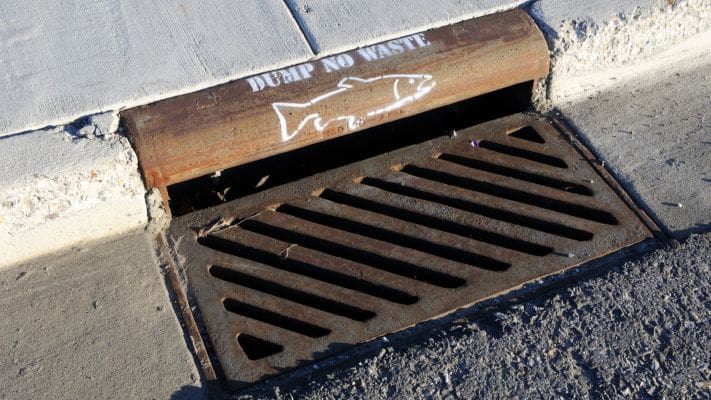
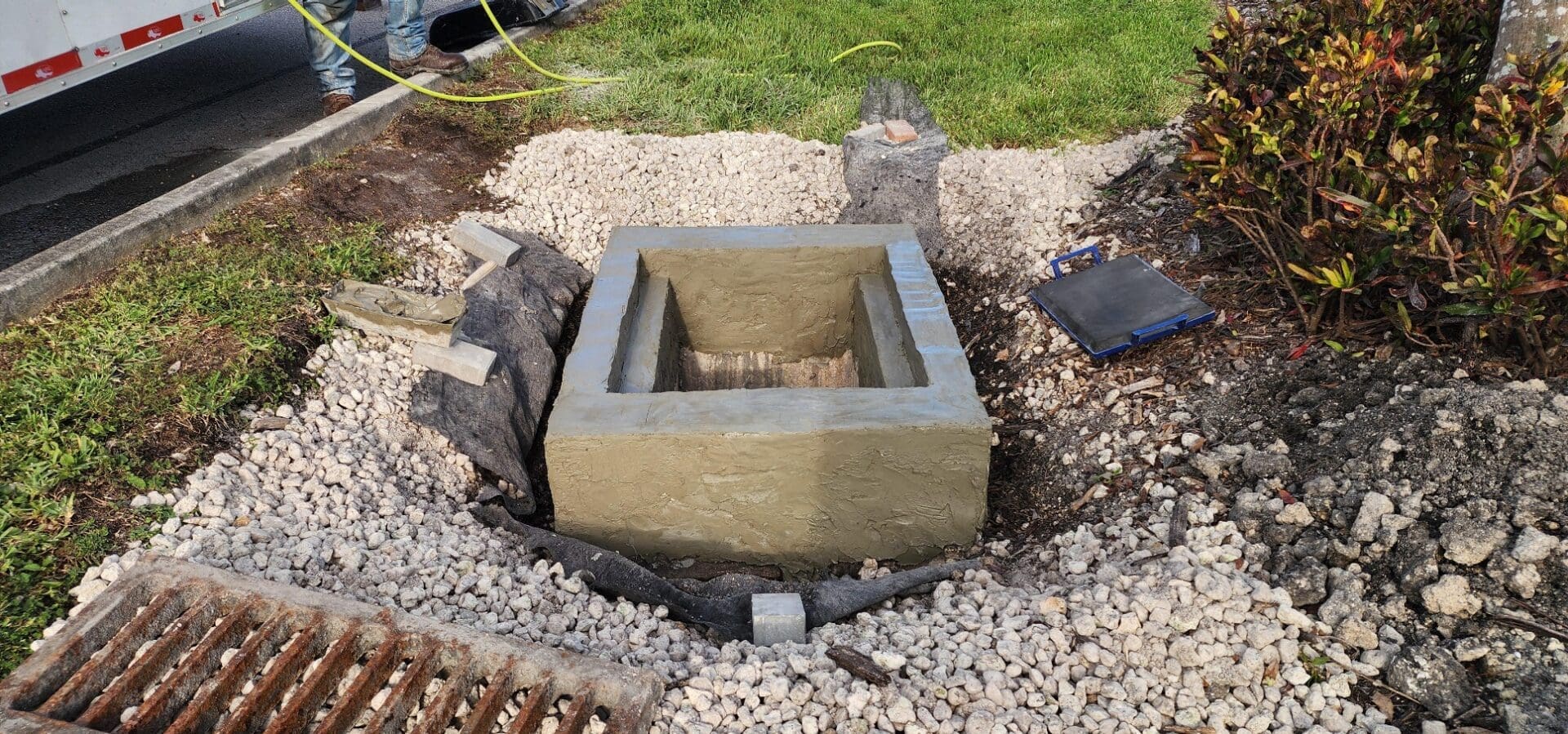
- On-site storm drain inlet protection devices, such as appropriately-selected storm drain filter inserts
- Vegetative swales, sand filters,
- and bioretention devices
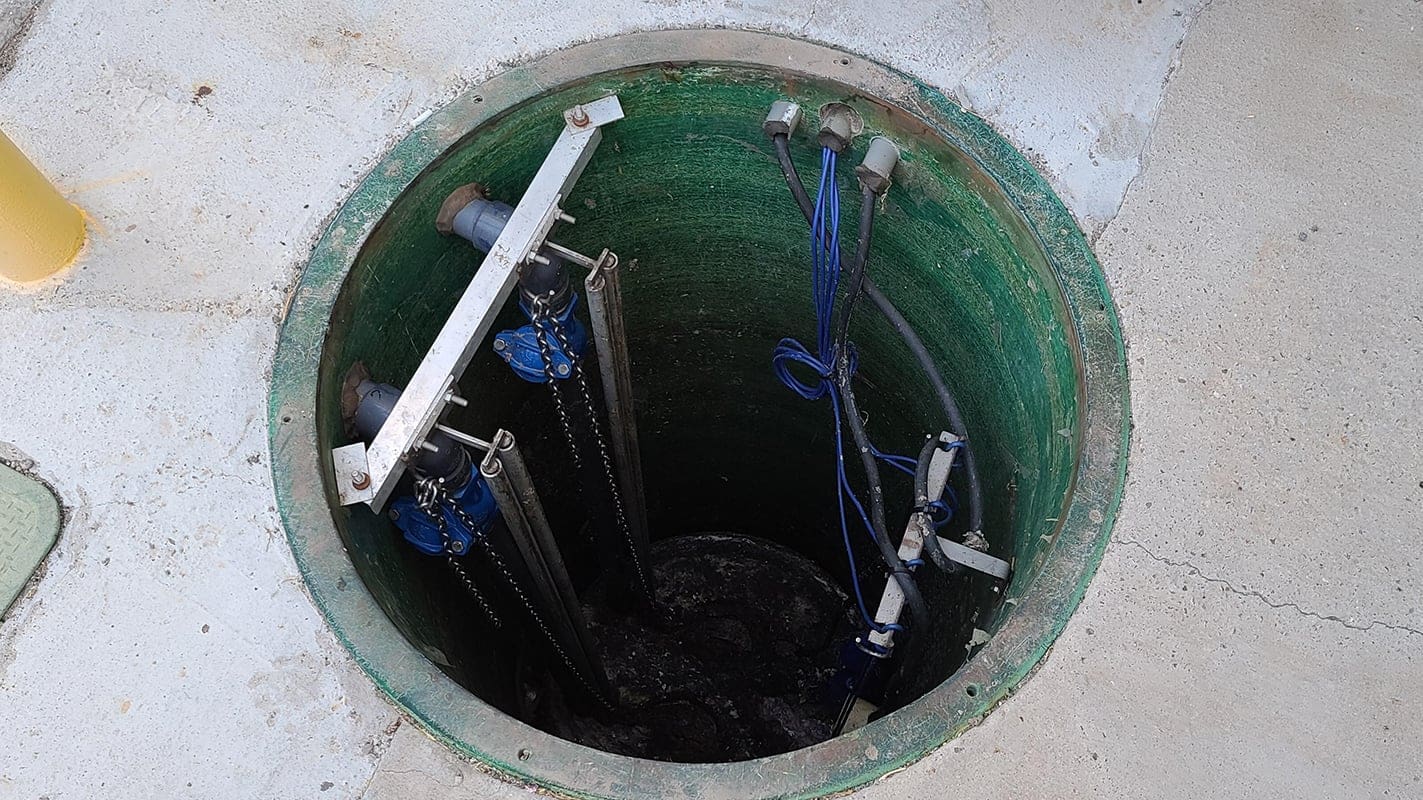
- Stormwater treatment vaults
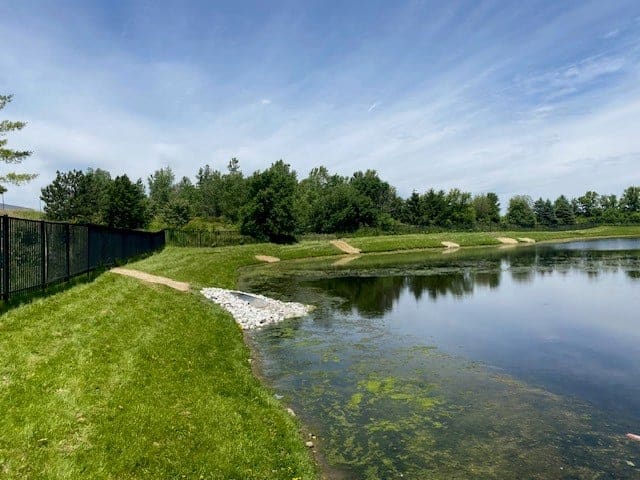
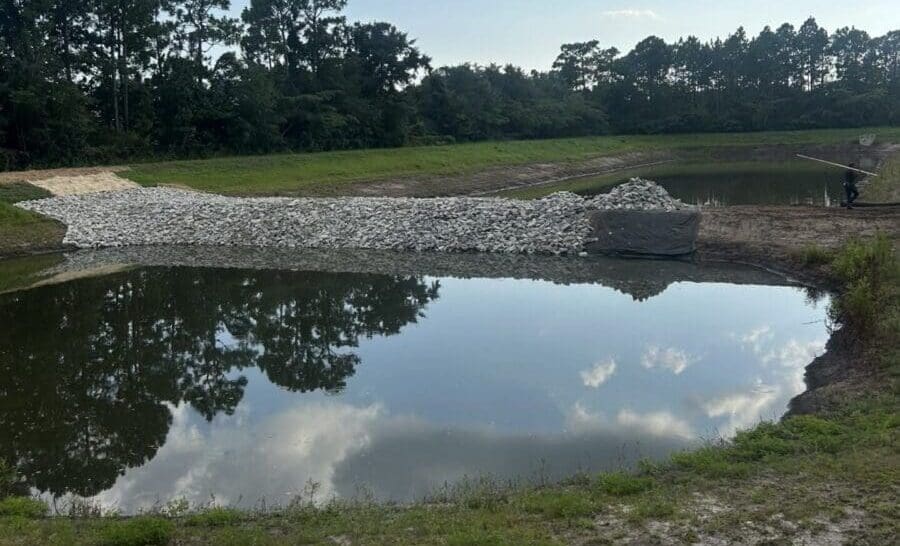
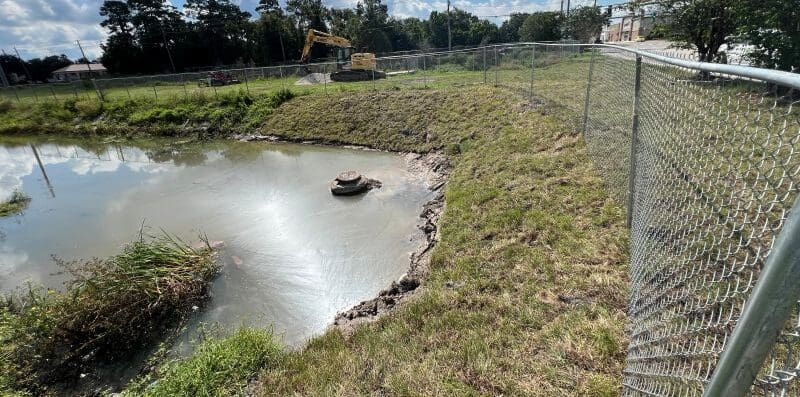
- Detention basins
All treatment control BMPs require regular inspection and maintenance to ensure proper operation.
The Environmental Management Department’s (EMD) Commercial/Industrial Stormwater Compliance Program regulates certain types of businesses throughout Sacramento County and all its incorporated cities except Isleton.
The purpose of the program is to ensure compliance with Sacramento County Code (SCC 15.12) and applicable city codes which prohibit non-storm water discharge to the County’s and cities’ storm drainage system and local waters. Only storm water and a few exemptions allowed by law may be discharged into the storm drainage system.
Excerpt – Stormwater Ordinance
AN ORDINANCE REPEALING CHAPTER 15.12 AND REENACTING CHAPTER 15.12 OF TITLE 15 OF THE SACRAMENTO COUNTY CODE RELATING TO STORMWATER MANAGEMENT AND DISCHARGE CONTROL
15.12.110 Findings.
a. The Federal Clean Water Act provides for the regulation and reduction of Pollutants discharged into the Waters of the United States by extending National Pollutant Discharge Elimination System (NPDES) requirments to Stormwater and urban runoff Discharge into the County Storm Drain System.
b. The State Water Resources Control Board (“State Board”) is the State water pollution control agency for all purposes of the Clean Water Act pursuant to Section 13160 of the California Water Code. The State Board is authorized by the United States Environmental Protection Agency to administer the NPDES program within the State. The Portr-Cologne Water Quality Control Act (Water Code section 13000 et seq.) provides authority for the State NPDES program, including provisions to issue NPDES Permits and Waste Discharge Requirements to regulate discharges of Stormwater to waters of the State.
c. Stormwater flows from individual properties to the County Storm Drain System and then ultimately to the waters of the State.
d. The County is a co-permittee under the Waste Discharge Requirements for County of Sacramento, Cities of Sacramento, Citrus Heights, Elk Grove, Folsom, Galt, and Rancho Cordova Area-Wide Storm Water Discharges From Municipal Separate Storm Sewer Systems Sacramento County (Order No. R5-2002-0206), dated December 6, 2002, which also serves as a National Pollutant Discharge Elimination System Permit under the Federal Clean Water Act (NPDES No. CAS082597). As a co-permittee, the County is required to possess the necessary legal authority, and to implement appropriate procedures, to regulate the entry of Pollutants and Non-Stormwater Discharges into and fromthe County Storm Drain System.
e. The County’s Municipal Stormwater Permit requires the County effectively to prohibit Non-Stormwater Discharges from the unincorporated urbanized area of the -2- County into the County Storm Drain System except as otherwise permitted by Federal law.
f. Non-Stormwater Discharges and Stormwater Pollutants that are discharged directly to waters of the State without passing through the County Storm Drain System are not subject to the requirements of the Municipal Stormwater Permit. However, such discharges have the potential to degrade water quality and impact the quality of life for the people of the County. Regulation of such discharges by the County provides benefits to its people and protects the local environment.
g. The Board finds in this regard that the provisions of this Chapter are necessary to provide the County with the legal authority necessary to implement and otherwise comply with the requirements of its Municipal Stormwater Permit and to protect the waters of the State for the benefit of its people and the environment.
15.12.300 General Requirements For Best Management Practices.
Any Person engaged in activities which may result in Pollutants entering the Stormwater conveyance system shall, to the maximum extent practicable, undertakeBMPs to reduce the risk of Non-Stormwater Discharge and/or Pollutant Discharge.
15.12.305 County Stormwater Permit
a. The Administrator may require the owner or operator of a Significant Industrial Activity to obtain a County Stormwater Permit, which may establish any provisions necessary for the implementation of this Chapter, effective control of Stormwater Pollutants and Non-Stormwater Discharges, and compliance with the Municipal Stormwater Permit. Provisions may include but are not limited to applicable Specified Performance Requirements; and reporting, documentation, training, and monitoring requirements.
15.12.310 Containment And Notification Of Spills.
a. Any Person owning or occupying a Premises, or conducting any activity, that has knowledge of any Non-Stormwater Discharge or Threatened Prohibited Discharge, from the Premises or activity to the County Stormwater conveyance system shall immediately take all reasonable action to contain and otherwise minimize any such Discharge.
b. The Administrator may designate types of industries where the owner or operator of the Industry shall be required to notify the Administrator or the Implementing Agency within twenty-four (24) hours of the discovery of an actual Discharge into the County Stormwater conveyance system.
c. For any Discharge subject to the reporting requirements of the State of California Water Code Sections 13271 and 13272, notification in compliance therewith shall constitute sufficient notification for the purposes of this Section.
15.12.325 Post Construction Requirements For New Development And Significant Redevelopment.
a. The Administrator shall be authorized to establish Specified Performance Requirements and requirements for BMPs as appropriate to minimize the long-term, post construction Discharge of Stormwater Pollutants from new development or Significant Redevelopment, to implement the Development Standards Plan, and to comply with the requirements associated with development standards in the Municipal Stormwater Permit, including but not limited to Provisions 16 through 26. The requirements for new development or redevelopment may include but are not limited to performance standards, source control BMPs, treatment BMPs, structural BMPs, operational BMPs, building material specifications or limitations, site design requirements, signage and marking, and associated maintenance programs or schedules.
b. Requirements established pursuant to subsection (a) may be included in development standards, building codes, building permits, conditions of development, or any other appropriate instrument administered by the County.
15.12.327 BMP Maintenance Requirements.
The Administrator may require a property owner to establish, document, and conduct a maintenance program, subject to approval, for any BMP or to ensure continued compliance with Specified Performance Requirements. This requirement may apply to BMPs required by the County or BMPs that were voluntarily installed. Such a maintenance program may be required when the Administrator determines that proper maintenance is necessary to protect public safety, health, infrastructure, or the environment, or to otherwise meet the purposes of this chapter. Maintenance requirements established pursuant to this subsection must be appropriate for the site conditions and design of BMPs.
15.12.400
Scope Of Inspections.
a. Prior to commencing any inspection authorized pursuant to this Chapter, the Administrator shall obtain the consent of the owner or occupant of the Premises, an inspection warrant or a criminal search warrant.
b. The Administrator may conduct inspections related to purposes of implementing this chapter on private or public property. Inspections shall be based upon such reasonable selection processes as may be deemed necessary to carry out the objectives of this Chapter, including, but not limited to, compliance with requirements of the Municipal Stormwater Permit, visual evidence, complaints received, knowledge or physical evidence of industrial activities or other Pollutant sources, random sampling, sampling in areas with evidence of Stormwater contamination, Illicit Connections, Discharge of non-Stormwater to the County Storm Drain System or similar factors.
c. The Administrator may enter upon private property to investigate the source of any Discharge to any public street, inlet, gutter, storm drain or the County Storm Drain System.
d. The Administrator may enter upon private property for the purpose of verifying compliance with the provisions of this Chapter, including, but not limited to, the following:
1. identifying products produced, processes conducted, chemicals used and Materials stored on or contained within the property;
2. identifying point(s) of Discharge of all wastewater, process water systems, Pollutants and other Discharges from the property;
3. investigating the natural slope of the premises, including drainage patterns and artificial conveyance systems;
4. establishing the location of all points of Discharge from the property, whether by surface run-off or through a storm drain system;
5. locating any prohibited condition, Illicit Connection, or the source of any prohibited Discharge; and
6. evaluating implementation of BMPs.
e. For purposes of verifying compliance with the provisions of this Chapter, the Administrator may inspect any vehicle, truck, trailer, tank truck or other mobile equipment, or any stationary equipment, which may reasonably be believed to be used by the business for business-related activities and to be associated with industrial sources of Pollutants or with Non-Stormwater Discharges.
f. The Administrator may inspect and copy all records of the owner or occupant of any Premises relating to chemicals or processes presently or previously occurring on-site, including Materials and/or chemical inventories, facilities maps or schematics or diagrams, material safety data sheets, hazardous waste manifests, business plans, pollution prevention plans, State general permits, monitoring program plans or any other records relating to Illicit Connections, prohibited Discharges or the potential Discharge of Pollutants to the County Storm Drain System. In addition, the Administrator may require the owner or occupant to furnish, within a reasonable time period, copies of all such records.
g. The Administrator may inspect, sample and test any area runoff, soils area (including any groundwater testing), process Discharge, Materials within any waste storage area (including any container contents), and/or treatment system Discharge for the purpose of determining the potential for the contribution of Pollutants to the County Storm Drain System. The Administrator may investigate the integrity and layout of all storm drain and sanitary sewer systems or other pipelines on the Premises using appropriate tests, including, but not limited to, smoke and dye tests or video surveys. The Administrator may take photographs or video tape, make measurements or drawings, and create any other record reasonably necessary to document conditions on the Premises.
h. The Administrator may erect and maintain monitoring and sampling devices for the purpose of measuring any Discharge or potential source of Discharge to the County Storm Drain System.
15.12.435 Reporting Requirements.
a. The Administrator may require any Person to report information for purposes related to the purpose and intent of this chapter. Required information may include but is not limited to the following:
- characterization of industrial activities;
- compliance with this Chapter, compliance with a County Stormwater Permit;
- compliance with State General Permit requirements;
- compliance with the County Stormwater Ordinance;
- compliance with Administrative Enforcement Orders or other enforcement actions;
- discharge monitoring;
- training;
- and BMP implementation, effectiveness, and maintenance.
b. The Administrator may require information to be submitted on an as needed basis, or according to a specific schedule as specified in a County Stormwater Permit.
c. The Administrator may require submitted information to be compiled, summarized, analyzed or organized in a reasonable manner that facilitates its interpretation or other use. As necessary to facilitate the use of information, the Administrator may also specify the medium and format of required submittals.
d. Failure to provide information in a timely manner as required by the Administrator, or knowingly or negligently providing false information shall be a violation of this Chapter.
15.12.570 Criminal Penalties.
a. Any Person who negligently or knowingly violates any provision of this Chapter, undertakes to conceal any violation of this Chapter, continues any violation of this Chapter after notice thereof, or fails to implement BMPs in accordance with Section 15.12.302 shall be guilty of a misdemeanor and upon conviction thereof be fined not more than $1,000 or imprisoned for not more than six (6) months in the County Jail, or both.
b. Each day in which a violation occurs and each separate failure to comply with either a separate provision of this Chapter, a Notice of Violation, a Cease and Desist Order, or failure to implement BMPs in accordance with Section15.12.302 shall constitute a separate violation of this Chapter punishable by fines or sentences in accordance herewith.
View State Page
Frequently Asked Questions
Does Sacramento County's stormwater program cover my property if it's inside a city rather than unincorporated county land?
Yes, in most cases. The county’s Commercial/Industrial Stormwater Compliance Program regulates qualifying businesses across the county and all its incorporated cities, with a single exception: Isleton administers its own program separately.
What kinds of businesses does Sacramento County specifically inspect for stormwater compliance?
A defined list tied to pollution risk. That includes auto repair and body shops, auto sales, lease, and rental facilities, gas stations, restaurants, nurseries, kennels, equipment rental businesses, and any facility already covered under the state’s General Industrial Stormwater Permit.
What order should I address stormwater pollution sources on my Sacramento County property?
Administrative measures first, then source control, and treatment control only as a last resort. Eliminating pollution sources administratively is almost always the most effective and least expensive option. Treatment, things like storm drain filter inserts, vegetative swales, or detention basins, should supplement rather than replace those earlier steps, since treatment alone tends to be the most expensive and least reliable way to protect water quality.
Do treatment control BMPs on my property need ongoing maintenance in Sacramento County?
Yes, without exception. Any installed treatment control BMP, whether it’s a storm drain inlet protection device, a bioretention area, a stormwater vault, or a detention basin, requires regular inspection and maintenance to keep functioning properly. The county can also require a documented maintenance program for any BMP, required or voluntary, when it determines that ongoing upkeep is necessary to protect public health, infrastructure, or the environment.
What do I have to do if there's a spill or discharge on my Sacramento County property?
Contain and minimize it immediately. Beyond that, the county can designate specific industries where the owner has to notify the Administrator within 24 hours of discovering an actual discharge into the county’s stormwater system. If your discharge is already subject to California Water Code reporting requirements, complying with those separately satisfies the county’s notification requirement too.
Can Sacramento County inspect my property without my consent?
Not without either your consent, an inspection warrant, or a criminal search warrant obtained first. Once that authorization exists, though, the county’s inspection authority is broad: reviewing chemical storage and processes, tracing discharge points, testing runoff and soil, inspecting vehicles and equipment tied to the business, and copying records like safety data sheets and pollution prevention plans.
What has to be reported to Sacramento County on an ongoing basis?
It depends on what the county requests, but it can include characterizing your industrial activities, documenting compliance with your county stormwater permit or applicable state permits, discharge monitoring results, training records, and BMP implementation and maintenance. Failing to submit required information on time, or submitting false information, is itself a separate violation.
How serious are stormwater violations in Sacramento County?
Treated as a misdemeanor. A negligent or knowing violation, concealing a violation, continuing one after notice, or failing to implement required BMPs can result in a fine of up to $1,000, up to six months in county jail, or both. Each day a violation continues, and each separate failure to comply with a notice of violation or cease-and-desist order, counts as its own separate offense.
How can AQUALIS help my property stay compliant with Sacramento County's stormwater ordinance?
AQUALIS helps Sacramento County property owners, particularly auto shops, restaurants, and other regulated business types, implement the BMP hierarchy the county requires, maintain treatment control devices already in place, and respond quickly to a discharge notification deadline or a county inspection request.
The information on this page is provided for general informational purposes only and is not legal advice. Regulations change frequently — AQUALIS makes no warranty as to the accuracy or completeness of this content, and any reliance on it is at your own risk. Consult a qualified professional or your local regulatory authority to confirm requirements applicable to your specific property.