

Last Updated 08/14/2026
Excerpt from Stormwater Ordinance
Sec. 118-275. – Establishment of ERU, ERU rate and stormwater management charge.
(a) For purposes of this division, an ERU shall be equivalent to 2,349 square feet of impervious property.
(b) Except as provided in this division, every contributor owning or occupying a single-family residential property, a multifamily residential property, an unclassified residential property, or a nonresidential property, other than exempt property, shall pay to the city at the office of the city’s collection agent, at the same time payment is made for water service, a stormwater management charge to be determined and billed as provided in this division. In the event the owner and the occupant of a particular property are not the same, the liability for payment of the stormwater management charge attributable to that property shall be joint and several as to the owner and occupant. The stormwater management charge shall be a monthly service charge and shall be determined by this division and the ERU and ERU rate which is established in this division and from time to time adjusted as provided in this division.
(c) The stormwater management charges provided in sections 118-276 through 118-279 of this division shall be applied and computed for each contributor during the customary billing periods as to all bills mailed by the city’s collection agent, and such charges shall thereafter be paid and collected as provided in this division.
(d) The ERU rate to be applied to residential and nonresidential properties shall be as follows:
(12) for the period January 1, 2020 through December 31, 2020, the ERU rate shall be $14.25; and
(13) for the period January 1, 2021 through December 31, 2021, the ERU rate shall be $15.11; and
(14) for the period January 1, 2022 through December 31, 2022, the ERU rate shall be $15.87; and
(15) for the period January 1, 2023 through December 31, 2023, the ERU rate shall be $16.35.
Said rate shall remain in effect until adjusted as hereafter provided.
(e) The director shall periodically review the ERU rate and/or budget for the stormwater management utility system. If at any time the director determines that the ERU rate and/or the budget for the stormwater management utility system requires adjustment, the director shall report such determination to the city manager and city council. The city council may at any time adjust the ERU rate by adoption of an ordinance amending this section, and may at any time adjust the budget for the stormwater management utility system by adoption of an appropriate resolution.
(f) No revenues generated by the stormwater utility user fee shall be used for any purpose other than stormwater expenses.
Sec. 118-276. – Stormwater management charge for single-family residential property.
(a) The stormwater management charge for a single-family residential property shall be a percentage of the ERU rate, based upon the impervious area of the lot or parcel upon which the single-family residence is located, as reflected in the following table:
| Impervious Area Rate of the Property (square feet) | Percentage of ERU Rate |
| 1,400 or less | 50 |
| 1,401 to 4,900 | 100 |
| 4,901 or more | 150 |
(b) As to a new single-family residence, the stormwater management charge attributable to that residence shall commence upon the earlier of the following:
(1) The issuance of a certificate of occupancy for the residence;
(2) Ninety days after construction is halted, provided construction is at least 50 percent complete; or
(3) Ninety days after construction is completed, even if a certificate of occupancy has not been issued for the residence.
(c) Any owner or occupant of a residential property aggrieved by the director’s calculation of the stormwater management charge as provided in this section may appeal such determination to the director as provided in section 118-281 of this division.
Sec. 118-277. – Stormwater management charge for multifamily residential property.
(a) The stormwater management charge for multifamily residential property shall be the ERU rate multiplied by the number of individual dwelling units existing on the property. As to a new multifamily dwelling or dwelling unit, the stormwater management charge attributable to that dwelling or dwelling unit shall commence upon the earlier of the following:
(1) The issuance of a certificate of occupancy for the dwelling or dwelling unit;
(2) Ninety days after construction is halted, provided construction is at least 50 percent complete; or
(3) Ninety days after construction is completed, even if a certificate of occupancy has not been issued for the dwelling or dwelling unit.
(b) Any owner or occupant of a multifamily residential property aggrieved by the director’s calculation of the stormwater management charge as provided in this section may appeal such determination to the director.
Sec. 118-278. – Stormwater management charge for unclassified residential property.
(a) The stormwater management charge for an unclassified residential property shall be the ERU rate multiplied by the numerical factor obtained by dividing the total impervious area of the particular unclassified residential property by the number of square feet in one ERU. The minimum charge for any unclassified residential property shall be equal to one ERU rate. For newly developed unclassified residential property, the charge attributable to that development shall commence or increase, for additional development to property which is already developed, upon the issuance of the certificate of occupancy for such additional development or, if no certificate of occupancy will be issued for that development or if development has halted, on the date that the director or the director’s designee determines in reasonable judgment that the development is substantially complete or has been halted for at least three months.
(b) For separately metered dwelling units within an unclassified residential property with joint users of common impervious areas, the director shall calculate and allocate the pro rata stormwater management charge among the users.
(c) Any owner or occupant of an unclassified residential property aggrieved by the director’s calculation of the stormwater management charge or allocation among users may appeal such determination to the director.
Sec. 118-279. – Stormwater management charge for nonresidential property.
(a) The stormwater management charge for nonresidential property shall be the ERU rate multiplied by the numerical factor obtained by dividing the total impervious area of a nonresidential property by the number of square feet in one ERU. The minimum charge for any nonresidential property shall be equal to one ERU rate. For newly developed nonresidential property, the charge attributable to that property shall commence or increase, for additional development to property which is already developed, upon the issuance of the certificate of occupancy for such additional development or, if no certificate of occupancy will be issued for that development or if development has halted, on the date that the director or the director’s designee determines in reasonable judgment that the development is substantially complete or has been halted for at least three months.
(b) For separately metered occupancy units within a nonresidential property with joint users of common impervious areas, the director shall calculate and allocate the pro rata stormwater management charge among the users.
(c) Any owner or occupant of a nonresidential property aggrieved by the director’s calculation of the stormwater management charge or allocation among users as provided in this section may appeal such determination to the director.
Sec. 118-280. – Periodic survey of dwelling unit and impervious surface calculation.
(a) The director or the director’s designee shall periodically conduct a survey, not less than once every ten years, of single-family residential properties within the city to determine the appropriate billing category of each such property as provided in section 118-276 of this division. The stormwater management charge for single-family residential properties shall be calculated on the basis of the impervious area thereof.
(b) The director or the director’s designee shall periodically conduct a survey, not less than once every ten years, of all duplex, triplex, and fourplex multifamily residential properties within the city to determine the actual number of dwelling units thereon and shall periodically update such data to keep it current. The stormwater management charge for duplex, triplex, and fourplex multifamily residential properties shall be calculated on the basis of the number of dwelling units on the property, unless the owner or occupant organization thereof exercises its appeal option as provided in this division, in which case the stormwater management charge for the property shall be calculated as provided in subsection 118-281(b) of this division.
(c) The director or the director’s designee shall periodically conduct a survey, not less than once every ten years, of all multifamily residential properties of more than four units to determine the actual number of dwelling units thereon and shall periodically update such data to keep it current. The stormwater management charge for multifamily residential properties of more than four units shall be calculated on the basis of the number of dwelling units on the property, unless the owner or occupant organization thereof exercises its appeal option as provided in this division, in which case the stormwater management charge for the property shall be calculated.
(d) The director or the director’s designee shall periodically conduct a survey, not less than once every ten years, of all nonresidential properties within the city to determine the actual square footage of impervious area on each such property and shall periodically update such data to keep it current. The stormwater management charge for nonresidential properties shall be calculated on the basis of actual square footage of impervious area of each such property, unless the owner or occupant exercises his or her appeal option as provided in this division, in which case the stormwater management charge for the property shall be calculated as provided in subsection 118-281(c) of this division.
Sec. 118-295. – Establishment of stormwater best management practices rebate program.
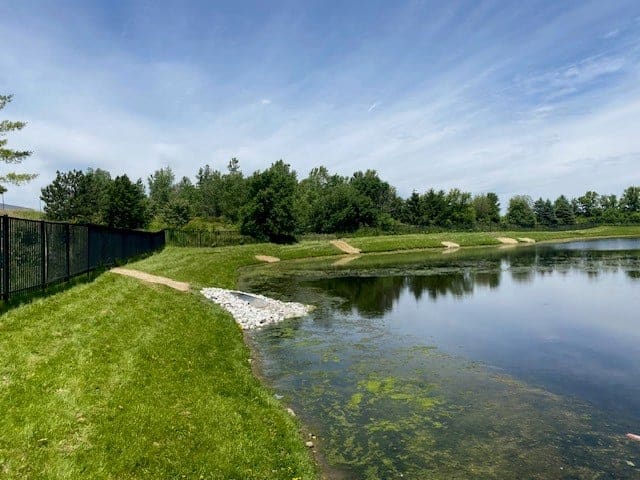
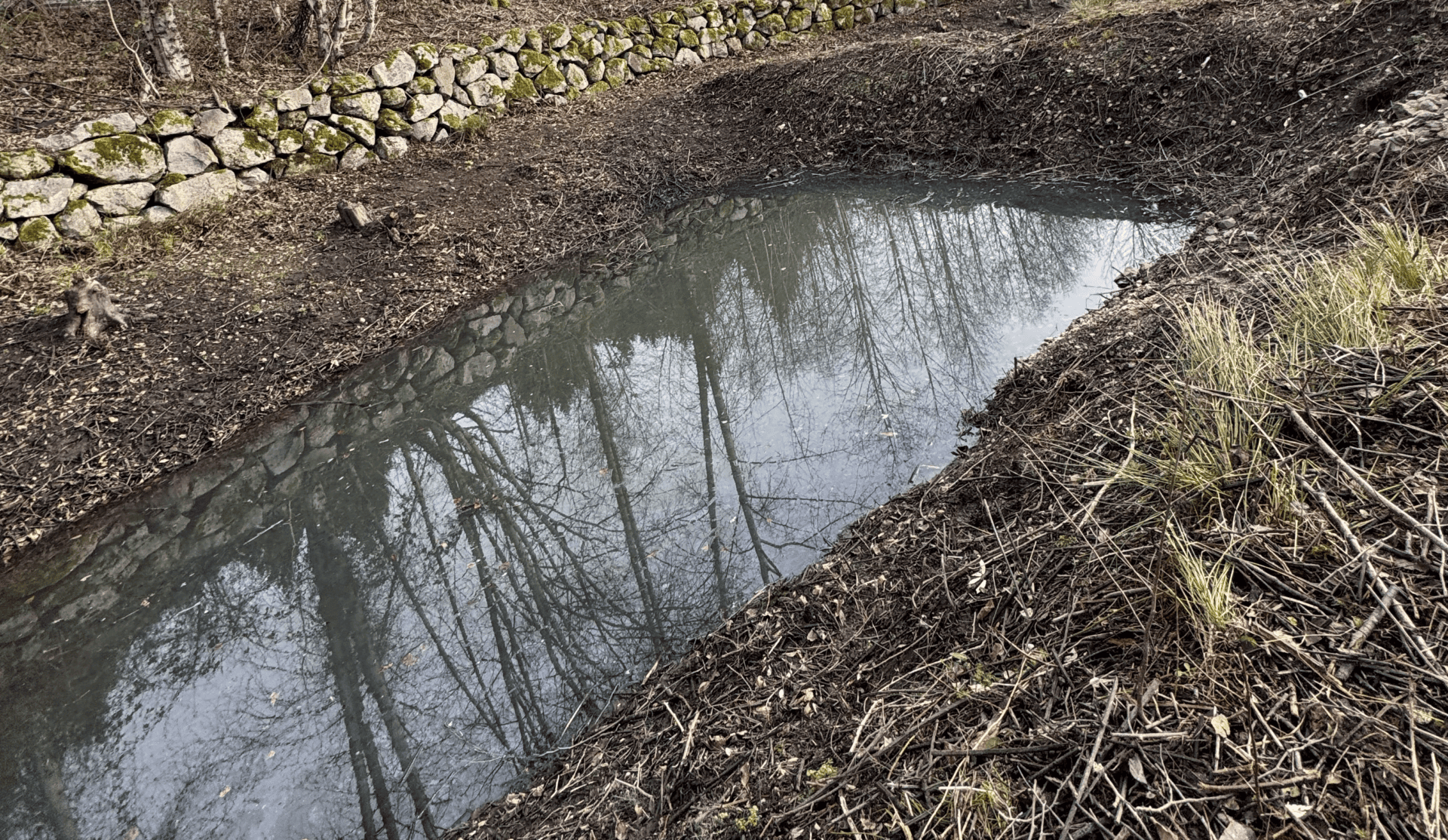
(a) The city council finds, determines, and declares it to be conducive to the health, welfare, safety and convenience of the city and its residents, and in compliance with the requirements of section 118-273, that a rebate program be established to reimburse contributors for qualifying stormwater best management practices, which help to enhance the water quality of stormwater runoff and/or to decrease the amount of stormwater runoff that enters the stormwater drainage system. The Environmental Protection Agency and Iowa Department of Natural Resources have mandated that municipalities promote the use of stormwater best management practices to address water quality and quantity issues. The goals of this program are to create a cost effective and sustainable incentive for the construction of stormwater best management practices within the city, to increase public awareness of the need to control stormwater runoff and to educate the public about sustainable practices to control stormwater runoff. The city has allocated from the stormwater sewer user fee revenues a sum sufficient to provide a rebate, to contributors who elect to make qualifying improvements to their property within the corporate boundaries of Des Moines as described in section 118-296. The amount of the stormwater best management practices rebate program rebate shall be as described in section 118-296.
(b) The director or the director’s designee shall make a stormwater best management practices rebate provided in this division to contributors who meet the requirements of this division.
(c) The city shall have the right to suspend or terminate this program if the city council determines that continuation of such program is likely to have an adverse effect on sewer service collections so that the applicable bond rate covenants will not be met.
View State Page
Resources
Frequently Asked Questions
How does Des Moines calculate the stormwater management charge for a nonresidential property?
The city multiplies its ERU rate by the property’s total impervious area divided by 2,349 square feet, the size set for one Equivalent Residential Unit. Every nonresidential property pays at least one full ERU rate as a minimum, regardless of how small its footprint is. The ERU rate itself isn’t fixed permanently; the ordinance shows it climbing from $14.25 in 2020 to $16.35 by 2023, with the director authorized to recommend further adjustments to the city council as needed.
How does Des Moines handle stormwater billing for a property with multiple tenants sharing common impervious area?
For nonresidential properties with separately metered occupancy units sharing common impervious area, the director calculates and allocates the stormwater charge on a pro rata basis among the users. That matters for multi-tenant commercial properties like strip retail or office parks, where no single tenant controls the entire parking lot or roof area the charge is based on. Owners or occupants who disagree with how that allocation was calculated can appeal directly to the director.
How often does Des Moines re-survey properties to update stormwater billing?
At least once every ten years, with nonresidential properties specifically surveyed to determine actual impervious square footage and that data kept current between full surveys. The stormwater charge is calculated on that measured impervious area unless the owner exercises the appeal option, in which case the charge gets recalculated through the formal appeal process instead.
Can I get money back for adding stormwater improvements to my Des Moines property?
Yes, through the city’s stormwater best management practices rebate program, funded out of stormwater utility fee revenue specifically to reimburse property owners for qualifying improvements that reduce runoff or improve its quality. The program exists partly because the EPA and Iowa DNR require municipalities to promote these practices, but it isn’t guaranteed to run indefinitely: the city council can suspend or terminate it if continuing the rebates would threaten the utility’s bond rate covenants.
The information on this page is provided for general informational purposes only and is not legal advice. Regulations change frequently — AQUALIS makes no warranty as to the accuracy or completeness of this content, and any reliance on it is at your own risk. Consult a qualified professional or your local regulatory authority to confirm requirements applicable to your specific property.