

Last Updated 08/14/2026
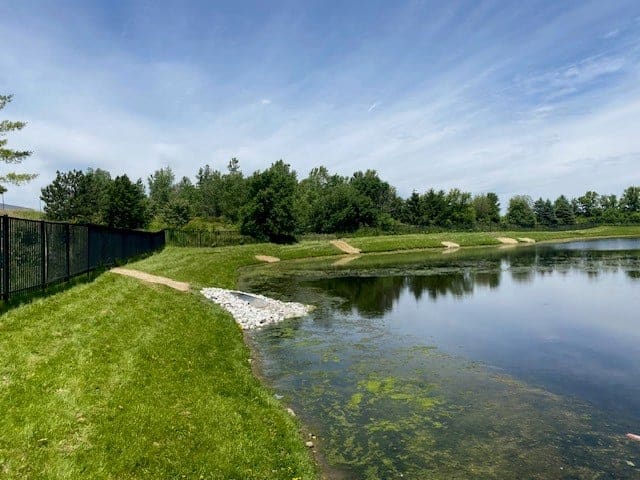
The Department of Natural Resources manages water quality through the implementation of the State’s water quality standards. These standards are found in Chapter 61 of the Iowa Administrative Code. The State’s water quality standards help ensure that all Iowans have surface waters that are fishable and swimmable to the fullest extent practicable and water resources that are put to their best beneficial uses.
Years after the Clean Water Act of 1972 was adopted, EPA completed rules to include storm water discharges in the NPDES permit program. Since Iowa was delegated the NPDES program for wastewater discharges, delegation was requested for storm water discharges as well. Information regarding the storm water permit program and how it is managed by the Iowa DNR can be found in the following pages:
- Online Storm Water General Permit Application – Submit Notices of Intent and Search General Permit Authorizations
- Understanding Storm Water NPDES Permitting Requirements
- Storm Water Permit Application Options
- Iowa Storm Water Management Manual
- State Revolving Fund – Offers low-interest loans for storm water practices that protect water quality. Eligible borrowers include both public and private entities.
Any discharge from a facility or construction site that may temporarily degrade an Outstanding National Resource Water or Outstanding State Resource Water is required to be permitted by an individual NPDES permit, as stipulated in subparagraph 567-64.7(2)f.(5) of the Iowa Administrative Code and in the Iowa Antidegradation Implementation Procedure. General permit coverage is not available for these discharges. The list of these waters is located in Appendix B of the Antidegradation Implementation Procedure.
Frequently Asked Questions
Which agency oversees stormwater discharge permits in Iowa?
The Iowa Department of Natural Resources administers the program, having been delegated authority for stormwater discharges under the NPDES framework after already holding delegation for wastewater discharges under the Clean Water Act. The DNR’s water quality standards, found in Chapter 61 of the Iowa Administrative Code, are built around a goal of keeping the state’s surface waters fishable and swimmable to the fullest extent practicable.
Does every facility in Iowa need a stormwater discharge permit?
Not automatically, but the state has published specific guidance on who’s required to apply, since coverage depends on the type of facility, construction activity or industrial classification involved. The DNR maintains an online application system for submitting Notices of Intent and searching existing general permit authorizations, along with detailed permitting requirement guidance for property owners trying to determine their own obligation before starting a project.
What happens if my discharge could affect one of Iowa's Outstanding Resource Waters?
General permit coverage isn’t available. Any discharge from a facility or construction site with the potential to temporarily degrade an Outstanding National Resource Water or Outstanding State Resource Water requires an individual NPDES permit instead, under the state’s Antidegradation Implementation Procedure. These waters are specifically listed in Appendix B of that procedure, so confirming whether a project sits near one of these designated waters is a necessary step before assuming general permit coverage will apply.
Does Iowa offer financial help for stormwater management projects?
Yes, through the State Revolving Fund, which provides low-interest loans for stormwater practices that protect water quality. Both public and private entities are eligible to borrow, which makes it a genuine funding option for a commercial property owner planning a larger stormwater retrofit or best management practice installation, not just a resource limited to municipalities.