


Last Updated 08/17/2026
Wastewater Discharge
Kentucky Stormwater Laws and Regulations
The Clean Water Act (CWA) (1972) was amended to prohibit the discharge of any pollutant to the waters of the United States from a point source unless authorized by a National Pollutant Discharge Elimination System (NPDES) permit. Since amending the CWA in 1987, there is increasing evidence that there are additional and more diffuse sources of surface water pollution. Specifically, stormwater runoff draining large surface areas (agriculture and urban lands) were found to be major causes of water quality impairment and non-attainment of designated beneficial uses. The term “designated use” is a goal, defined for a water body as the uses society, through various units of governments, determines should be attained in the water body. The primary federal regulation pushing communities towards the goal of “fishable and swimmable water” is the Clean Water Act. Sections of the Clean Water Act which specifically are relevant to stormwater address:
- Regulation of stormwater discharges
- Water quality standards for water bodies receiving stormwater runoff
- Implications of non-attainment of water quality standards
As part of the MS4 Phase II Final Rule promulgated by the U.S. Environmental Protection Agency (EPA) in 1999 (40 CFR 122.32), Departments of Transportation were identified as regulated MS4 entities. The KDOW regulated KYTC under the general stormwater permit (KYG20) as a co-permittee with other MS4s until the issuance of KYTC’s individual stormwater permit (KYS000003) effective October 1, 2012. Pursuant to KYS000003, KYTC is a Phase II regulated entity with authorization to discharge stormwater runoff into receiving waters of the Commonwealth. The permit applies to KYTC’s MS4 conveyances and outfalls to the Waters of the Commonwealth for KYTC facilities and rights-of-way located within the urbanized boundaries of the MS4s across the Commonwealth of Kentucky.
The primary objective of the permit is the reduction of pollutant discharges to the Maximum Extent Practicable (MEP) from facilities and rights-of-way covered under KYTC’s MS4 permit. KYTC is required under the 2012 MS4 Stormwater permit to address the following Minimum Control Measures (MCMs) by developing and implementing Best Management Practices (BMPs) which will allow KYTC to document its methods for improvements in runoff water quality and/or decreases in pollutants being discharged. The MCMs are listed below:
1. Public Education and Outreach Requirements
2. Public Involvement and Participation Requirements
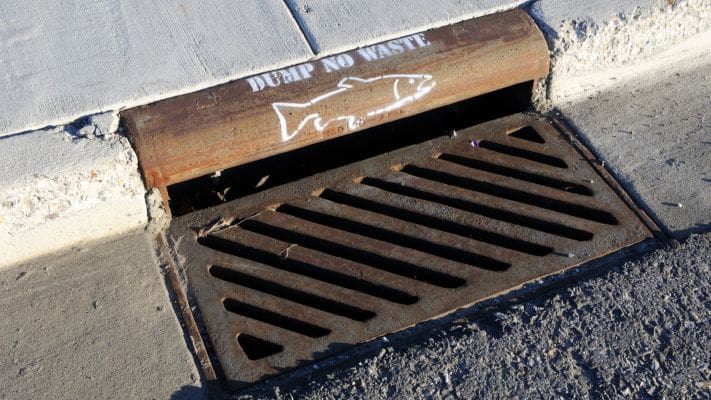
3. Illicit Discharge Detection and Elimination
4. Construction Site Stormwater Runoff Control Requirements
5. Post-Construction in New Development and Redevelopment
6. Pollution Prevention/Good Housekeeping
7. Reporting and Records Retention
KYTC is to implement the practices, policies, procedures and stormwater controls contained in the permit and addressed in this plan throughout the regulated area. KYTC is required to develop and administer a Storm Water Quality Management Plan (SWQMP) and update as necessary to maintain compliance with the KPDES permit.
Other regulatory requirements also impact KYTC’s MS4 program. The Total Maximum Daily Load (TMDL) program, established under Section 303(d) of the Clean Water Act (33 USC 1313) focuses on identifying and restoring polluted rivers, streams, lakes and other surface waters. A TMDL is a written, quantitative assessment of water quality problems in a water body and contributing sources of pollution. The TMDL specifies the minimum amount of a pollutant that can exist in a waterbody for it to achieve its designated use and meet Water Quality Standards (WQS), allocates pollutant load reductions, and provides the basis for taking actions needed to restore the water quality.
View State Page
Frequently Asked Questions
Does every discharge into Kentucky's waters need a permit?
Yes. All discharges to waters of the Commonwealth require authorization through the Kentucky Pollutant Discharge Elimination System, and that permit includes effluent limitations developed from both technology-based and water quality-based criteria. Kentucky offers several permit types depending on the situation, including Individual Permits, General Permits, Kentucky Inter-System Operations Permits and Kentucky No Discharge Operational Permits, so the right application depends on what kind of discharge a property is dealing with.
How does Kentucky determine what pollutant limits go into a KPDES permit?
The Division of Water follows its published General Procedures for Limitations Development to set the specific effluent limitations included in each permit, weighing both what treatment technology can achieve and what the receiving water body’s own quality standards require. That dual approach means a permit’s limits aren’t arbitrary. They’re calibrated to the specific water body a discharge is entering, which is part of why permit requirements can vary meaningfully across different sites even for similar types of discharge.
What is a TMDL, and why would it matter to a Kentucky property owner?
A Total Maximum Daily Load is a written, quantitative assessment of a specific water body’s pollution problems, established under the Clean Water Act to identify and restore impaired rivers, streams and lakes. A TMDL sets the minimum amount of a given pollutant a waterbody can handle and still meet its designated use, then allocates reductions among the sources contributing to it. A property discharging into a water body with an active TMDL may face more specific pollutant limits than one discharging into an unimpaired stream, since the TMDL directly shapes what a downstream KPDES permit can allow.
What does Kentucky's stormwater program require of state transportation infrastructure?
The Kentucky Transportation Cabinet operates under its own individual MS4 stormwater permit, addressing seven required program areas, from illicit discharge detection to construction site runoff control and pollution prevention. It’s a useful reference point for private property owners too, since KYTC’s program illustrates the same core minimum control measures, like public education, post-construction runoff management and recordkeeping, that most municipal stormwater programs across Kentucky are built around at a smaller scale.
The information on this page is provided for general informational purposes only and is not legal advice. Regulations change frequently — AQUALIS makes no warranty as to the accuracy or completeness of this content, and any reliance on it is at your own risk. Consult a qualified professional or your local regulatory authority to confirm requirements applicable to your specific property.