
Last Updated 08/21/2026
Excerpt from Michigan Stormwater BMP Manual
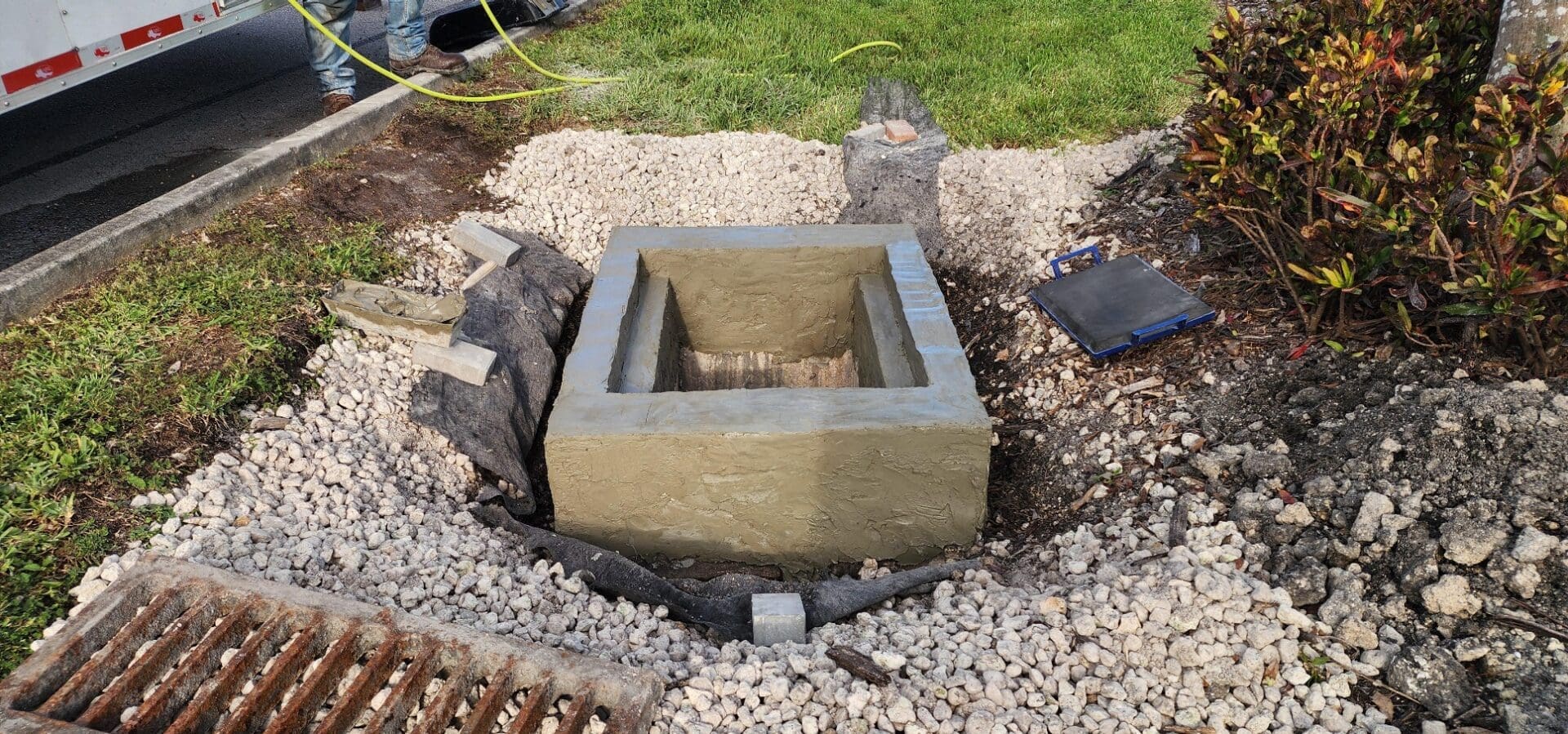
Catch Basin
Maintenance
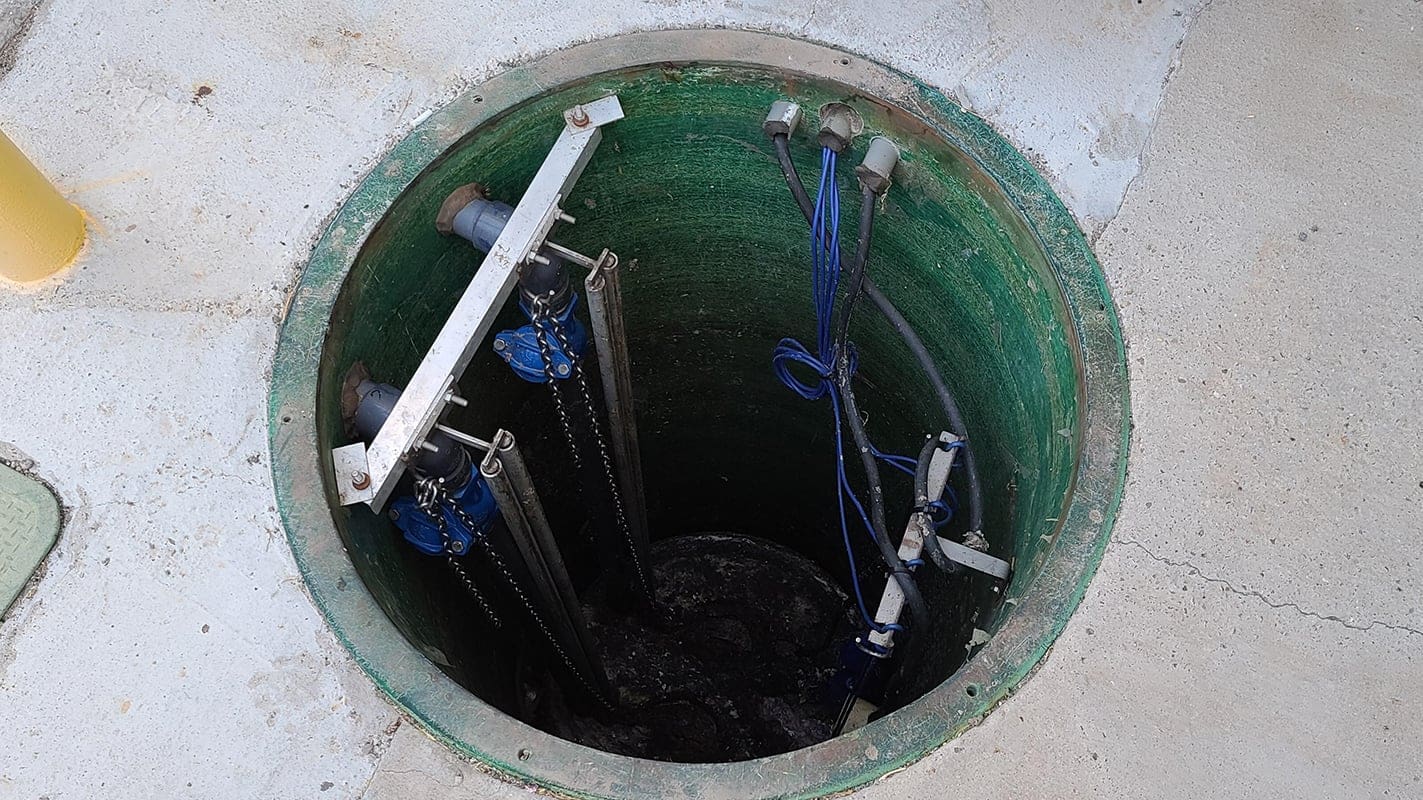
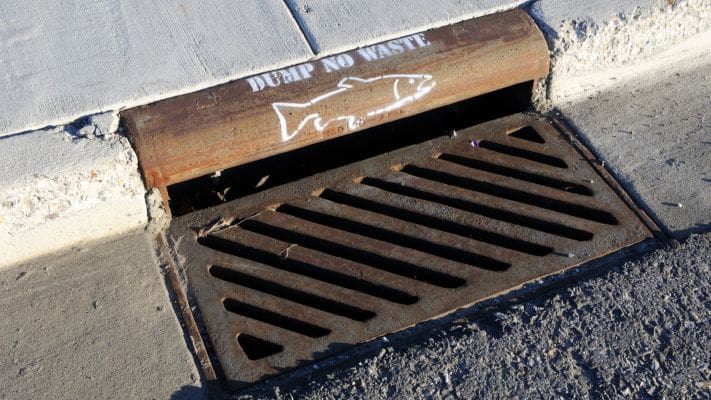
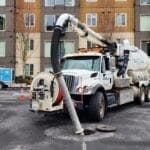
The preferred method of material removal from catch basins is using a sewer vacuum, referred to as a vactor truck.
Some references recommend catch basin cleaning when the sediment height in the sump gets up to 0.3 meters (one foot) below the outlet pipe invert. Other references recommend clean-out when the sediment depth reaches anywhere from 30 percent to 50 percent of total sump depth. Too-infrequent cleaning can result in sumps filling up to a point where any sediment entering catch basins simply passes on through the system. Sumps that are too full of material are also more prone, at lower flows, to re-suspension and passage of any previously settled material.
One study (Herrera Environmental Consultants, Inc., 2006) suggests the following clean-out frequencies, based on the land use draining to a given catch basin:
– Industrial: quarterly to semi-annually
– Commercial: semi-annually
– Residential: annually
This study also states that, based on a review of previous monitoring studies, there is a point of diminishing returns. That is, above a certain clean-out frequency, no more water quality benefit is gained, because so little material has accumulated since the previous clean-out.
Therefore, the clean-out frequencies cited above should only be used as a guideline or a starting point. Rather than relying completely on arbitrary, fixed maintenance schedules, operators should monitor and track their storm sewer systems to determine how quickly catch basins sumps fill up. They should then base their clean-out frequency on that monitoring data, to maximize the amount of residue obtained, and water quality benefit provided.
The combined solid and liquid residue generated from cleaning out catch basins is legally defined as “liquid industrial waste” in Part 121, Liquid Industrial Wastes, of the Natural Resources and Environmental Protection Act, 1994 PA 451, as amended, (NREPA)and is subject to all the requirements of that legislation. Refer to MDEQ (2007) guidance for proper handling, transportation, and disposal of material generated by cleaning catch basins.
Infiltration Trench
Maintenance
A very high failure rate occurs with infiltration trenches if they are not maintained. The most critical maintenance item for this BMP is the periodic removal of accumulated sediment. If sediment is allowed to accumulate, the storage volume of the trench for wastewater will become reduced as the space between rocks is filled with sediment. Surface soils can become clogged and the trench will cease to operate as designed. Normally, total rehabilitation of the trench will be needed if it becomes clogged.
Total rehabilitation can be avoided if filter fabric is placed 6 to 12 inches below the surface of the trench. If failure occurs, only the portion of the trench above the filter fabric will require replacement. This is most useful where systems to remove course sediment have a high probability of failure.
The observation well should be checked several times within the first few months of operation to be sure the trench is operating correctly. The well should be checked annually thereafter to determine when rehabilitation is needed.
Where Catch Basins or Oil/Grit Separators are used, the sediment and oil accumulated within them must be periodically removed. Follow the maintenance schedule in the BMP. Debris which can clog the inlets or outlets must also be removed.
Other maintenance items include mowing Buffer/Filter Strips. Follow specifications in the Buffer/Filter Strip BMP.
Eroding or barren areas must be revegetated as soon as possible.
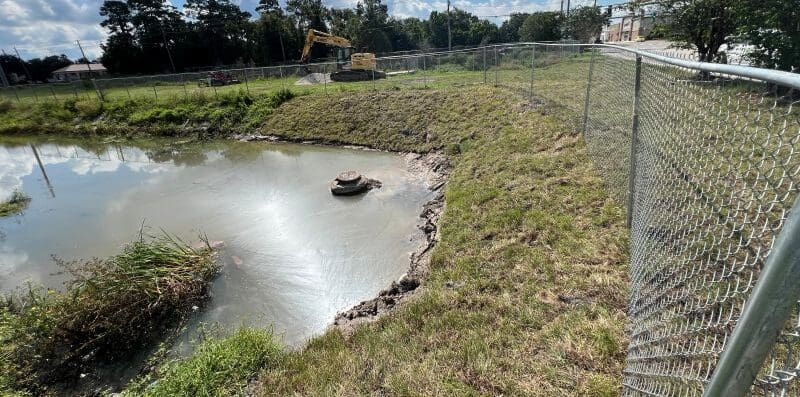
Wet Detention Basin
Maintenance
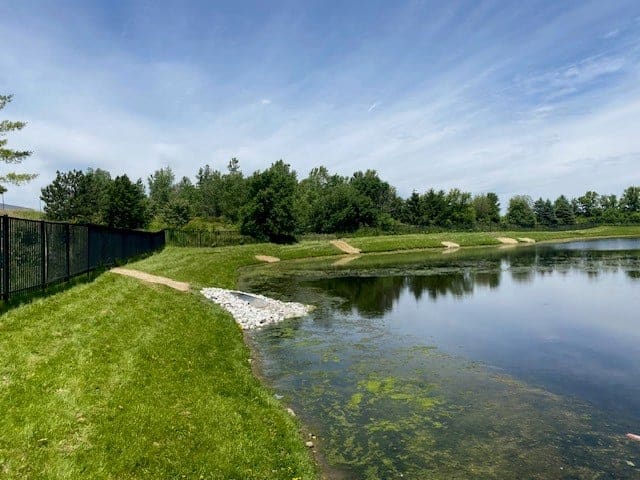
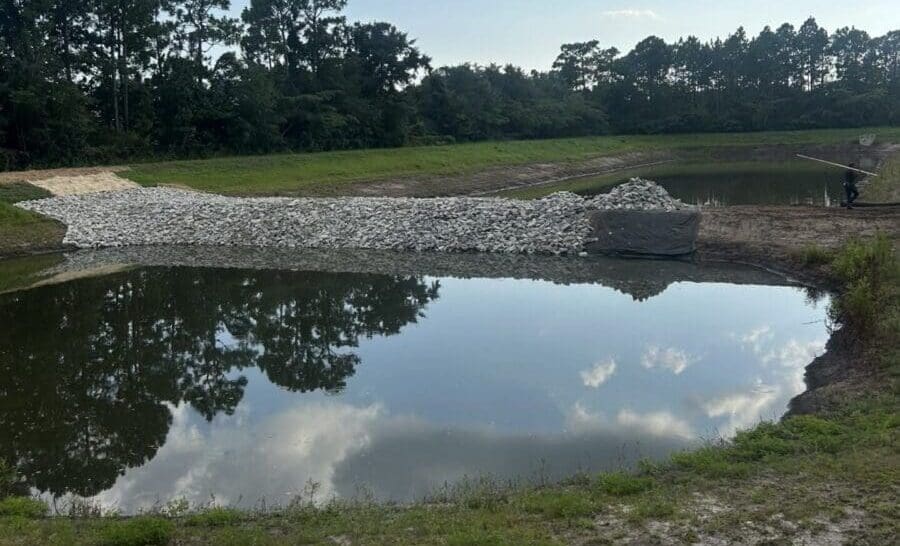
Regular maintenance includes mowing the buffer/filter strip and removing debris from the basin. The side banks must be mowed regularly to prevent woody plant growth. If maintained as a lawn, mowing is much more frequent. If maintained as a meadow, mowing can be reduced to twice a year.
The basin should be inspected regularly during wet weather. Particular attention should be given to the inlet and outlet structures.
If properly designed, sediment removal from the basin will only be necessary every five to ten years. Excessive algae must be removed to prevent odors and to maintain nutrient removal capacity.
Any eroded banks must be stabilized as soon as possible.
Porous Asphalt Pavement
Maintenance
All porous pavement should be inspected several times in the first few months after construction, and at least annually thereafter. Inspections should be conducted after large storms to check for surface ponding that might indicate local or widespread clogging. If severe clogging occurs, the entire structure may have to be replaced.
The porous pavement surface should be vacuum swept at least four times per year, followed by high pressure jet hosing to keep the asphalt pores open.
Spot clogging of the porous pavement layer can be relieved by drilling half-inch holes through the porous asphalt layer every few feet. In cases where clogging occurs in a low spot in the pavement, it may be advisable to install a drop inlet to route water into the stone reservoir.
Potholes and cracks can be repaired using conventional, non-porous patching mixes as long as the cumulative area repaired does not exceed 10% of the parking lot area.
Stormwater Conveyance Channel
Maintenance
At a minimum, check all constructed channels after each storm which meets or exceeds the design storm. On riprap-lined waterways, check for scouring below the riprap layer, and be sure the stones have not been dislodged by the flow.
Particular attention should be paid to the outlet of the channel. If erosion is occurring at the outlet, appropriate energy dissipation measures should be taken.
Sediment should be removed from riprap-lined channels if it reduces the capacity of the channel.
Excerpt from Chapter 8 Stormwater Storage facilities
8.5 MAINTENANCE
8.5.1 Introduction
Storage facilities are often used in urban drainage systems to temporarily store or detain excess stormwater runoff and then release it at a regulated rate to downstream areas. Using this approach, runoff is stored in constructed or natural basins from which it is released continually until the water elevation in the facility reaches its design dry-weather stage. To function properly, the storage volume must be maintained at its design level and outlet facilities must be kept open and free from obstructions or clogging.
An important step in the design process is identifying whether special provision specifications are warranted to properly construct or maintain proposed storage facilities. To minimize long-term operational costs, storage facilities that require extensive maintenance are discouraged. The following maintenance problems are typical of urban detention facilities, and facilities shall be designed to minimize these problems:
- Grass and vegetation maintenance,
- Sedimentation control,
- Bank deterioration,
- Standing water or soggy surfaces,
- Mosquito control,
- Blockage of outlet structures,
- Litter accumulation, and
- Maintenance of fences and perimeter plantings.
Proper design should focus on the elimination or reduction of maintenance requirements by addressing the potential for problems to develop.
- Both weed growth and grass maintenance may be addressed by constructing side slopes that can be maintained using available power-driven equipment, such as tractor mowers.
- Constructing traps to remove sediment may control sedimentation. Sediment traps also reduce erosion and sediment transport in low-flow channels.
- Bank deterioration can be controlled with protective lining or by limiting bank slopes.
- Standing water or soggy surfaces may be eliminated by sloping basin bottoms toward the outlet, constructing low-flow pilot channels across basin bottoms from the inlet to the outlet, or by constructing underdrain facilities to lower water tables.
- In general, when the above problems are addressed, mosquito control will not be a major problem.
- Outlet structures should be selected to minimize the possibility of blockage (i.e., very small pipes tend to block quite easily and should be avoided). Weirs are recommended with either sheet piling or earth embankment weirs.
- Finally, one way to deal with the maintenance associated with litter and damage to fences and perimeter plantings is to locate the facility for easy access where this maintenance can be conducted on a regular basis.
8.5.2 Maintenance Program
A good maintenance program should include preventive maintenance as well as corrective maintenance. The maintenance program should include:
- periodic inspection, adjustment, replacement;
- preventive maintenance – doing maintenance to prevent problems from occurring, such as removal of debris at inlets; and
- corrective maintenance – making changes to the system so that system functions as intended at the lowest annualized cost, such as resetting an inlet to reduce ponding.
The major prerequisite for a preventive and corrective type of program is an assured source of funds. The other component of a maintenance program, emergency repairs, is characterized by crisis-type responses to problems that go unrecognized, or are unattended, over a lengthy period of time. Often, such problems are treated as emergencies and, in some instances, little time is available for study, design, competitive bidding, etc
8.5.3 Inspection Intervals
Inspection of major detention facilities should be made as frequently as experience shows necessary, perhaps monthly as a minimum and more often in wet seasons. Where debris is a problem, inspections must be spaced according to debris generation. In any event, it is important to conduct inspections and cleanup work following major individual runoff events. It is sometimes necessary to make inspections during rainstorms when intense rainfall occurs.
Besides removing debris blockages during inspections, mechanical equipment such as generators, float valves, pumps, discharge controls, and other electrical and mechanical equipment should be checked and adjusted as necessary.
Inspect detention basins once a year, preferably during wet weather. Inspect after major flood events. Basins should be mowed as required (at least twice a year) and sediment should be removed every 5 to 10 years.
Infiltration facilities should be inspected at least once a year.
Observation of time to drain is an early indicator of plugging and need for maintenance. Maintenance would involve removal of silt material or debris that lead to reduction of infiltration capacity of the basin. Returning basin to design grade is critical to keep design storage volume.
8.5.4 Maintenance Tasks
Maintenance tasks can be grouped in three general categories:
- aesthetic maintenance,
- nuisance maintenance, and
- operation maintenance.
Of these, the most important, from the standpoint of health and safety, is operation maintenance.
8.5.5 Operation Maintenance
This category can be characterized as that level of maintenance required to ensure against failure of major structural components and/or flow controls, and to ensure that the facility continues to function as designed. Neglecting this level of maintenance could cause dam failure and subsequent property damage as well as possible loss of life. In addition, neglect often causes a facility to cease functioning as it was originally designed to do. A program of scheduled, periodic inspections of the facility is essential to recognize potential structural maintenance needs. The following is a partial list of items that should be checked periodically and corrective action taken as required:
- settling of embankment,
- woody growth on the embankment (roots can create channels for dam leakage and eventual failure),
- signs of piping (leakage) through embankment,
- signs of seepage or wet spots on the downstream face of an embankment (may require toe drains or chimney drains to solve problems),
- riprap failures,
- deterioration of primary and auxiliary spillways,
- various stage/outlet controls,
- effectiveness of debris racks,
- outlet channel conditions,
- safety features (access controls to hazardous areas),
- mechanical and electrical equipment (pumps, generators, automatic controls, etc.),
- access for maintenance equipment,
- availability of manufacturer’s mechanical and electrical information manuals, and availability of design information such as rating curves and tables for spillway flow, bypass flow, total flow, and storage and pump-out calculations.
In addition, the following actions should be taken on each facility, as required.
- Replace soil removed by rodent burrows.
- Inspect drainage systems and relief wells annually for proper functioning and clean out or replacement as necessary.
- Maintain riprap or other wave-protective measures and replace as needed.
- Remove and/or stabilize slide material as soon as practical. It may be necessary to construct a berm or flatten the slope.
- Replace eroded material and establish vegetation in eroded areas in emergency spillways, swales and other areas.
- Repair any unusual seepages, boils, or settlements in fill areas, or sinkholes in pool areas.
Also, observations should be made of any changes in topography, downstream drainage systems or land uses that may have a bearing on the operational effectiveness and safety of detention facilities.
Infiltration facilities should be promptly removed of any accumulated sediment. The pervious bed of the infiltration facility should be replaced if no longer functioning.
8.5.6 Volume Maintenance
One of the most important variables in the design of a detention facility is the volume available for storage of runoff. If a detention facility is allowed to accumulate sediment and debris which will decrease the storage volume, the ability of the facility to function as designed can be greatly reduced. Thus it is essential to maintain the design volume. To facilitate the inspection of the facilities for volume control, it is recommended that some marker be installed in the detention facility to indicate the maximum level for silt buildup before the facility must be dredged or cleaned. This marker could be a small pipe with a stripe or suitable indicator at the cleanout level. A suitable indicator could also be place on the outlet device or in some location which can be easily identified during the inspection process.
View State Page
Frequently Asked Questions
How often should catch basins be cleaned out on a commercial property in Michigan?
Clean-out frequency depends on land use. Industrial properties generally need quarterly to semiannual cleaning, commercial properties need semiannual cleaning, and residential properties can typically go a full year between cleanings. These figures are only a starting point. The most reliable approach is monitoring how quickly sediment accumulates in a specific system and setting a clean-out schedule based on that data rather than a fixed calendar.
What happens if catch basin sediment isn't removed on schedule in Michigan?
Once sediment builds past a certain point in the sump, whatever comes in next simply passes through the system untreated, and previously settled material becomes more likely to re-suspend at even low flow rates. Cleaning too early wastes resources since little benefit is gained above a certain frequency, but waiting too long defeats the system’s purpose entirely.
Does Michigan regulate the waste generated from cleaning out catch basins?
Yes. The combined solid and liquid residue from catch basin cleaning is legally defined as liquid industrial waste under the state’s Natural Resources and Environmental Protection Act, and it’s subject to all the handling, transportation, and disposal requirements that classification carries.
How often do infiltration trenches and wet detention basins need sediment removal in Michigan?
Infiltration trenches need far more frequent attention. Accumulated sediment reduces their storage volume and can clog the surface soils entirely, often requiring full rehabilitation once that happens. A properly designed wet detention basin or extended detention basin, by contrast, typically only needs sediment removal every five to 10 years, though regular mowing, debris removal, and inspection during wet weather still apply in between.
What inspection schedule applies to stormwater detention facilities in Michigan?
Major detention facilities should be inspected as frequently as experience shows is necessary, monthly at a minimum and more often during wet seasons. Inspections should also follow any major storm event. Basins specifically should be inspected at least once a year, mowed at least twice a year, and checked for signs of embankment settling, seepage, or structural deterioration that could point to bigger problems.
How often does porous pavement need maintenance on a Michigan commercial property?
The surface should be vacuum swept at least four times a year, followed by high-pressure jet hosing to keep the pavement’s pores open and functioning. Inspections should happen several times in the first few months after installation and at least annually after that, with extra attention paid after large storms to catch signs of clogging before it becomes severe enough to require replacing the entire structure.
The information on this page is provided for general informational purposes only and is not legal advice. Regulations change frequently — AQUALIS makes no warranty as to the accuracy or completeness of this content, and any reliance on it is at your own risk. Consult a qualified professional or your local regulatory authority to confirm requirements applicable to your specific property.
Did you receive an NOV? Have an urgent need? We can help.
Notices of Violation (NOVs) or Corrective Notices should be taken seriously. Contact AQUALIS today to learn how to resolve the issue and comply with regulations.