

Last Updated 08/20/2026
Engineering Design and Construction Standards
8.03 Post Construction Stormwater Management
E. Structural & Non-structural Best Management Practices
Performance Standards
- Peak Discharge: There shall be no increase in stormwater runoff peak discharge rate leaving the project site between the pre- and post- development conditions for, at a minimum, the 1-Year, 24-Hour Storm (2.83 inches). Runoff volume drawdown time shall be a minimum of twenty-four (24) hours, but not more than one hundred and twenty (120) hours.
- Total Nitrogen: The total nitrogen (TN) export limitations, per the Neuse Basin Rules, 15A NCAC 2B.0233, will be required throughout the Town and extra territorial jurisdiction. The Town Council shall establish Fee in Lieu and may amend and update the fees and policies from time to time. Fee costs and policies will be outlined in Section 8.03 of this Design Manual.
- 85% Average Annual TSS: A minimum of 85% average annual removal for Total Suspended Solids (note: for most SCMs this will be based on the 1 inch run off volume, some specific SCMs may be based on alternative design criteria. On occasion NCDENR BMP Stormwater Manual will require 90% TSS removal.)
- General: General engineering design criteria for all projects shall be in accordance with 15A NCAC 2H .1008c, as explained in the Design Manual;
- Stream Setback: All Built-Upon Area shall be at a minimum of 30-feet landward of all perennial and intermittent surface waters, as described in Section 7.06 of the UDO. “Where applicable, stormwater management facilities may be located within the outer 50’ of the TOHS riparian buffer but are not permitted within the Neuse Riparian Buffers unless specifically approved in writing by the TOHS Executive Director of Utilities and Infrastructure Services or designee. SCMs outfalls are permitted in riparian buffers as consistent with NCDENR policies and 401 approvals.” Additionally, Section 8.03 of this manual outlines the TOHS Restored Riparian Buffer requirements for removed ponds.
Stormwater Control Measures (SCMs)
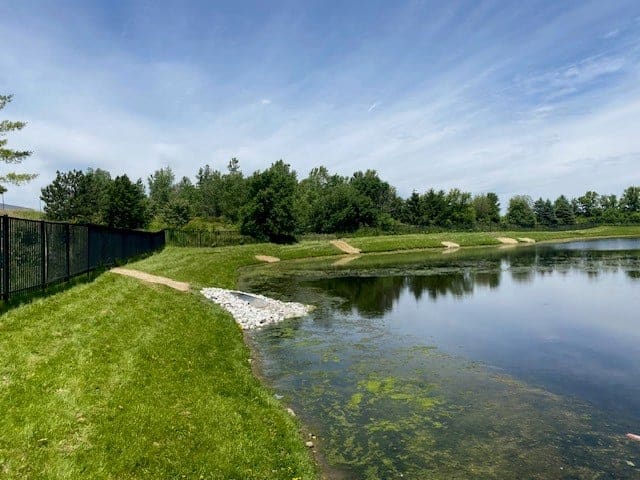
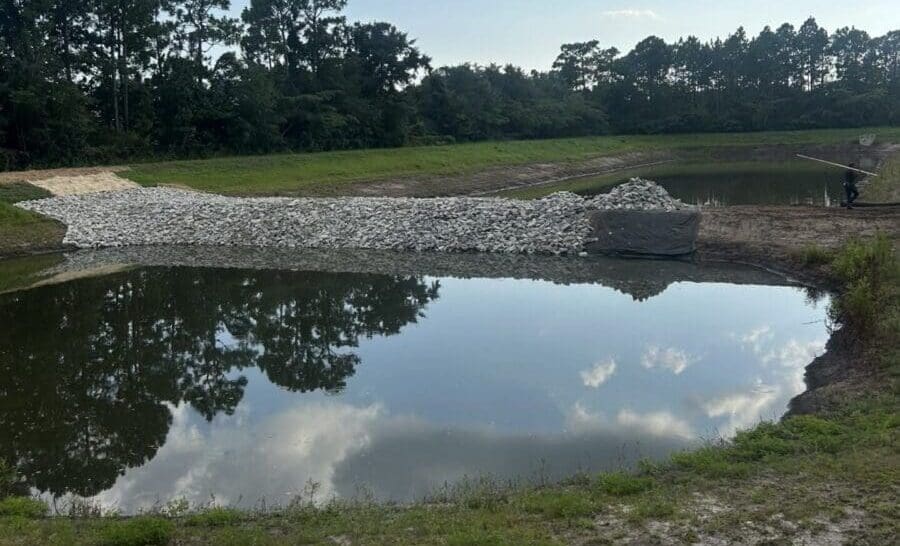
SCMs should be designed according to the latest version of NCDEQ Minimum Design Criteria (MDC). Additional design requirements may be necessary for SCMs that are utilized as detention basins for flood control.
Because they are permanent features, choosing the correct SCM or group of SCMs for a site is an important decision that should be thoroughly and carefully considered at the outset. Because every site is unique and has its own challenges, there is no one SCM solution that is best suited for every site. When selecting a SCM for a site:
-
- Understand which SCMs will work within the physical constraints of the site,
- Evaluate how the possible SCMs address the regulatory requirements relevant to the site, including pollutant removal and water quantity control, and
- Consider other factors such as construction costs, maintenance and access, ownership issues, safety, aesthetic, and environmental factors at the site.
Best Management Practices (BMPs)
Best Management Practices are passive or programmatic and tend to be source control or pollution prevention policies and programs that reduce pollution in runoff by reducing the opportunity for the stormwater runoff to be exposed to the pollutants. BMPs usually work by changing behavior through government regulation (e.g., planning and ordinances), and/or economic instruments (density, etc.). BMPs also include institutional, educational or pollution prevention practices.
Operations and Maintenance Requirements
SCMs are crucial in protecting water quality from the impacts of development projects. If designed correctly, SCMs can also be an aesthetic asset to the development. However, no matter how well they are designed and constructed, SCMs will not function correctly nor look attractive unless they are properly maintained. Most maintenance problems with SCMs are less costly to correct when they are caught early.
This section details operations, inspections and maintenance procedures for all SCMs. Inspection and Maintenance of each SCM is required through an Operation and Maintenance Agreement attached to the property deed. An example Operation and Maintenance Agreement is provided in Appendix D.
Inspection Procedures
Regular inspection and maintenance is an ongoing legal requirement after the SCM is constructed. Inspections must be completed quarterly and annually (certified by a qualified professional engineer) throughout the year and inspection records must be made available to the TOHS upon request and PE certifications shall be submitted to the Town annually.
Tables in this section provide the following information for each SCM type:
- Components of the SCM to be inspected,
- Types of problems possible with each component, and
- Appropriate remedies.
These tables provide a starting point; additional components or problems may arise with certain SCMs, the position of the SCM in the landscape, and/or individual circumstances.
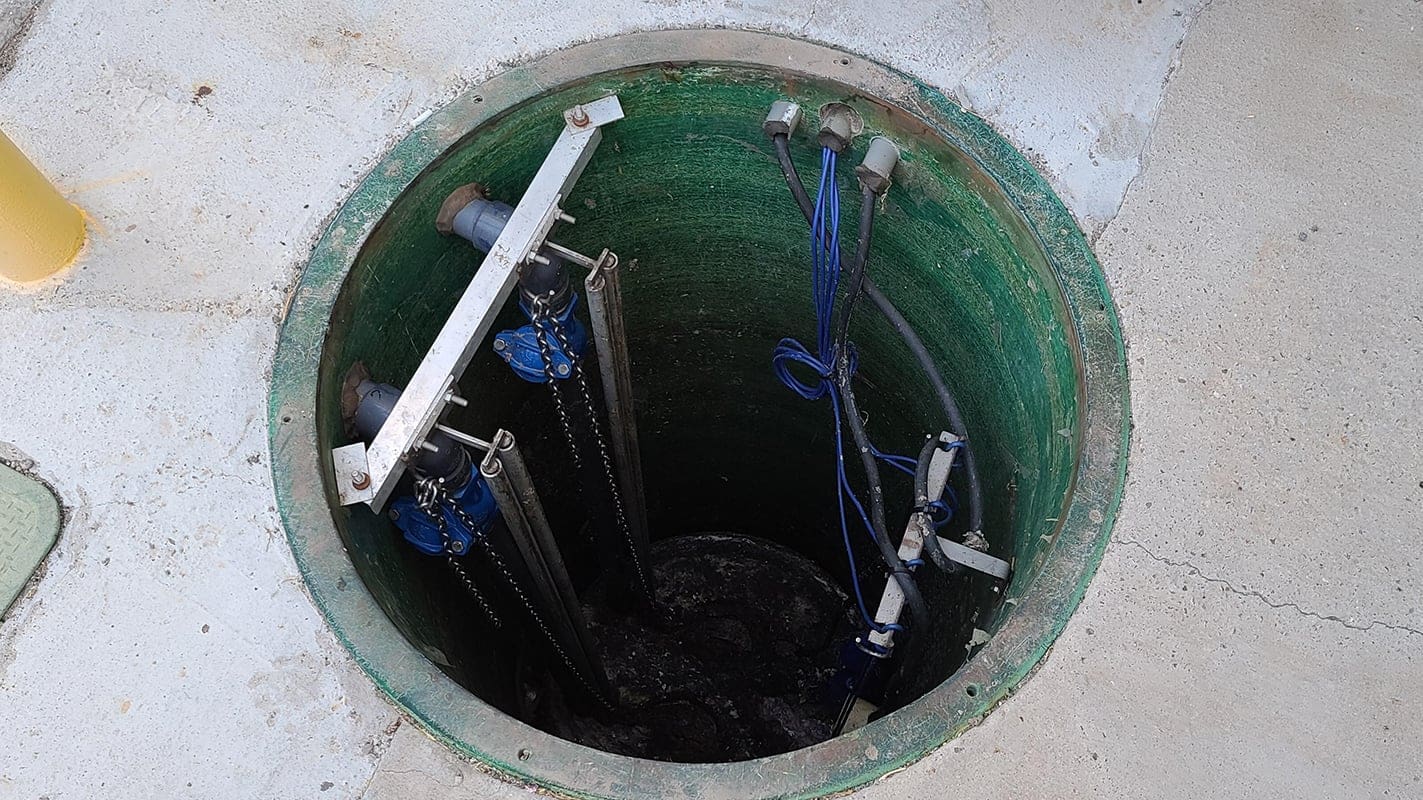
During each inspection, the inspector shall consult the appropriate Operations and Maintenance Table as described in this section and note which problems are seen and which remedies are recommended. The resulting inspections report will include any of the listed remedies required, as well as a narrative describing special circumstances and schedule for that individual SCM that needs to be addressed.
The Phase II Post-Construction Stormwater Ordinance
DIVISION 4. – PERFORMANCE AND MAINTENANCE
Sec. 8-260. – Function of BMPs as intended.
Sec. 8-264. – Operation and maintenance surety for structural BMPs.
- Stormwater maintenance agreement (SMA). An executed SMA is required to establish and outline the requirements of the maintenance surety. The SMA shall be approved by the engineering department prior to the transfer of maintenance responsibility from the original applicant, permit holder, or owner to the association or owner(s). For all structural BMPs required pursuant to this article the required SMA shall include all of the following provisions:
- Acknowledgment that the applicant, permit holder, owner(s) or association shall continuously operate and maintain the structural BMPs.
- Requiring the applicant, permit holder, owner(s) or association to maintain, repair and, if necessary, reconstruct the structural BMPs, and shall state the terms, conditions, and schedule of maintenance for the structural BMPs.
- Granting to the town a right of entry in the event that the engineering department has reason to believe it has become necessary to inspect, monitor, maintain, repair, or reconstruct the structural BMPs; however, in no case shall the right of entry, of itself, confer an obligation on the town to assume responsibility for the structural BMPs.
- A statement that this agreement shall not in any way diminish, limit, or restrict the right of the town to enforce any of its ordinances as authorized by law.
- A provision indemnifying and holding harmless the town for any costs and injuries arising from or related to the structural BMPs.
- All inspection records shall remain with the owner or responsible party. A copy of the approved operation & maintenance (O&M) manual for the structural BMPs, including a provision requiring an annual inspection and certification by a registered professional engineer.
- The SMA shall be executed by one of the following:
- The person(s) financially responsible,
- The owner(s) of the land, and
- Any registered agents.
Sec. 8-265. – Notice to owners.
- Deed recordation and indications on plat. The applicable SMA, O&M manual, and private drainage easement pertaining to every structural BMP shall be referenced on the final plat and shall be recorded at the expense of the owner with the county register of deeds upon final plat approval. The following statement shall be required on all plats that include structural BMPs:
“Structural Stormwater BMPs are contained in Private Drainage Easements shown on this plat and shall be operated and maintained as described in the executed Stormwater Maintenance Agreement and recorded Stormwater Operation and Maintenance Manual for this project.”
If no plat is recorded for the project, then the O&M manual and the easement shall be recorded at the expense of the owner with the county register of deeds, with the current owner’s name in the grantor index so as to appear in the chain of title of all subsequent purchasers under generally accepted searching principles. A certified copy of the recorded the O&M manual and the easement deed shall be given to the engineering department within 14 days following its recordation.
- Signage. Structural BMPs shall be posted with a conspicuous sign stating who is responsible for required maintenance and annual inspection, professional engineer’s certification, and the structural BMP’s purpose. The sign shall be maintained by the owner so as to remain visible and legible and shall otherwise comply with the town sign ordinances and the engineering design and construction standards.
Sec. 8-266. – Records of installation and maintenance activities
(1) Annual maintenance inspection and report. The person responsible for maintenance of any structural BMP installed pursuant to this article shall annually submit to the engineering department an inspection report and certification, from a qualified registered state professional engineer, performing services only in their area of competence. The inspection report and certification shall contain all of the following:
a. The name and address of the landowner;
b. The recorded book and page number of the lot of each structural BMP;
c. A statement that an inspection was made of all structural BMPs;
d. The date the inspection was made;
e. Statements that all inspected structural BMPs are performing properly and are in compliance with the terms and conditions of the approved O&M manual required by this article. If maintenance measures are required, a statement of what maintenance is required shall be included, including the schedule of performing the maintenance; and
f. The original signature and seal of the engineer.
Sec. 8-267. – Nuisance.
The owner of each structural BMP shall maintain it so as not to create or result in a nuisance condition. For the purpose of this section, nuisance includes, but is not limited to, the following:
(1) Structural BMPs that have maintenance issues such as overgrowth, trash accumulation, erosion, odor, standing water, mosquito infestation and other issues that could negatively affect the public.
(2) Structural BMPs that are in the need of repair that negatively affect the public, public rights of way or other properties.
View State Page
Frequently Asked Questions
What is post-construction stormwater management, and does it apply to my property in Holly Springs?
Post-construction stormwater management covers the ongoing responsibility to maintain the structural BMPs and open space on your property according to its approved stormwater plan, under the NPDES Phase II program Holly Springs operates as the permitting authority for. If your property in Holly Springs has a structural BMP installed under an approved plan, maintaining it is a continuous obligation that lasts for the life of the property, not just through construction. AQUALIS provides full post-construction stormwater management for property owners across Holly Springs, so BMPs stay compliant well after a project wraps up.
How often does Holly Springs require stormwater BMP inspections?
Holly Springs has one of the more detailed inspection schedules in the region. Property owners must arrange quarterly inspections by trained personnel, along with an additional inspection within 24 hours after any storm exceeding one inch of rainfall, plus an annual inspection that must be certified and sealed by a licensed professional engineer and filed with the town’s engineering department. Keeping up with this schedule on your own can be demanding. AQUALIS manages the full inspection cycle for Holly Springs property owners, from quarterly checks and storm-triggered inspections to the annual PE certification.
How quickly do I need to fix maintenance issues found during a Holly Springs stormwater inspection?
Any maintenance needs identified during a quarterly, semi-annual, or annual certification inspection in Holly Springs must be addressed within 60 days, unless the circumstances call for faster action. Letting an identified issue sit past that window puts a property at risk of a compliance problem before the next inspection even occurs. AQUALIS resolves maintenance issues on Holly Springs properties well within the town’s 60-day requirement, so corrective work never becomes a compliance gap.
What documentation do I need to keep for my stormwater BMP in Holly Springs?
Holly Springs requires property owners to maintain operation and maintenance logs for each structural BMP on their site, along with digital photographs taken at the time of inspection and again after any maintenance work is completed. Annual inspection reports sealed by a professional engineer must also be filed with the town. Falling behind on this recordkeeping can leave a property owner unable to demonstrate compliance when it matters most. AQUALIS keeps these logs, photographs, and sealed reports current for every Holly Springs property it services.
What is a Stormwater Maintenance Agreement, and does it stay with my Holly Springs property?
Before a performance surety is released, a Holly Springs property owner must execute a binding Stormwater Maintenance Agreement that outlines continuous operation and maintenance obligations, requires the annual PE inspection and certification, and is recorded with the county register of deeds and referenced on the final plat. This agreement transfers with the property to any future owner, so the obligation never lapses just because a site changes hands. AQUALIS reviews existing Stormwater Maintenance Agreements for Holly Springs property owners and manages the maintenance activity the agreement requires.
What happens if my property in Holly Springs falls behind on stormwater inspections or maintenance?
Because Holly Springs conducts inspections under its NPDES Phase II permitting authority, a property that misses a quarterly check, a storm-triggered inspection, or the annual PE certification is at risk of being flagged for noncompliance, which can lead to enforcement action from the town. Catching up after falling behind is far more difficult than staying current in the first place. AQUALIS provides non-compliance resolution and prevention for Holly Springs property owners, keeping inspection and maintenance schedules on track so violations don’t happen in the first place.
Where can property owners in Holly Springs get help with post-construction stormwater compliance?
Post-construction stormwater compliance in Holly Springs involves quarterly and storm-triggered inspections, annual PE certification, a 60-day correction window, detailed recordkeeping, a recorded Stormwater Maintenance Agreement, and a dedicated reserve fund. Managing all of this without dedicated stormwater staff is difficult for most property owners. AQUALIS offers complete post-construction stormwater management for Holly Springs property owners, covering inspections, maintenance, recordkeeping, and non-compliance resolution, so owners can meet the town’s requirements without managing the process themselves.
The information on this page is provided for general informational purposes only and is not legal advice. Regulations change frequently — AQUALIS makes no warranty as to the accuracy or completeness of this content, and any reliance on it is at your own risk. Consult a qualified professional or your local regulatory authority to confirm requirements applicable to your specific property.