

Did you receive a Notice of Violation (NOV)? Contact AQUALIS today to learn how to resolve the issue.

Back to Compliance
South Carolina Local Compliance

Town of Mount Pleasant

At AQUALIS, we know Mount Pleasant's sustainable water compliance standards and manage regulator relations for our clients.

It is our mission to help you become compliant with these stormwater, wastewater and drinking water regulations through inspections, maintenance, repairs and rehabilitation services. As your water compliance provider, we handle the regulatory guidelines specific to Mount Pleasant, South Carolina and ensure that our services meet the highest compliant procedures to keep you in compliance with local regulators.

Last Updated 08/06/2026

Stormwater Management and Water Quality Regulations of the Town of Mount Pleasant, South Carolina

Chapter 153

153.007 LICENSES AND PERMITS REQUIRED; COMPLETE PLANS TO BE FURNISHED; AND COMPLIANCE

 (A)   Licenses and permits.
 
      (1)   Before commencing any construction, clearing or grading on any commercial or residential tract lot, streets, road or any lands within the town limits, all necessary licenses and permits shall be obtained; and
 
      (2)   Complete plans, consisting of general and specific drawings, specifications and analysis, together with details to provide a comprehensive plan of the construction contemplated, shall be furnished to, and approved by, the town.
 
   (B)   Responsibility of developer.
 
      (1)   Permits and licenses, payments and notices. The developer and contractor shall procure all permits and licenses, pay all charges, fees, and taxes, and give all notice necessary and incident to the due and lawful prosecution of the work.
 
      (2)   Conduct of work. The developer shall at all times conduct the work in such a manner to:
 
         (a)   Provide for and insure the safety and convenience of the traveling public and of the residents along and adjacent to the streets or roads; and
 
         (b)   Offer the least practicable obstruction to the flow of traffic.
 
      (3)   Assumption of responsibilities. The developer and contractor shall assume their responsibilities to the public, or particularly that portion of the public that patronizes or abuts his or her development, and the developer and contractor shall at no time relinquish such responsibility by inferring that the responsibility lies with the municipality or any other organization.
 
      (4)   Safeguarding the work.
 
         (a)   The developer shall provide, erect, and maintain in good condition, all necessary barricades, suitable and sufficient lights, danger signals and other signs, and take all necessary precautions for the protection and safety of the workers, contractors, the public and others, in conformance with the Uniform Manual of Traffic Safety, federal, state and local safety codes and regulations.
 
         (b)   The developer shall indemnify agents and employees from all suits or claims of any character brought because of injuries or damages received or sustained by any person or property on account of operations of the developer; or on account of or in consequence of any neglect in safeguarding the work; or because of any act of omission, neglect, or misconduct of the developer or contractor.
 
      (5)   Correction of deficiencies. The developer shall be responsible for correcting any and all deficiencies in streets and stormwater management systems, resulting from faulty design or construction, for a period of two years from the time the streets and drainage system are accepted by the town, as evidenced by the recording of the final plat into the town’s system.
 
      (6)   Affidavit. The developer, engineer and prime contractor must sign a notarized affidavit certifying that the streets and drainage system have been built to all requirements of the town.

153.021 TOWN STORMWATER MANAGEMENT PROGRAM (SWMP).

  (A)   The SWMP developed by the town to comply with the NPDES stormwater permit serves as the basis for the town’s program implementation and administration. As amended from time to time by the town, the SWMP is hereby adopted for the life of the town’s stormwater system NPDES permit as the official operational program. The mapping and geographic information system developed as part of the SWMP shall serve as the official authoritative information source for program administration.
 
   (B)   The Town Engineer and Stormwater Program Manager shall implement and conduct the town’s operations according to the Town Stormwater Management Program. The SWMP serves as the basis for compliance with the NPDES stormwater permit granted to the town under the provisions of the Water Quality Act of 1987 and 40 C.F.R. § 122.26. This management program is more fully described in the NPDES stormwater permit, which defines the terms and conditions of the town’s authority to operate its stormwater system.
 
   (C)   By way of summary only, the SWMP includes the following mandated elements:
 
      (1)   A description of structural and source control measures to reduce pollutants from runoff from commercial and residential areas;
 
      (2)   A description of a program to implement and maintain structural and nonstructural best management practices to reduce pollutants in stormwater runoff from construction sites to the stormwater system.
 
      (3)   Illicit discharge program. [Reserved]
 
      (4)   Monitoring program. [Reserved]

153.042 DRAINAGE PLAN REQUIREMENTS.

 (A)   Storm drainage. A drainage system shall be designed and constructed to provide for the proper drainage of the surface water and the drainage area of which it is a part, to permit the unimpeded flow of natural watercourses, to provide for water quality control, and where necessary, water quality improvements. The information, plans, specifications, certifications and design evaluations described in the drainage master plan, preliminary plat checklist, or site plan checklist, whichever is appropriate, shall be submitted to the Town Engineer. Checklists shall be provided by the Department of Engineering and Development Services, and may be amended from time to time.
 
      (1)   Design and construction standards.
 
         (a)   Drainage systems shall be designed by a licensed engineer and constructed by the subdivider/developer consistent with the design principals and standards contained herein, described in the Town BMP manual and established by SCDHEC-OCRM.
 
         (b)   In all cases, drainage systems shall conform to cross sections, dimensions, erosion control measures and grades as shown on the approved construction plans.
 
      (2)   Watershed. The watershed containing the site shall be shown, and shall be extended to a natural watercourse or publicly maintained drainage facility that is adequate to receive the storm drainage.
 
      (3)   Connection to public storm sewers. Where adequate existing public storm sewers are reasonably accessible, as determined by the Director of Engineering and Development Services or his or her designee, the system proposed for the land being subdivided is required to be connected thereto.
 
      (4)   Ditches and swales.
 
         (a)   Open drainage ditches (a DITCH is a waterway with side slopes 3:1 or steeper) shall not be permitted in the town.
 
         (b)   Existing ditches above the SCDHEC-OCRM critical line shall be piped, filled and regraded, based upon staff recommendations.
 
         (c)   SWALES are grass-lined drainage ways with 10 to 1 side slopes, and are encouraged as a means to manage stormwater in a manner that is protective of water quality.
 
      (5)   Positive drainage for each lot. The subdivider/developer shall be responsible for including as part of the drainage plan provisions for positive drainage for each lot individually as a part of the project development.
 
         (a)   Individual lot drainage shall be detailed on the construction plans and shall include, but not be limited to, yard drains for lawn areas, side and rear yard features to include swales and a piped system of inlets and other items necessary for the removal of water from the lot.
 
         (b)   It is not necessary to provide pad-ready lots during subdivision development.
 
         (c)   However, positive drainage is required for each lot prior to plat approval.
 
         (d)   Rear yard pipe systems are required and shall be designed to accommodate ten-year storm events.
 
         (e)   Inlets shall be standard 6490 modified grate or an equivalent designed to minimize debris clogging.
 
      (6)   Inspection fee. Upon application for preliminary subdivision plat, the applicant shall submit such inspection fee for drainage systems, based upon a per linear foot of roadway centerline as may be established by Town Council.
 
      (7)   Permanent erosion control features and drainage systems for streets and lots. Filling, grading, permanent erosion control features, and installation of drainage systems for lots and streets shall be provided prior to final plat approval.
 
   (B)   Erosion, runoff and sedimentation control. Engineering and construction on any land within the town shall be carried out in such a manner as to protect neighboring persons and property from damage or loss resulting from excessive stormwater runoff, soil erosion, or deposition upon private property or public streets of water-transported silt and debris.
 
   (C)   Plan requirements. Drainage plans shall include:
 
      (1)   The information, plans, specifications, certifications and design evaluations described in the drainage master plan, preliminary plat checklist, or site plan checklist, whichever is appropriate. Checklists shall be provided by the Engineering and Development Services Department, and may be amended from time to time;
 
      (2)   No grate inlets in the right-of way of public streets;
 
      (3)   A stormwater pollution prevention plan as described in § 153.043;
 
      (4)   A permanent maintenance plan for all stormwater management facilities; and
 
      (5)   Design components that meet the following special situations, as appropriate and as described in S.C. Regulation 72-304, Appendix B, Chapter III, C.3.XIII.
 
         (a)   All projects must detain the greater of one inch of runoff from the entire site, or one-half inch of runoff from the developed portion of the site; and must demonstrate the rate of release extends for 24 hours and does not exceed the pre-development flow rate.
 
         (b)   For projects located within 1,000 feet of shellfish beds, 1-1/2 inches of runoff from the developed portion of the site must be retained onsite.
 
         (c)   For bridges that traverse saltwater and/or critical areas.
 
            1.   No treatment is necessary for runoff from bridge surfaces spanning SA waters. This runoff can be discharged through scupper drains directly into surface waters. However, the use of scupper drains should be limited as much as feasibly possible.
 
            2.   If the receiving water is either ORW or SFH, then the stormwater management requirements shall be based on projected traffic volumes and the presence of any nearby shellfish beds. The following matrix lists the necessary treatment practices over the different classes of receiving waters.
 
            3.   The average daily traffic volume (ADT) is based upon the design carrying capacity of the bridge.

153.047 OWNERSHIP AND TOWN PARTICIPATION.

   (A)   All stormwater management facilities shall be privately owned and maintained unless the town accepts the facility for town ownership and maintenance. The owner of all private facilities shall grant to the town a perpetual, non-exclusive easement that allows for public inspection and emergency repair.
 
   (B)   All stormwater management measures relying on designated vegetated areas or special site features shall be privately owned and maintained as defined on the drainage plan.
 
   (C)   Transfers of ownership of stormwater BMPs or stormwater retention facilities shall be reported to the town through the ownership certificate. A transfer of ownership responsibilities will not be considered in effect until such form is received by the town. The transfer must include evidence of the acceptance of the ownership transfer from both parties.

153.049 BEST MANAGEMENT PRACTICES MANUAL.

   (A)   Purpose. The town shall provide or develop and maintain a best management practices manual in accordance with the approved Stormwater Management Program. The best management practices manual shall serve as guidance for the design, construction and maintenance of facilities that discharge stormwater.
 
   (B)   Contents. The manual will include, but not be limited to, the following information:
 
      (1)   Guidance and specifications for the preparation of stormwater management plans. Acceptable techniques for obtaining, calculating and presenting the information required in the plans shall be described, as will design conditions that must be accounted for.
 
      (2)   Guidance in selecting environmentally sound practices for managing stormwater. Descriptions of specific techniques and practices shall be included. Development and use of techniques emphasizing use of natural systems shall be encouraged.
 
      (3)   Minimum specifications for designing, constructing and maintaining stormwater management facilities. These specifications shall be established in accordance with current good engineering practices.
 
      (4)   Minimum easement requirements.
 
      (5)   Post-development performance standards for stormwater management facilities and practices. Methodology/criteria for evaluation will include:
 
         (a)   Hydrologic and hydraulic evaluations;
 
         (b)   Evaluation of best management practices (BMPs); and
 
         (c)   Evaluation of downstream impacts.
 
      (6)   BMPs. BMPs can be either structural or nonstructural, and may be enforced by specific prescription in zoning requirements, subdivision regulations, or on a site-specific basis as may be prescribed to meet management program objectives.
 
   (C)   Updated periodically. The manual shall be updated periodically to reflect the most current and effective practices, and shall be made available to the public.
 
   (D)   Other accepted engineering practices may be used. The manual is not designed to replace the need for engineering judgment. Rather, other accepted engineering procedures may be used to conduct hydrologic and hydraulic studies, if they equal or exceed the procedures contained in the manual, or if they are approved by the Town Engineer.
 
   (E)   Compliance with other governmental requirements. Nothing in this chapter shall absolve the applicant form complying with other land usage ordinances, regulations or policy requirements. Applicants should ensure that their project is designed and conducted in accordance with all other local, state and federal requirements. Reviews and approvals of projects by town staff do not constitute approval for other governmental regulatory requirements.

153.050 STORMWATER FACILITY MAINTENANCE AGREEMENT.

   (A)   Submission and approval required. A proposed inspection and maintenance agreement for all privately owned and maintained stormwater storage control facilities shall be submitted to, and approved by, the town prior to either the final approval of the subdivision final plat or issuance of a certificate of occupancy.
 
      (1)   Such agreement shall be in the form and content acceptable to the Town Engineer.
 
      (2)   The agreement shall provide access to the facility by virtue of a nonexclusive perpetual easement granted to the town for regular inspection and emergency maintenance of the facility.
 
   (B)   Contents. The maintenance agreement shall, at a minimum, contain:
 
      (1)   The name, address, and phone number of the owner of the facility(s);
 
      (2)   The name, address, and phone number for the party responsible for maintaining the facility(s);
 
      (3)   A description of the facility, including access points, easements, restrictions, inspection and maintenance frequencies, and other pertinent data;
 
      (4)   A reference to the final approved as-built plans for the site and general design standards for the facility(s);
 
      (5)   A statement that properties that will be served by the facility will be granted rights to construct, use, reconstruct, repair, maintain and access the facility; or
 
      (6)   A statement that each lot served by the facility is responsible for repairs and maintenance of the facility, and any unpaid ad valorem taxes, public assessments, and nuisance abatement liens charged against the facility, including all interest charges together with legal fees, costs and expenses of collection.
 
         (a)   If an association is delegated these responsibilities, then membership into the association shall be mandatory for each parcel or lot served directly or indirectly by the facility and any successive buyer.
 
         (b)   The association shall have the power to levy assessments for all obligations, and all unpaid assessments shall become a lien on the individual lot or parcel;
 
      (7)   An overall long-term inspection schedule for the facility(s), including a checklist to assist the owner(s) in scheduling and determining the need for preventative maintenance; and
 
      (8)   A statement that no amendments to the agreement shall be made without the written consent of the town.
 
   (C)   Periodic preventative maintenance inspections. The agreement shall provide for periodic preventive maintenance inspections by the town or its agents.
 
      (1)   These inspections shall include inspections during the warranty period, an inspection prior to the end of the two-year infrastructure warranty period, and annual inspections in perpetuity.
 
      (2)   During the end of warranty inspection, the town shall request from the owner an as-built survey of the facility prepared by a registered professional engineer or land surveyor.
 
      (3)   This survey will be used to determine if the facility requires remedial work prior to final approval by the town.
 
      (4)   The survey will include at a minimum:
 
         (a)   For pond, wetland, bio-retention, and other like systems, a scaled drawing of the subject facility, showing its location within the recorded boundary or easement, any surface encroachments within the drainage easement, the bank slope and a statement of its condition, the inlet pipe and slope protection and their condition, and the system depth (taken from a representative sample of cross sections);
 
         (b)   For manufactured systems:
 
            1.   A scaled drawing of the subject facility showing its location within the recorded boundary or easement, only if any surface encroachments have been made within the drainage easement; and
 
            2.   A copy of the manufacturer’s recommendations for system inspection, frequency of inspection, and maintenance schedule or directives;
 
         (c)   A statement of the overall condition of the facility and inlet structures by the engineer or land surveyor, along with a comparison to the design conditions; and
 
         (d)   A copy of inspection and maintenance logs of the facility(s) undertaken during the warranty period, including the amount of debris removed, if any.
 
         (e)   A statement of probable cost to correct any deficiencies noted during the inspection and survey.
 
   (D)   Notification of any deficiency or failure to comply. The agreement shall provide that the registered professional performing the survey shall notify the town and the owner(s) of any deficiency or failure to comply with the approved design drawings.
 
      (1)   The agreement shall also provide that, upon failure to correct such deficiencies within 30 days after written notice by the town, the town shall provide for all work to place the facility in proper working condition.
 
      (2)   The owner(s) shall be assessed for all work performed by the town pursuant to this section.
 
   (E)   Minimum requirements for long-term inspection process.
 
      (1)   The owner shall be responsible for inspections of the stormwater facilities, at a minimum on an annual basis, unless a more frequent schedule is otherwise dictated by manufacturer’s recommendations.
 
         (a)   Inspections shall be performed by a licensed professional engineer or a certified Clemson Post Construction BMP Inspector.
 
         (b)   An inspection log of findings and remediations shall be kept by the facility owner and transferred with the property to future owners.
 
         (c)   Copies of these inspections and any remediation shall be sent to the town’s Stormwater Manager annually.
 
      (2)   Subsequent inspections of the stormwater facilities may also be made by the town to ensure proper inspections and system upkeep.
 
   (F)   Certification in lieu of inspection. The Town Engineer, at his or her sole discretion, may accept the certification of a registered professional engineer or land surveyor in lieu of any inspection required by this agreement.

153.052 MONITORING AND LONG-TERM MAINTENANCE INSPECTIONS

  (A)   Monitoring. [Reserved]
 
   (B)   Inspections.
 
      (1)   The Director of Public Services, or his or her designee, bearing proper credentials and identification, may enter and inspect all properties for regular inspections, periodic investigations, monitoring, observation measurement, enforcement, sampling and testing, to effectuate the provisions of this chapter. The Director of Public Services shall duly notify the owner of the property or the representative on site, and the inspection shall be conducted at reasonable times.
 
      (2)   Upon refusal by any property owner to permit an inspector to enter or continue an inspection, the inspector shall terminate the inspection or confine the inspection to areas in which no objection is raised. The inspector shall immediately report the refusal and the grounds to the Director of Public Services. The Director of Public Services shall promptly seek appropriate compulsory process.
 
      (3)   In the event that the Director of Public Services, or his or her designee, reasonably believes that discharges from the property into the Town MS4 may cause an imminent and substantial threat to human health or the environment, the inspection may take place at any time and without immediate notice to the owner of the property or a representative on site.
 
         (a)   The town will make all reasonable efforts to contact the owner of the property prior to entering the property or while in the process of conducting the inspections.
 
         (b)   The inspector shall present proper credentials upon reasonable request by the owner or representative.
 
      (4)   Inspection reports shall be maintained in a permanent file located in the office of the Director of Public Services.

153.070 ENFORCEMENT, PENALTIES AND ABATEMENT.

   (A)   Violations.  
 
      (1)   Upon determination that a violation of any of the provisions of this chapter or the SWMP has occurred, the Director of Public Services Department or Director of Engineering and Development Services may give timely actual notice at the property where the violation has occurred, or at the address of the permit holder, and shall give written notice to the violator within 15 days.
 
      (2)   This notice shall specify:
 
         (a)   The nature of the violation;
 
         (b)   The proposed penalty; and
 
         (c)   The amount of time in which to correct deficiencies, if appropriate.
 
      (3)   It shall be sufficient notification to deliver the notice to the person to whom it is addressed, or to deposit a copy of such in the United States Mail, properly stamped, certified and addressed to the address used for tax purposes.
 
   (B)   Civil penalties. 
 
      (1)   Any person violating any provision of this chapter shall be subject to a civil penalty of not more than $500 for each violation.
 
      (2)   Each separate day of a violation constitutes a new and separate violation.
 
   (C)   Additional legal measures.
 
      (1)   Where the town is fined and/or placed under a compliance schedule by the state or federal government for a violation(s) of its NPDES permit, and the town can identify the person(s) who caused such violation(s) to occur, the town may pass through the penalty and cost of compliance to that person(s).
 
      (2)   The Town Attorney may institute injunctive, mandamus or other appropriate action or proceedings at law or equity, including criminal conviction, for the enforcement of this chapter or to correct violations of this chapter, and any court of competent jurisdiction shall have the right to issue restraining orders, temporary or permanent injunctions, mandamus or other appropriate forms of remedy or relief
 
   (D)   Corrective action.  
 
      (1)   In the event a violation of this chapter has not been corrected within the applicable time period for correction, the town, or its contractor, may enter upon the lot or parcel of land and correct the violation.
 
      (2)   The costs incurred as a result of such action (including inspection, administration, labor and equipment costs) shall be collected from the bond, if in place and sufficient to cover such costs, or shall become a lien upon the property and shall be collected in the same manner as town taxes are collected.
 
   (E)   Stop work.  
 
      (1)   Any person who shall proceed with any work that requires a stormwater management plan hereunder without first submitting a plan and obtaining a permit, where applicable, shall have automatically placed on the subject property a stop work order, payable to the Town Stormwater Division, an administrative fee of $200 or the inspection and administration of the stop work order, and/or payment of any other applicable penalties associated with the reason for the stop work order and site protection and cleaning, prior to lifting of the stop work order.
 
      (2)   The stop work order may allow or require correction of violations, but no other project-related activities.
 
      (3)   Any person in violation of a stop work order is subject to impoundment of any and all equipment on the property, and payment of all fees, penalties and impoundment charges prior to retrieving such equipment.
 
   (F)   Permit suspension and revocation. A site clearing and grading permit may be suspended or revoked if one or more of the following violations have been committed:
 
      (1)   Violations of the conditions of the drainage plan approval;
 
      (2)   Construction not in accordance with the letter or intent of the approved plans;
 
      (3)   Non-compliance with correction notice(s) or stop work order(s); or
 
      (4)   The existence of an immediate danger in a downstream area, in the judgment of the Town Engineer or Stormwater Program Manager.
 
   (G)   Criminal penalties.  
 
      (1)   In addition to any applicable civil penalties, any person who negligently, willfully or intentionally violates any provision of this article shall be guilty of a misdemeanor, and shall be punished within the jurisdictional limits of magistrate’s court.
 
      (2)   Each day of a violation shall constitute a new and separate offense.

View State Page

Frequently Asked Questions

Indefinitely. Any structural stormwater control measure installed to meet the town’s site performance standards must be maintained in perpetuity. The town works to ensure this long term maintenance actually happens, and property owners or operators must provide verification that their approved stormwater controls are being properly maintained. AQUALIS can help property owners in Mount Pleasant set up a maintenance plan that holds up over time.

Yes, at least once during the permit term. Inspections confirm your stormwater control measures are operating correctly and being maintained according to your maintenance agreement. The town documents its findings in an inspection report and keeps records of both findings and any enforcement actions, available for review by the permitting authority.

Yes. As-builts let your project engineer confirm the site was constructed according to the approved plans, and the town uses this information to manage post construction BMPs and infrastructure long term. It’s best to submit your draft as-built well ahead of project closeout so there’s time for review, comment, and any corrections, using the town’s as-built checklist.

AQUALIS can help property owners in Mount Pleasant coordinate this each year. Annual inspections must be performed by a qualified engineer, with reports sent to the town. As of November 2021, the town will also accept annual inspection reports from Certified BMP Inspectors, giving property owners another option for meeting this requirement.

Yes. Beyond the annual inspection you arrange, the town performs random site inspections to confirm owners are properly caring for their systems. The specific maintenance your system needs will depend on the type of BMP installed at your site.


The information on this page is provided for general informational purposes only and is not legal advice. Regulations change frequently — AQUALIS makes no warranty as to the accuracy or completeness of this content, and any reliance on it is at your own risk. Consult a qualified professional or your local regulatory authority to confirm requirements applicable to your specific property.
Services Offered in Town of Mount Pleasant and Surrounding Area

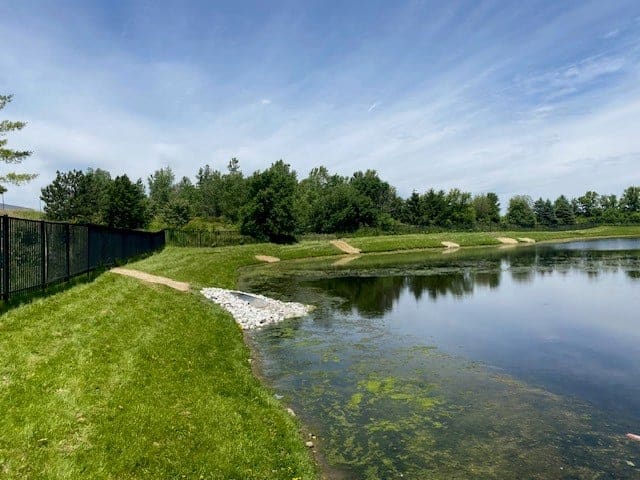
retention pond and grass shore

Stormwater Management

AQUALIS provides comprehensive stormwater services across the United States. From inspection and maintenance to repairs and rehabilitations, AQUALIS manages water on your property so you do not have to.
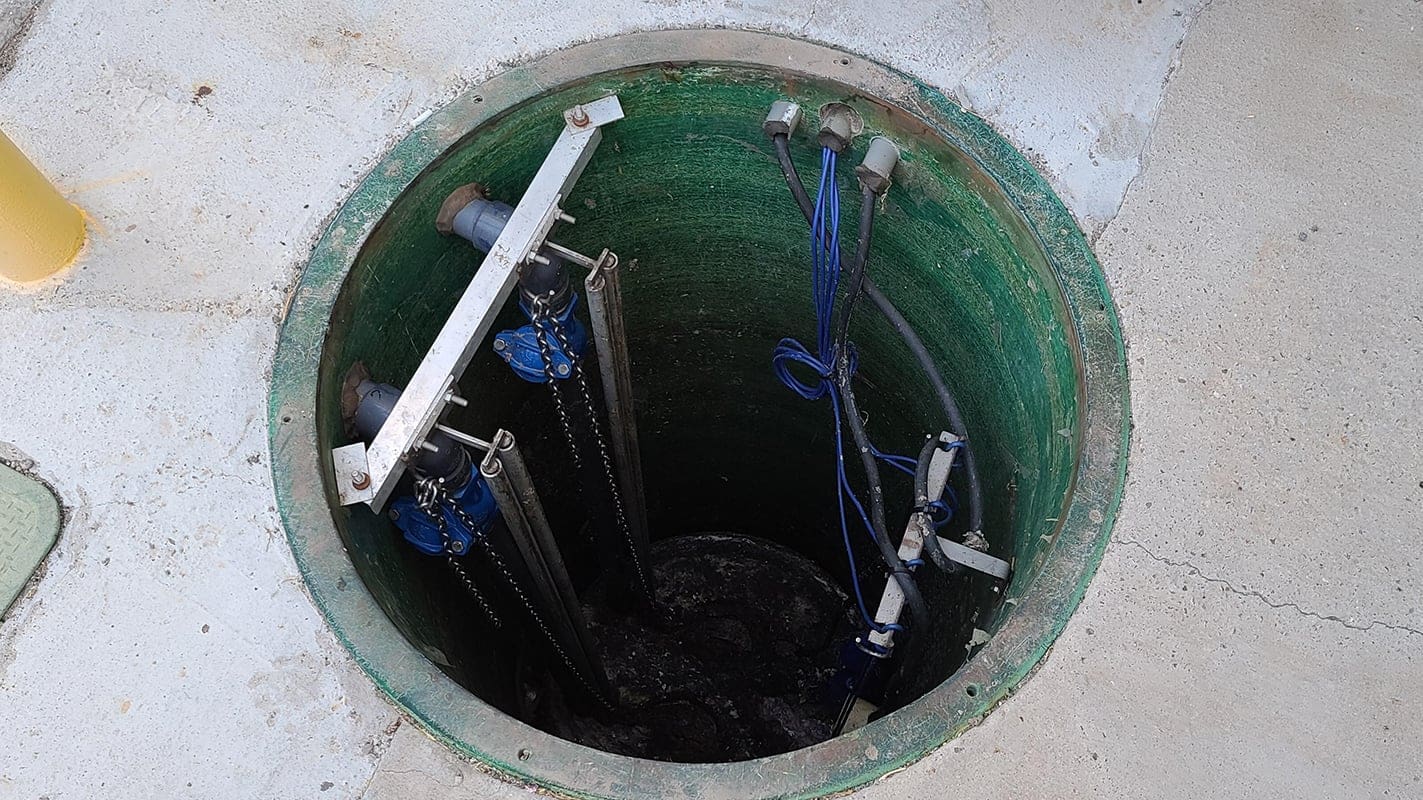
lift station

Wastewater Management

AQUALIS offers sustainable wastewater solutions including inspection, maintenance and repairs.
Three people reviewing plans

Sustainable Water Engineering

AQUALIS provides sustainable engineering services, in states in which we are licensed, from concept through construction, working closely with our clients to identify and deliver their ideal solutions.
storm drain

Monitoring & Reporting

There are multiple requirements and records that need to be kept from your SWPPP to inspections and depending on your industry, stormwater sampling and analysis.
person holding a beaker

Water Quality Testing

AQUALIS offers water quality testing for stormwater, wastewater and drinking water.

Case Studies

CIPP Lining and Structural Pipe Repair in Shelby Crossings, Fla.  

AQUALIS rehabilitated failing stormwater infrastructure at a commercial property in Shelby Crossings, Florida, using CIPP lining and structural pipe repair. Three pipe runs were lined, while two collapsed sections were excavated and replaced to restore the system.

Multiphase Stormwater Infrastructure Rehabilitation in Atl. GA

AQUALIS helped an Atlanta, Georgia property owner rehabilitate aging stormwater infrastructure through a phased approach. The project addressed critical repairs while allowing the owner to plan for future stormwater improvements.

How a Hidden Pipe Failure Created a Sinkhole and Pond Erosion at a Commercial Property in Orange City, Fla. 

A hidden stormwater pipe failure caused a sinkhole and pond erosion at a commercial property in Orange City, Florida. AQUALIS identified the damage through CCTV inspection and completed pipe and pond repairs to restore the stormwater system.

Lift Station Overhaul Restores Critical Sewage Infrastructure Tacoma, Wash.

AQUALIS completed a lift station overhaul for a critical wastewater system in Tacoma, Washington. The project replaced failing pumps, piping and electrical components, restoring reliable sanitary sewer service without disrupting terminal operations.
during construction of a new bridge in fox point, wisconsin

Green Infrastructure Protects Bridges in Fox Point, Wis.

Severe erosion threatened twin bridges spanning a ravine overlooking Lake Michigan. AQUALIS combined green and gray infrastructure to stabilize the slopes and protect critical infrastructure.

Comprehensive Lift Station Overhaul Restores Sanitary Service at Industrial Facility in Mount Vernon, Wash. 

After years of continuous service, an industrial facility's sanitary lift station had reached the end of its serviceable life. AQUALIS executed a full overhaul, replacing the pumps, plumbing, controls and in-well hardware to return the station to reliable, code-compliant operation.
Muffin Monster installation

Sanitary Lift Station Grinder Installation and System Reliability Improvement in Katy, Texas

AQUALIS addressed recurring sanitary lift station failures at a retail facility in Katy, TX, by identifying the upstream solids issue driving repeated emergency callouts. The project included installation of an inline Muffin Monster grinder, controls integration and full site restoration to improve system reliability and reduce reactive maintenance.
cut pipes laying in a parking lot

Parking Lot Sinkhole Leads to Underground Pipeline Reconstruction in Springfield, Va.

A large sinkhole at a commercial property in Springfield, Virginia led to full reconstruction of the site’s underground stormwater detention system. AQUALIS managed the phased demolition, geotechnical evaluation, utility coordination and installation to restore long-term stability and performance.
new catch basin

Manhole Root Intrusion Repair and System Assessment in Miami, Fla.

Sediment buildup, buried structures and root intrusion prompted a Miami shopping center to partner with AQUALIS to inspect, clean and restore key components of its stormwater system
uv light entering pipe

How Stormwater Pipe Inspection & UV Rehabilitation Restored Flow in New Bern, N.C.

A facility relies on an underground stormwater system to move runoff to a nearby retention basin. A 36-inch pipe plays a key role, but concerns emerged as flooding occurred during heavier rainfall.
new riprap for a pond

Facility Pond Shoreline Stabilization Addresses Erosion in Findlay, Ohio

Years of erosion driven by fluctuating pond levels and site runoff led to shoreline damage across this distribution property. AQUALIS implemented targeted repairs to stabilize the pond and restore stormwater control.
retention pond

Fixing Pond Erosion to Restore and Improve Stormwater Function in Mebane, N.C.

The customer requested maintenance of stormwater management principles located on the property. Lack of routine preventive maintenance had caused overgrowth, leading to insufficient stormwater systems.

Did you receive an NOV? Have an urgent need? We can help.

Notices of Violation (NOVs) or Corrective Notices should be taken seriously. Contact AQUALIS today to learn how to resolve the issue and comply with regulations.