AQUALIS partnered with another engineering firm to design a solution that addressed the erosion at every stage of the water’s journey across the site. The first priority was stopping the damage upstream by intercepting and treating runoff before it reached the ravine.
AQUALIS prioritized green infrastructure to reduce reliance on traditional gray infrastructure and treat stormwater through natural processes. The team installed roadside bioswales along both bridge approaches to capture runoff before it reaches the ravine. The bioswales filter pollutants, promote infiltration, and have the capacity to treat more than 28,000 gallons of runoff.
To manage water flowing in from higher elevations, the team installed regenerative stormwater conveyance, or RSC, systems. RSC uses tiered stone pools to dissipate the energy of stormwater as it moves downslope, converting erosive surface flows into controlled subsurface seepage. The systems have the capacity to treat more than 6,000 gallons of runoff and reduce the hydraulic forces acting on the ravine.
RSC was particularly well-suited to this site because the limited sunlight beneath and around the bridges ruled out vegetation-dependent solutions, which require sustained light to establish and maintain plant cover. RSC functions through stone, soil media and infiltration rather than surface vegetation, allowing it to perform reliably in shaded conditions where conventional bioswales or vegetated channels would struggle.
Slope Stabilization
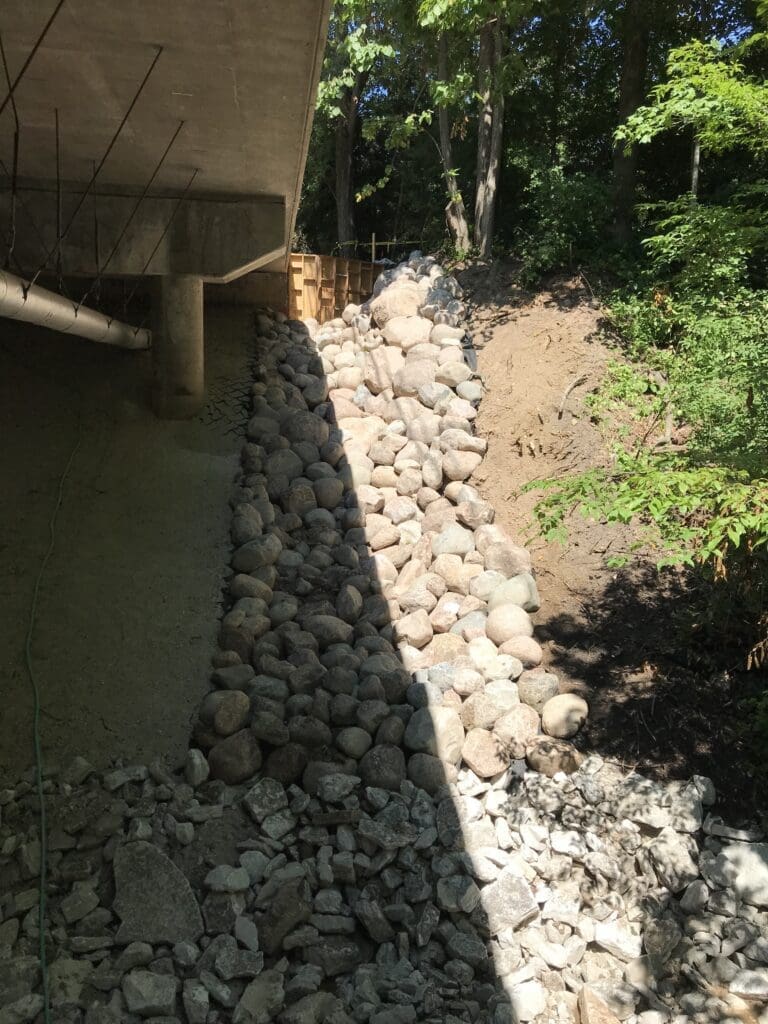
With less water reaching the ravine, the next priority was repairing the damage already done. Engineers regraded the eroded slopes and reinforced them with a cellular confinement system selected for its durability and cost efficiency. The installation eliminated the existing eroded incisions and reinforced the soil supporting the bridge piers.
Structural Enhancements
The final piece of the project addressed what was happening underground. Green infrastructure could manage surface runoff, but the site also required targeted gray infrastructure to correct underlying drainage failures that green systems alone could not solve.
AQUALIS realigned utilities that had been routed through unstable soil and reconfigured storm drains that were either misdirected or undersized for current conditions. Replacing and rerouting these systems eliminated point sources of concentrated discharge that had been actively contributing to the erosion. The reconfigured drainage network now works in coordination with the bioswales and RSC systems, directing water through controlled pathways rather than letting it find its own destructive routes through the soil. The improvements extended the service life of the bridges and ensured the green infrastructure investments would not be undermined by failing conventional systems.
Results
The project covers an 87-acre drainage area and combines two forms of green infrastructure, bioswales and RSC systems, with targeted gray infrastructure repairs. The integrated approach controlled erosion, protected the bridges and improved the quality of water entering the ravine and Lake Michigan.
The bridge restoration project demonstrates that green and gray infrastructure work best as a coordinated system rather than competing approaches. Green infrastructure handles surface runoff and water quality treatment through natural processes, reducing long-term maintenance demands. Gray infrastructure addresses the engineered systems that green solutions cannot replace, including subsurface drainage and structural support. The pairing offers a replicable model for similar ravine restoration efforts.

 Regenerative Stormwater Conveyance Improves Highway Drainage in Kenosha, Wis.The Root-Pike Watershed Initiative Network Kenosha County, and others worked with AQUALIS to design and implement an innovative solution for stormwater control along Highway KR.
 Sinkhole Leads to Stormwater System Repair in Durham, N.C.The tenant on this property noticed a depression that opened to the ground below and notified the property owners.