
Last Updated 04/11/2026
The City of Jacksonville is in compliance with the Federal Clean Water Act. The City of Jacksonville is the permitting authority for all land disturbing activities and requires the land owner to maintain all on-site stormwater control facilities and all open space areas (e.g. parks or “green” areas) required by the approved stormwater control plan. The City of Jacksonville will only provide construction permits to projects that establish a plan to manage stormwater runoff occurring during the construction process. Stormwater fees will be calculated and collected by the city. Stormwater credits are available for properties that engage in stormwater best management practices. The City of Jacksonville, under the NPDES program, also has the authority to inspect properties for noncompliance and can issue a notice of violation (NOV) for any deficiency or infraction onsite. Property owners are responsible for the maintenance of any stormwater facilities or practices located on the property. The City of Jacksonville has the authority to inspect stormwater facilities and practices in order to ascertain that they properly maintained and functioning.
To learn more about stormwater and wastewater management in Jacksonville, Florida, schedule a FREE consultation today!
Duval County Lift Station Requirements
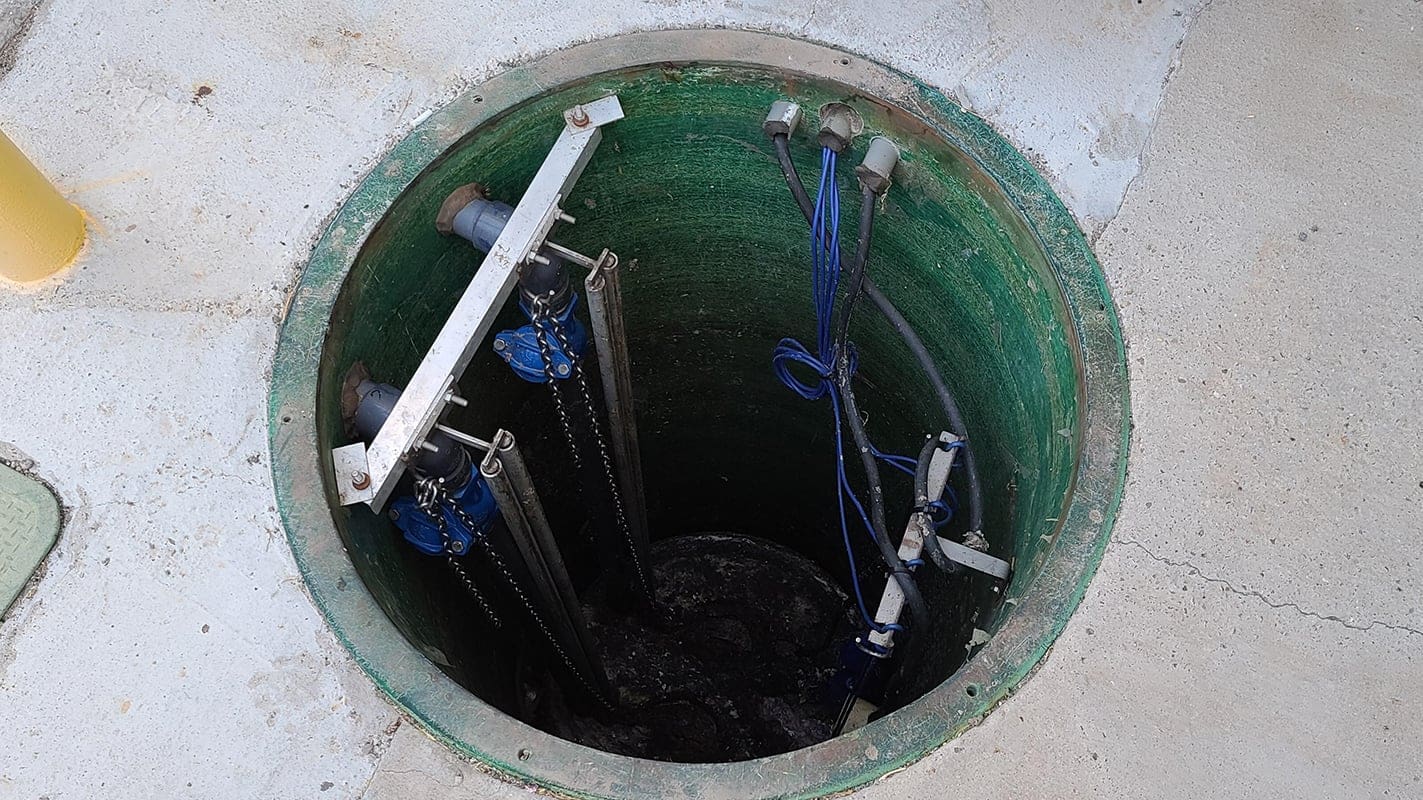
Because of the low elevations throughout Duval County, wastewater generated by businesses and homes cannot always flow through sanitary sewer systems by gravity forces alone. In many systems, it is necessary to include lift stations to assist wastewater flow. Because of extensive construction activity throughout Duval County, the Water Quality Branch has been permitting a growing number of lift stations, all of which are regularly inspected to ensure compliance with local regulations. All sanitary lift stations are required to have certified operator attendance at least once a month.
If your lift station is in need of inspection, contact AQUALIS
Stormwater Utility Fee, Credits, & Adjustments
The stormwater fee is based on two elements of a developed piece of property:
- The total square footage of impervious area on a property
- The type of development on the property (Residential or Non-Residential)
When possible, the city analyzed each property individually to confirm/verify impervious area. Otherwise, impervious areas are estimated based on the best data available (usually property records).
All fee rates, both residential and non-residential, are calculated based on the citywide average impervious area of a single-family detached dwelling. This unit of measurement is called an ‘SFU,’ or single-family unit. The City of Jacksonville’s average impervious area for a single family unit equals 3,100 square feet.
To determine the fee for a non-residential property, you must first determine that property’s SFUs:
SFUs = Total impervious area ÷ 3,100
Then, multiply the number of SFUs by $5 to determine the monthly fee, and multiply that figure by 12 to determine the annual fee:
Annual Fee = (SFUs x $5) x 12
ADJUSTMENTS
A property owner may apply for an adjustment if s/he feels the city committed an error in determining his or her fee. Examples of error include misidentifying the property type, applying an incorrect residential category, or miscalculating the impervious area.
The stormwater fee is based on total impervious area on a parcel, which is area on a property that is covered or compacted to such a degree as to not allow rain water to percolate. Types of impervious area include buildings (residences, structures); sidewalks on private property; concrete, asphalt, limerock or gravel driveways; patios; compacted gravel or dirt parking areas; pool decks (not pools), etc.
Structures identified as “garage apartments” will not be charged a separate SFU rate; the impervious area of any such structures will be considered in conjunction with any other residences or other impervious area onsite. All other structures that are identified as either a single family home or mobile home will be charged the appropriate SFU rate for each such structure onsite.
Adjustments will not be granted based on the following:
• Total size or elevation of a property containing impervious area
• A property’s proximity to or lack of city-maintained drainage facilities
• Properties on private roads
• Properties that drain directly into natural waterways
• Properties on a well or piped water, sewer or septic tank
• Any other condition that is not directly related to a property’s total impervious area.
CREDITS
Since the mid-1980s, developers have had to meet increasingly stringent guidelines when it comes to handling both the amount and environmental impacts of stormwater that runs off a piece of property. As a result, most developments built since that time have structures, facilities and/or programs in place that not only meet state and federal regulations, but provide a local benefit by controlling and treating stormwater and educating citizens about issues surrounding stormwater management.
In short, they do a lot of work that the city would ordinarily have to do.
The Stormwater Utility Credits Program was developed to recognize those who are helping the city with its stormwater management by providing discounts on stormwater fees. The values of the available credit options were established as proportional to the level of benefit contributed to the city’s stormwater system.
Each of the options is assigned a credit value, and if more than one option is applied for and approved, they are tallied cumulatively. The total cumulative discount allowed may not exceed 50% of the fee amount, even if the combined value of approved credits is greater.
The single exception to the 50% cap involves situations where a development provides the maximum water quality treatment and volume control possible – essentially, the system is entirely self-contained and does not utilize the city system at all (“landlocked”). In such cases, a property owner would be eligible to receive a 25% bonus credit.
If a property owner will receive or has received a fee adjustment (Section A), s/he may still apply for credits. The cumulative credit value will be applied after the fee is adjusted.
Property owners that wish to apply for more than one type of credit for a property are asked to submit all the applications at one time. Please attach the “Guide to Credit Options” (page 9) with the applications.
Terms and Conditions
• Credits will only be approved if the requirements outlined in the Adjustments & Credits Manual are met, including (but not limited to) completion of ongoing maintenance and guaranteed right-of-entry for inspections.
• Credits will be defined as percent reductions applied to the fee calculation equation.
• Total maximum discount provided will be 50% of the original fee, except in the case of a successful application for the 25% “bonus credit,” in which case the total discount will equal 75% of the original fee.
• Credits will carry over across billing cycles; property owners will not be required to re-apply.
• No public or private property will receive a credit for any condition or activity that is unrelated to the city’s stormwater management system or program.
• Credits will not apply to Stormwater Pollution Prevention Plan (SWPPP) review and/or inspection fees attributable to new development or redevelopment costs.
• Any BMP (or portion thereof) within a permanent drainage easement or right of way maintained by the city, JEA or Florida Department of Transportation (FDOT) will not be eligible for credit.
• Successful application for the Education Credit may not also count as fulfillment of the education option within the Programs & Services Credit.
• Applicants who receive or qualify for the 30% Permitted Stormwater Pond Credit may pursue the Detailed Drainage Study Credit to obtain credit above 30%. The credits do not compound.
Stormwater Credit Types:
Permitted Stormwater Pond (30% Credit) –
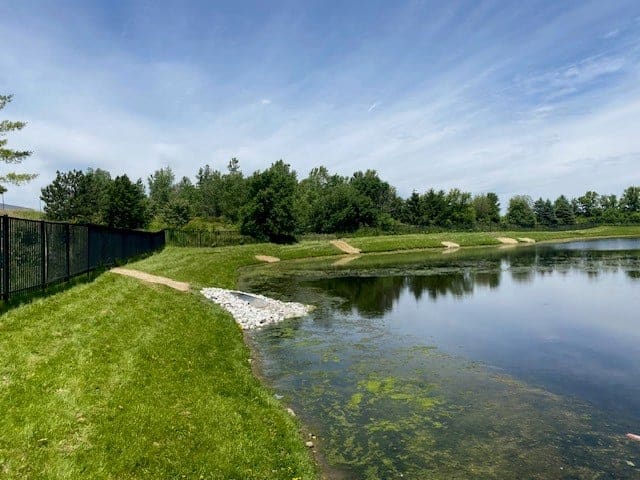
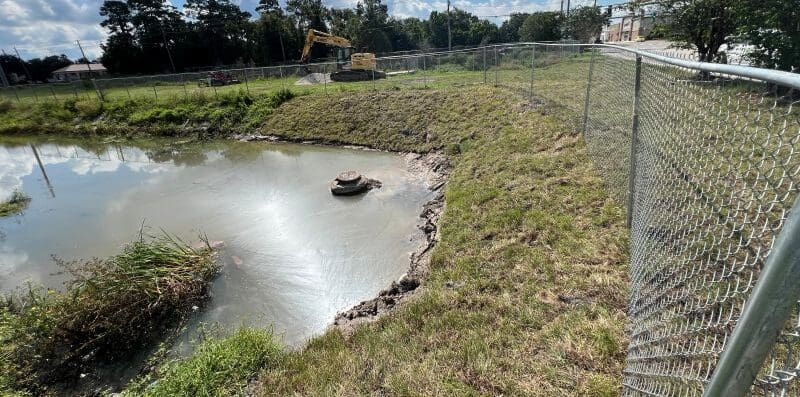
available for property owners providing a stormwater pond that has been permitted by the St. Johns River Water Management District (SJRWMD) or Florida Department of Environmental Protection [Regulation]. Applicants must also attest that the facility was built and has since been maintained according to the original permit.
Detailed Drainage Study (Max 50% Credit) –
available for property owners providing stormwater treatment (quality) and/or stormwater volume control (quantity) calculations for a permitted system. If complete stormwater treatment is provided (60% nitrogen removal), the property owner will receive a maximum of 30% credit. If complete stormwater volumetric control is provided (during the 7 hr peak of storm – between 10th & 17th hr), the property owner will receive maximum of 20% credit. This credit may not be compounded with the Permitted Stormwater Pond Credit.
Landlocked System (“Bonus” Credit +25%) –
available for property owners that can demonstrate no discharge (per the SJRWMD definition of a “closed system”) and meet the full credit for treatment and volume.
Programs & Services [Non-Structural] (4% Credit) –
available for property owners providing water quality programs or services. There are nine (9) service opportunities; the property owner must fulfill six (6) to be awarded credit.
Other Best Management Practices (2% Credit) –
available for property owners that have a unique opportunity/approach to improving water quality that is not addressed through other options in the Adjustments & Credits Manual
View State Page
Frequently Asked Questions
How do I know if my stormwater system is at risk in Jacksonville?
The physical signs are familiar: standing water past 72 hours, erosion, sinkholes, discolored discharge. Jacksonville adds a specific one for properties with a sanitary lift station, since Duval County’s low elevation means many properties rely on lift stations to move wastewater, and every one of them requires a certified operator’s attendance at least once a month. A missed monthly check is a compliance gap even if the station seems to be running fine.
How does stormwater compliance affect property value in Jacksonville?
Jacksonville bases its stormwater fee on a property’s total impervious area measured against a single-family unit benchmark of 3,100 square feet, and properties with a permitted stormwater pond or documented treatment and volume control can qualify for credits up to 50% of the fee, or 75% for fully self-contained “landlocked” systems. That credit carries over across billing cycles once approved, so a buyer inheriting an active credit is also inheriting a meaningful, ongoing discount, provided the system keeps meeting its original permit conditions.
How often does Jacksonville require stormwater inspections?
Properties holding a stormwater fee credit have to guarantee the city right-of-entry for inspections and keep up with ongoing maintenance as a condition of retaining that credit. Sanitary lift stations carry their own cycle, requiring certified operator attendance monthly. Beyond those, the city retains standing authority under the NPDES program to inspect any stormwater facility to confirm it’s properly maintained and functioning.
What are the most common stormwater violations in Jacksonville?
The most common issue AQUALIS sees with credit-holding properties is a lapse in the ongoing maintenance or inspection access required to keep that credit active, which can cost real money if it’s revoked. For lift stations, a missed monthly certified operator visit is a straightforward compliance gap. Beyond those Jacksonville-specific triggers, the usual findings persist everywhere: overgrown vegetation, sediment buildup and clogged inlets that keep a system from performing as designed.
What happens if my property is found in violation of Jacksonville's stormwater ordinance?
Under the NPDES program, the city can issue a notice of violation for any deficiency it finds onsite, and property owners remain responsible for maintaining every facility on their land. For properties receiving a stormwater fee credit, failing to meet the ongoing maintenance and inspection requirements risks losing that discount entirely, on top of any separate violation finding. AQUALIS helps Jacksonville property owners keep lift stations and credit-qualifying systems compliant so neither a fee discount nor a clean compliance record is at risk.
The information on this page is provided for general informational purposes only and is not legal advice. Regulations change frequently — AQUALIS makes no warranty as to the accuracy or completeness of this content, and any reliance on it is at your own risk. Consult a qualified professional or your local regulatory authority to confirm requirements applicable to your specific property.