

Last Updated 07/29/2026
Excerpt from McKinney Land Development Code
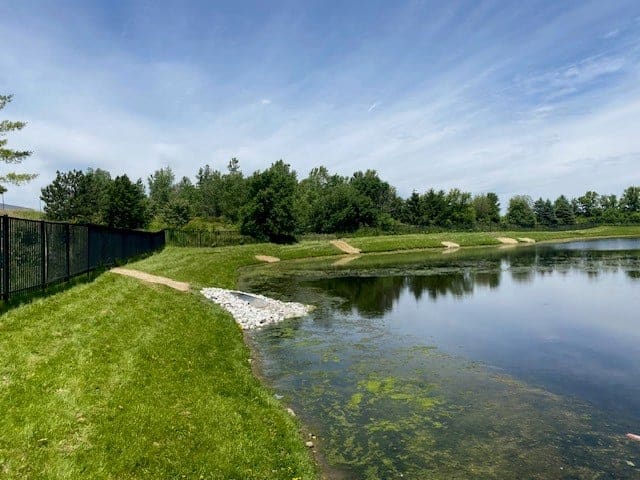
The development of land can cause significant changes in the manner, quality, frequency, rate, and volume of stormwater runoff entering a stream or lake. Changes in stormwater runoff can upset the natural balance of erosion and deposition in lakes and streams resulting in increased flooding and loss of bank stability, thus endangering adjacent public and private improvements and causing impacts to lake and stream characteristics that are generally viewed as negative.
Division 2- Administration
Sec. 130-265. Responsibilities of owners.
(a) The owner or developer of a property shall be responsible for all storm drainage flowing through or abutting such property. Construction of stormwater detention facilities only relieves the owner or developer of any responsibility for off-site drainage improvements with the exception of the NRCS lakes provisions of this article and does not relieve an owner or developer of the responsibility for improvements on-site or adjacent to a proposed development. This responsibility also includes drainage directed to that property by ultimate development as well as the drainage naturally flowing through the property by reason of topography.
Division 3- Drainage Requirements
Sec. 130-300. Impact of runoff on downstream facilities.
(a) Stormwater runoff, based on fully developed watershed conditions, will be allowed from all future developments provided that the receiving drainage facilities and/or natural channels can adequately convey the fully developed 100- year storm runoff and there are existing drainage easements and floodplain easements, or the required floodplain easements and/or any required drainage easements can be obtained by the owner, builder, or developer of the subject project. Calculations to verify downstream adequacy shall be performed utilizing the 10% rule as defined in section 130-182. If the receiving drainage facilities and/or natural channels cannot adequately convey stormwater runoff based on fully developed conditions, or the required drainage easement and/or floodplain easement does not exist and cannot be obtained, runoff from the site will be limited to the pre-project flow rate at the point of discharge.
(b) Flow that can adequately be conveyed is defined as the flow that does not exceed the capacity of downstream drainage.
Division 6- Erosion Control Guidelines
Sec. 130-418. Enforcement.
(a) Violations. It shall be an offense for a responsible party or a third party performing work on a project to violate any of the requirements of this article, including, but not limited to, the following:
(1) Conducting any land disturbing or construction activity without an approved erosion control plan for the location where the violation occurred;
(2) Failing to install erosion control devices or to maintain erosion control devices throughout the duration of land disturbing activities, in compliance with the approved erosion control plan for the location where the violation occurred;
(3) Failing to remove off-site sedimentation that is a direct result of land disturbing activities where such off-site sedimentation results from the failure to implement or maintain erosion control devices as specified in an approved erosion control plan for the location where the violation occurred;
(4) Allowing sediment-laden water resulting from belowground installations to flow from a site without being treated through an erosion control device; or
(5) Failing to repair damage to existing erosion control devices, including replacement of existing grass or sod.
(b) Notice of violation. Written notice of violation shall be given to the responsible party or his job site representative as identified in the erosion control plan for a site. Such notice shall identify the nature of the alleged violation and the action required to obtain compliance wit the intent of the approved erosion control plan.
View State Page
Frequently Asked Questions
Why does the city regulate stormwater runoff from developed properties?
Developing land can significantly change the way stormwater moves across a site, including its rate, volume, and frequency. These changes can throw off the natural balance of erosion and deposition in nearby lakes and streams, leading to more flooding, less stable banks, and negative impacts to surrounding public and private property. McKinney’s drainage requirements are designed to prevent these effects.
How does the city determine if my property's runoff is acceptable?
Runoff from a fully developed site is allowed as long as the downstream drainage facilities or natural channels can adequately handle the fully developed 100-year storm event, and the necessary drainage or floodplain easements exist or can be obtained. The city verifies this using its standard downstream adequacy calculations.
How will I know if my erosion control plan is out of compliance?
The city gives written notice of violation to the responsible party or their job site representative. That notice identifies the alleged violation and spells out the steps needed to bring the site back into compliance with the approved plan.
The information on this page is provided for general informational purposes only and is not legal advice. Regulations change frequently — AQUALIS makes no warranty as to the accuracy or completeness of this content, and any reliance on it is at your own risk. Consult a qualified professional or your local regulatory authority to confirm requirements applicable to your specific property.