

Last Updated 07/16/2026
The City of Huntsville has enacted a Stormwater Ordinance in order to establish minimum stormwater management requirements and controls to protect and safeguard the general health, safety, and welfare of the public residing in watersheds within this jurisdiction. The City of Huntsville is the permitting authority for all land disturbing activities and requires the land owner to maintain all on-site stormwater control facilities and all open space areas (e.g. parks or “green” areas) required by the approved stormwater control plan. The City of Huntsville will only provide construction permits to projects that establish a plan to manage stormwater runoff occurring during the construction process. The City of Huntsville, under the NPDES program, also has the authority to inspect properties for noncompliance and can issue a notice of violation (NOV) for any deficiency or infraction onsite. Property owners are responsible for the maintenance of any stormwater facilities or practices located on the property. The City of Huntsville has the authority to inspect stormwater facilities and practices in order to ascertain that they are properly maintained and functioning.
Excerpt from Huntsville Stormwater Homepage
Natural Resources coordinates activities by the City of Huntsville designed to ensure compliance with State and Federal storm water quality requirements for medium sized municipalities. These requirements include development and implementation of a comprehensive municipal storm water management program plan, as well as requirements for monitoring storm water quality.
In addition to assembling information gathered by other City Departments to satisfy reporting requirements, Natural Resources conducts industrial inspections and investigates discharges of pollutants to the storm sewer system.
Surface water quality investigations are also performed by Natural Resources in support of the storm water quality program.
Excerpt from Huntsville Storm Water Management Program Plan
The Storm Water Phase I Final Rule issued by the United States Environmental Protection Agency (EPA) in 1990 requires coverage of all operators of “medium” and “large” MS4s serving populations of 100,000 or greater. The Phase I NPDES Permit ALS000005 for storm water discharges from the Huntsville Area Medium MS4 was issued to the City of Huntsville, the City of Madison, and the Alabama Department of Transportation (ALDOT) with an effective date of October 1, 2001. The five‐year permit expired on September 30, 2006 and permit coverage was administratively extended. NPDES Permit ALS000005 covered all areas within the corporate boundaries of the City of Huntsville and the City of Madison. From 2001 to 2013, the City of Huntsville, the City of Madison, and ALDOT operated as co-permittees under the joint MS4 Permit. In April of 2013, ALDOT was issued a separate Phase I permit and ALDOT’s coverage under the permit with Huntsville and Madison was terminated. In May of 2015, the City of Madison was issued an individual Phase II permit, and Madison’s coverage under ALS000005 was terminated. In 2018, ADEM personnel met with representatives of the City of Huntsville to prepare a reissued Phase I permit to replace the 2001 permit. In June of 2018, the City of Huntsville received a draft of the Phase I permit for reissuance. The draft of reissued permit ALS000005 was filed for public notice on June 29, 2018. Phase I NPDES Permit No. ALS000005 for storm water discharges from the Huntsville MS4 was issued to the City of Huntsville with an effective date of October 1, 2018. The reissued permit replaces the 2001 permit previously issued to the City of Huntsville, and applies to the corporate boundaries of the City of Huntsville. The permit will expire on September 30, 2023. A copy of the reissued Phase I NPDES Permit is included in Appendix B.
Excerpt from Huntsville Code of Ordinance Article VI. – Stormwater Management
Sec. 12-332. – Violations; remedies; enforcement.
(1) Violate any provision of this article or fail to comply therewith;
(2) Violate the provision of any permit issued pursuant to this article, including the stormwater management manual incorporated herein by reference;
(3) Fail or refuse to comply with any lawful order or notice to abate or remediate a violation of this article issued by the city engineer;
(4) Violate the provisions of conditions and safeguards established in connection with the enforcement and administration of this article, including conditions or safeguards imposed by the director of city engineering in connection with permits or approvals issued pursuant to this article; or
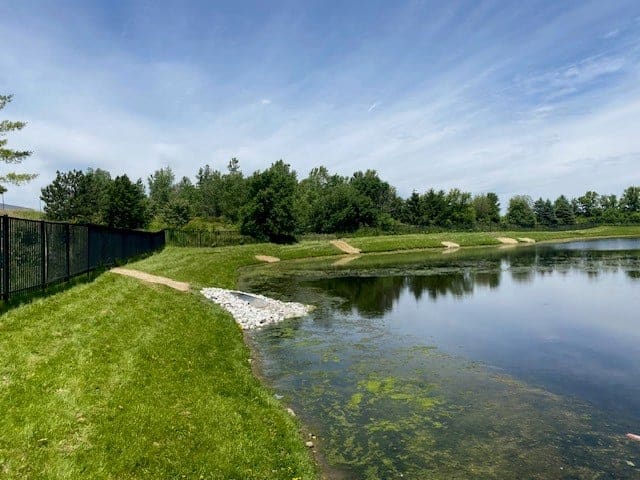
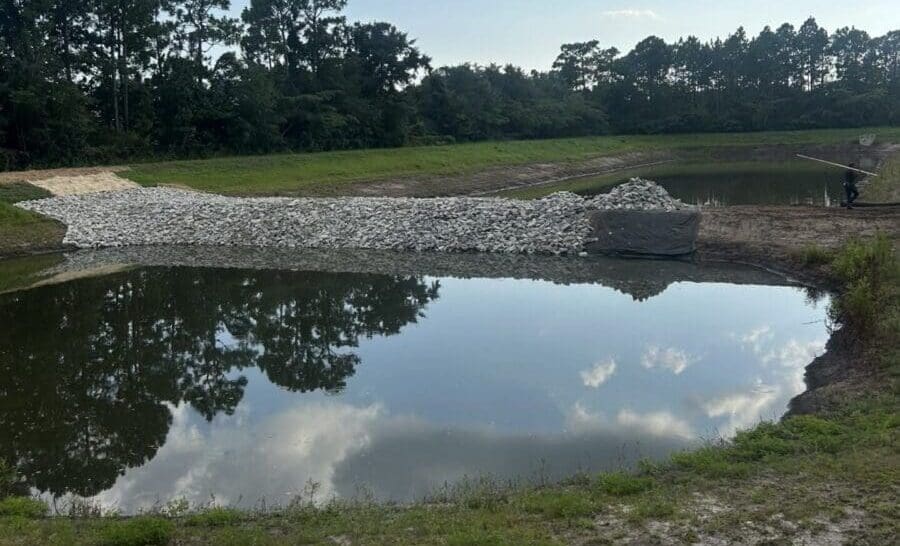
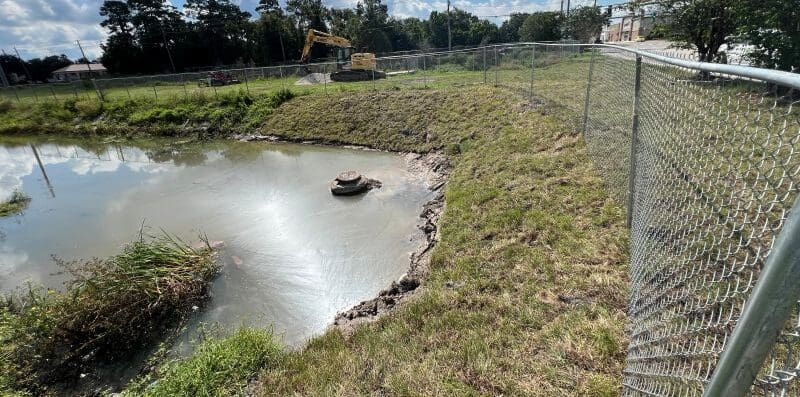
(5) Fail to maintain any low impact development/green infrastructure element or detention pond required pursuant to the stormwater management manual.
Sec. 12-333. – Penalties and injunctions.
(a) A violation of this article shall be punishable as provided in section 1-7.
(b) In addition to all other remedies provided by law, the city shall have the right to injunctive relief for any violation of this article.
Sec. 12-334. – Authority of city engineer.
(b) The city engineer shall have the authority to issue grading permits as required under this article. Any grading permit exemption authorized by the city engineer under this article shall not be construed as relieving the party responsible for the identified activity from making on-site drainage improvements that may be required or from compliance with the zoning ordinance of the city or any other applicable laws or regulations.
(c) The city engineer shall have the authority to review all building permit applications prior to their issuance by the inspection division to ensure compliance with the provisions of this article. Building permit applications are exempted from review by the city engineer if the structure which is the subject of such application is to be remodeled within its existing walls and no grading is to occur on the site or is a residential dwelling on a single lot within an approved subdivision with an approved grading plan that establishes the stormwater drainage pattern for the site. No building permit, unless exempted as indicated in this article, shall be issued by the inspection division until an application for such building permit has been approved by the city engineer. The exemptions listed in this article shall not be construed as relieving the party responsible for the identified activity from on-site drainage improvements that may be required in accordance with adopted building and construction codes or from compliance with the zoning ordinance of the city or any other applicable laws or regulations.
(d) The city engineer is authorized to enter upon the premises of any land within the city for which a grading or building permit application has been filed to inspect the site before, during and upon conclusion of any land disturbance activity to determine compliance with this article.
(e) In cases where the city engineer is authorized to review building permits prior to issuance or has issued a grading permit, a certificate of occupancy shall not be issued until the city engineer has determined compliance with this article.
(f) The city engineer, or an employee of his department designated by him, is authorized to issue a citation to any person found by him to be in violation of this article, including the stormwater management manual. The citation shall order the person to appear in the municipal court at a date and time certain to answer the charges against him.
(g) The city engineer is authorized to issue a stop work order with regard to any grading or other land disturbance activity that is being done contrary to the provisions of this article or in a dangerous or unsafe manner. Such notice shall be in writing, shall be delivered to the owner of the property, his agent, or the person doing the work, and shall state the conditions under which work may be
Sec. 12-335. – Stormwater management manual standards.
Excerpt from Stormwater Management Manual
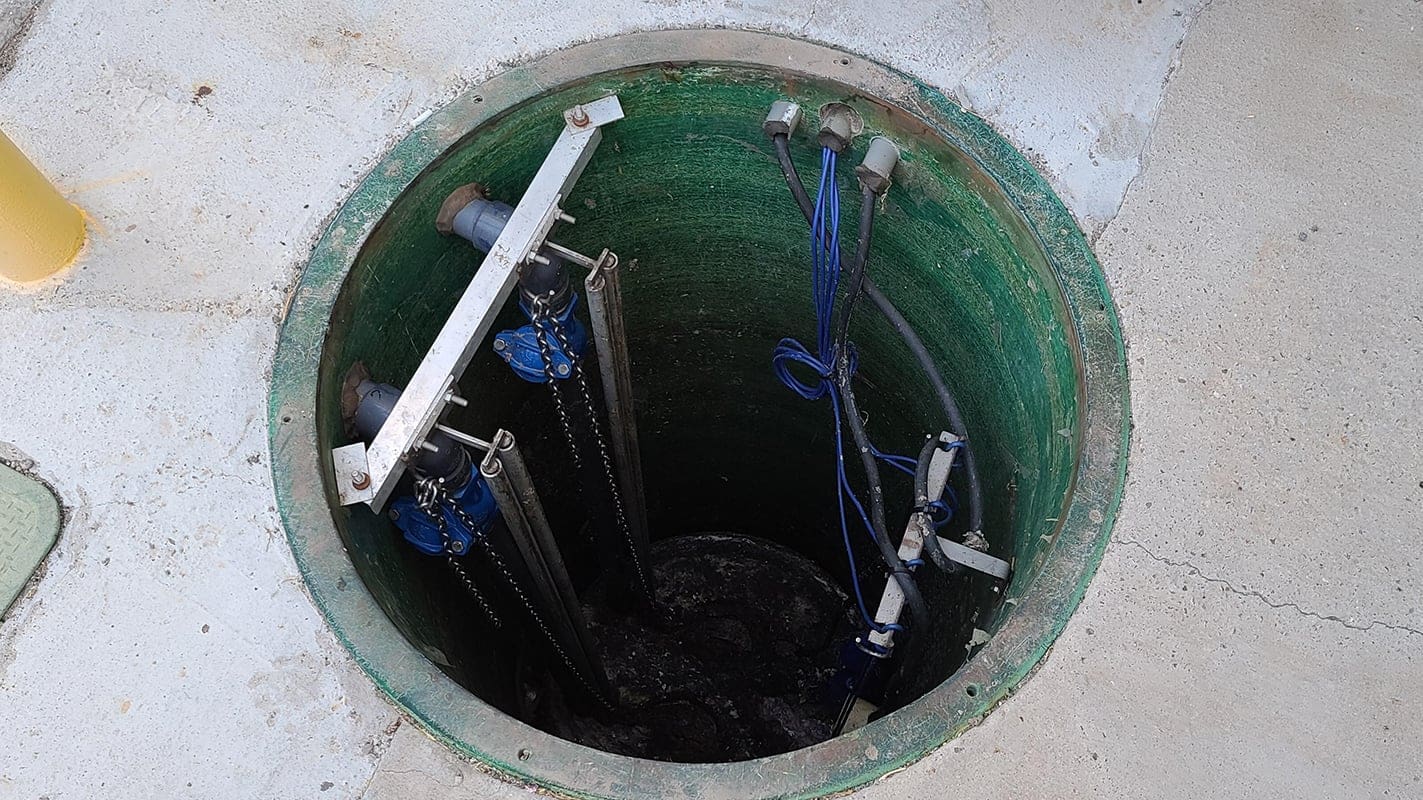
2.10 Annual Inspections of Post-Construction Stormwater Controls
The Engineering Division will require or conduct inspections of post-construction stormwater controls to confirm that the controls are functioning as designed.
Privately-Owned/Maintained Controls
Owners of post-construction stormwater controls will be required to inspect all owned postconstruction stormwater controls annually, at a minimum, and document that the controls are properly maintained and functioning as designed. Inspections will be conducted by individuals familiar with the operation of said controls. Inspections will be documented and are required to be maintained by the owner/responsible party for a minimum period of three years from the date of inspection or maintenance, and will be made available to the City and/or ADEM upon request.
City-Owned/Maintained Controls
The Engineering Division will inspect City-owned or managed post-construction stormwater controls annually. The City may also inspect non City-owned post-construction stormwater controls periodically at its discretion. Inspection records will be maintained for a minimum period of three years from the date of inspection or maintenance, and will be made available to ADEM upon request.
View State Page
Frequently Asked Questions
Why does Huntsville have different stormwater requirements than other Alabama cities?
Huntsville is regulated under a Phase I NPDES permit rather than Phase II. Federal rules apply Phase I coverage to medium and large municipal separate storm sewer systems serving populations of 100,000 or more, while smaller communities fall under Phase II. Huntsville’s current Phase I permit, issued directly to the city, took effect in October 2018 and covers stormwater discharges across the city’s corporate boundaries.
Who has the authority to enforce Huntsville's stormwater ordinance?
The city engineer. That role includes issuing grading permits, reviewing building permit applications for stormwater compliance before they’re approved, inspecting properties before, during and after land-disturbing activity, and issuing citations or stop work orders when a project violates the ordinance.
Can Huntsville stop work on my construction site?
Yes. If grading or other land-disturbing activity is being done in violation of the stormwater ordinance, or in a dangerous or unsafe manner, the city engineer can issue a written stop work order to the property owner, their agent or the person doing the work. The order specifies what has to happen before work can resume.
Does failing to maintain green infrastructure count as a violation in Huntsville?
Yes, specifically. Huntsville’s code calls out failure to maintain a required low-impact development or green infrastructure element, or a detention pond, as its own distinct violation. That makes ongoing maintenance a legal obligation, not just good practice, for any property with those features built into its stormwater plan.
How often does Huntsville require inspection of post-construction stormwater controls?
Annually, at minimum. If you own or maintain post-construction stormwater controls, you’re required to inspect them yourself each year and document that they’re functioning as designed, using someone familiar with how the controls operate. Those records have to be kept for at least three years and made available to the city or the Alabama Department of Environmental Management on request.
Does Huntsville inspect stormwater controls the city doesn't own?
It can. While the city’s Engineering Division inspects city-owned controls annually as a matter of course, it also reserves the right to inspect privately owned post-construction stormwater controls periodically at its discretion, independent of the owner’s own required annual inspection.
What happens if I get a citation for a stormwater violation in Huntsville?
A citation issued by the city engineer orders the recipient to appear in municipal court on a specific date to answer the charges. Violations are treated as misdemeanors, and the city can also pursue injunctive relief in addition to any other penalty.
Can I get a certificate of occupancy if my property has an outstanding stormwater issue in Huntsville?
Not if your project falls under the city engineer’s review. Where a grading permit was issued or a building permit required city engineer sign-off, a certificate of occupancy won’t be issued until the city engineer confirms the property complies with the stormwater ordinance.
How can AQUALIS help my property stay compliant with Huntsville's stormwater ordinance?
AQUALIS supports Huntsville property owners with the annual post-construction inspections and three-year recordkeeping the city and ADEM require, along with maintenance of the detention ponds and green infrastructure elements the ordinance specifically ties to compliance.
The information on this page is provided for general informational purposes only and is not legal advice. Regulations change frequently — AQUALIS makes no warranty as to the accuracy or completeness of this content, and any reliance on it is at your own risk. Consult a qualified professional or your local regulatory authority to confirm requirements applicable to your specific property.