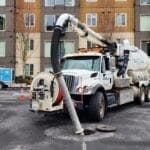
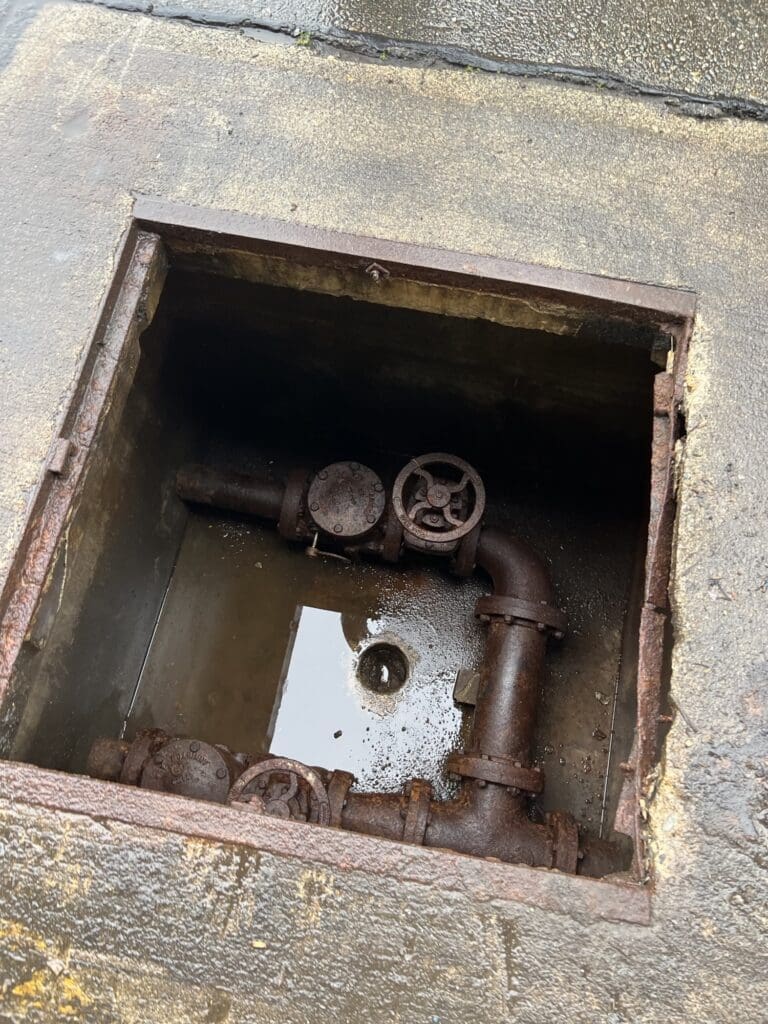
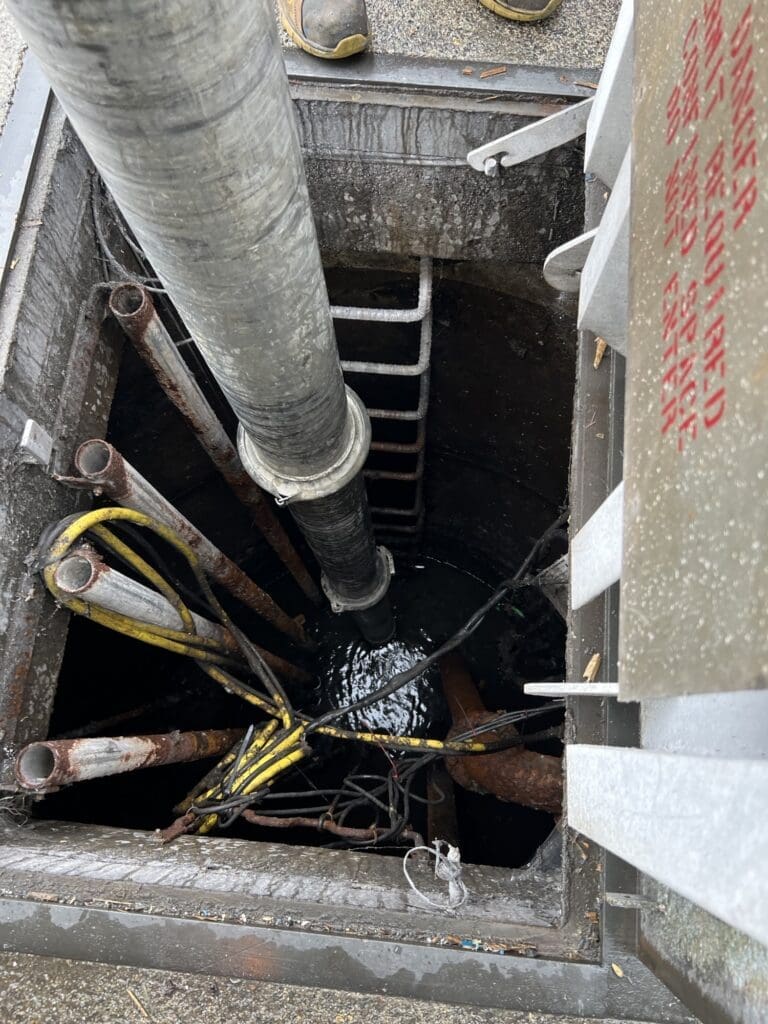
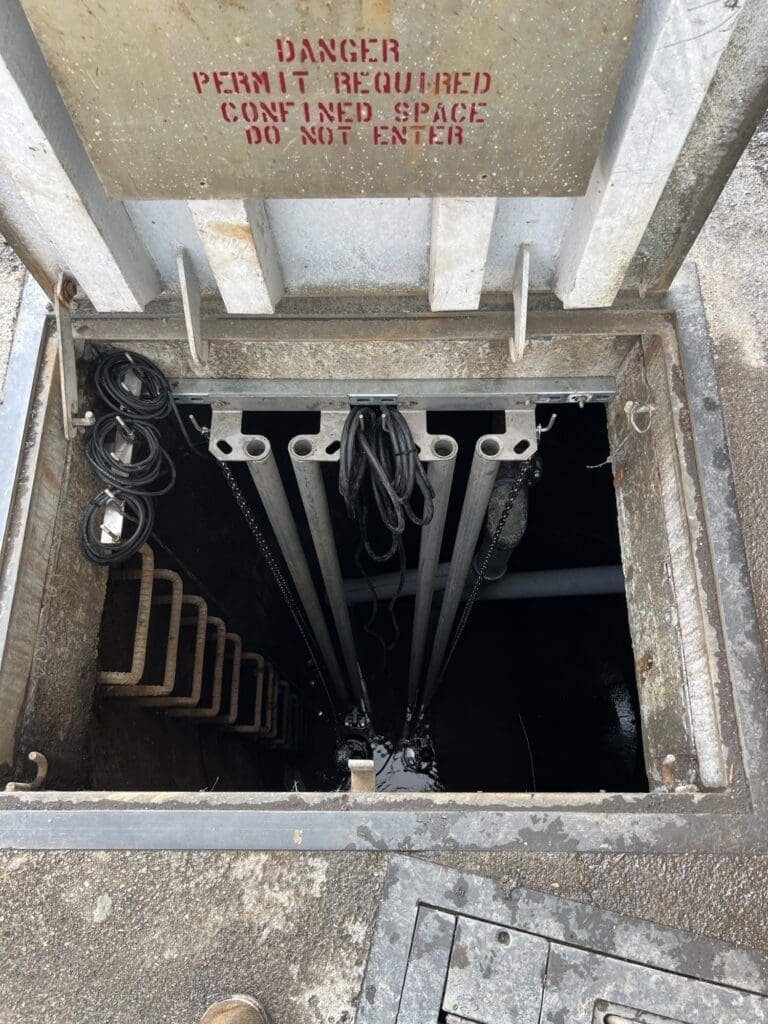
Keeping the wastewater flowing while repairing the lift station that handles it required isolating the system first. AQUALIS crews made confined space entries into the underground chamber to plug the incoming water lines, a task governed by strict safety protocols given the enclosed conditions and hazardous gases present. A temporary pumping setup then kept wastewater moving without interruption while the original components were removed.
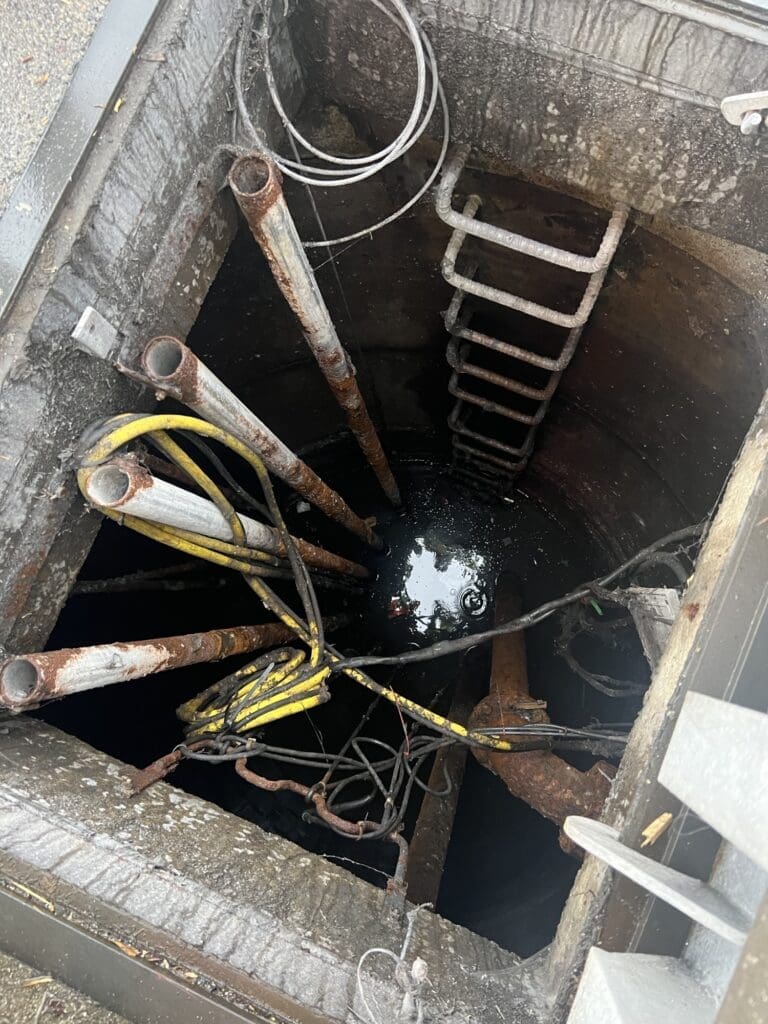
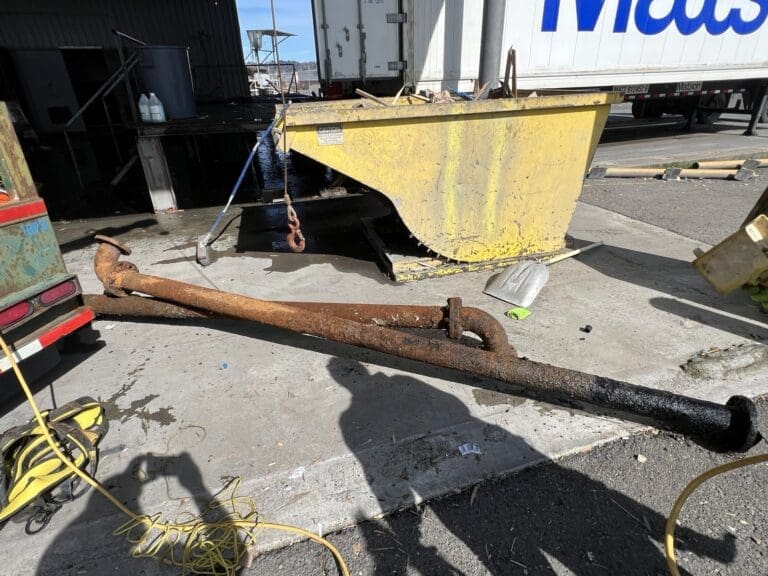
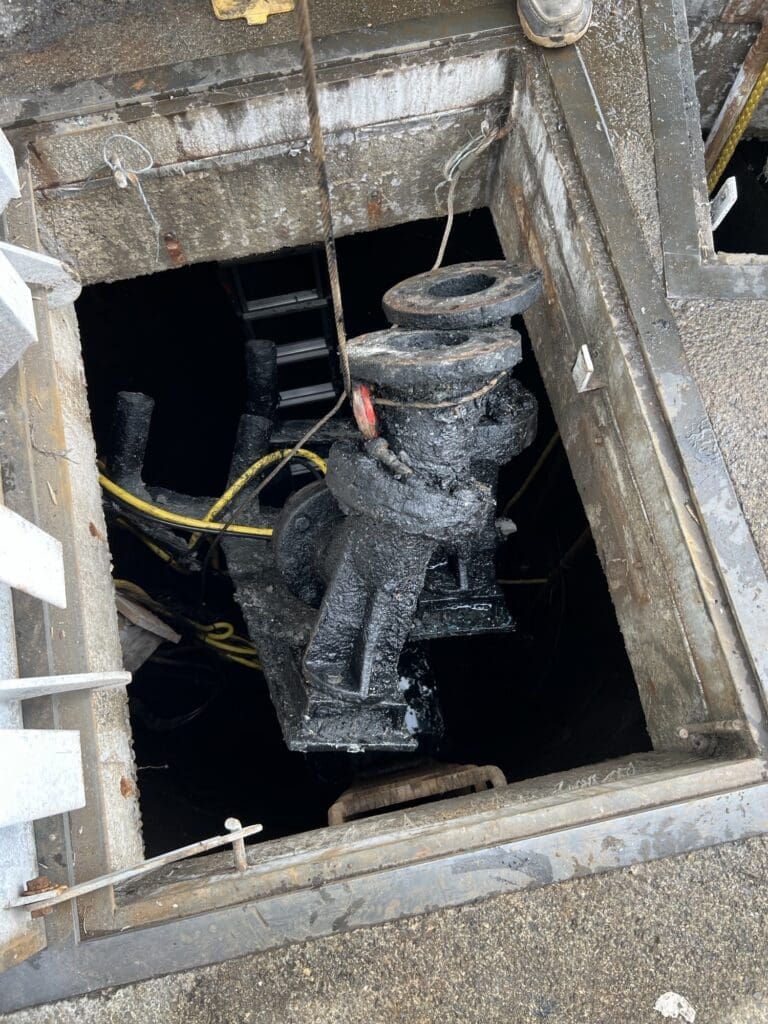
Demolition followed over three days. Crews removed every pump, float, length of piping, guide rail, bracket and the failing control panel, then pressure washed the chamber and cleared all accumulated debris, leaving a clean structure ready to receive new equipment.
Rebuilding for the Environment
Every site is different. This property had a higher level of scrutiny due to proximity to the local waterway. Standard parts would have failed in the same conditions that destroyed the original system. AQUALIS engineered the replacement around that reality.
Mechanical Systems
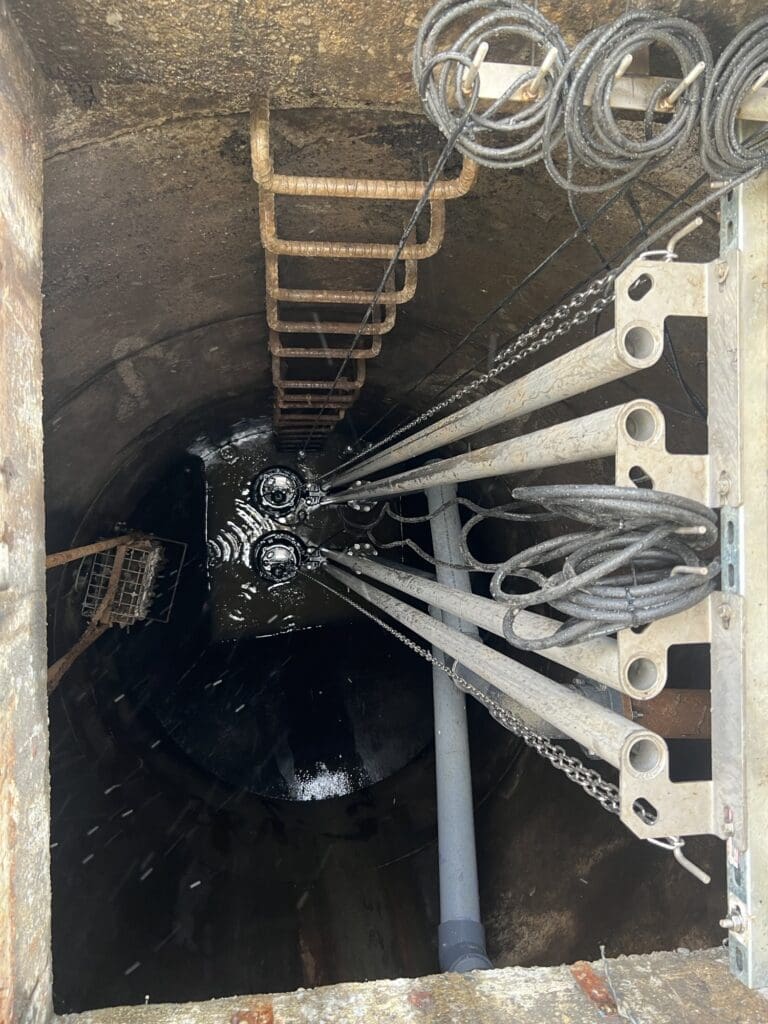
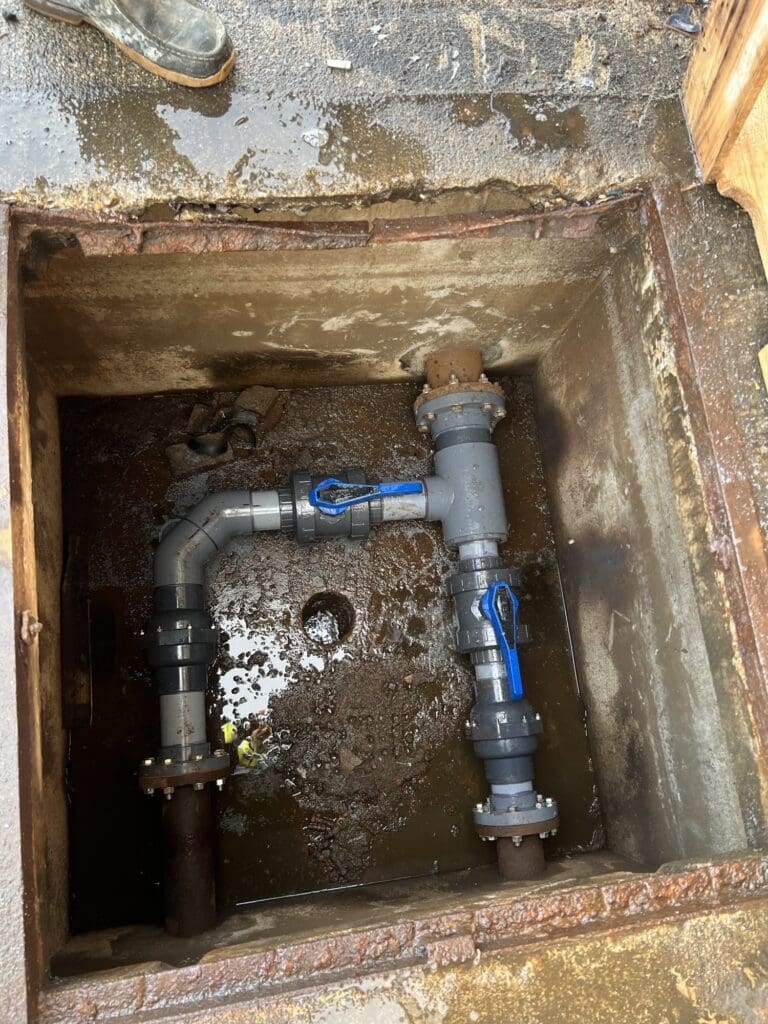
A new base system was anchored to the station floor with stainless steel fasteners, paired with new stainless steel guide rails built to hold up against constant moisture and saltwater exposure. Two new high-capacity pumps were installed to provide reliable wastewater conveyance for terminal operations, supported by new piping built specifically to resist the saltwater and chemical exposure that destroyed the original system. New sensors control pump operation automatically based on water level.
Electrical Systems
The original wiring ran directly through the corrosive underground chamber, exposed to the same conditions that had degraded the mechanical equipment. AQUALIS removed that vulnerability at the source: every electrical connection was relocated out of the chamber and into a new junction box installed above ground by a licensed electrician, built to withstand weather and corrosion. The conduit feeding it was sealed to keep chamber gases from reaching the wiring.
Because the junction box sits in the right of way, AQUALIS installed a traffic-rated enclosure over it to withstand vehicle loads, then backfilled the excavation and poured new concrete to restore the drive lane.
Controls
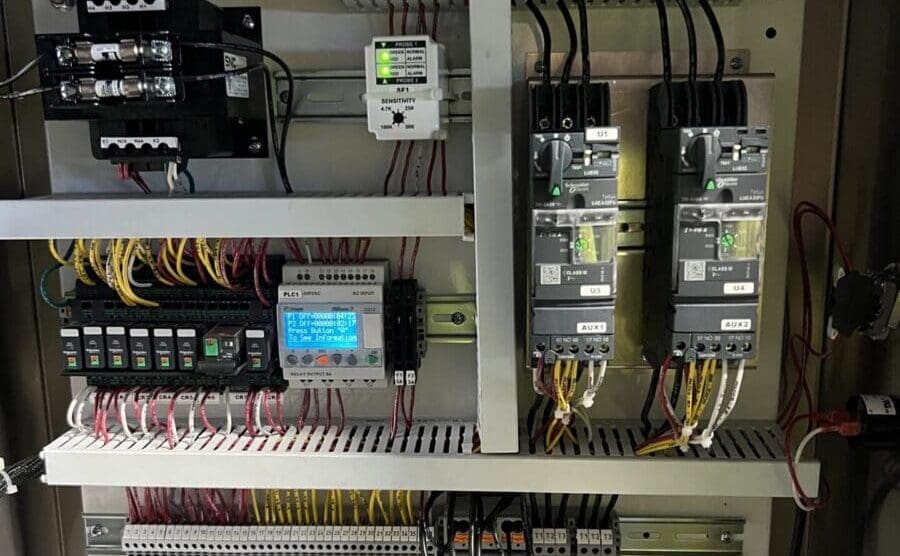
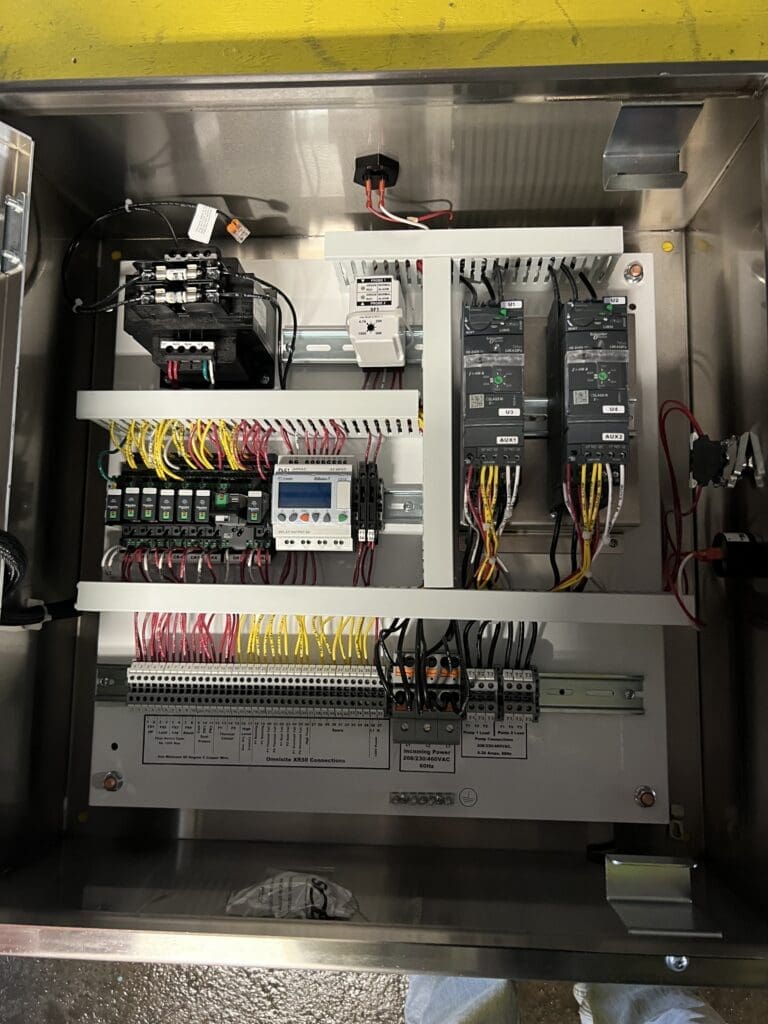
The original control panel was replaced with a modern controller housed in a sealed stainless steel enclosure, built for the same demanding environment that had worn down the equipment it replaced.
By selecting corrosion-resistant materials and relocating vulnerable electrical components, the rebuild addressed the environmental conditions that had accelerated deterioration in the original system.
Results
AQUALIS stress tested the rebuilt system and confirmed proper operation before returning the station to service. All removed materials were disposed of off-site in accordance with local and federal regulations.
The complete overhaul was delivered in just five days without disrupting terminal operations.
The site now operates on a lift station engineered for its environment: two new pumps, corrosion-resistant piping and components, electrical systems isolated from the chamber’s harsh conditions and an above-ground electrical setup built to perform in an active right of way. The project replaced equipment on the verge of failure with infrastructure designed to perform reliably for years, delivered through a process that managed permitting, public safety and multi-party coordination without disrupting operations.

 Regenerative Stormwater Conveyance Improves Highway Drainage in Kenosha, Wis.The Root-Pike Watershed Initiative Network Kenosha County, and others worked with AQUALIS to design and implement an innovative solution for stormwater control along Highway KR.
 Sinkhole Leads to Stormwater System Repair in Durham, N.C.The tenant on this property noticed a depression that opened to the ground below and notified the property owners.