
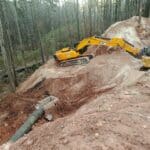

The Northeast, as defined by NOAA, spanning New York, New Jersey, Connecticut, Massachusetts, Rhode Island, Vermont, New Hampshire, Pennsylvania, Delaware, Maryland and Maine, presents a distinct set of vegetation challenges for commercial and municipal property owners. Dense hardwood forests, variable seasons, high annual rainfall and nutrient-rich soils create ideal conditions for fast-spreading invasive plants that threaten stormwater infrastructure and local ecosystems alike.
Effective vegetation management helps properties prevent permit violations, protect drainage infrastructure and reduce costly long-term risks. AQUALIS provides a complete guide to Northeast vegetation management strategies and common invasive species to help you maintain compliance and support long-term infrastructure health. Empty heading
What Is the Best Way to Manage Vegetation in the Northeast?
The region’s four distinct seasons, combined with spring snowmelt and summer storm events, mean unchecked plant growth can rapidly disrupt stormwater systems during the warmer months, while insufficient vegetation cover in winter can lead to erosion and freeze-thaw damage. A well-planned vegetation strategy protects land and waterways, enhances property appearance and reduces long-term costs.
Core objectives include:
-
- Protecting stormwater systems and nearby waterways
- Meeting local and state permit requirements, including NPDES and MS4 obligations
- Limiting the spread of invasive plants into drainage corridors and detention areas
- Supporting healthy, native vegetation
- Reducing erosion and sedimentation risks during winter freeze-thaw cycles
Empty heading
Vegetation Management Services in the Northeast
A complete vegetation management approach combines several service areas, each protecting infrastructure and supporting compliance in a different way.
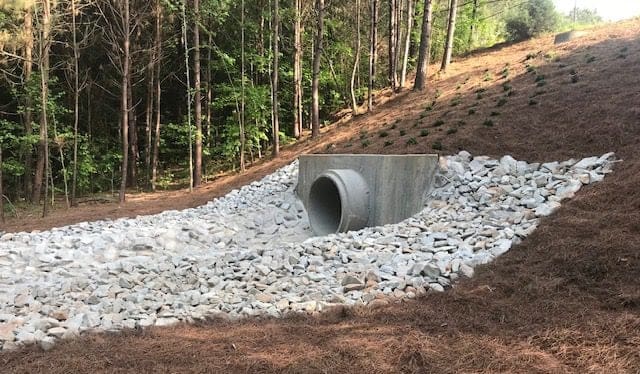
Tree trimming and woody vegetation control addresses the risks created by the Northeast’s dense canopy. Fast-growing species can block access to detention basins, damage inlet structures with root intrusion and interfere with drainage conveyance. Selective trimming and removal protect drainage systems, maintain inspection access and reduce storm-related liability.
Aquatic and wetland vegetation control focuses on the Northeast’s extensive wetland systems, floodplain corridors and pond networks. Work in these sensitive environments must follow strict state and federal guidelines, typically through selective mechanical removal, targeted aquatic herbicide application and seasonal timing restrictions designed to minimize ecological impact.
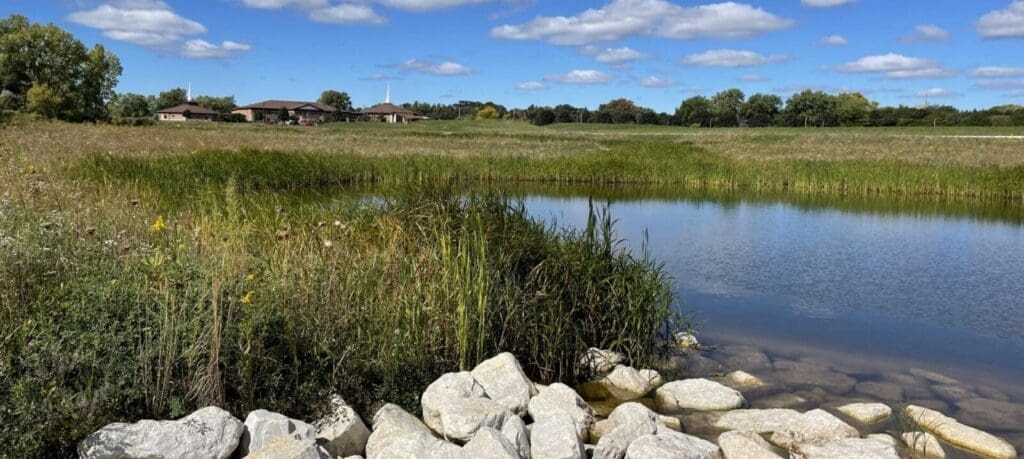
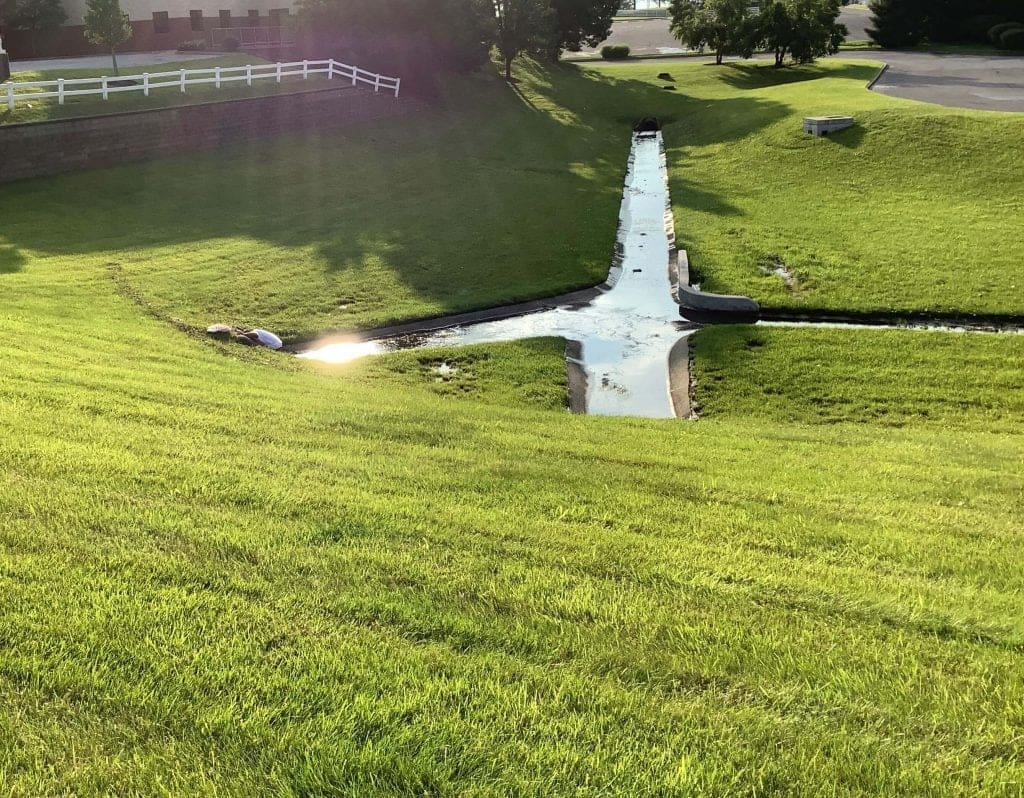
Native species planting is foundational. Plants native to the region are adapted to local soils, rainfall and temperature swings, making them ideal for stabilizing pond banks, swale corridors and bioretention cells. Native vegetation also supports compliance with Stormwater Pollution Prevention Plans (SWPPPs) and Operations and Maintenance (O&M) requirements set by local and state regulators, reduces the need for irrigation and chemical inputs and resists invasive encroachment. Empty heading
Empty headin
Common Native Vegetation Species in the Northeast
These plants absorb rainfall, slow runoff, filter sediment and pollutants and strengthen drainage systems. The following are commonly recommended in state stormwater manuals across Connecticut, Pennsylvania, Maryland and New York.
Trees and Shrubs
- Red Maple Acer rubrum
- River Birch Betula nigra
- Black Tupelo / Black Gum Nyssa sylvatica
- American Sycamore Platanus occidentalis
- Swamp White Oak Quercus bicolor
- Buttonbush Cephalanthus occidentalis
- Winterberry Holly Ilex verticillata
- Inkberry Holly Ilex glabra
- Highbush Blueberry Vaccinium corymbosum
- Swamp Rose Rosa palustris
- Silky Dogwood Cornus amomum
- Smooth Alder Alnus serrulata

Herbaceous Plants and Grasses
- Blue Flag Iris Iris versicolor
- Joe-Pye Weed Eutrochium purpureum
- Swamp Milkweed Asclepias incarnata
- Switchgrass Panicum virgatum
- Cardinal Flower Lobelia cardinalis
- Soft Rush Juncus effusus
- Broadleaf Cattail Typha latifolia
Empty headingInvasive Species Removal in the Northeast
Invasive Species Removal in the Northeast
In the Northeast, invasive plants spread aggressively due to seasonal rainfall, rich organic soils and fragmented land use that creates pathways along roadsides, waterways and disturbed commercial sites. Once rooted in stormwater corridors, these species can overwhelm detention basins, choke pond outlets, accelerate erosion and create persistent compliance challenges.
According to Executive Order 13112, an invasive species is any plant, animal or other organism outside its natural range that causes harm to the environment, economy or human health. Invasive plants typically spread through wind and water, stormwater runoff, human activity and wildlife movement, and they outcompete native plants for light, nutrients and space
Common Invasive Plants in the Northeast
The following species are confirmed invasive across the region and documented by state natural resource agencies.
Woody Shrubs and Vines
- Japanese Barberry Berberis thunbergii
- Multiflora Rose Rosa multiflora
- Autumn Olive Elaeagnus umbellata
- Oriental Bittersweet Celastrus orbiculatus
- Winged Euonymus / Burning Bush Euonymus alatus
- Common Buckthorn Rhamnus cathartica
- Glossy Buckthorn Frangula alnus
- Bush Honeysuckle Lonicera spp.
- Porcelain Berry Ampelopsis brevipedunculata

Herbaceous Plants and Grasses
- Common Reed / Phragmites Phragmites australis
- Hybrid Cattail Typha x glauca and Narrowleaf Cattail Typha angustifolia
- Japanese Knotweed Reynoutria japonica
- Purple Loosestrife Lythrum salicaria
Empty headingEmpty headin
Invasive Trees
- Tree of Heaven Ailanthus altissima
- Norway Maple Acer platanoides

Empty heading
Phragmites: The Northeast’s Most Aggressive Wetland Invader
Phragmites australis is one of the most persistent and damaging invasives in the region. Growing up to 15 feet tall, it forms dense monocultures that crowd out native plants, restrict flow at outlet structures and reduce pond storage capacity. Rhizomes can extend up to 9 feet deep, so eradication is rarely a one-season effort. Effective management combines permitted herbicide application timed to late summer or early fall, mechanical cutting and long-term monitoring across multiple growing seasons. Treatment in wetland environments typically requires permits from agencies such as the New York State Department of Environmental Conservation or the New Jersey Department of Environmental Protection.
Empty heading
Cattails: When a Native Plant Becomes a Problem
Not all cattails are invasive. Native broadleaf cattail (Typha latifolia) provides erosion control, wildlife habitat and pollutant filtration in stormwater settings. The invasive hybrid cattail (Typha x glauca) and narrowleaf cattail (Typha angustifolia), however, spread aggressively and form dense stands that clog inlets and culverts, reduce pond capacity and compromise waterbody function. Cattails establish in water depths of 1.5 feet or less but can persist up to 6 feet, making shallow pond shelves particularly vulnerable. Steeper bank slopes limit the zones they colonize, and established infestations can be controlled through mechanical cutting below the waterline, dredging or permitted herbicide application.
Empty heading
Effective Invasive Species Removal Strategies
Because many invasives regenerate from root fragments or resprout aggressively, effective management combines immediate action with long-term prevention. Common methods include:
-
- Hand Pulling: Best for small infestations and younger plants with shallow roots. Not recommended for established Japanese knotweed, since new shoots can form from small root fragments.
- Mechanical Cutting and Mowing: Controls larger infestations and limits seed production, most effective when paired with follow-up treatments over multiple seasons.
- Solarization: Plastic sheeting traps heat and exhausts root systems, useful for dense herbaceous infestations.
- Targeted Herbicide Application: Eliminates invasive root systems while protecting adjacent native plants. Essential for Japanese knotweed, phragmites and tree of heaven, and timed to the growing season.
- Aquatic Herbicide Treatments: Applied under permit in wetland and pond environments for species such as purple loosestrife, phragmites and hybrid cattails, using EPA-registered aquatic formulations.
Empty heading
Empty heading
Choose AQUALIS for Vegetation Management and Invasive Species Removal in the Northeast
Vegetation management in the Northeast comes with unique seasonal challenges and a complex regulatory landscape. AQUALIS provides comprehensive solutions tailored to the region, combining proactive maintenance with environmentally responsible practices.
With AQUALIS, you get customized vegetation management plans designed for Northeast climate conditions, safe and effective invasive species removal, expertise in wetlands, urban stormwater corridors, pond banks and sensitive riparian areas, and a proactive approach that minimizes future risks and keeps your property in compliance.
From routine mowing and woody vegetation control to large-scale invasive species remediation, AQUALIS helps protect critical infrastructure and keeps your site safe, functional and sustainable year-round.
Contact us today to learn how AQUALIS can support your Northeast vegetation management and invasive species needs.