

Last Updated 08/05/2026
Excerpt from Stormwater Ordinance
ARTICLE V. – STORMWATER MANAGEMENT UTILITY
Sec. 29-303. – References to assist the applicant in meeting the mandatory standards and requirements as established by this article.
All calculations, formulas and data used in the inspection of completed utility projects shall be subject to approval by the stormwater supervisor which may require other calculations made, formula used or data supplied. Acceptable standards for such matters may be found in the following publications. Whenever the mandatory standards and requirements of this article impose higher standards and plan requirements, this article shall govern.
- Soil Survey of York County, South Carolina – issued by the U. S. Department of Agriculture, Soil Conservation Service, 13 S. Congress Street, Room 5, York, South Carolina 29745 – dated April 1965.
- Erosion and Sediment Control in Developing Areas; Planning Guidelines and Design Aids – issued by the U. S. Department of Agriculture, Soil Conservation Service, Storm Thurmond Building, 1835 Assembly Street, Columbia, South Carolina 29201 – dated July 1974.
- Urban Hydrology for Small Watersheds: Technical Release No. 55 (Second Edition) – issued by the U. S. Department of Agriculture, Soil Conservation Service, available from the National Technical Information Service, U. S. Department of Commerce, 5285 Port Royal Road, Springfield, Virginia 22151 – dated June 1986.
- Erosion and Sediment Control Practices for Developing Areas – issued by S. C. Land Resources Commission, 2221 Devine Street, Columbia, South Carolina 29205 – latest edition.
- Erosion and Sediment Control Planning and Design Manual – issued by the North Carolina Department of Natural Resources and Community Development, Raleigh, North Carolina 27687 – latest edition.
- A Guide to Site Development and Best Management Practices for Storm Water Management and Sediment Control – issued by the South Carolina Department of Land Resources Conservation Commission, Columbia, South Carolina 29205 – latest edition.
Sec. 29-304. – Maintenance during construction.
The person responsible for maintenance shall perform or cause to be performed preventive maintenance of all completed stormwater management practices to ensure proper functioning. The responsible inspection agency shall ensure preventive maintenance through inspection of all stormwater management practices.
Sec. 29-305. – Maintenance responsibilities after development.
Temporary and permanent erosion, sedimentation and stormwater management facilities, once installed and after a final inspection has been completed, shall be maintained in one of the following manners:
Facilities maintained by owner. The owner of the property on which work has been done pursuant to the Rock Hill City Code, or any other person or agent in control of such property, shall maintain in good condition and shall promptly repair and restore all grade surfaces, walls, drains, dams and structures vegetation, erosion and sediment control measures, and other protective devices. Such repairs or restorations and maintenance shall be in accordance with the approved plan.
Most facilities are privately maintained by the owner. The facilities to be maintained by the owner shall provide adequate access to permit city or state authorities to inspect and, if necessary, to take corrective action. If the owner or any other person or agent in control of such property fails to maintain properly the facilities for which he is responsible under the provisions of this section, the stormwater supervisor shall give such owner, person or agent in control written notice describing specifically the deficiency. If the owner, person or agent fails, within ten days from the date of receipt of such notice, to take or commence corrective action, such owner, person or agent shall be subject to the penalties found in this article or elsewhere in the Rock Hill City Code.
Facilities maintained by the city. All facilities to be maintained by the city must be designed and constructed in accordance with the requirements of this article, elsewhere in the Rock Hill City Code, the city’s zoning ordinance and design specifications, and all such facilities shall be dedicated to the city by plat, deed or right-of-way/easement with attached record drawings, after the city has accepted the conveyance of such facilities by resolution of the city council. Facilities located within the street right-of-way may be accepted with such street acceptance in accordance with section 26-164 of this Code. Such instrument shall include sufficient easements to permit the city to properly maintain such facilities. Any facilities conveyed to the city under the provisions of the Rock Hill City Code shall be maintained, warranted and guaranteed against defects by the developer in accordance with the city’s zoning ordinance. City council retains discretion to modify the terms of acceptance of dedication for unique situations, including existing facilities.
Inspections and monitoring.
a. Right of entry for inspection. Whenever necessary to make an inspection to enforce any provision of this section, or whenever the stormwater supervisor has cause to believe that there exists, or potentially exists, in or upon any premises any condition which constitutes a violation of this chapter, any authorized official may enter such premises at all reasonable times to inspect and copy records related to stormwater compliance. The stormwater supervisor shall also be permitted to enter and inspect properties and facilities as often as may be necessary to determine compliance with this section.
b. Powers of inspection. If a property or facility has security measures in force which require proper identifications and clearance before entry into its premises, including but not limited to security systems and locks, the owner or operator shall make the necessary arrangements to allow safe and easy access to the property or facility by the stormwater supervisor. In the event the owner or occupant refuses entry after a request to enter and inspect has been made, the city is empowered to seek assistance from any court of competent jurisdiction in obtaining such entry.
c. Authority to perform sampling. Any authorized official shall have the right to set up on any property devices necessary to conduct monitoring and/or sampling of the facility’s stormwater discharge, or discharges of unknown origin.
d. Compliance monitoring. The stormwater supervisor may require the owner or operator to install monitoring equipment, perform monitoring as necessary, and make the monitoring data available to the stormwater supervisor. The sampling and monitoring equipment shall be maintained at all times in a safe and proper operating condition by the owner or operator at his/her own expense. All devices used to measure flow and quality shall be calibrated to ensure their accuracy and be appropriately adapted and designed for the prescribed task(s).
Violations, enforcement and penalties.
The stormwater supervisor shall be the enforcement officer for the provisions of this section.
a. Violations. It shall be unlawful for any person to violate any provision or fail to comply with any of the requirements of this section. Any person who has violated or continues to violate the provisions of this section, may be subject to the enforcement actions outlined in this section or may be restrained by injunction or otherwise abated in a manner provided by law.
b. Warning notice. When the stormwater supervisor finds any person has violated, or continues to violate, any provision of this section, or any order issued hereunder, the stormwater supervisor may serve upon that person a written warning notice, specifying the particular violation believed to have occurred and requesting the discharger to immediately investigate the matter and to seek a resolution whereby any offending discharge will cease. Investigation and/or resolution of the matter in response to the warning notice in no way relieves the alleged violator of liability for any violations occurring before or after receipt of the warning notice. Nothing in this subsection shall limit the authority of the stormwater supervisor to take any action, including emergency action or any other enforcement action, without first issuing a warning notice.
c. Notice of violation. Whenever the stormwater supervisor finds that a person has violated a prohibition or failed to meet a requirement of this section, the stormwater supervisor may order compliance by written notice of violation to the responsible person.
The notice of violation shall contain:
- The name and address of the alleged violator;
- The address when available or a description of the building, structure or land upon which the violation is occurring, or has occurred;
- A statement specifying the nature of the violation;
- A description of the remedial measures necessary to restore compliance with this section and a time schedule for the completion of such remedial action;
- A statement of the penalty or penalties that shall or may be assessed against the person to whom the notice of violation is directed;
- A statement that the determination of violation may be appealed to the stormwater supervisor by filing a written notice of appeal within three days of service of notice of violation; and
- A statement specifying that, should the violator fail to restore compliance within the established time schedule, the work will be done by a designated governmental agency or a contractor and the expense thereof shall be charged to the violator.
Such a notice may require without limitation and within the timelines required by such notice:
- The performance of monitoring, analyses, and reporting; The elimination of illicit connections or discharges;
- That violating discharges, practices, or operations shall cease and desist;
- The abatement or remediation of stormwater pollution or contamination hazards and the restoration of any affected property;
- Payment of a fine to cover administrative and remediation costs; and
- The implementation of source control or treatment BMPs.
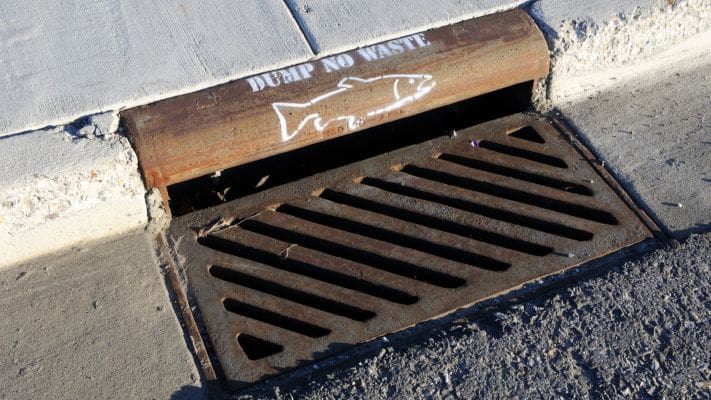
d. Compensatory action. In lieu of enforcement proceedings, penalties, and remedies authorized by this section, the stormwater supervisor may impose upon a violator alternative compensatory actions such as storm drain stenciling/marking, attendance at compliance workshops, creek cleanup, etc.
e. Escalated enforcement. Any combination of the enforcement actions below or their functional equivalent, where deemed necessary to address persistent noncompliance, repeat or escalating violations, or incidents of major environmental harm, may require more strict enforcement penalties.
f. The stormwater supervisor may impose monetary fines not to exceed $500.00 and each day a violation continues constitutes a separate violation. In setting the fine amount, the stormwater supervisor shall consider the type, duration, severity of the violation, and the responsiveness of the person against whom the penalty is assessed in remedying the violation.
Repeat offenders may be subject to double monetary fines, at the discretion of the stormwater supervisor.
g. All fines imposed under this section which are uncontested shall be made payable to the City of Rock Hill and shall be received by the stormwater supervisor within ten calendar days. All fines collected by the stormwater supervisor shall be deposited into the stormwater general fund.
h. The City of Rock Hill may issue a stop work order that requires construction activity be halted, except for those activities directed at cleaning up, abating discharges, and installing appropriate control measures.
i. The City of Rock Hill may withhold plan approval or other authorization to affect a person’s ability to discharge into the MS4.
j. The City of Rock Hill may perform work necessary to abate illicit discharges or connections and collect funds against a person’s bond, letter of credit, or by way of direct billing.
k. In addition to any other penalties or remedies provided in this section, the city, upon the recommendation of the city attorney and approval of the stormwater supervisor, may institute a civil action in the appropriate court to obtain injunctive compliance with the provisions of this section or remedy or prevent the violation or threatened violation of any provision of this section.
l. In the event that the clean-up or abatement activities required by this section cannot be completed, within the reasonable judgment of the City of Rock Hill, within the time frame or timelines provided and the City of Rock Hill agrees to allow for more time, then a new timeline or timeframe may be established by the City of Rock Hill, in its sole discretion, and SCDHEC shall be notified.
Sec. 29-314. - Fees.
(a) Established; criteria. The city council shall establish by ordinance the amount or amounts and classifications of fees to be implemented to help fund the utility and its programs and projects. In establishing such fees, the city council shall consider, among other things, he following criteria:
(1) The fee system shall be reasonable and equitable so that users pay to the extent they contribute to the need for the utility, and the fees shall be apportioned with approximate equality and upon a reasonable basis with due regard for the benefits conferred. The city council recognizes that these benefits, while substantial, in many cases cannot be measured directly.
(2) The components of the calculations used to establish fees may include, but are not limited to, the following cost factors, which may be associated with the resolution of stormwater problems which the utility shall seek to alleviate:
a. Stormwater management planning and preparation of comprehensive watershed master plans for stormwater management;
b. Regular inspections of public and private stormwater management facilities and measures and the construction thereof;
c. Maintenance and improvement of stormwater management facilities and infrastructure that have been accepted by the city for the purpose;
d. Plan review and inspection of sediment control and stormwater management plans, measures, and practices;
e. Retrofitting designated watersheds to reduce existing flooding problems or to improve water quality;
f. Acquisition of interests in land, including easements;
g. Design and construction of stormwater management facilities and the acquisition of equipment;
h. Administration and enforcement;
i. Water quantity and water quality management, including monitoring, surveillance, and private maintenance inspection; and
j. Debt service and financing costs.
(3) The components of the calculations used to establish fees shall be based upon and take into account any or all of the following:
a. Number of equivalent runoff units (ERUs);
b. Commercial and land uses other than single-family residential;
c. Open and/or forested land;
d. The amount of the site that is impervious; and
e. Other generally accepted factors relevant to such calculations based upon the provisions of this article.
(b) Schedule.
(1) Monthly single-family residential fees shall be as set forth in the fee schedule in Appendix A to this Code.
(2) Monthly per dwelling unit multifamily residential fees shall be as set forth in the fee schedule in Appendix A to this Code.
(3) Monthly nonresidential property fees shall be as set forth in the fee schedule in Appendix A of this Code.
(4) Monthly fees shall also apply to other property including, but not limited to, construction projects, vacant dwelling units, lots, raw acreage and unimproved real estate. The public works director shall determine the appropriate subsection (b)(1), (b)(2) or (b)(3)a), b), c), d) or e) [of appendix A, section 29-314] in order to properly calculate the correct fee(s) to include a reasonable determination based on the factors set forth in this section.
(5) Where there are multiple residential or nonresidential users, all served from a single or master meter, then the stormwater fee shall be included on such single utility statement and calculated as set forth in subsections (b)(2) and (b)(3) of this section. Where there are multiple nonresidential users, buildings, structures or units which exist on one parcel or property but are served by separate utility accounts, stormwater fees shall be calculated according to subsection (b)(3) of this section. Total area for each of these separate accounts shall be calculated by including the individual user’s area plus its weighted average share of common and parking areas.
(6) When the BMP and/or water quantity facilities are not properly maintained, the stormwater fee will be increased by 25 percent in addition to the normal stormwater fee before any credits.
(c) Credit adjustment. The maximum combined total credit for any property shall not exceed 25 percent.
(1) Facilities with a current NPDES permit for stormwater discharges associated with an industrial activity and which have a stormwater pollution prevention plan (SPP) on file with South Carolina Department of Health and Environmental Control (SCDHEC) may be eligible for a stormwater management credit. In order to be considered for any credit, the property owner must submit a yearly application. The facility must be current with any maintenance of their detention/water quality facilities and shall submit copies of the SCDHEC permits, inspection reports, SPCC plan, etc. to the city.
Credit amount …..5%
(2) Quality control credits may be available to properties employing best management practices (BMP) on site in order to reduce or minimize stormwater pollution. Properties receiving a BMP credit may be subject to periodic inspections and failure to maintain the BMPs will result in elimination of the credit. In order to be considered for any credit, the property owner must submit a yearly application, the property must be current with any maintenance of their BMP facilities, shall submit copies of the SCDHEC permits, submit inspection and cleaning reports, submit approved site and stormwater plan, submit BMP maintenance plan, etc. to the city. If the BMP only serves a portion of the property, a prorated credit will be issued based on the percent of property covered by the BMP. When a BMP serves multiple properties, all property owners must apply for the credit separately to receive the credit.
BMP credit amount …..10%
(3) Quantity control credits may be available to properties employing control facilities on site in order to reduce or minimize peak stormwater runoff rates. The control facilities must be designed, constructed, and maintained according to city standards in order to receive and maintain the credit. Properties receiving a quantity credit may be subject to periodic inspections and failure to maintain the facilities will result in elimination of the credit until the maintenance is completed. In order to be considered for any credit, the property owner must submit a yearly application signed by a professional engineer who has determined the facility is constructed and being maintained per the design and any applicable standards, the property must be current with any maintenance of the facilities, submit copies of the SCDHEC permits, submit copies of inspection reports, submit approved site and stormwater plan, etc. to the city. If the control facility only serves a portion of the property, a prorated credit will be issued based on the percent of property covered by the facility. When a control facility serves multiple properties, all property owners must apply for the credit separately to receive the credit.
Quantity credit will be issued based on one of the following:
Credit amount for two- and ten-year design storm …..5%
Credit amount for two-, ten-, and 25-year design storm …..10%
Credit amount for two-, ten-, 25-, and 50-year design storm …..15%
Credit amount for two-, ten-, 25-, 50-, and 100-year design storm …..20%
(4) An education credit may be available to any public or private school or school system which teaches the “Action for a Cleaner Tomorrow” program approved by South Carolina Department of Education in grades Kindergarten through 12 annually. The educational credit shall be proportional to the extent the approved curriculum is taught, but shall not exceed 13 percent. The superintendent of schools shall annually certify the extent to which the curriculum was taught during the previous school year by July 1 in order to continue the credit for the following year.
View State Page
Frequently Asked Questions
Who maintains stormwater facilities after construction in Rock Hill, South Carolina?
It depends on how the facility is classified. Most facilities are privately maintained, meaning the property owner, or any other person or agent in control of the property, is responsible for keeping grade surfaces, walls, drains, dams, structures, vegetation, and erosion and sediment control measures in good condition, and for promptly repairing anything that needs it, according to the approved plan. AQUALIS can help property owners in Rock Hill understand which maintenance category their facility falls under.
Does the City of Rock Hill ever take over maintenance of a stormwater facility?
Yes, in some cases. Facilities maintained by the city must be designed and built according to the ordinance, the city’s zoning ordinance, and its design specifications, and they must be formally dedicated to the city by plat, deed, or right-of-way easement after city council accepts the conveyance by resolution. Facilities conveyed to the city this way are still maintained, warranted, and guaranteed against defects by the original developer under the city’s zoning ordinance.
What happens if I don't maintain my stormwater facility properly in Rock Hill?
If the stormwater supervisor finds that an owner, or a person or agent in control of the property, has failed to properly maintain their facilities, you’ll receive written notice describing the specific deficiency. You then have 10 days from receiving that notice to take or begin corrective action. Failing to do so within that window makes you subject to the penalties in the ordinance or elsewhere in the Rock Hill City Code. AQUALIS can help property owners respond quickly to notices like this to avoid further penalties.
Can I earn a stormwater fee credit in Rock Hill, South Carolina?
Yes. Rock Hill offers stormwater credits for properties with installed and properly maintained stormwater runoff control facilities, best management practices (BMPs), or water quality controls. AQUALIS can help property owners identify which existing or planned BMPs would qualify for these credits.
Who ensures ongoing preventive maintenance is happening on stormwater facilities in Rock Hill?
The person responsible for maintenance must perform or arrange preventive maintenance to keep completed stormwater management practices functioning properly. Separately, the city’s inspection agency also inspects stormwater management practices to help ensure that preventive maintenance is actually happening.
Can the City of Rock Hill inspect my property for stormwater compliance?
Yes. Under its NPDES program, the City of Rock Hill has the authority to inspect properties for noncompliance and can issue a notice of violation for any deficiency or infraction found onsite.
The information on this page is provided for general informational purposes only and is not legal advice. Regulations change frequently — AQUALIS makes no warranty as to the accuracy or completeness of this content, and any reliance on it is at your own risk. Consult a qualified professional or your local regulatory authority to confirm requirements applicable to your specific property.